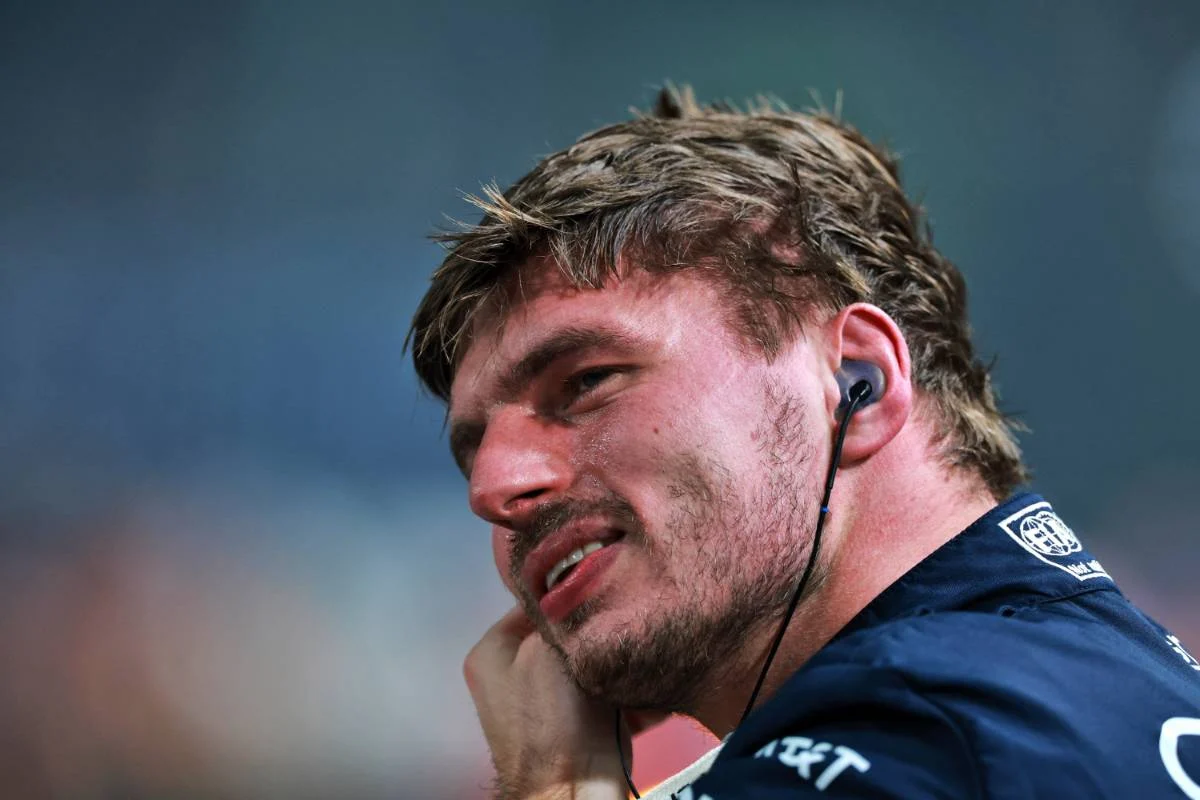
The 2026 Formula 1 season will likely be remembered by Red Bull Racing not for its dominance, but for the profound existential crisis it forced upon the Milton Keynes outfit. For Max Verstappen, the reigning four-time world champion, the campaign began as a descent into frustration, defined by the unpredictable and often uncooperative nature of the RB22. As the team fought to climb back to the summit of the podium, the Dutchman’s internal standards became the engine of the team’s recovery—a process that required a level of brutal honesty that some might label as severity.
In a candid reflection following his 250th Grand Prix start, Verstappen has opened up about the tensions that simmered behind the scenes, the technical abyss the team had to cross, and why he refuses to apologize for the demanding nature of his leadership during the most difficult months of his career.
The Anatomy of a Crisis: Why 2026 Was Different
To understand the gravity of the situation, one must distinguish between the challenges of 2025 and the systemic failures of 2026. Last year, Red Bull navigated a sea of complex setup choices; the car had a window of performance that was narrow, but accessible through meticulous fine-tuning and simulator work.
However, the start of the 2026 season presented a fundamentally different problem. The RB22 was not a matter of "wrong clicks" on the suspension or wing angles. It was, as Verstappen described in an interview with De Telegraaf, a car that was inherently flawed in its aerodynamic balance.
"It’s a completely different story," Verstappen noted. "Last season, everything was a matter of car setup. For a long time, we thought this car couldn’t work with certain setups, and eventually, we discovered it was possible. That served as a lesson for us. This year, it was different. At the beginning, we could have tried any setting on the car, and it wouldn’t have improved its balance. The issue was much deeper."
This technical stagnation forced the engineering department to go back to the drawing board, effectively shifting the development trajectory mid-season. It was this period of helplessness that tested the patience of the champion.
A Chronology of the Turnaround
The narrative of the 2026 season can be divided into three distinct acts:
Act I: The Struggle (January – May)
The opening rounds of the championship were characterized by a lack of correlation between the factory’s CFD data and the track performance of the RB22. Verstappen struggled with a car that lacked front-end bite on turn-in and suffered from erratic rear instability during corner exit. During this period, the frustration was palpable in the team radio messages, with the driver frequently expressing his dissatisfaction with the car’s handling characteristics.
Act II: The Pivot (June – August)
The turning point arrived with a major aerodynamic overhaul introduced in Baku. The team opted for a fundamental shift in their sidepod architecture and floor design, aimed at stabilizing the center of pressure. This upgrade package, which took several months to refine, finally gave the engineers a platform that responded predictably to adjustments.
Act III: The Resurgence (September – Present)
With the technical gremlins addressed, the true speed of the RB22 began to manifest. Victories in Malaysia and Singapore served as a clear indicator that the championship challenger had returned to form. For Verstappen, this period has been about rebuilding momentum and regaining the psychological edge that had slipped away during the spring.
The Price of Perfection: "I Have Been Tough, But Honest"
Max Verstappen is no stranger to criticism regarding his communication style. His blunt, sometimes abrasive commentary on the team radio has occasionally sparked debate in the paddock. When asked if he had been too hard on his staff during the dark days of the RB22’s development, he was characteristically uncompromising.
"I have sometimes been hard, but I have mostly been clear and honest," Verstappen asserted. "The team knows that I never target anyone personally. I am simply a perfectionist, and I always want to do better, especially when I know it is truly possible to make progress."
This brand of leadership, while demanding, is rooted in the belief that mediocrity is the enemy of success. For Verstappen, the "toughness" is not a personal slight against the mechanics or the aerodynamicists; it is a manifestation of his desire to win. He views the team as an extension of his own ambition—a collective unit that must operate at 100% capacity at all times to withstand the pressure from rivals like McLaren and Ferrari.
The 250-Race Milestone: A Life in the Fast Lane
The Singapore Grand Prix marked a significant milestone for the Dutchman: his 250th race start. It is a staggering number for a driver who is still only 29 years old, having made his debut at the tender age of 17 with Toro Rosso in 2015.
Despite the grandeur of the occasion, Verstappen displayed his typical indifference toward statistics. "To be honest, I had no idea it would be my 250th race," he admitted. This lack of attachment to milestones is perhaps what keeps him grounded. He does not spend his evenings browsing through his career achievements or re-watching his maiden title win in Abu Dhabi 2021. Instead, his focus is clinical.
"I watch all the races afterwards, whether they were good or bad," he explained. "It allows me to have a better understanding of how they unfolded and to see or hear certain things, including at other teams. It’s about learning, not reminiscing."
Implications for the Future
The implications of the 2026 turnaround are significant for both Red Bull and the sport at large.
- Team Cohesion: The ability of Red Bull to recover from a deep technical slump proves that their infrastructure and human capital remain elite. The "tough love" from their lead driver has, by his own account, served as a catalyst for this recovery.
- Technical Development: By successfully diagnosing and fixing the systemic flaws of the RB22, the team has validated its internal processes, which will be crucial for the development of the 2027 regulations.
- The Driver’s Mental State: Having "wiped" the early, disastrous races from his "hard drive," as he put it, Verstappen enters the final stretch of the season with a renewed sense of purpose. He is no longer fighting a broken car; he is fighting for the title.
As the season enters its final phase, the pressure remains, but the tone has shifted from desperation to expectation. Max Verstappen has proven that while he may be a demanding taskmaster, his ability to diagnose issues and push his team to their limits is exactly what keeps Red Bull in the hunt for championships.
For now, the focus is singular: continue to squeeze every millisecond out of the RB22. If the progress made in Malaysia and Singapore is any indication, the remainder of the 2026 season promises a tightly contested battle that will test not just the speed of the cars, but the resilience of the men behind them. The "tough" approach may not win popularity contests, but as the standings show, it is a proven method for winning races.