

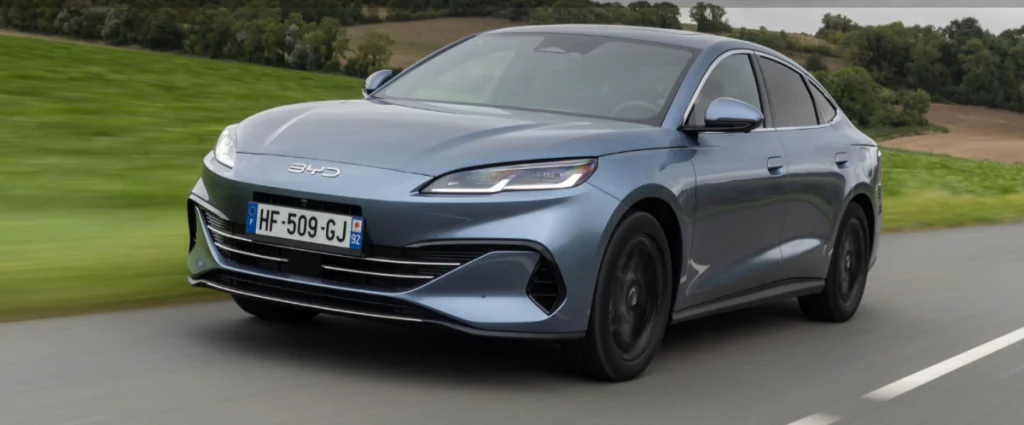
The 2026 Paris Motor Show has transformed from a traditional celebration of European automotive heritage into a high-stakes geopolitical battleground. With a record-breaking contingent of 20 Chinese brands—doubling the presence seen just two years prior—the event serves as a stark visual manifestation of the seismic shift currently reshaping the global automotive industry. As household names like BYD, Chery, Aito, and Avatr occupy prime exhibition space, the traditional pillars of the European auto sector find themselves navigating a precarious landscape defined by trade tensions, aggressive electrification targets, and a rapidly eroding market share.
The Main Facts: A Dual-Front Challenge
The presence of 20 Chinese manufacturers in Paris is not merely a logistical milestone; it is a strategic offensive. While European manufacturers are gathered to unveil new, more affordable electric vehicle (EV) models, they are doing so under the shadow of a mounting competitive threat.
The Chinese influx comes at a pivotal juncture. As European brands struggle with declining sales in China—a market that once fueled their record profits—Chinese automakers, largely locked out of the United States market, have identified Europe as their primary theater for international expansion. This "pivot to the West" is characterized by a diversification of strategy. Having faced significant EU tariffs on fully electric vehicles, Chinese OEMs have pivoted their focus toward the hybrid and plug-in hybrid electric vehicle (PHEV) segments, where they have gained significant traction.
Chronology of the Chinese Incursion
To understand the current state of the European market, one must examine the rapid trajectory of this disruption:
- 1970s–2010s: The era of Japanese expansion into Europe, which established the blueprint for international automotive competition in the region.
- 2020–2022: The COVID-19 pandemic triggers a structural decline in European sales within the Chinese market. Simultaneously, domestic demand in China begins to plateau, forcing manufacturers to look outward.
- 2024: The previous Paris Motor Show saw a notable, though limited, Chinese presence. It served as a "testing of the waters" that proved highly successful for brands like BYD.
- 2025: The EU introduces aggressive tariff regimes on Chinese-made battery electric vehicles (BEVs), intended to protect domestic supply chains.
- 2026: The current Paris Motor Show marks the full-scale deployment of Chinese brands. With a 10.7% market share, they have officially eclipsed the historical peak influence of Japanese competitors from previous decades.
Supporting Data: The Erosion of European Dominance
The numbers provided by Schmidt Automotive Research paint an uncompromising picture. In the second quarter of 2026, Chinese marques secured 10.7% of the European market, a staggering jump from the 5.7% recorded just twelve months prior.
The most concerning metric for European incumbents is the PHEV sector. Two years ago, Chinese brands held a negligible 2.2% share of the Western European plug-in hybrid market. Today, that figure has skyrocketed to over 26%. This surge suggests that Chinese manufacturers have successfully utilized PHEVs as a "bridge" technology to circumvent trade barriers, effectively maintaining their momentum even while their pure BEV exports face regulatory friction.
Furthermore, the scale of ambition is best exemplified by brands like Aito, the premium marque of the Seres Group. Currently, Aito’s international sales represent less than 1% of its total volume. By 2029, the company aims to shift its export mix to 20%. With four new high-end electric SUVs debuting in Paris, the intent is clear: they are not just competing on price, but on technology, connectivity, and premium positioning.
Official Responses and the "Double Game"
The European response is a complex mixture of protectionism and reluctant collaboration. As industry giants like Volkswagen and BMW announce massive restructuring programs—including plant closures and significant workforce reductions—the industry’s lobby has intensified its calls for the European Union to extend tariff protections to include plug-in hybrids.
Simultaneously, the EU is refining its "Made in Europe" legislative framework. This proposed policy would tie future government subsidies and public procurement contracts to a minimum percentage of local content. The goal is to force manufacturers—regardless of origin—to localize their supply chains within the continent.
However, a paradoxical trend has emerged. Pedro Pacheco, Vice President of Research at Gartner, describes this as a "double game." While European politicians and legacy automakers publicly decry the influx of Chinese competitors, they are privately engaging in extensive partnerships. Stellantis’s collaboration with the Chinese state-owned Dongfeng is the most prominent example. European firms are increasingly monetizing their underutilized production capacity and technical expertise by acting as manufacturing partners or technology providers for their rivals, effectively profiting from the very competition they fear.
Implications: The Future of the European Auto Industry
The 2026 Paris Motor Show is widely regarded by analysts as the most significant European automotive event since the pandemic. It represents a "make or break" moment for the continent’s legacy manufacturers.
The Return of the "People’s Car"
Central to the European counter-offensive is a return to affordability. The industry is currently betting on a new generation of low-cost EVs. The most anticipated unveiling in this category is the modern interpretation of the Citroën 2CV. By testing new regulatory flexibilities—which allow manufacturers to strip away certain non-essential electronic features to reduce costs—Stellantis hopes to create a vehicle that can compete directly with entry-level Chinese imports.
The "No Salon, No Sale" Paradigm
François Roudier, Secretary General of the OICA, notes that the Chinese arrival has breathed new life into the motor show concept. His mantra, "No salon, no sale," highlights the shift from digital-only marketing back to physical, experiential retail. For Chinese brands, the Paris Motor Show is the ultimate validation, a place to prove to European consumers that they are not just transient exporters, but permanent fixtures of the European transport ecosystem.
The Geopolitical Minefield
The implications extend far beyond the showroom floor. If the U.S. had remained an open, competitive market, the pressure on Europe would likely be lower. As it stands, Europe is currently the primary "battlefield" for the global EV transition. Brad Kunz of Grant Thornton Stax highlights that the European market is essentially absorbing the surplus capacity created by the Chinese market’s internal slowdown and the American market’s protectionist stance.
Conclusion: A New Equilibrium
As the 2026 Paris Motor Show concludes, the industry is left with a sobering reality. The competitive landscape has been irrevocably altered. Chinese brands have moved past the initial phase of "market entry" and are now deeply integrated into the European supply and demand chain.
For European automakers, the path forward is fraught with difficulty. They must navigate a transition to electrification that is as expensive as it is necessary, while simultaneously fending off competitors who have mastered the art of vertical integration and cost control. The "double game" of partnering with the very rivals they seek to outcompete may provide a short-term cushion, but it is not a long-term solution.
As we look toward the end of the decade, one thing remains certain: the European automotive sector of 2030 will look nothing like the sector of 2020. The 20 brands on display in Paris this week are merely the vanguard of a structural transformation that will determine which legacy giants survive and which will be replaced by the new titans of the East. The "Great Continental Shift" is no longer coming; it is already here, and it is driving the future of the European road.
