

Main Facts: A Political Collision in Austin
The Circuit of the Americas (COTA) in Austin, Texas, is typically a temple of speed, engineering precision, and high-octane spectacle. However, during the most recent United States Grand Prix, the roar of the engines was momentarily eclipsed by a different kind of noise: the collective disapproval of thousands of spectators.
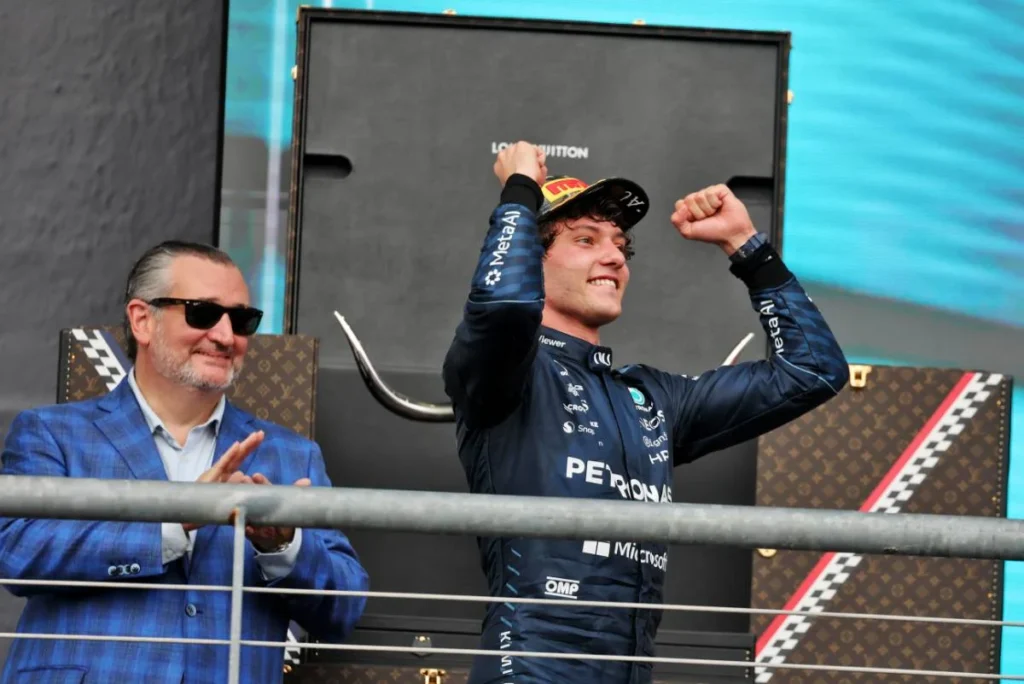
As Senator Ted Cruz stepped onto the podium to participate in the trophy presentation ceremony, he was met with a chorus of loud, unmistakable boos from the grandstands. The incident occurred in the immediate aftermath of a thrilling race that saw Kimi Antonelli claim victory, followed by Charles Leclerc and Max Verstappen. The juxtaposition of a high-profile Republican political figure and a global sporting event served as a stark reminder of the current polarized climate in the United States, particularly as the nation barrels toward critical midterm elections.
For the organizers of the Formula 1 event, the disruption served as a microcosm of the intersection between international sport and domestic politics. While the podium ceremony is intended to be a moment of celebration for the athletes, it instead became a flashpoint for public sentiment.
Chronology: The Sequence of Events
The tension began to bubble as soon as the race concluded. Kimi Antonelli’s performance, which further solidified his burgeoning reputation, had electrified the crowd. Yet, as the dignitaries made their way to the podium, the atmosphere shifted.
- The Post-Race Atmosphere: As the top three drivers concluded their cooldown laps and climbed toward the podium, the broadcast cameras caught the arrival of Senator Ted Cruz.
- The Audible Disapproval: The moment Cruz appeared on the jumbotrons and the physical stage, the crowd’s reaction was instantaneous. Boos reverberated around the circuit, drowning out the ambient noise of the post-race celebrations.
- Commentary Response: The incident was immediately noted by the global broadcast team. David Croft, the lead commentator for Sky Sports F1, remarked in real-time, "The midterm elections are approaching. People are already voting with their voices."
- The Senator’s Deflection: Despite the hostile reception, Cruz maintained a stoic demeanor during the ceremony and later pivoted to a narrative of success on social media, describing the day as "incredible" and praising the global visibility of the Texas-based race.
Supporting Data: The Political Context
The timing of the booing is far from coincidental. With the U.S. midterm elections slated for November 3, the country is in the heat of a fierce political cycle. These elections, which determine the composition of the House of Representatives and a significant portion of the Senate, are widely viewed as a referendum on the current administration and a litmus test for the influence of former President Donald Trump.
While Ted Cruz was not on the ballot during this specific cycle, his presence at such a high-profile international event served as a lightning rod for anti-establishment sentiment. Political analysts suggest that the reaction at COTA reflects the broader trend of "politicizing the public square." In an era where sports arenas have increasingly become venues for social and political expression, the COTA crowd demonstrated that they were not willing to separate their political frustrations from their sporting experiences.
Despite the backlash, Cruz’s team leaned into the optics of the event. His official statement highlighted the prestige of hosting the world at the Circuit of the Americas, effectively framing his presence as a duty to his constituents and the state of Texas, regardless of the vocal opposition present in the crowd.
Official Responses and Perspectives
The incident has triggered a debate regarding the role of politicians in sporting ceremonies. Critics of the Senator’s appearance argue that politicians often use such platforms for photo opportunities that inevitably lead to friction with the public. Conversely, supporters argue that representatives of the host state should be present to welcome international guests.
The Formula 1 organization, typically keen to avoid overt political associations, has remained largely quiet on the matter, prioritizing the focus on the sporting achievements of Antonelli, Leclerc, and Verstappen. However, the incident has left a lingering question: should politicians continue to be invited to these high-visibility moments, or does it risk alienating the fan base and detracting from the athletes’ spotlight?
Implications: A Season of Uncertainty
While the podium incident was a domestic distraction, the broader concerns looming over the Formula 1 paddock are of a more serious, geopolitical nature. The final two races of the season—the Qatar Grand Prix on November 29 and the Abu Dhabi Grand Prix on December 6—are currently shrouded in uncertainty due to escalating tensions in the Middle East.
The Shadow of Global Conflict
The possibility of a wider conflict involving the United States and Iran has prompted serious discussions behind the scenes. Former President Donald Trump has suggested that the U.S. might wait until after the midterm elections to calibrate its response to ongoing regional volatility. This creates a "wait and see" period that directly overlaps with the final leg of the F1 calendar.
The Perspective from the Cockpit
The drivers, often sheltered from the logistical realities of global security, are beginning to voice their own concerns. Carlos Sainz, speaking candidly before the Austin weekend, expressed significant reservations about the feasibility of the season’s conclusion.
"At a personal level, it is very difficult to be convinced at the moment, because there is still so much going on in the Middle East," Sainz noted. His comments highlight the friction between the sport’s commercial obligations and the safety of the personnel involved. Sainz further noted that the world is in a state of flux, and that the political landscape could shift drastically in the coming six weeks, necessitating a flexible and cautious approach from the FIA.
Trust in Governance
Despite the anxiety, there is a prevailing sentiment among the drivers that they must defer to the expertise of the FIA and Formula 1’s governing bodies. As Sainz pointed out, "We do not have as much political or confidential information as they do. We have to trust them in their decisions."
This reliance on leadership is critical. The logistical nightmare of moving a massive racing circus across international borders during a period of geopolitical instability is significant. Should the security situation deteriorate further, the FIA may be forced to make unprecedented decisions regarding the final rounds of the championship.
Conclusion: A Turning Point
The U.S. Grand Prix in Austin served as a reminder that Formula 1 operates in a world that is deeply interconnected with the political sphere. From the boos directed at Senator Ted Cruz to the quiet anxiety regarding the season finale in the Middle East, the sport is being forced to navigate a landscape where it cannot simply "shut up and drive."
As the series heads to Mexico, the focus will undoubtedly return to the track. Kimi Antonelli stands on the precipice of a historic title, and the racing action remains as compelling as ever. However, the events in Austin have set a precedent. Whether it is the voice of the electorate in the grandstands or the concerns of the drivers in the paddock, the sport is clearly feeling the pressure of a world in transition.
The coming month will be defining—not just for the championship standings, but for the resilience of the Formula 1 calendar in the face of a volatile geopolitical reality. Fans, teams, and organizers remain on high alert, watching for signals from both Washington and the Middle East, hoping that the chequered flag in Abu Dhabi will mark a safe and successful end to a truly turbulent season.
