

Date: September 30, 2026
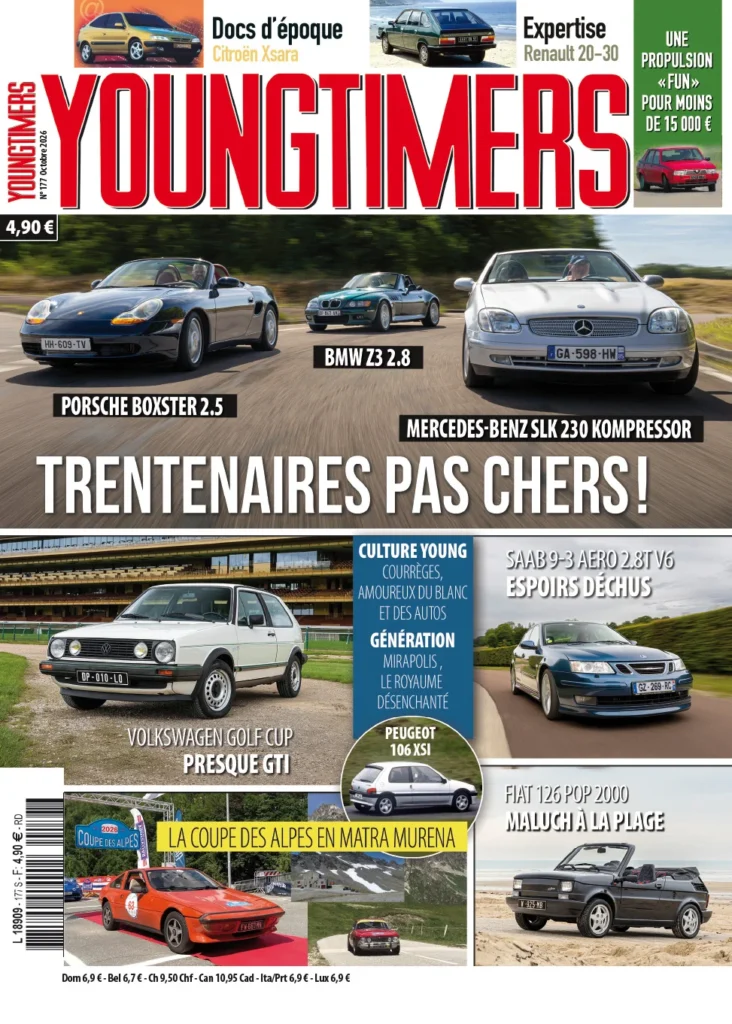
Subject: Editorial Review – Youngtimers Magazine, Issue 177 (October 2026)
The automotive landscape of the late 20th century remains one of the most fertile grounds for collectors and enthusiasts alike. As we step into the final quarter of 2026, Youngtimers magazine continues its mission to chronicle the machines that defined an era of analog purity, bold experimentation, and accessible performance. The newly released October issue (No. 177) serves as a poignant reminder of why the "Youngtimer" segment—cars typically aged between 20 and 40 years—remains the most dynamic sector of the collector car market.
The Roadsters’ Renaissance: A Triple-Threat Comparison
The centerpiece of this month’s edition is a definitive retrospective on the late-90s roadster boom. By 1996, the automotive world was undergoing a seismic shift. Manufacturers were looking to recapture the spirit of the classic British roadsters of the 60s, but with modern reliability, safety standards, and, crucially, German engineering.
Youngtimers brings together three titans that defined this golden era: the BMW Z3 2.8, the Mercedes-Benz SLK 230 Kompressor, and the Porsche Boxster 2.5.
The BMW Z3 2.8: The Emotional Choice
With its long hood and cab-rearward silhouette, the Z3 was a style icon from day one. The 2.8-liter inline-six engine provides the classic BMW soundtrack that has become synonymous with the marque’s most beloved models.
The Mercedes-Benz SLK 230 Kompressor: The Engineering Marvel
The SLK (Sport-Leicht-Kurz) was revolutionary, primarily due to its "Vario-Roof" retractable hardtop. It bridged the gap between a coupe and a convertible, effectively creating a segment that has been copied ad infinitum.
The Porsche Boxster 2.5: The Dynamic Benchmark
Often considered the savior of Porsche, the 986-generation Boxster brought mid-engine balance and legendary handling to a wider audience. The 2.5-liter flat-six provides the heartbeat of a true sports car, proving that entry-level, in Porsche terms, still meant world-class performance.
Chronology: Defining the Youngtimer Decade (1990–2005)
To understand the vehicles featured in this month’s issue, one must place them within the broader timeline of the late 20th-century automotive evolution:
- 1990–1994: The Foundation. Brands began focusing on "fun-to-drive" platforms. The Peugeot 106 (launched 1991) and the Fiat 126 final production runs represent the shift toward compact, efficient, yet spirited motoring.
- 1995–1998: The Roadster Boom. The launch of the Z3, Boxster, and SLK fundamentally changed how the public perceived premium convertibles.
- 1999–2003: Technical Sophistication. The introduction of more complex forced-induction engines, such as those found in the Saab 9-3 Aero 2.8T V6, demonstrated the industry’s pivot toward high-torque, usable daily power.
- 2004–2006: The Modern Transition. Models like the Citroën Xsara and the late-stage Renault 20/30 updates showcased the final gasps of the pre-digital design philosophy before the heavy integration of complex ECU-managed electronics became the industry standard.
Supporting Data: Why These Models?
Market data from the Youngtimers archives suggests that these specific models are currently experiencing a significant appreciation curve.
- The "Boxster Effect": Porsche 986 prices have seen an 18% increase over the last 24 months, as the market realizes the sheer engineering quality of early water-cooled Porsches.
- The Saab 9-3 Aero’s Niche Appeal: As Saab has transitioned into a heritage brand, the 9-3 Aero 2.8T V6 has become a "cult hero." Its scarcity in well-maintained condition has pushed it into the spotlight for enthusiasts looking for a "sleeper" performance car.
- The French Connection: The focus on the Peugeot 106 XSI and the Citroën Xsara highlights a growing trend of "neo-retro" collecting. These cars are no longer viewed as mere "used cars" but as legitimate heritage assets.
Official Perspective: The Editorial Stance
The editorial team at Youngtimers emphasizes that Issue 177 is more than just a catalog of specifications; it is a cultural document.
"We are currently seeing a generational handover," the editors noted in a brief summary of the issue. "The people who grew up dreaming of a Boxster or a Z3 in the late 90s are now in the prime of their professional lives. They are looking to recapture their youth, not through nostalgia alone, but through the tactile, visceral experience of driving a machine that still relies on a physical connection between driver and road."
The decision to include the Coupe des Alpes in a Matra Murena serves as a thematic bridge. It reminds readers that the "Youngtimer" movement is not just about static garage queens—it is about endurance, road trips, and the joy of testing the limits of vintage mechanical engineering in real-world conditions.
Implications: The Future of the Market
The implications of this month’s issue are twofold:
1. Market Stability
As newer cars become increasingly autonomous and screen-dependent, the market for "analog" Youngtimers will continue to strengthen. The demand for the 106 XSI and the Renault 20/30, for example, suggests that "accessible classics" are now the gateway drug for the next generation of collectors who cannot afford the stratospheric prices of 1960s Ferraris or Porsches.
2. Preservation Over Restoration
There is a clear shift toward "preservation" rather than "restoration." Owners are increasingly prioritizing original paint, original interiors, and verified service histories. The feature on the Saab 9-3 Aero highlights the difficulty—and the reward—of finding a clean, unmodified example.
Summary of Contents
The October 2026 issue provides a comprehensive breakdown for the enthusiast:
- Roadster Special: Deep dive into the Z3, SLK, and Boxster.
- Motorsport Heritage: A detailed look at the Volkswagen Golf Cup.
- The Saab Legacy: Evaluating the 9-3 Aero 2.8T V6.
- French Icons: Technical spotlights on the Peugeot 106 XSI, Citroën Xsara, and the Renault 20/30 duo.
- Unique Projects: The Fiat 126 Pop 2000 and the Matra Murena Alpine adventure.
Conclusion
Issue 177 of Youngtimers is a masterclass in automotive journalism. By balancing the "Big Three" roadsters with the gritty, practical charm of French hatchbacks and Saab’s idiosyncratic performance, the magazine reaffirms its position as the authority on the cars that made us fall in love with driving.
Whether you are a seasoned collector or a newcomer looking for your first project car, this issue provides the necessary context to navigate the complexities of the current market. As the industry hurtles toward an electrified, autonomous future, the cars featured in Youngtimers n°177 stand as the last bastions of an era that celebrated the internal combustion engine in its most refined, accessible form.
The October issue is now available in newsstands across France and via the official Youngtimers boutique with free shipping.
