

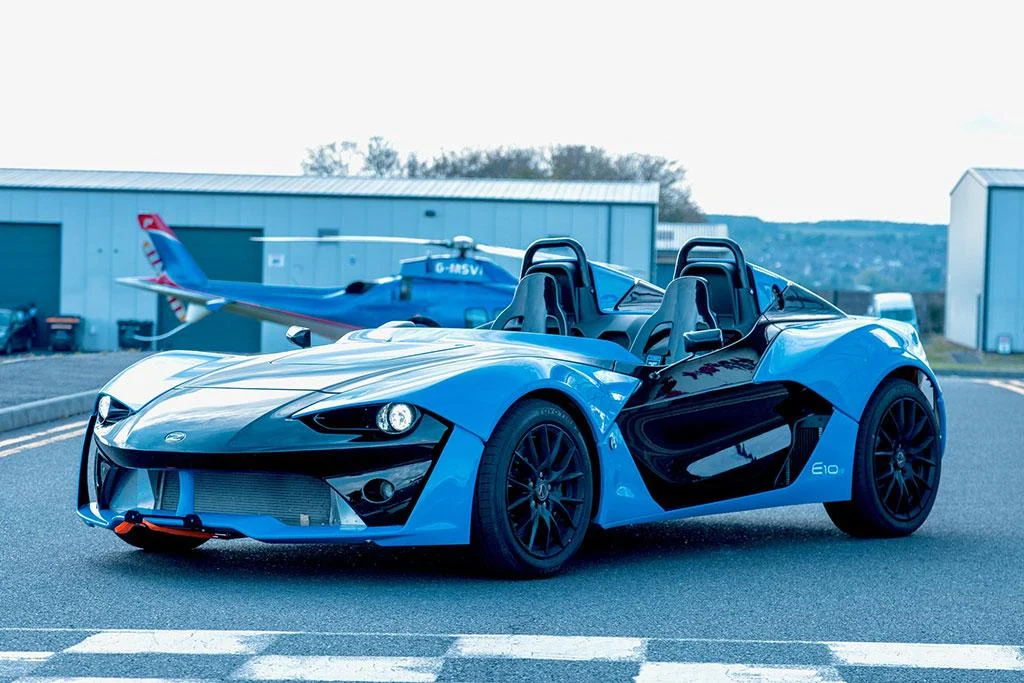
October 20, 2026 – In an era where the automotive landscape is increasingly dominated by heavy, tech-laden electric SUVs and autonomous driving aids, the return of a boutique British manufacturer feels like a breath of fresh, unadulterated air. Zenos Cars, the niche firm founded in 2012 by former Lotus and Caterham executives, has officially announced its comeback. Following a tumultuous history that saw the brand collapse into bankruptcy in 2016, Zenos is back with a revitalized vision of its flagship roadster, the E10. This new generation promises to uphold the "lightweight, high-sensation" mantra that once made it a cult favorite among driving purists.
A Legacy of Lightweight Engineering
To understand the significance of this revival, one must look back at the original Zenos mission. Founded by Ansar Ali and Mark Edwards—veterans of the British sports car scene—Zenos was built on the premise that modern cars had become too insulated from the road. The original E10 was a response to the homogenization of the industry, offering a driving experience that drew clear inspiration from the Lotus Elise, Ariel Atom, and the KTM X-Bow.
When the E10 first hit the market, it was a revelation for those who prioritized mechanical feedback over creature comforts. It was a car stripped to its bare essentials: a cockpit open to the elements, a chassis constructed from a hybrid of aluminum and carbon fiber, and a total absence of electronic "nanny" systems. It was designed for the driver who wanted to feel every vibration through the steering column and every shift of weight through the seat. For many, the return of Zenos is not just a commercial relaunch; it is a symbolic stand against the trend of "digitized" driving.
The Chronology of a Volatile Journey
The history of Zenos is a testament to the brutal reality of the low-volume automotive manufacturing sector.
- 2012: Zenos Cars is founded in Norfolk, England, with the goal of creating affordable, high-performance track-day vehicles.
- 2014: The E10 is launched, receiving critical acclaim for its handling and purist approach.
- 2015: The high-performance E10 R is introduced, pushing the power-to-weight ratio to supercar-baiting levels.
- 2017: Despite the positive reviews, the company succumbs to financial pressure, declaring bankruptcy in January.
- 2017 (March): A glimmer of hope appears as investors associated with AC Cars step in to save the brand from total liquidation.
- 2017–2025: The brand enters a period of dormancy, focusing on restructuring and securing the capital necessary for a modern relaunch.
- 2026: Zenos officially emerges from its long hiatus, unveiling the E10 r2 and E10 rZ.
This turbulent timeline highlights the challenges of balancing engineering ambition with the harsh economic realities of the boutique automotive market. The resurrection of the brand in 2026 suggests that while the business model may have changed, the passion for the product has remained undiminished.
Engineering the New E10: Evolution Over Revolution
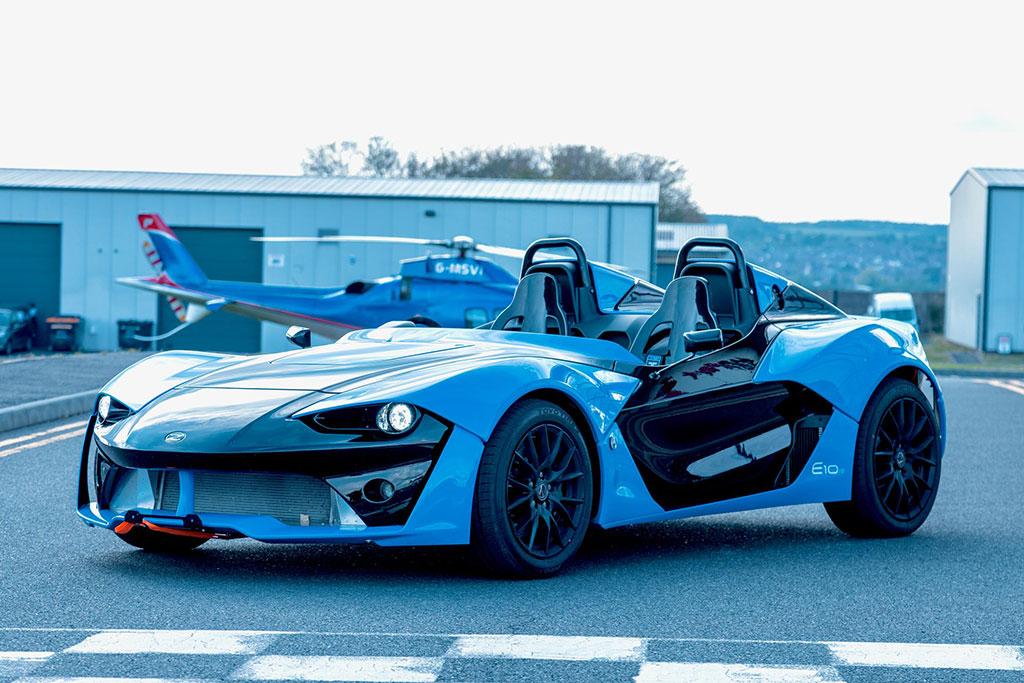
Visually, the 2026 E10 retains the minimalist, aggressive silhouette that characterized its predecessor. It is an aesthetic dictated by function rather than fashion. The chassis, still a sophisticated blend of aluminum and carbon fiber, remains the structural backbone of the car. However, beneath the familiar skin, significant upgrades have been implemented to ensure the vehicle remains competitive in a modern context.
The interior, while still intentionally Spartan, has received a subtle update. Gone are the dated dials; in their place is a modern, high-definition digital instrumentation cluster. The seats have been upgraded to lightweight carbon fiber units, providing better support during high-G cornering while further shaving weight from the chassis.
The Powertrain Specs: A Tale of Two Beasts
Zenos has structured its new lineup into two distinct tiers:
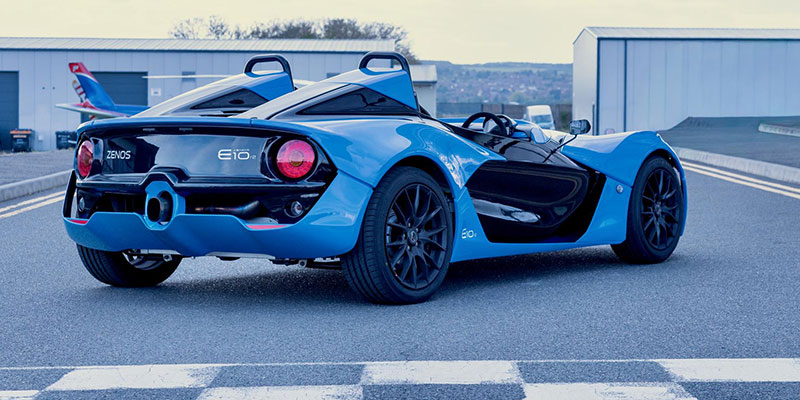
The E10 r2: This model serves as the new entry point into the Zenos ecosystem. It is powered by a 2.3-liter turbocharged four-cylinder engine, widely believed to be an evolution of Ford’s EcoBoost architecture (the same unit found in the Mustang). It delivers a robust 304 hp and 425 Nm of torque. With a curb weight of just 790 kg, the r2 is capable of a 0-100 km/h sprint in 3.8 seconds, with a top speed of 240 km/h.
The E10 rZ: The range-topping rZ is a true track weapon. It utilizes a highly tuned 2.0-liter turbocharged engine—an evolution of the unit previously seen in the Focus ST. In this application, it has been pushed to an impressive 385 hp and 510 Nm of torque. The result is a 0-100 km/h time of just 3.2 seconds.
Both models feature a six-speed manual gearbox, a mechanical limited-slip differential, and independent suspension with adjustable coilovers. By capping the top speed at 240 km/h, Zenos is sending a clear message: this car is built for technical circuits, winding B-roads, and the raw thrill of acceleration, not for top-speed bragging rights on an Autobahn.
The Financial Shock: A Move Upmarket
Perhaps the most jarring aspect of the Zenos return is the pricing structure. In 2014, the original E10 was marketed as an "accessible" track car, with a starting price of roughly £26,995. This pricing strategy was essential for establishing the brand’s identity as a purveyor of "affordable" performance.

The 2026 model, however, has pivoted sharply toward the premium sector. The E10 r2 now starts at £115,900, while the high-performance rZ commands a staggering £129,900. This is a massive departure from the brand’s original philosophy.
Industry analysts are already debating the implications of this shift. While the materials, engineering, and performance metrics have undoubtedly improved, the brand is now competing in a segment occupied by established players with deep histories and massive brand equity. Can a company that hasn’t produced a car in nearly a decade justify a six-figure price tag for a platform that, while refined, is rooted in 2014 technology?
Market Implications and The Road Ahead
The decision to reposition Zenos as a luxury-performance boutique presents both risks and opportunities. By moving upmarket, Zenos avoids the "race to the bottom" in the entry-level track car market, where margins are razor-thin and competition is fierce. Instead, they are positioning the E10 as an artisanal, bespoke machine for the wealthy collector—a "collector’s piece" for those who already have a garage full of Ferraris and Porsches but want something raw and unfiltered to drive on Sunday mornings.
However, the lack of a modern, clean-sheet design may prove to be a hurdle. In a market where buyers are increasingly demanding the latest in aerodynamics, safety tech, and engine efficiency, the E10’s reliance on a decade-old architecture is a gamble. The brand will rely heavily on the "analog" experience to win over buyers who are tired of the sanitized, over-engineered feel of modern supercars.

Conclusion: A Purist’s Last Stand?
Zenos Cars returns at a pivotal moment in automotive history. As the industry races toward electrification and automation, there is a growing, vocal minority of enthusiasts who are terrified of losing the visceral connection between driver and machine. Zenos is betting that there is enough demand to sustain a business based on this "pure" philosophy, even at a significantly higher price point.
Whether the new E10 can succeed where its predecessor failed remains to be seen. The quality is there, the passion is palpable, and the performance figures are undeniably impressive. Yet, the road from bankruptcy to prosperity is long and winding. For now, the automotive world watches with bated breath as Zenos attempts to prove that, in the world of high-performance driving, the most important component is not the software, but the soul.
