

Main Facts: The End of "Badge Engineering" as We Know It
The automotive industry has long relied on platform sharing to reduce costs, streamline manufacturing, and accelerate time-to-market. However, a major internal reckoning is underway at Renault. Speaking candidly at the Paris Motor Show, François Provost, Renault’s Chief Partnerships Officer, dropped a surprising admission: the French manufacturer failed to demand enough visual and identity differentiation between its own vehicles and those of its alliance partners.
At the center of this controversy is the upcoming all-electric Nissan Micra. Built on the same technical foundations as the critically acclaimed Renault 5 E-Tech, the new Micra shares an overwhelming amount of its architecture, interior layout, and overall silhouette with its French cousin. Aside from distinct front and rear light signatures and minor bumper tweaks, the Japanese city car is, for all intents and purposes, a Renault 5 wearing a Nissan badge.
This lack of distinctiveness has prompted a strategic U-turn. Moving forward, Renault intends to fundamentally rewrite the rulebook for its industrial collaborations—not only with long-standing partner Nissan, but also with newer allies like Ford and Mitsubishi. The core mandate for future joint projects is simple: true product differentiation, distinct brand identities, and an end to minimalist "badge engineering" that risks confusing consumers and diluting brand equity.
Chronology: From Alliance Synergies to the Paris Motor Show Wake-Up Call
The Genesis of Platform Sharing (Early 2020s)
Under the leadership of the Renault-Nissan-Mitsubishi Alliance, engineering teams were heavily incentivized to maximize component sharing. The logic was purely financial: developing a dedicated EV platform requires billions of euros, and sharing development costs across multiple brands is essential for survival in a tightening market.
The Industrial Realization at the Industrial Sites (2023–2024)
As production lines at Renault’s "ElectriCity" manufacturing hub in northern France—specifically the Douai plant—began preparing vehicles for assembly, the practical reality of near-identical production became glaringly apparent. The Renault 5 and the upcoming Nissan Micra were effectively rolling off the same lines with interchangeable cabin components, differing primarily in exterior cosmetics.
The Paris Motor Show Confession (Late 2024)
The tension culminated at the Paris Motor Show. François Provost openly acknowledged the strategic misstep to the press, admitting that Renault did not push hard enough for Nissan to carve out a wholly unique aesthetic path for the Micra. During the same briefing, Provost outlined a completely revised methodology for incoming vehicle projects developed alongside Nissan, Ford, and Mitsubishi, marking a definitive shift in corporate policy.
Supporting Data and Case Studies: Analyzing the Lineup
To understand Renault’s pivot, one must examine how current and future collaborative models compare across the board.
1. The Renault 5 and Nissan Micra: The Catalyst for Change
- Platform: Ampere (Renault’s EV-dedicated architecture).
- Production: Douai, France.
- The Issue: The interior cabin of the Micra is practically identical to the Renault 5, save for steering wheel badges and minor trim options. Exterior differentiation is restricted almost entirely to light clusters and specific panel stampings. For consumers, the distinction is marginal at best.
2. The Twingo and Dacia Spring: The Benchmark for Success
- Platform: Shared-cost entry EV architecture.
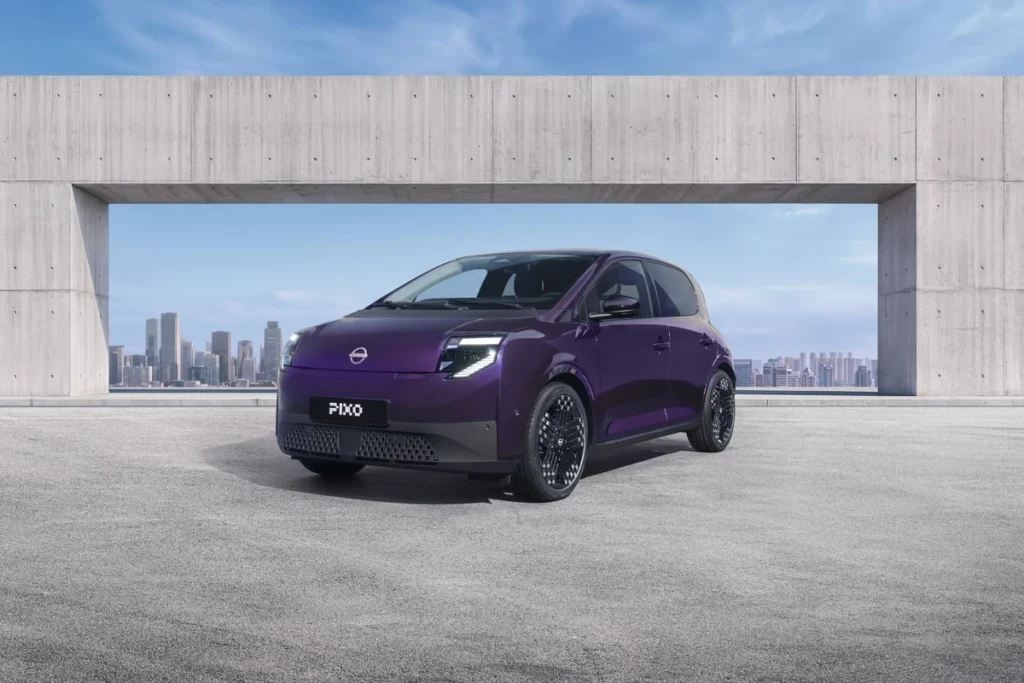
- The Solution: Provost pointed to the relationship between Renault’s future mini-city cars and budget brand Dacia as the ideal template. While underlying components and platforms may share commonalities, the resulting vehicles possess radically distinct styling, positioning, and target audiences. "Nobody would confuse them," Provost emphasized. This philosophy will directly influence the upcoming Nissan Pixo, a sibling to the next-generation electric Twingo, also slated for production in Douai.
3. The Ford Partnership: A Leap of Faith
- Scope: Two upcoming European electric vehicles built on Renault’s Ampere platform, manufactured in northern France, with market launch slated for early 2028.
- The Dynamic: Unlike the Nissan arrangement, Ford retained absolute control over the exterior and interior design language, while Renault handled the underlying technical engineering. Because of strict corporate confidentiality agreements, Renault executives have not been permitted to review Ford’s design progress in advance.
- The Risk: Success here relies entirely on mutual trust and Ford’s independent styling choices. While no official imagery has been released, Ford CEO Jim Farley’s insistence on a distinct "Blue Oval" identity means the vehicles must look, feel, and drive like Fords from day one.
4. Mitsubishi and the Eclipse Cross Precedent
- Scope: Mitsubishi continues to leverage Renault vehicles for its European footprint, notably with the Eclipse Cross sharing its DNA with the Renault Scénic.
- The Friction Point: While Renault maintains that both vehicles utilize separate iterations of Ampere-derived platforms and preserve independent brand identities, automotive critics—including automotive media outlets—remain skeptical, arguing that the visual overlap remains far too pronounced.
Official Responses and Strategic Pivot
The acknowledgment from Renault’s executive branch highlights a delicate balancing act: how to maintain the economies of scale that make electric vehicle manufacturing profitable, while ensuring that partner brands maintain enough individuality to justify their own pricing and customer loyalty.
"We did not ask for enough differentiation," François Provost stated plainly at the Paris summit. “If Jim Farley decided to partner with Renault, the resulting vehicle had to be undeniably a Ford. That must be the baseline for all our future partnerships.”
The Economic Dilemma: Differentiation Costs Money
Achieving true visual and structural separation is far from simple—and it comes with a steep price tag. Provost made no secret of the fact that pushing models further apart structurally increases manufacturing overhead.
In past projects, Renault offered partners modular tiers of personalization, scaling all the way up to entirely unique body panels. However, these bespoke modifications drive up production line complexity and inflate final manufacturing costs. Moving forward, Renault prefers fewer, more deeply integrated long-term contracts, provided that the end product bears distinct, unmistakable design signatures.
This dynamic creates a complex set of industrial questions:
- Exactly how many styling modifications are required before a consumer stops seeing a "rebadged clone"?
- Who will absorb the financial burden of these custom panels and unique interiors—Renault, or its industrial partners?
- How will retail pricing be managed if partner vehicles require heavier engineering changes to stand apart from their French donors?
Implications for the European EV Market
Renault’s newfound commitment to distinctiveness will shape the landscape of European automotive joint ventures for the remainder of the decade.
For Nissan, the lesson is already set in stone. The current Nissan Micra is locked into its production reality and will hit showrooms largely unchanged from its current blueprint. However, subsequent collaborative models—such as the anticipated Nissan Pixo derivative—will face much stricter internal design reviews to ensure Japanese design DNA shines through.
For Ford and Mitsubishi, the mandate offers both freedom and pressure. Ford’s upcoming 2028 EVs must prove that Renault’s underlying EV tech can be wrapped in authentic American-inspired design without leaking manufacturing synergies. Meanwhile, Mitsubishi will need to lean harder into proprietary cabin layouts and unique styling elements if it wishes to avoid ongoing criticism over "rebadged" offerings.
Ultimately, Renault is signaling that the era of the lazy badge-engineered EV is drawing to a close. As the European electric vehicle market matures, consumers are demanding more than just a swapped emblem on an identical chassis. By demanding greater differentiation, Renault is betting that higher upfront design costs will pay off in stronger brand loyalty, cleaner market segmentation, and long-term commercial success across all partner portfolios.
