

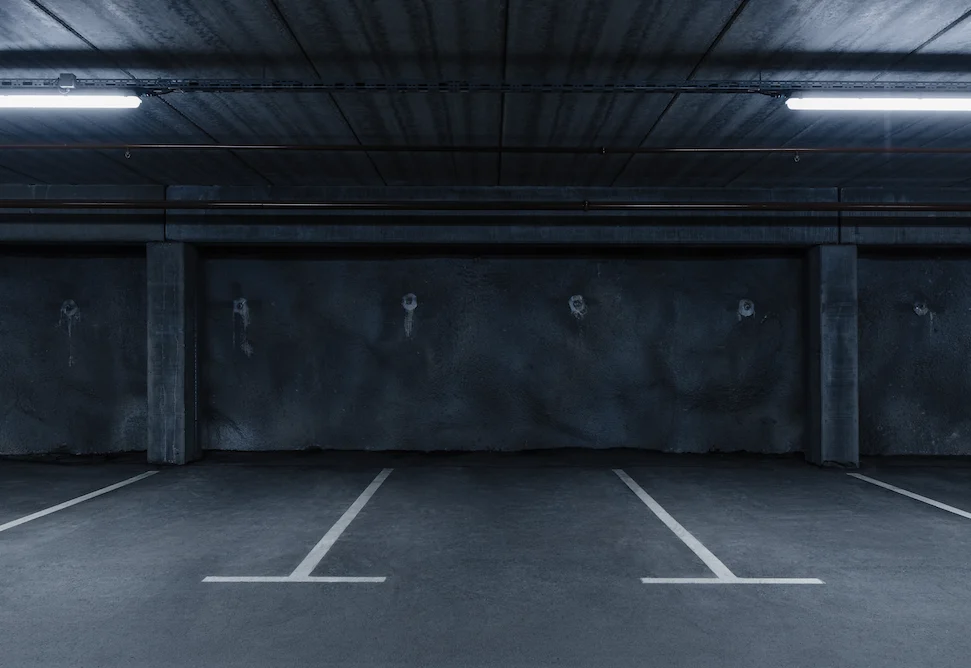
PALMA, Spain — What should have been a straightforward routine—walking down the stairs of one’s home to get into a parked car—turned into an ongoing logistical obstacle course for a property owner in the Balearic Islands. In a dispute that has quickly ascended through the ranks of the Spanish judicial system, a residential garage wall erected by one sister has forced another to step out onto the public street, walk around the perimeter of the building, and access her vehicle solely through the main exterior gate.
What began as a domestic disagreement over property boundaries has evolved into a fascinating legal precedent regarding copropriety rights, architectural modifications, and structural servitudes in Spain. The case highlights the complex legal realities of family-owned multi-dwelling buildings, where shared spaces can easily become battlegrounds when familial harmony breaks down.
Main Facts of the Case
The dispute centers on a residential building located in the Balearic Islands, structurally divided into three distinct apartments and a shared ground-floor garage space. The property is co-owned by three sisters, whose familial ties have been severely tested by a series of physical alterations made to the building’s common areas.
Historically, the ground floor functioned as a single, open-plan communal garage. According to the official property deeds and architectural blueprints, all three co-owners shared an equal right to circulate within this ground-level volume. Access to the vehicles was designed to be seamless, with an interior staircase and corridor connecting the residential upper floors directly to the parking area.
Over the years, as is common in multi-generational family properties, certain modifications were made to improve everyday convenience. Each sister eventually installed an independent garage door opening directly onto the public street, allowing them to drive their vehicles in and out more easily. However, these exterior modifications did not alter the legal status of the interior common areas, nor did they eliminate the internal pedestrian pathways.
The crisis point was reached in 2022. One of the sisters decided to unilaterally enclose her designated parking space. To achieve this, she commissioned the construction of a solid masonry wall, effectively partitioning her section from the rest of the communal garage. Furthermore, she replaced the lock on the interior door that connected the shared stairwell directly to the garage floor.
The practical consequences for the other sister were immediate and burdensome. Deprived of the interior route, she could no longer descend the stairs from her apartment directly to her vehicle. Instead, to access her car, she was forced to exit her front door, walk out onto the public pavement, contour the entire exterior of the building, and manually open the large outer gate of her designated parking box.
Unwilling to accept what she viewed as an unlawful usurpation of communal property, the disadvantaged sister took formal legal action, initiating a civil lawsuit before the court of Manacor.
Chronology of Events
To understand how a domestic garage modification escalated into a prominent civil case, it is essential to trace the timeline of the property’s evolution and the subsequent legal proceedings:
- Pre-2010 (The Open-Plan Era): The ground floor operates as a unified, open garage space. The three sisters utilize the interior corridor and staircase to access their vehicles, complemented by newly installed individual exterior garage doors facing the street.
- Approximately 2011 (The First Partition): One of the sisters constructs an initial partition wall within the garage space. However, this early barrier is designed in a way that preserves overall circulation; it does not block movement through the garage, nor does it cut off the interior pedestrian access points. The other co-owners raise no legal objections, and the status quo is maintained.
- 2022 (The Escalation): The second sister decides to fully enclose her specific area. She builds a comprehensive physical wall, segregates her parking bay, and changes the locks on the interior stairwell door. This action completely cuts off her sibling’s internal access route, forcing her to rely exclusively on the street-side entrance.
- 2022–2023 (Filing the Lawsuit): Failing to reach an amicable familial agreement, the aggrieved sister files a formal civil lawsuit at the Court of First Instance in Manacor, alleging a breach of copropriety rules and an infringement upon her right of passage.
- First-Instance Ruling: The civil judge in Manacor rules in favor of the plaintiff. The court orders the demolition of the controversial wall and the restoration of the original access points, dismissing the defendant’s justifications regarding municipal permits and historical precedent.
- May 21, 2026 (The Appellate Decision): The Provincial Court of the Balearic Islands upholds the lower court’s ruling on appeal. The appellate judges firmly reject the defense’s arguments, solidifying the legal obligation to tear down the wall and reinstate the shared property’s original configuration.
Supporting Data and Technical Context
The legal arguments presented in court hinged heavily on property law, architectural blueprints, and the precise legal definition of "common elements" versus "private zones" within Spanish real estate frameworks.
The Architectural Blueprint vs. Reality
Official records classify the entire ground floor as an indivisible elemento común (common element) intended for collective utility. While individual parking spaces within a shared garage are often apportioned for specific use, the structural pathways, corridors, stairwells, and access points remain under collective ownership. Under Spanish property law (Ley de Propiedad Horizontal), no individual co-owner can alter the exterior or interior configuration of common elements without the unanimous consent of all other coproprietors.
Evaluating the Two Walls
A central point of contention during the trial was the existence of the first wall, built roughly fifteen years prior to the 2022 dispute. The defendant argued that because a precedent had already been set years earlier allowing a partition, her own wall should be legally permissible.
However, forensic evidence and witness testimonies demonstrated a critical technical difference:
- The First Wall (Circulation-Friendly): Built years prior, this partition delineated space without blocking the flow of traffic or obstructing the internal stairwell door. All co-owners retained the ability to walk through the garage and access their properties internally.
- The Second Wall (Exclusive Enclosure): The 2022 construction completely severed the internal connection, transforming a shared transit zone into a private, locked enclave. It effectively canceled out a pre-existing easement or servitude of passage (servidumbre de paso) enjoyed by the other co-owner.
Official Responses and Judicial Reasoning
Throughout the legal battle, the defendant attempted to justify her actions using administrative arguments, while the judiciary consistently prioritized civil property rights and the protection of shared building infrastructure.
The Defendant’s Arguments
The sister responsible for the wall defended her actions on three primary grounds:
- Private Property Rights: She maintained that as a co-owner of the building, she was merely exercising control over her allocated portion of the ground floor.
- Municipal Authorization: She presented a construction permit issued by the local town hall, arguing that because the municipality had greenlit the physical work, the alterations were legally sound.
- Historical Precedent: She leaned heavily on the existence of the first partition wall, arguing that internal modifications were already an established practice within the building.
The Court’s Rebuttal
Both the Court of First Instance in Manacor and, subsequently, the Provincial Court of the Balearic Islands systematically dismantled these defenses:
- The Limits of Municipal Permits: The judiciary clarified a fundamental principle of Spanish real estate law: a local administrative permit (granted by a town hall for building safety or urban planning compliance) does not override civil copropriety law. A municipal license permits physical construction; it does not grant legal immunity against the infringement of neighbors’ or co-owners’ private property rights.
- Protection of Common Elements: The Provincial Court emphasized that stairwells, portals, and shared corridors are protected under strict legal frameworks. Altering them to the detriment of another owner constitutes an abuse of rights.
- The Right of Passage: The court ruled that the long-standing practice of accessing the parking area via the internal stairwell constituted a valid servitude of passage. Revoking this access unilaterally was deemed an illegal act of self-help (vías de hecho).
As a direct consequence of the May 21, 2026 appellate ruling, the defendant faces a clear legal mandate: she must demolish the concrete wall at her own expense, reinstall the original locks, restore access to the interior stairwell, and return the garage to its lawful, undivided architectural state.
Broader Implications and Legal Outlook
While this specific dispute is rooted in the Balearic Islands, property lawyers note that family-owned multi-dwelling buildings are uniquely vulnerable to these types of intense, emotional conflicts. When familial bonds fray, real estate assets often become the physical manifestation of underlying personal grievances.
Potential Next Steps
Despite two consecutive losses in court, the saga may not yet be entirely finished. Under Spanish civil procedure, the defendant retains a final, narrow window of opportunity to lodge an extraordinary appeal before the Spanish Supreme Court (Tribunal Supremo). However, legal experts point out that the Supreme Court only accepts cases involving conflicting jurisprudence or fundamental violations of constitutional law—hurdles that are notoriously difficult to clear in localized property disputes.
Lessons for Co-Ownerships
For the broader public, the Balearic Islands garage dispute serves as a cautionary tale regarding property alterations:
- Consent is Mandatory: Minor cosmetic changes within a private box are generally acceptable, but structural changes affecting walls, doors, or access points in common areas require absolute consensus among co-owners.
- Administrative vs. Civil Law: Securing a permit from local authorities does not protect a property owner from civil litigation filed by aggrieved neighbors or family members.
- Historical Alterations Matter: Courts examine the functional impact of modifications. A wall that merely divides space without hindering access is viewed very differently from one that entirely blocks a neighbor’s lawful right of way.
Until the final legal avenues are exhausted—or until bulldozers finally arrive to clear the disputed masonry—the plaintiff in Manacor continues her daily routine, stepping out onto the public street, keys in hand, simply to reach her family garage.
