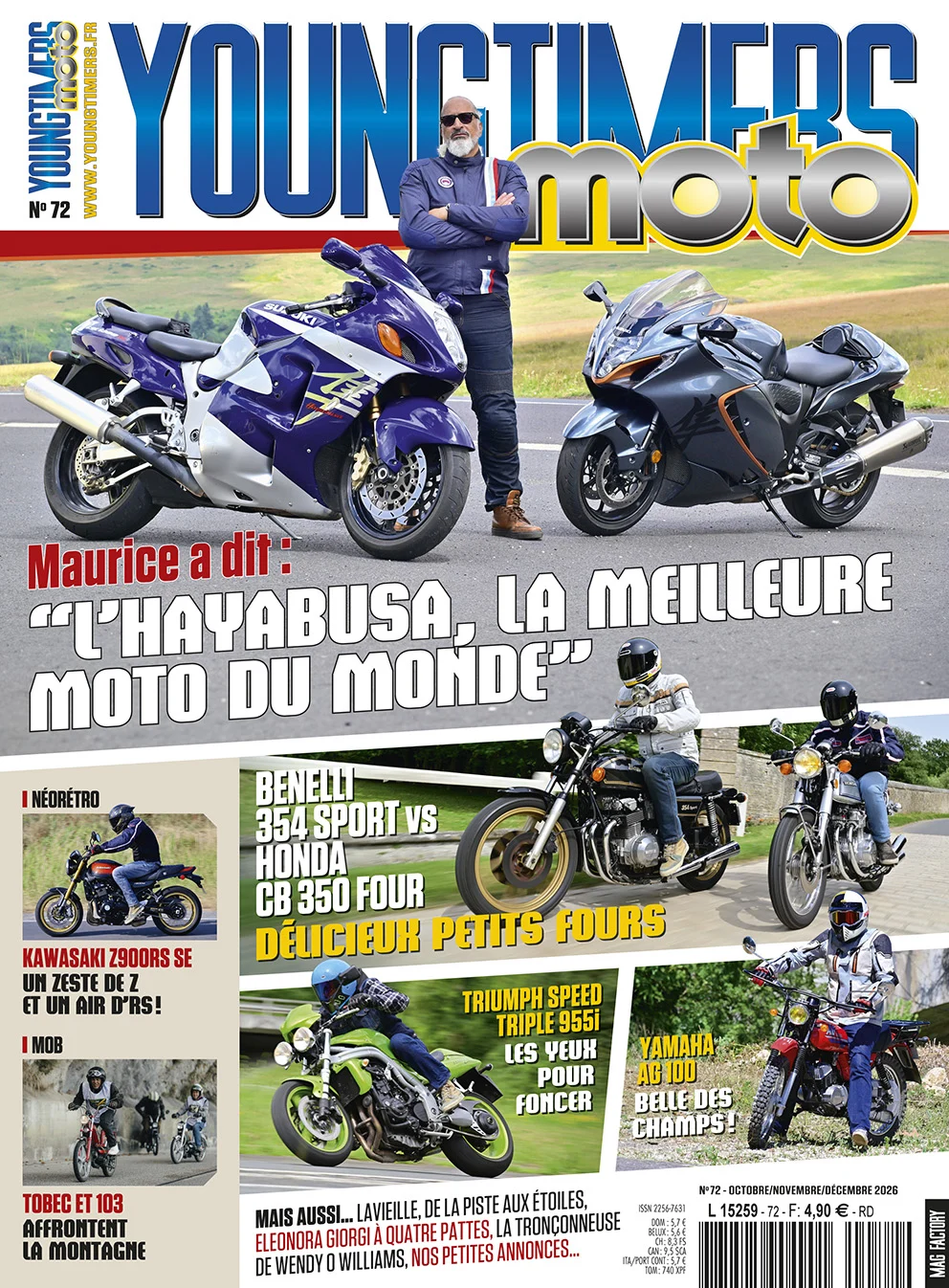
October 10, 2026 — As the autumn leaves begin to settle on the asphalt, the editorial team at Youngtimers Moto has officially unveiled their latest quarterly edition. Issue No. 72, covering the months of October, November, and December 2026, serves as a time capsule for motorcycle enthusiasts. From the dawn of hyper-performance to the humble utility of agricultural workhorses, this issue captures the eclectic spirit of the "Youngtimer" era—those machines that bridged the gap between mechanical nostalgia and modern performance.
Main Facts: A Diverse Editorial Landscape
The 72nd issue of Youngtimers Moto is not merely a collection of reviews; it is a curated exploration of motorcycle evolution. The magazine has structured its latest installment around a diverse range of machines that defined their respective decades.
At the heart of this issue is the Suzuki Hayabusa, an icon of speed that redefined the late 90s and early 2000s, contrasted sharply with the vintage charm of the Benelli 354 Sport and the Honda CB 350 Four. The editorial board has balanced these heavy hitters with the raw, aggressive character of the Triumph Speed Triple 955i and the practical, off-beat utility of the Yamaha AG 100. Rounding out the lineup is a nod to modern-retro sensibilities with the Kawasaki Z900RS SE, alongside a scenic feature titled "Mobs en Chartreuse," which explores the charm of mopeds in the French alpine landscape.
Chronology: The Evolution of the "Youngtimer"
To understand why these specific bikes are featured in the Fall 2026 edition, one must look at the timeline of motorcycle history that Youngtimers Moto consistently highlights.
- The 1970s (The Honda/Benelli Era): The inclusion of the Honda CB 350 Four and Benelli 354 Sport reminds readers of the mid-displacement golden age. These were the machines that democratized the four-cylinder engine, bringing grand-touring technology to the average rider.
- The 1990s (The Rise of the Radical): The Triumph Speed Triple 955i represents the "Streetfighter" revolution. It was a decade defined by stripping away fairings and exposing the mechanical heart of the bike, prioritizing torque and handling over top-end aerodynamic speed.
- The Late 1990s/Early 2000s (The Speed Wars): The Suzuki Hayabusa remains the undisputed king of this chronology. It marked the pinnacle of the "speed wars," where Japanese manufacturers pushed the limits of physics and engineering to create the fastest production motorcycles in the world.
- The Present Day (The Neo-Retro Movement): The Kawasaki Z900RS SE serves as the bridge between the past and present, proving that today’s technology can successfully pay homage to the design language of the 1970s.
Supporting Data: Technical Insights and Market Appeal
The appeal of Youngtimers Moto lies in its ability to synthesize technical specifications with emotional resonance.
The Suzuki Hayabusa: The Benchmark of Performance
When the Hayabusa first hit the scene, it was a seismic event in motorcycling. With its 1,299cc inline-four engine, it wasn’t just about raw horsepower; it was about the seamless, aerodynamic design that allowed it to exceed 300 km/h. In the pages of Issue 72, the editors analyze how this machine has transitioned from a controversial speed-demon to a sought-after collector’s item.
The Streetfighter Legacy: Triumph Speed Triple 955i
The Triumph 955i is analyzed through the lens of its iconic "bug-eye" headlights and its punchy, three-cylinder engine note. Data suggests that the 955i holds a special place in the hearts of European riders, as it was instrumental in cementing Triumph’s post-bankruptcy comeback.
Utility and Nostalgia: The Yamaha AG 100 and "Mobs"
By including the Yamaha AG 100—a bike designed for agricultural labor—the magazine highlights that "Youngtimers" aren’t always about speed. This section provides a unique look at how utilitarian machines can become objects of affection, particularly for those who appreciate simplicity and reliability over raw performance.
Official Responses and Editorial Philosophy
In a statement regarding the release of the 72nd issue, the Youngtimers Moto editorial team emphasized their commitment to preserving the heritage of motorcycling amidst an increasingly digital world.
"As we move further into the era of electric mobility and rider-assist technologies, the value of the ‘Youngtimer’ only increases," the editor stated. "Our readers are looking for a visceral connection to the machine. Whether it is the frantic buzz of a small-displacement four-cylinder from the 70s or the sheer, brute-force speed of a first-generation Hayabusa, these bikes offer a purity of experience that is becoming rare in the modern market."
The magazine also addressed the inclusion of the "Mobs en Chartreuse" feature, noting that it reflects a growing trend in Europe: the "moped movement." Riders are increasingly turning to small, low-maintenance machines to explore local landscapes, finding that the joy of motorcycling does not always require high-speed capability.
Implications: The Future of the Collector Market
The publication of Issue 72 has significant implications for the motorcycle collector market. By highlighting these specific models, Youngtimers Moto acts as a barometer for market interest.
- Increased Demand for 90s Sportbikes: As the generation that grew up in the 90s gains more disposable income, interest in "Radical" era bikes like the Speed Triple and the Hayabusa is reaching an all-time high.
- Preservation of "Everyday" Classics: The focus on the Yamaha AG 100 and the 350cc-class fours suggests that collectors are moving away from purely "exotic" investments. There is a growing appreciation for the "common man’s" motorcycle—bikes that were ridden hard, lived in, and possess a history of daily service.
- The Neo-Retro Symbiosis: The Kawasaki Z900RS SE demonstrates that the market for modern motorcycles is inextricably linked to the history of the brand. By profiling modern bikes alongside their spiritual ancestors, the magazine reinforces the strategy manufacturers use to keep interest in classic aesthetics alive.
Conclusion: A Must-Have for the Enthusiast
For those seeking to understand the trajectory of modern motorcycling, Youngtimers Moto No. 72 is an essential reference. It manages to balance the high-octane excitement of the hyper-bike era with the quiet, scenic appreciation of mopeds in the mountains.
The magazine is currently available at newsstands across France and is also available for purchase via the official Youngtimers website. With free shipping on online orders, the publication is making a concerted effort to reach a global audience of enthusiasts who value the mechanical soul of the motorcycle.
As the industry pivots toward the future, Youngtimers Moto stands as a reminder that the heart of motorcycling will always be found in the rumble of an engine, the precision of a gear change, and the stories told on the open road. Whether you are a seasoned collector or a newcomer to the hobby, the 72nd issue offers a comprehensive look at the machines that built our culture.
Quick Reference: What’s Inside Issue 72
- The Titan: Suzuki Hayabusa (The speed king).
- The Classics: Benelli 354 Sport & Honda CB 350 Four.
- The Icon: Triumph Speed Triple 955i (The streetfighter pioneer).
- The Worker: Yamaha AG 100 (Utility meets charm).
- The Modern Classic: Kawasaki Z900RS SE.
- The Lifestyle: "Mobs en Chartreuse" (Moped touring feature).
For more information or to secure your copy, visit the official Youngtimers Boutique.