


The global automotive industry was caught off guard when BMW abruptly announced its decision to skip the upcoming Mondial de l’Auto in Paris, scheduled for October 12–18, 2026. The move represents a stunning reversal for the Bavarian automaker, which had previously positioned the prestigious French exhibition as a cornerstone event for introducing its next-generation technological era, the "Neue Klasse."
While industry insiders and the public alike anticipated a grand showcase featuring a fleet of redesigned models and electric vehicles, financial realignments have forced the manufacturer to slam the brakes on its exhibition budget. Leaving the path entirely clear for historical rivals Audi and Mercedes-Benz, BMW’s absence leaves a noticeable void at one of Europe’s premier automotive gatherings.
Main Facts: The Anatomy of a Cancellation
The decision to pull out of the 2026 Paris Motor Show is not merely a logistical tweak; it is a profound signal of shifting corporate priorities under mounting economic pressure.
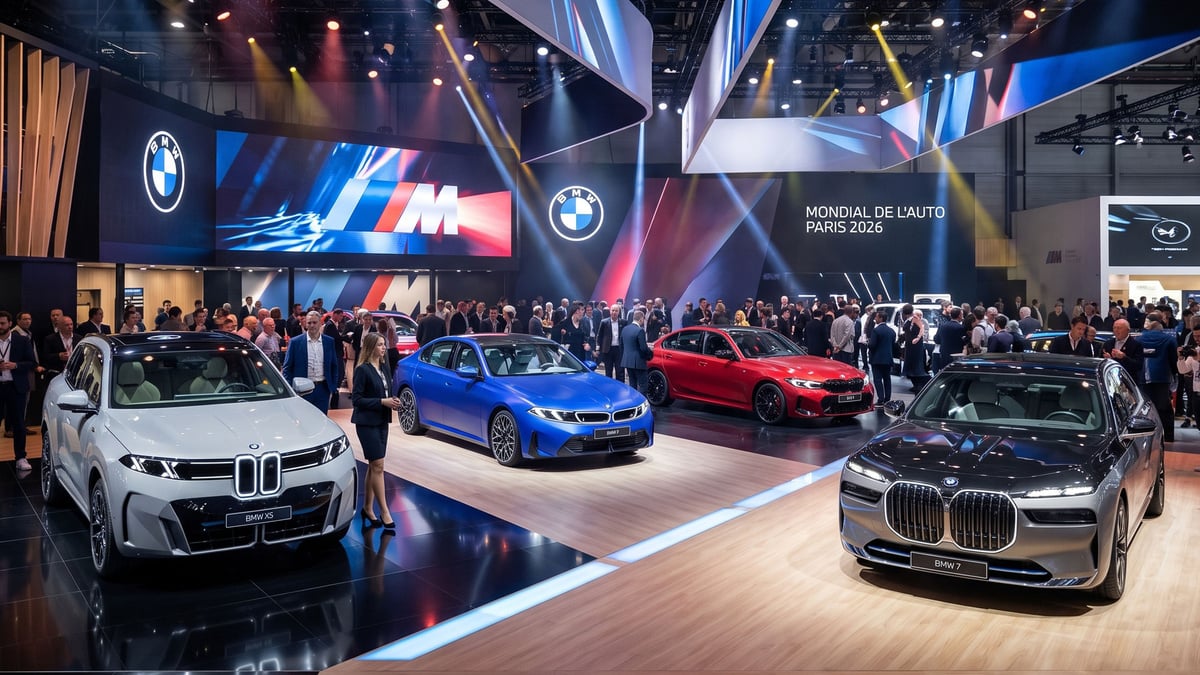
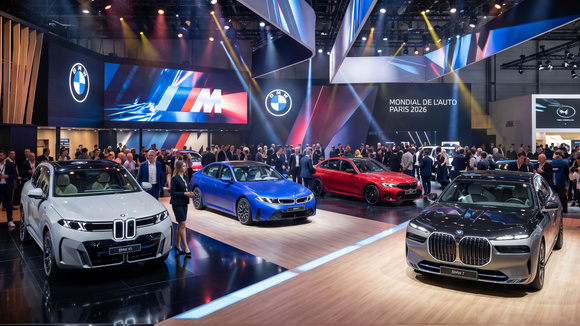
- The Event: The Mondial de l’Auto 2026, set to take place in Paris from October 12 to 18, will proceed without one of Germany’s heavyweights.
- The Missing Fleet: BMW has scrapped plans to exhibit eight major new vehicles, most notably the eighth-generation BMW 3 Series (internal code G50), its all-electric sibling the i3, the redesigned X5 and its multi-powertrain variants (including the iX5), the sleek iX4 SUV coupé, a heavily updated 7 Series / i7, and the circuit-focused BMW M2 equipped with xDrive all-wheel drive.
- The Financial Catalyst: Prompted by a downward revision of its financial objectives in mid-2026—driven largely by a prolonged and steep contraction of sales in the critical Chinese market—BMW Group management instituted sweeping internal cost-cutting measures.
- The Competitive Consequence: By choosing to bypass Paris, BMW has effectively ceded the spotlight to its domestic rivals, Audi and Mercedes-Benz, both of which confirmed their robust participation to capture market share and consumer mindshare in the heart of Europe.
Chronology: From Enthusiastic Anticipation to Abrupt Withdrawal
Understanding how BMW shifted from a full-steam-ahead exhibition strategy to a complete blackout requires tracing the timeline of decisions made throughout 2026.
January 2026: The Vision for the "Neue Klasse"
At the start of the year, the executive leadership of BMW Group France—overseeing the core BMW brand alongside Mini and Rolls-Royce—upbeatly briefed the press regarding the brand’s autumn roadmap. Executives explicitly designated the October 2026 Paris Motor Show as the ultimate launching pad for the brand’s new technological paradigm, the Neue Klasse. The platform was framed as a structural leap forward, promising unprecedented efficiencies, revolutionary digital architecture, and next-generation battery technology.
June 2026: Financial Realities and Market Headwinds
Behind closed doors in Munich, the tone shifted drastically by early summer. Amid a wider economic review, BMW Group announced a downward revision of its financial targets for the fiscal year. The primary driver behind this correction was a severe, sustained slump in vehicle deliveries across China. For decades, the Chinese market had served as an almost bottomless profit engine for German premium automakers. However, intensifying local competition, a rapid shift toward domestic electric vehicle brands, and a broader cooling of consumer spending eroded BMW’s margins. Leadership was forced to initiate aggressive cost containment policies across all corporate divisions, freezing non-essential expenditures, marketing campaigns, and international trade show deployments.
July 22, 2026: The Official Pivot
The breaking point arrived on July 22, 2026. Italian automotive media first leaked internal memos indicating that the Bavarian manufacturer had finalized plans to cancel its participation in the Paris exhibition. Shortly thereafter, the news rippled across the European automotive press, confirming that BMW had officially pulled its booking. The sudden U-turn sent shockwaves through the industry, transforming what was supposed to be a triumphant homecoming for the brand’s new electric architecture into a ghost presence.
Supporting Data: The Eight Missing Masterpieces
For automotive enthusiasts and prospective buyers alike, the absence of BMW in Paris stings because of the sheer volume and significance of the hardware left behind in Munich. The brand’s product pipeline was bursting with heavy hitters across nearly every major segment.
1. The All-New BMW 3 Series (G50) & i3
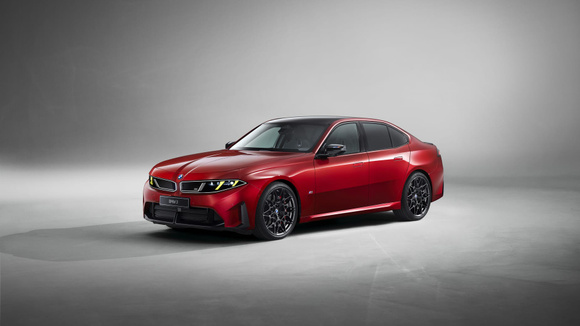
Unveiled globally on September 30, the eighth generation of the iconic 3 Series carries the internal designation G50 and features a radically transformed design language. Running parallel to it is the new, dedicated BMW i3, the battery-electric iteration designed to challenge the incoming electric Mercedes C-Class. Having debuted in March, the i3 desperately needed a major European auto show to establish its market presence and engage in face-to-face interactions with prospective buyers.
2. The Multi-Energy BMW X5 and iX5
The full-size luxury SUV market remains fiercely competitive, and the latest generation of the BMW X5—offering a staggering five different powertrain options including gasoline, diesel, plug-in hybrid, pure battery electric (iX5), and even hydrogen fuel cell technology—was engineered to be a showstopper. Its absence in Paris denies European consumers a firsthand look at one of the most versatile mechanical platforms currently developed by the brand.
3. The BMW iX4 SUV Coupé
Following the architectural blueprint of the second-generation iX3, the new iX4 introduces a sweeping, sloping roofline designed to capture lifestyle-oriented buyers seeking dynamic styling combined with zero-emission mobility.
4. High-Performance and Ultra-Luxury Updates
Rounding out the list of absent vehicles are several crucial niche and flagship products:
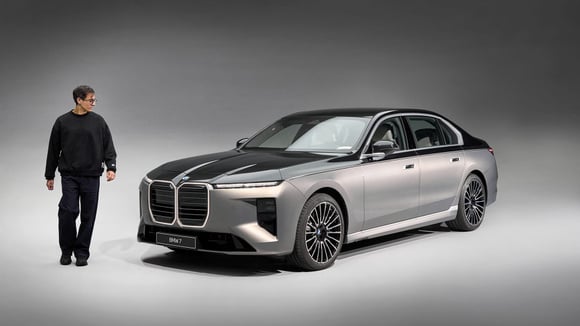
- The Restyled BMW 7 Series / i7: The brand’s premier luxury limousine received a mid-cycle refresh aimed at sharpening its digital interface and exterior fascia.
- The Track-Ready BMW M2: The compact performance powerhouse received vital mechanical upgrades, notably integrating an xDrive all-wheel-drive system alongside a specialized track-day equipment pack.
Official Responses and Industry Reactions
The sudden vacuum left by BMW has sparked intense debate among industry analysts, event organizers, and competing executives.
Event organizers for the Mondial de l’Auto sought to downplay the impact, emphasizing that the vitality of the Paris exhibition remains robust due to strong commitments from French manufacturers, Asian challengers, and German competitors. Indeed, the contrasting decisions made by Stuttgart and Munich have drawn sharp commentary from market observers. While Mercedes-Benz and Audi viewed the 2026 Paris show as a vital defensive and offensive sandbox to assert dominance in the European market, BMW’s bean-counters prioritized immediate balance-sheet preservation over brand visibility.
Automotive trade unions and French dealership networks expressed deep disappointment, noting that international motor shows remain one of the few remaining physical touchpoints capable of driving tangible regional sales leads and sustaining brand passion among younger demographics.

Implications: What BMW’s Withdrawal Means for the Future of Auto Shows
BMW’s eleventh-hour defection from Paris is far more than a localized scheduling conflict; it serves as a symptom of a broader, systemic crisis facing traditional international auto exhibitions.
1. The Erosion of Traditional Trade Shows
For over a century, auto shows served as the undisputed theaters where car manufacturers declared their dominance. However, the rise of digital-first product reveals, virtual reality showrooms, and proprietary brand-centric events (such as BMW’s own "BMW Welt" experiences) have fundamentally altered marketing return-on-investment (ROI) calculations. When financial performance stumbles—as experienced by BMW in China—expensive physical pavilions spanning thousands of square meters are often the first items to be slashed.
2. Shifting Competitive Dynamics in Europe
By voluntarily sitting out the Paris exhibition, BMW cedes critical mindshare to Mercedes-Benz and Audi. At a time when European consumers are aggressively navigating the complex transition toward electrification—and evaluating new players entering from China—presence matters. If Mercedes-Benz successfully showcases its electric C-Class and next-generation portfolio to thousands of captive attendees without interference from its primary Munich rival, it could secure an early psychological and commercial advantage in key European markets.

3. The Cost of Globalization and Regional Vulnerability
BMW’s predicament underscores the structural risks associated with hyper-globalized business models. Heavy reliance on the Chinese market, which historically cushioned European R&D budgets, became a liability when economic conditions shifted and domestic Chinese brands captured consumer preference. The ensuing fiscal correction directly starved European marketing budgets, proving that turbulence in Asian boardrooms can instantly cancel a product’s public debut on the streets of Paris.
As October 2026 approaches, the Mondial de l’Auto will go on, but the exhibition halls will noticeably lack the propeller badge. For BMW, the choice to stay home is a calculated, defensive defense mechanism to protect its margins; for the industry at large, it marks another milestone in the slow, painful evolution of how the automotive world connects with its audience.
