

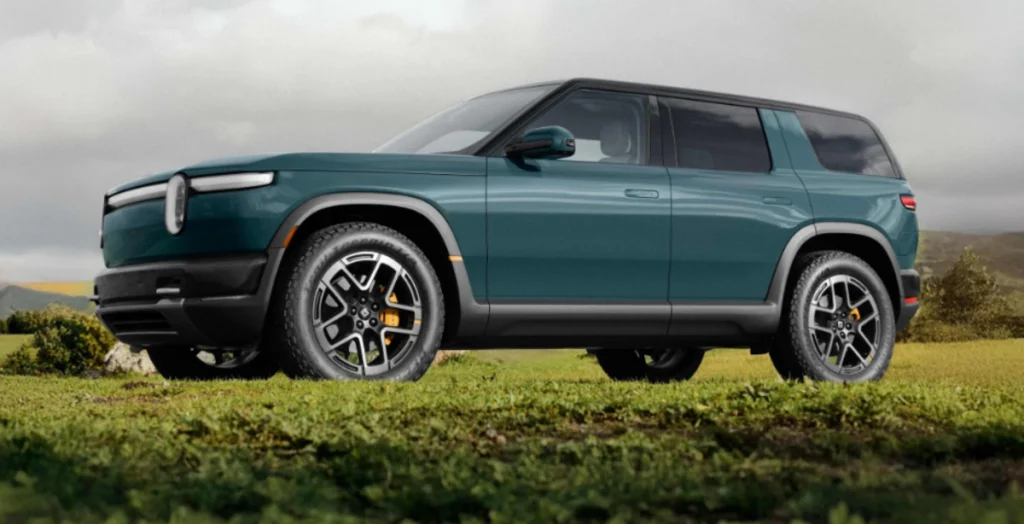
Rivian Automotive has reached a significant milestone in its corporate history, reporting a record-breaking 19,248 vehicle deliveries during the third quarter of 2026. This performance, which comfortably surpassed the consensus analyst estimate of 18,001 units, signals a period of operational maturation for the California-based electric vehicle (EV) manufacturer. Despite a challenging macroeconomic environment characterized by cooling demand for EVs, volatile interest rates, and shifting regulatory landscapes, Rivian’s ability to exceed market expectations underscores the successful integration of its latest model, the R2 SUV, into its production ecosystem.
However, the financial markets reacted with characteristic caution. Despite the record-breaking volume, shares of Rivian experienced a slight pullback—dipping over 2% in early trading sessions. This disconnect between operational success and stock market performance stems from the company’s decision to maintain its existing 2026 guidance rather than raising it, a move that left some investors who were betting on a more bullish outlook disappointed.
The Core Pillars of Growth: Scaling the R2
For years, Rivian’s market presence was defined by its premium offerings: the R1T electric pickup and the R1S SUV. While these vehicles earned critical acclaim for their engineering prowess and off-road capability, they occupied a niche, high-price segment of the market. The introduction of the R2, which began shipping in June 2026, represents a fundamental strategic pivot.
The R2 is engineered as a mid-size SUV designed to compete in the high-volume, mass-market segment. By offering a more accessible price point without compromising the brand’s rugged identity, Rivian is effectively widening its total addressable market. The scaling of R2 production at the company’s manufacturing facility in Normal, Illinois, is the linchpin of Rivian’s long-term viability. During the third quarter, the company produced 19,751 vehicles, a figure that slightly outpaced its delivery volume. This "inventory cushion" suggests that the company is effectively managing the supply chain ramp-up as it transitions from a niche luxury player to a broader automotive manufacturer.
Chronology of a Turnaround
To understand the significance of the Q3 2026 record, one must view it within the broader timeline of Rivian’s recent trajectory:
- Q1 2026: Rivian begins final preparations for the mass-market rollout of the R2, focusing on streamlining production lines in Illinois to accommodate the new chassis architecture.
- June 2026: The first consumer units of the R2 are delivered, marking a critical transition point for the company’s revenue model.
- July 2026: Rivian officially raises its annual production and delivery guidance, citing improved supply chain stability and early demand signals for the R2.
- September 30, 2026: The close of the third quarter, culminating in a record 19,248 units delivered.
- October 29, 2026: The upcoming date for the full financial disclosure, where investors will be looking for insights into profit margins and cash burn rates related to the R2 ramp-up.
This timeline reflects a deliberate, phased approach. Rather than over-promising, the leadership team at Rivian has prioritized manufacturing consistency over rapid, potentially destabilizing expansion.
Supporting Data: By the Numbers
The data provided for the third quarter paints a clear picture of an automaker in a state of controlled acceleration:
- Total Deliveries: 19,248 (Exceeding the 18,001 estimate).
- Total Production: 19,751 (Indicating a production surplus of ~500 units, likely held in transit or for final delivery processing).
- Annual Guidance: 65,000 to 70,000 vehicles for 2026.
- Market Comparison: Analysts tracking the sector, such as those using data from Visible Alpha, had set a conservative bar for the quarter. Rivian’s ability to clear this hurdle by more than 1,200 units demonstrates that the "EV winter" is not affecting every manufacturer with equal force.
Seth Goldstein, a senior equity analyst at Morningstar, notes that while the production numbers are robust, the market was perhaps over-eager for a guidance hike. "The strength of Q3 suggests that the demand for the R2 is real and sustainable," Goldstein remarked. "While the company has opted for caution by maintaining its annual target, the underlying volume trends point toward a strong finish to the year."
Official Responses and Strategic Outlook
Rivian’s management has maintained a disciplined, if somewhat conservative, tone. In official statements, the company reiterated that its production and delivery targets of 65,000 to 70,000 units are fully aligned with its internal expectations. By holding these figures steady, Rivian aims to insulate itself from the volatility inherent in the automotive sector, where supply chain bottlenecks or component shortages can quickly derail even the most optimistic forecasts.
The Uber Partnership: A Glimpse into 2028
Beyond immediate sales, Rivian is looking toward the future of mobility. In March 2026, the company finalized a transformative, long-term partnership with ride-sharing giant Uber. This agreement is twofold:
- Capital Injection: Uber has committed to investing up to $1.25 billion into Rivian, providing a substantial cash runway to fund ongoing R&D.
- Autonomous Future: The agreement outlines a roadmap for deploying R2-based, fully autonomous vehicles as robotaxis by 2028. This partnership validates Rivian’s software stack and positions the company as a key player in the nascent autonomous vehicle space.
Implications: A Challenging Industry Landscape
The broader context for this news is a domestic auto industry in flux. The U.S. market is grappling with several headwinds that threaten to dampen the transition to electric mobility:
- Fiscal Policy: The phasing out of various federal tax credits for EVs has created pricing pressure, forcing manufacturers to either absorb the cost or risk losing price-sensitive consumers.
- Trade Barriers: Increased scrutiny and potential tariffs on imported automotive components have complicated the supply chains for many manufacturers, though Rivian’s "Made in America" focus provides it with a distinct competitive advantage in this regard.
- Macroeconomic Pressure: With high interest rates affecting auto financing, the appetite for premium vehicles has softened. Rivian’s pivot to the R2 is, therefore, not just a product choice but a survival strategy designed to capture the segment of the market that remains active despite economic uncertainty.
The Road Ahead: Analysis and Perspective
From the perspective of The Blog Auto, the record-breaking third quarter is an undeniable success. However, it also serves as a diagnostic tool for the company’s health. By maintaining the 65,000–70,000 annual target, Rivian is signaling to shareholders that it prefers predictability over speculation.
The real test for the company will emerge in the upcoming quarterly report on October 29. Investors will look beyond delivery numbers to assess:
- Gross Margin Per Vehicle: Can the R2 be produced at a level of efficiency that supports long-term profitability?
- Capital Expenditure: How much of the cash reserves is being utilized to sustain the current production rate?
- Backlog Conversion: How quickly can the company convert its growing pre-order list into actual sales?
In conclusion, Rivian stands at a critical juncture. It has successfully moved past the "startup phase" and is now functioning as a full-scale automotive manufacturer. The R2 is not merely a new model; it is the vehicle that will determine if Rivian can achieve its goal of becoming a pillar of the American automotive industry. While the stock market may have reacted with skepticism to the unchanged guidance, the fundamental metrics—production, delivery, and strategic partnerships—suggest that Rivian is building a foundation that is far more durable than its share price might currently reflect. The coming months will be defined by the company’s ability to scale the R2 without sacrificing quality or financial health, a balancing act that will be watched closely by every stakeholder in the EV ecosystem.
