

By the Editorial Staff, July 20, 2026
The opening act of the 2026 Austrian Grand Prix at the iconic Red Bull Ring provided a masterclass in Mercedes’ resurgence, yet the headlines were shared with a series of technical gremlins that crippled the programs of several championship contenders. Under the sweltering Styrian sun, Kimi Antonelli staked his claim as the man to beat, setting the pace in a high-stakes Free Practice 1 session that saw the grid struggle with track temperatures approaching 50°C.
As the F1 circus descended upon the Spielberg circuit, the focus was meant to be on car development and the integration of young talent. However, the session quickly devolved into a test of patience for teams like Red Bull Racing, McLaren, and Cadillac, who spent more time troubleshooting in the garage than gathering crucial data on the track.
A Dominant Display from the Silver Arrows
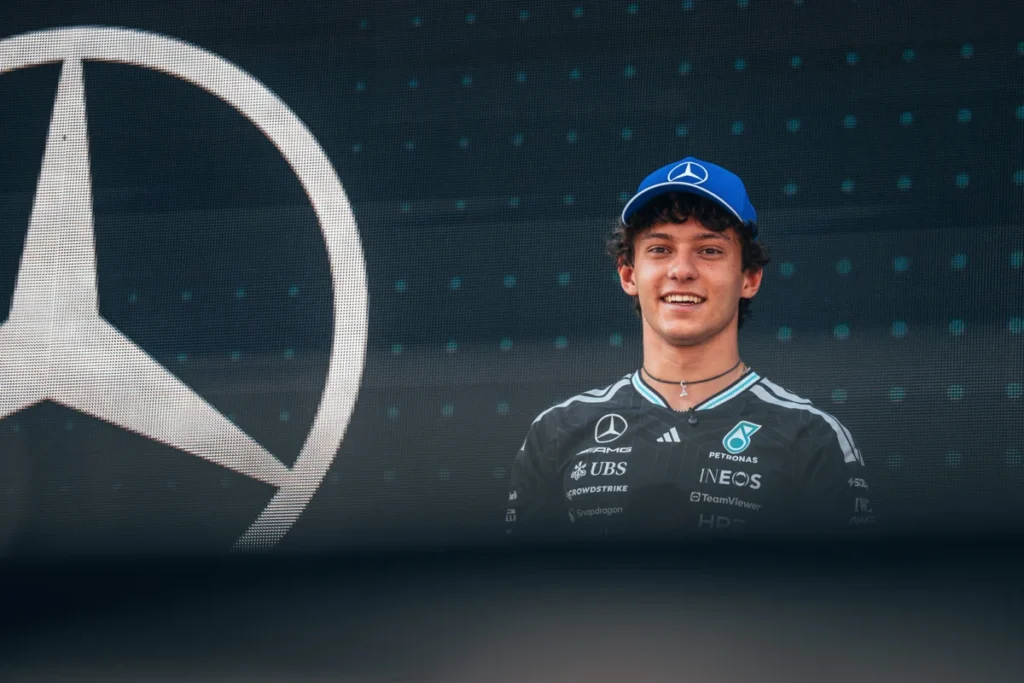
Mercedes arrived in Austria with clear intent. From the moment the pit lane opened, the W16 appeared perfectly balanced on the short, high-speed layout of the Red Bull Ring. Kimi Antonelli, continuing his impressive trajectory this season, set the benchmark early. His fastest lap of 1:07.796 was not merely a display of raw speed, but a testament to the stability of the Mercedes package in volatile conditions.
His teammate, George Russell, followed just 0.040 seconds behind. Despite some initial concerns regarding the pedal feel—which Russell described over the radio as "bizarre compared to last week"—the British driver was able to extract significant performance. The pair exchanged fastest times throughout the opening half-hour, consistently pushing the limits of the Pirelli rubber. While Antonelli did have a minor off-track excursion at Turn 1, his ability to recalibrate and immediately improve upon his lap time suggests a level of maturity that belies his relative inexperience at the pinnacle of motorsport.
Chronology of a Disrupted Session
The session began with an aggressive surge of activity as the field sought to maximize track time. With six rookies participating to fulfill mandated young-driver testing requirements, the circuit was congested early on.
The Early Woes of Red Bull
The narrative shifted almost immediately to the championship leader, Max Verstappen. The Dutchman’s session was hampered before it truly began. His Red Bull RB22 stalled in the pit lane, requiring the crew to push the car back into the garage. The team identified a persistent anti-stall issue, which caused the car to trigger safety protocols repeatedly. Even after a series of fixes, it took over twenty minutes for Verstappen to record a meaningful lap.
Similarly, the Red Bull-backed Isack Hadjar, stepping in for the team, was restricted to the garage for the majority of the first half-hour. When he finally emerged, the shortened window meant that his run plan was drastically compromised, leaving him unable to complete the long-run simulations that are vital for Sunday’s race strategy.
McLaren and Cadillac’s Frustrations
The drama was not limited to the Red Bull garage. Lando Norris, the reigning World Champion, found his McLaren sidelined for the majority of the session due to a frustrating hydraulic leak. Confined to the garage until the final fourteen minutes, Norris’s seventh-place finish was a testament to his ability to adapt quickly, but the lack of comparative data puts McLaren on the back foot as the weekend progresses.
The session ultimately ended under a red flag. Sergio Perez, driving for Cadillac, saw his session curtailed in the final minutes when his machine came to a halt on the circuit. This mechanical failure not only ruined his own final stint but also denied other drivers the chance to conduct practice starts, a critical component of the Friday routine.

Supporting Data: The Hierarchy Revealed
While the timesheets offer a snapshot, they must be interpreted through the lens of the technical issues that plagued the field.
FP1 Classification (Top 10):
- Kimi Antonelli (Mercedes): 1:07.796
- George Russell (Mercedes): +0.040s
- Oscar Piastri (McLaren): +0.117s
- Max Verstappen (Red Bull): +0.281s
- Lewis Hamilton (Ferrari): +0.665s
- Arvid Lindblad (Racing Bulls): +0.930s
- Lando Norris (McLaren): +1.077s
- Franco Colapinto (Alpine): +1.166s
- Dino Beganovic (Ferrari): +1.258s
- Oliver Bearman (Haas): +1.275s
The gap between the top two and the rest of the field is notable, but the presence of rookies like Arvid Lindblad in the top six highlights the variable nature of this session. With teams splitting their focus between junior driver evaluations and race-week preparation, the true competitive order remains obscured.
Official Perspectives and Technical Challenges
Post-session, the atmosphere in the paddock was one of cautious concern. Mercedes engineers were pleased with the W16’s performance but remained wary of the track temperature fluctuations. "We have a strong baseline," a team spokesperson noted, "but the margin to McLaren is razor-thin, and we expect the gap to close once they resolve their hydraulic issues."
For Red Bull, the focus was entirely on diagnostics. Max Verstappen, usually vocal about his car’s behavior, remained focused on the data. He reported a "lack of feel" and excessive tire degradation, likely exacerbated by the fact that he was forced to run his performance programs in the hottest part of the session, rather than the cooler, more representative morning window.
Cadillac, meanwhile, faces a long night ahead. The mechanical failure on Perez’s car, coupled with Valtteri Bottas’s own struggles to climb above 13th, suggests that the American manufacturer is still grappling with the reliability of its power unit in high-altitude conditions.
Implications for the Weekend
As the teams head into FP2, the primary implication of this morning’s session is that no one has a complete picture of the race pace.
- Mercedes’ Tactical Advantage: By completing their primary programs without significant interruption, Antonelli and Russell have provided their engineers with a clear roadmap for set-up refinements. They are the only team to have completed a full, undisturbed race-simulation stint.
- The "Catch-up" Game: Red Bull and McLaren now face a condensed schedule. They must integrate their missing data from FP1 into their FP2 plans, which usually focus on qualifying simulations. This risks compromising their long-run data, which could be a decisive factor in the Grand Prix.
- The Rookie Factor: The performance of drivers like Arvid Lindblad and Dino Beganovic provided a glimpse into the future of the sport. Their ability to remain competitive despite the pressure of an FP1 setting is a positive indicator for the talent pipeline, even if their presence on track caused occasional traffic issues for the veterans.
Conclusion: A Weekend of Uncertainty
The first session of the Austrian Grand Prix has set the stage for a weekend of volatility. Mercedes holds the current advantage, but the sheer volume of lost track time for their closest rivals means that the true hierarchy of the 2026 grid is still waiting to be revealed.
The heat, the technical fragility of the current-generation cars, and the narrow margins of the Red Bull Ring ensure that FP2 and Qualifying will be high-stakes affairs. For Kimi Antonelli, this session was a statement of intent; for the rest of the grid, it was a reminder that in Formula 1, speed is nothing without reliability. All eyes now turn to the afternoon sessions, where the true pace of the title contenders will finally be laid bare.
