

Embarking on the journey to obtain a motorcycle license is a milestone that blends the thrill of newfound freedom with the sobering reality of technical rigor. Whether you are a sixteen-year-old eyeing your first 125cc machine or a seasoned motorist looking to transition to a high-powered motorcycle, the regulatory landscape can feel daunting. From deciphering the alphabet soup of licenses (A1, A2, A) to selecting the right training center, this guide provides a roadmap for navigating the path to becoming a qualified rider.
Main Facts: Decoding the Regulatory Framework
At the heart of motorcycle training lies a structured system designed to ensure safety and competency. In many jurisdictions, including France, the training ecosystem is defined by specific categories of licenses, each tailored to different engine capacities and rider maturity.
The Licensing Hierarchy
- Permis A1: Designed for the youngest enthusiasts, this license is accessible from age 16. It authorizes the operation of light motorcycles with a maximum power output of 11 kW (the equivalent of a 125cc engine). It serves as the foundational step for many riders.
- Permis A2: This is the standard entry point for adults aged 18 and over. It allows the operation of more powerful machines, capped at 35 kW. This intermediate stage is essential for developing the necessary skills before graduating to unrestricted power.
- The "Passerelle" (Bridge) A: For those who have held an A2 license for at least two years, a gateway exists to obtain the full "A" license. This process, which can be started as early as age 20, is significantly streamlined, requiring only a seven-hour supplementary course rather than a full re-examination.
The Examination Landscape
The modern motorcycle curriculum is built on three pillars: the ETM (Theoretical Motorcycle Examination), the plateau (closed-course) test, and the circulation (on-road) evaluation. Candidates must master the ETM, where they must correctly answer at least 35 out of 40 questions regarding traffic laws, mechanical safety, and rider conduct. The practical exams follow, testing everything from slow-speed maneuvering to high-speed emergency braking and situational awareness in real-world traffic.
Chronology: From Enrollment to Licensure
The path to licensure is not merely a test of skill; it is a process of cognitive and physical adaptation. The journey typically follows a logical sequence:
- Administrative Registration: Before touching a handlebar, students must navigate the registration process, which involves gathering identification, health certifications, and sometimes utilizing government-subsidized funding platforms like the CPF (Personal Training Account).
- The Theoretical Foundation: Students begin by studying for the ETM. This stage focuses on the nuances of motorcycle physics, visibility, and the "rules of the road" as they apply specifically to two-wheeled vehicles.
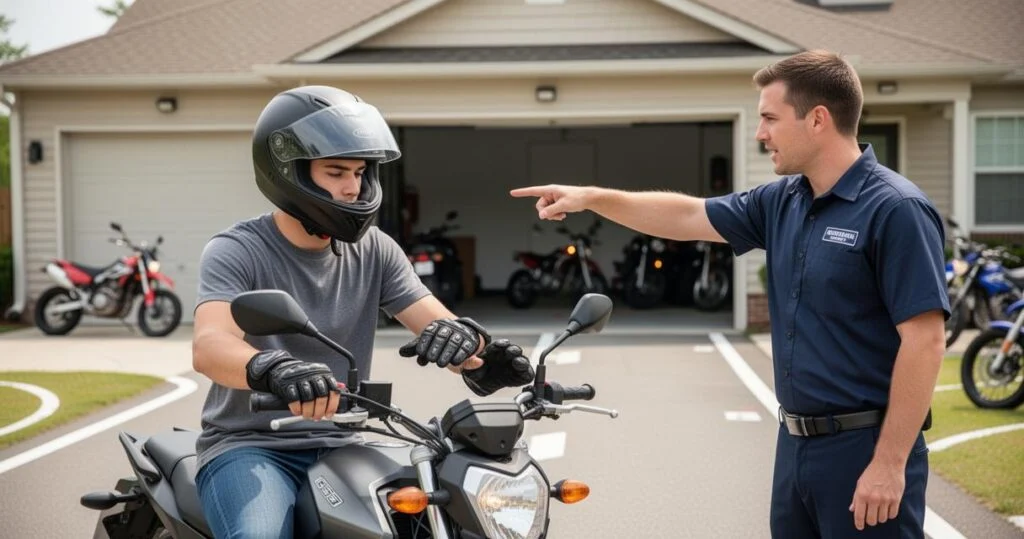
- The Plateau Phase: Often considered the most intimidating part, the plateau sessions take place on a private, closed course. Here, instructors guide students through maneuvers: the "poussette" (moving the bike without the engine), slaloms, braking exercises, and the dreaded U-turn.
- On-Road Integration: Once the fundamentals are mastered in a controlled environment, the student moves to public roads. This phase is critical, as it teaches defensive riding, lane positioning, and interaction with other motorists.
- The Final Assessment: The culmination of the training is the final practical exam. Successful completion of both the plateau and the circulation test grants the student their license, marking the transition from "learner" to "motorcyclist."
Supporting Data: Why Training Quality Matters
A common pitfall for aspiring riders is prioritizing cost over the quality of instruction. However, statistical trends in road safety suggest that the choice of driving school is a primary determinant of long-term success and accident prevention.
The Instructor-to-Student Ratio
Industry experts emphasize that a lower student-to-instructor ratio is correlated with higher success rates. Schools that cap the number of students per session allow for a more personalized pedagogical approach. In a high-quality program, the instructor can diagnose individual weaknesses—whether it is a lack of confidence in low-speed turns or a failure to properly scan for hazards at intersections—and provide immediate, actionable feedback.
The Value of Private Facilities
Infrastructure is a critical, yet often overlooked, component of quality. A school that owns or has exclusive access to a private, well-maintained plateau allows students to learn without the pressure of sharing space with other schools or the anxiety of being in public view. Furthermore, the state of the motorcycle fleet is a proxy for the school’s commitment. Modern, well-maintained bikes are not just safer; they offer predictable clutch and braking responses, which are essential for beginners trying to master the delicate art of "friction zone" control.
Official Perspectives: The Professional Standard
The official stance of regulatory bodies and leading training centers, such as those operating in the dense metropolitan environments of Île-de-France, is clear: consistency is key.
"A driving school is not just a place to pass an exam; it is an environment where you cultivate the habits that will keep you alive," notes a senior instructor at a prominent Parisian moto-école. Official guidelines suggest that prospective students should look beyond marketing brochures. Instead, they should visit facilities in person. Does the school have a modern fleet? Are the instructors patient and attentive? Is there transparency regarding the total cost, including potential re-test fees?
Furthermore, officials urge students to treat the "Passerelle A" not as a nuisance, but as a vital opportunity. The seven-hour bridge course is specifically designed to address the habits formed during the two years of A2 riding, helping riders transition to high-displacement machines with a renewed focus on safety and advanced defensive techniques.
Implications: The Long-Term Impact of Your Choice
The decision to obtain a motorcycle license has profound implications for a rider’s lifestyle, budget, and personal safety.
Financial and Social Implications
The ability to access training via the CPF (in countries where such schemes exist) has democratized access to the sport. However, the initial cost is only the beginning. Proper gear—helmets, armored jackets, gloves, and boots—is a non-negotiable expense that should be factored into the overall budget. Failing to invest in high-quality protective equipment, or choosing a cut-rate school that offers "bargain" lessons, can lead to devastating consequences in the event of an accident.
Building a Safety Culture
The most significant implication of a rigorous training process is the cultivation of a "safety-first" mindset. Motorcycling is a skill that is never truly "finished." The best riders are those who recognize that the license is merely a permit to continue learning. By selecting a school that emphasizes road-craft over rote memorization of test patterns, the new rider is setting themselves up for a lifetime of enjoyable, safe riding.
Conclusion: Making the Right Move
For those in regions with dense traffic, such as Paris or the wider Île-de-France area, the sheer number of options can be overwhelming. However, by applying the criteria outlined above—evaluating success rates, inspecting the fleet, verifying the quality of the private plateau, and checking independent reviews—future riders can navigate the process with confidence.
Remember: your motorcycle license is a document that grants you access to a world of adventure, but it is your training that dictates how long you will be able to enjoy it. Take the time to choose a partner in your education who views your success and safety as their primary objective. The road ahead is long, and the right foundation makes all the difference.
