

Main Facts: The Ultimate Open-Air Classic Goes on Sale
For automotive enthusiasts seeking a blend of vintage charm, high-end craftsmanship, and Mediterranean lifestyle appeal, a rare opportunity has emerged. A meticulously restored and customized 1988 Mini Moke by Mokoncept is currently listed for sale in Beausoleil, France, carrying an asking price of €44,500.
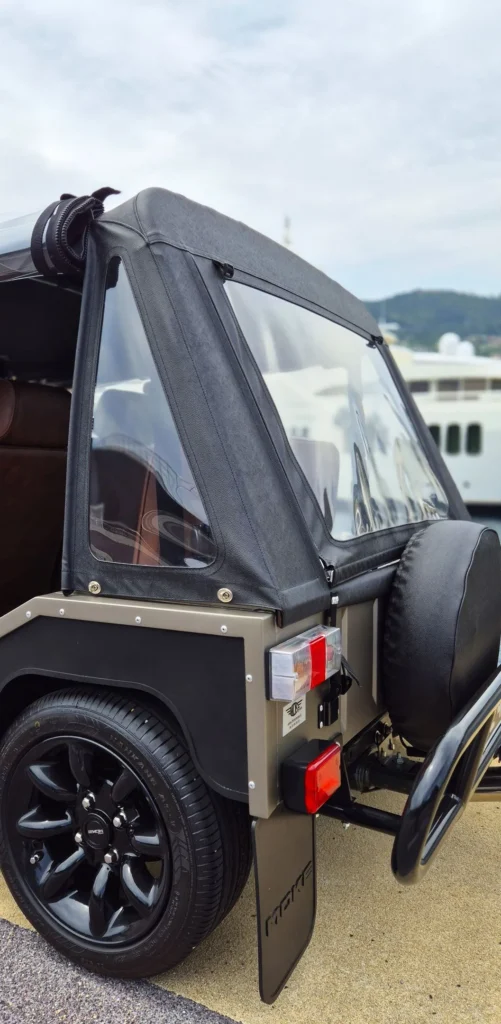
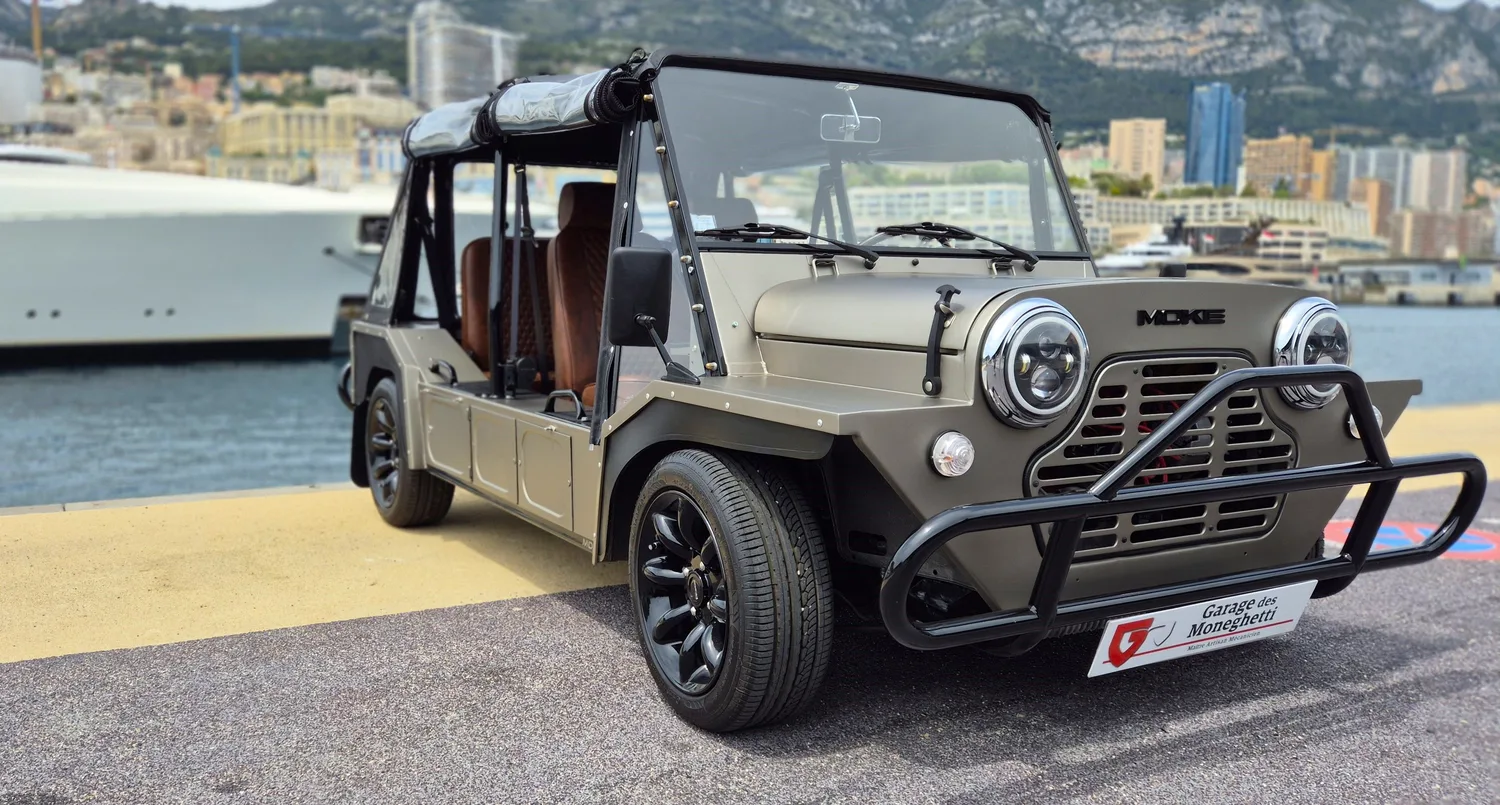
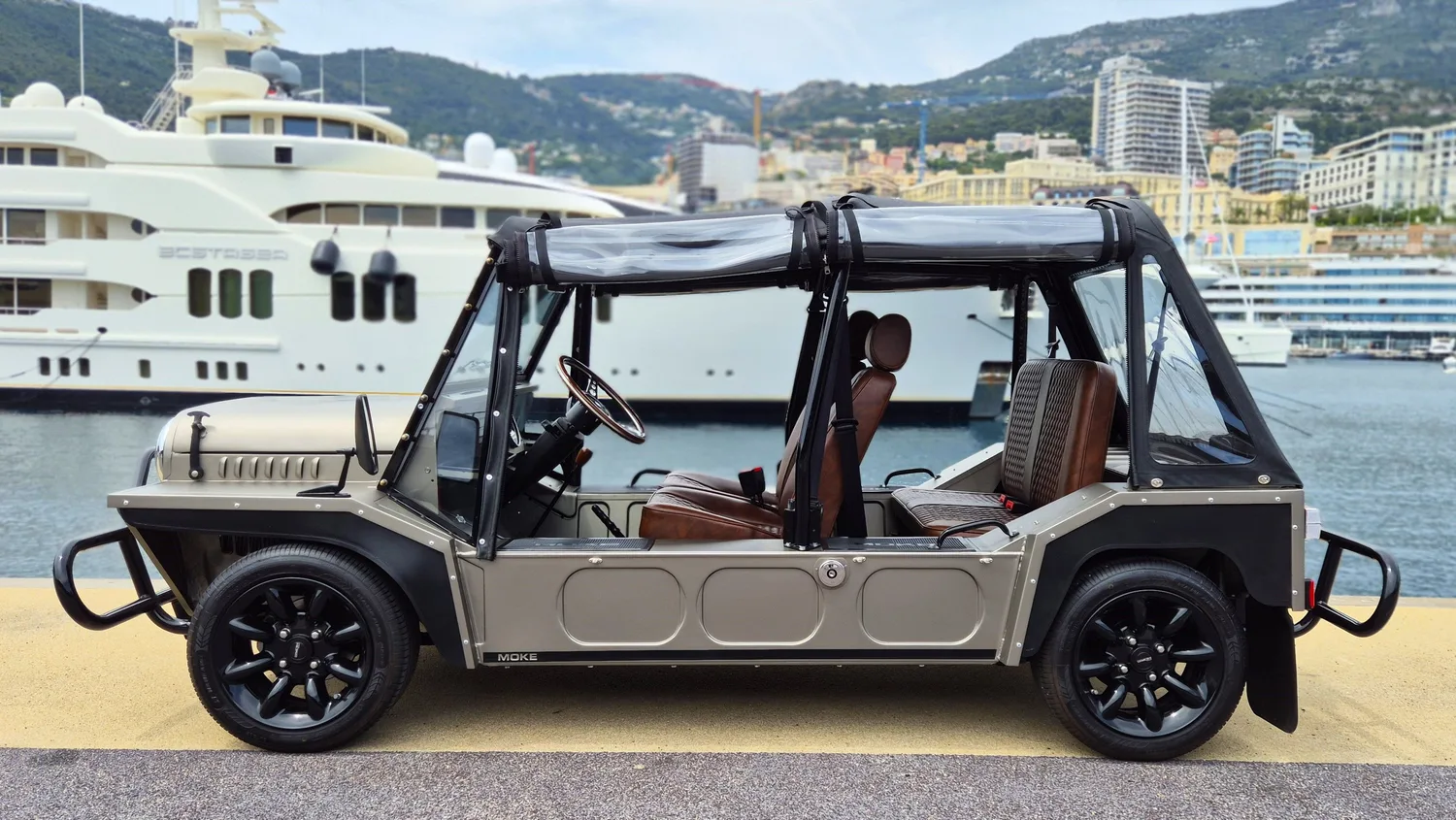
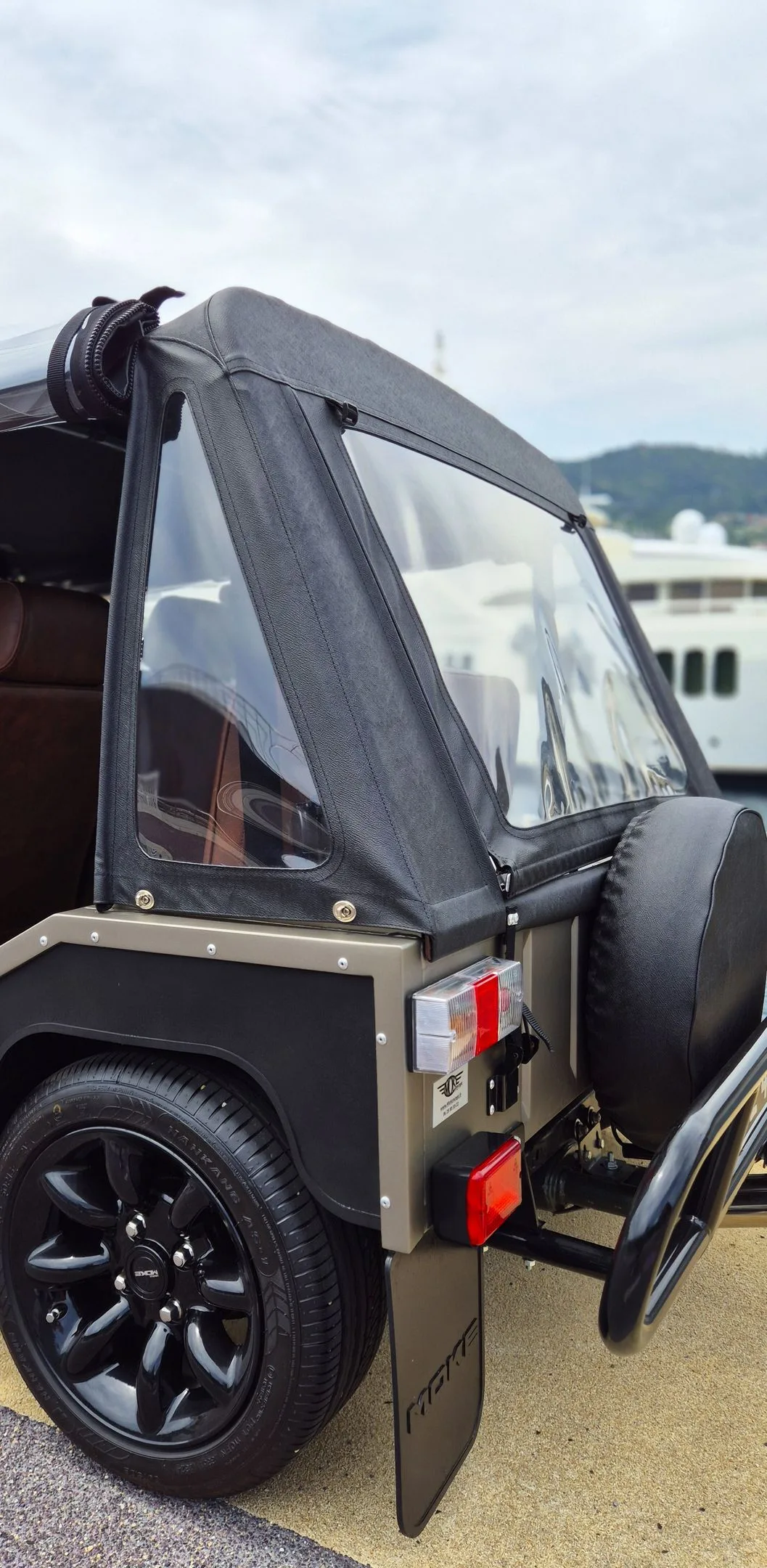
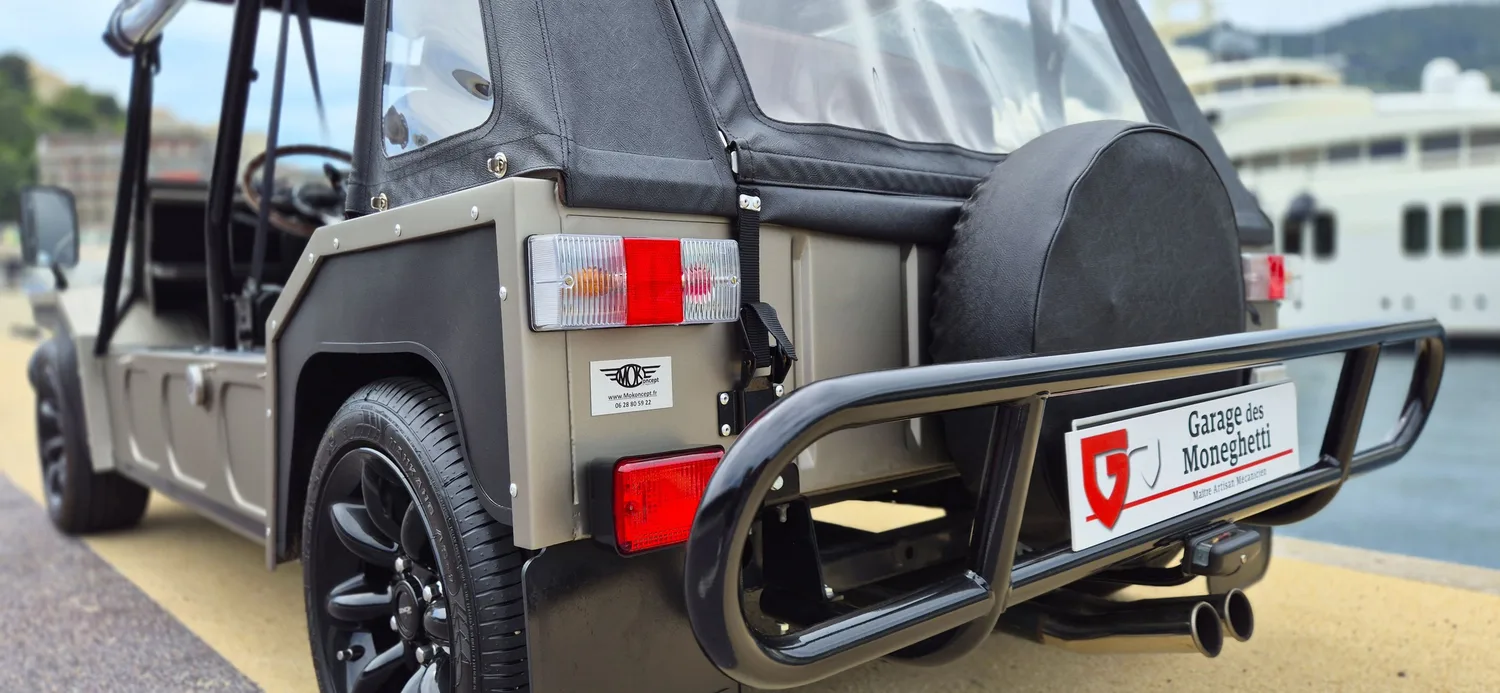
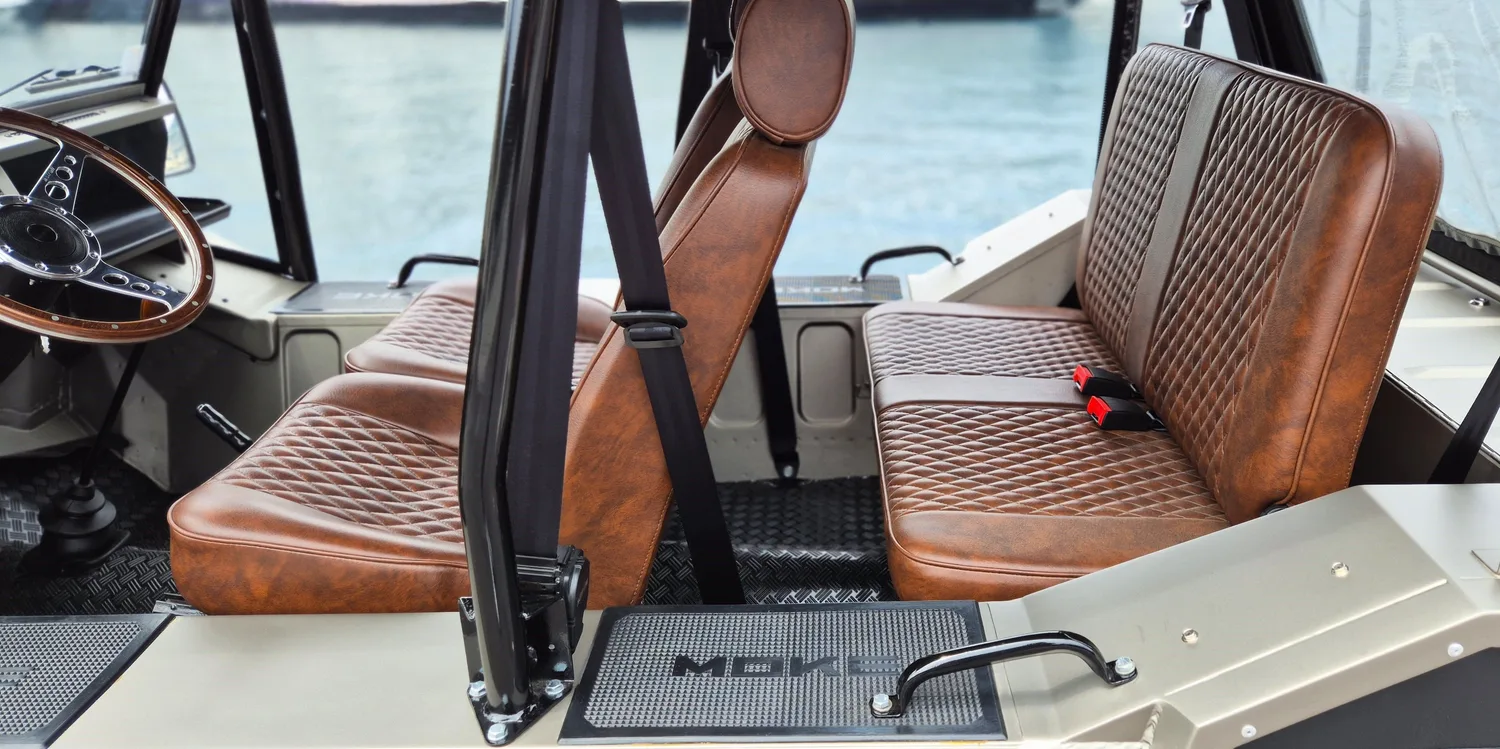
Delivered fresh from a comprehensive, top-tier transformation in January 2025, this open-air classic has covered a mere 1,000 kilometers since its completion. It bridges the gap between historical automotive icon and contemporary luxury item. Finished in an understated, sophisticated AMG-derived matte bronze-gray paint over a bespoke whiskey-colored leather interior, this specific Moke redefines a vehicle traditionally known for its utilitarian simplicity. Equipped with a robust 1,275cc A-Series engine tuned with Cooper-spec components and a fully rebuilt four-speed manual transmission, this four-seater French-registered vehicle stands as one of the most exclusive and turnkey-ready examples available on the European collector car market.
Chronology: From Rejected Military Prototype to Coastal Icon
The 1960s: Born from Necessity, Adopted by Leisure
The history of the Mini Moke is a classic tale of accidental success. Conceived in the early 1960s by Sir Alec Issigonis—the visionary engineer behind the groundbreaking Austin/Morris Mini—the vehicle was originally commissioned by the British military. The objective was straightforward: create a lightweight, highly versatile, all-terrain utility vehicle that could be easily airdropped into combat zones.
However, the British Army ultimately rejected the design. Military brass deemed its ground clearance insufficient for serious battlefield operations. Rather than letting the project die on the drawing board, British Motor Corporation (BMC) pivoted the vehicle toward the civilian market. It was a masterstroke of unintended fortune.
Throughout the late 1960s and 1970s, the Moke shed its khaki aspirations in favor of vibrant summer colors. It quickly became the undisputed king of coastal resort towns. From the sun-drenched alleys of Mykonos and the idyllic shores of the Isle of Wight to the golden beaches of the Algarve, the Moke became a cultural symbol of post-war optimism and uninhibited youth culture. Over its multi-decade production run, manufacturing shifted across the globe—spanning the United Kingdom, Australia, Portugal, and Macau—with each region introducing distinct mechanical and regulatory tweaks. European production officially ceased in the mid-1990s, cementing the Moke’s status as a bona fide collector’s item.
The 1980s: The Evolution of the Late-Model Mokes
The 1988 model year represents a mature phase in the Moke’s production timeline. By this era, the vehicle benefited from decades of subtle, incremental improvements introduced during its overseas assembly runs. These late-series models featured slightly refined interiors, more robust electrical systems, and better-sorted mechanical components while fiercely retaining the unmistakable visual DNA laid down by Issigonis two decades prior.
The 2025 Transformation by Mokoncept
Fast forward to January 2025: this particular 1988 chassis was handed over to Mokoncept, an atelier specializing in high-end, bespoke Moke restorations. Eschewing the often gimmicky, bright-colored pastel palettes typical of rushed restorations, Mokoncept approached this build with a distinctly upscale philosophy. The result is a vehicle that respects the utilitarian architecture of the original design while introducing modern luxury standards, mechanical upgrades, and a sophisticated color scheme. Having traveled only 1,000 kilometers since its debut, the car presents in virtually new condition.
Supporting Data: Specifications, Mechanics, and Market Valuation
Technical Specifications & Mechanical Enhancements
Underneath its open-air bodywork lies a tried-and-true British mechanical architecture:
- Engine: 1,275cc water-cooled, four-cylinder inline A-Series block. Highly regarded for its legendary robustness, global parts availability, and ease of maintenance.
- Mokoncept Upgrades: Features a performance intake and carburetor sourced from the iconic Cooper lineup, paired with a custom sport exhaust system that enriches the throttle response and delivers a lively, eager acoustic signature without compromising drivability.
- Transmission: Fully rebuilt traditional four-speed manual gearbox sending power to the front wheels.
- Chassis & Suspension: Shares its platform with the classic Mini, utilizing independent suspension at all four corners with rubber cone springs designed by Alex Moulton. This setup delivers a nimble, highly communicative driving dynamic tailored for coastal roads and tight urban environments.
- Dimensions & Weight: Exceptionally lightweight, allowing it to dart through narrow streets and park in spaces modern city cars cannot reach.
Market Valuation and Comparative Pricing
The collector market for the Mini Moke has experienced a sustained resurgence over recent years. Driven by changing urban regulations that favor vintage combustion engines in certain historical zones, alongside a booming demand from coastal property owners, values have climbed steadily.
Based on data from specialized platforms like LesAnciennes.com and classic car market trackers, valuations vary significantly depending on origin and restoration quality:
| Generation / Origin | Average Condition | Good Condition | Restored / Exceptional |
|---|---|---|---|
| Mini Moke UK (1964–1968) | €8,000 – €12,000 | €15,000 – €22,000 | €25,000 – €35,000 |
| Mini Moke Australia (1966–1981) | €7,000 – €11,000 | €14,000 – €20,000 | €22,000 – €32,000 |
| Mini Moke Portugal / Macau (1980–1993) | €9,000 – €14,000 | €16,000 – €25,000 | €28,000 – €40,000 |
| Specialist Restorations (Mokoncept, etc.) | — | — | €35,000 – €50,000 |
At an asking price of €44,500, the Beausoleil-based Mokoncept build sits comfortably at the upper tier of this pricing matrix. This valuation is justified by its near-zero mileage since restoration, bespoke materials, and turnkey readiness.
Official Responses and Expert Perspectives
Automotive journalists and classic car experts have long praised the singular appeal of the Mini Moke. The British publication Practical Classics famously summarized the driving experience as "the most fun you can have for very little money." While fully restored, high-end bespoke builds have outgrown their budget-car origins, the core philosophy remains untouched.
Owners consistently report that driving a Moke alters the social dynamics of the road. As noted by classic car reviewers, parking a Moke outside a café or along a marina immediately triggers spontaneous conversations with passersby of all generations—a feat very few modern supercars or luxury cruisers can achieve with such effortless charm.
Furthermore, specialist restorers emphasize that building a Moke to this standard requires overcoming unique challenges. Because the car is completely open to the elements, sourcing and protecting specific body panels, weather-resistant upholstery, and marine-grade finishes demands meticulous craftsmanship. Mokoncept’s choice of an AMG-inspired matte bronze-gray exterior paired with high-grade whiskey leather represents a deliberate move away from cheap novelty restorations toward high-end, timeless automotive art.
Implications: What This Means for Buyers and the Collector Market
The Reality of Modern Moke Ownership
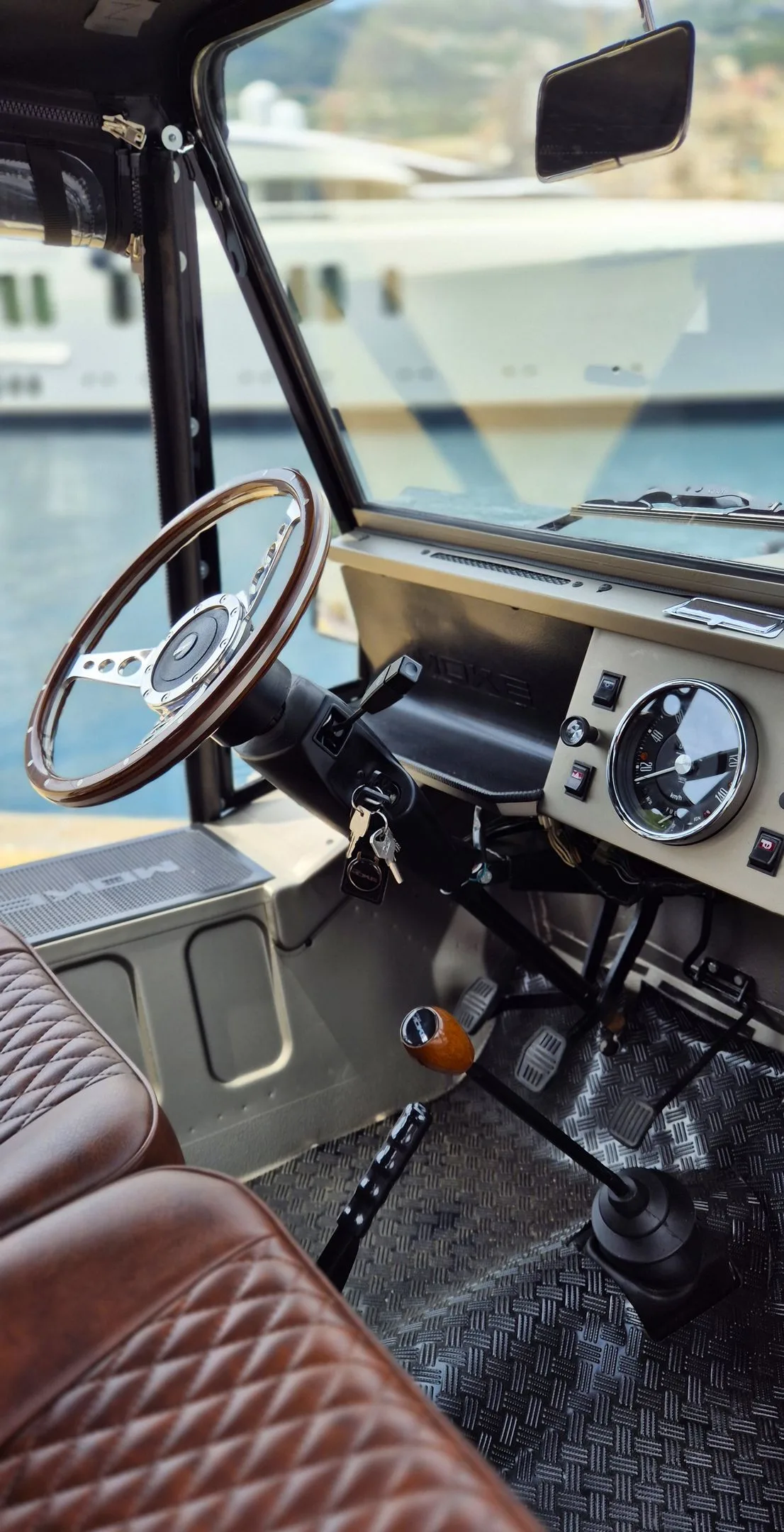
Purchasing a classic vehicle like this in 2026 requires clear expectations. As noted by automotive analysts, a Moke is unapologetically sparse. There are no airbags, no power steering, no modern air conditioning, and no heavy soundproofing. The soft top protects occupants from sudden rain showers, but it is not a substitute for a rigid roof.
Yet, these very omissions are precisely what buyers seek. In an era dominated by hyper-connected, digitized, and heavy vehicles, the Moke offers pure, unfiltered mechanical engagement. It invites the driver to slow down, feel the airflow, and cast off modern driving anxieties.
Maintenance and Practicality
For all its exotic flair, the vehicle remains anchored by accessible mechanics. The 1,275cc A-Series engine can be serviced by any competent local mechanic using readily available parts from global Mini specialists. Insurance costs for vintage and collection vehicles remain low when usage is restricted to seasonal and recreational driving.
However, prospective buyers must remain vigilant about structural integrity. While this Mokoncept build has been completely overhauled, standard Moke inspections should always prioritize checking for corrosion in the sills, floorboards, and underbody structures, alongside verifying the condition of the cooling system and head gaskets after periods of storage.
Conclusion: A Tailored Proposition for the Riviera Lifestyle
Currently located and available for inspection in Beausoleil—just a stone’s throw from Monaco and the sparkling waters of the French Riviera—this 1988 Mini Moke by Mokoncept is more than just a car; it is a lifestyle accessory. Complete with French four-seater registration papers (carte grise normale) and dual declaration status for Monaco, it targets the discerning collector who values immediate, trouble-free enjoyment over lengthy restoration projects. For those looking to conquer the coastal roads of the Mediterranean in unmatched vintage style, this high-end Moke stands unrivaled.
