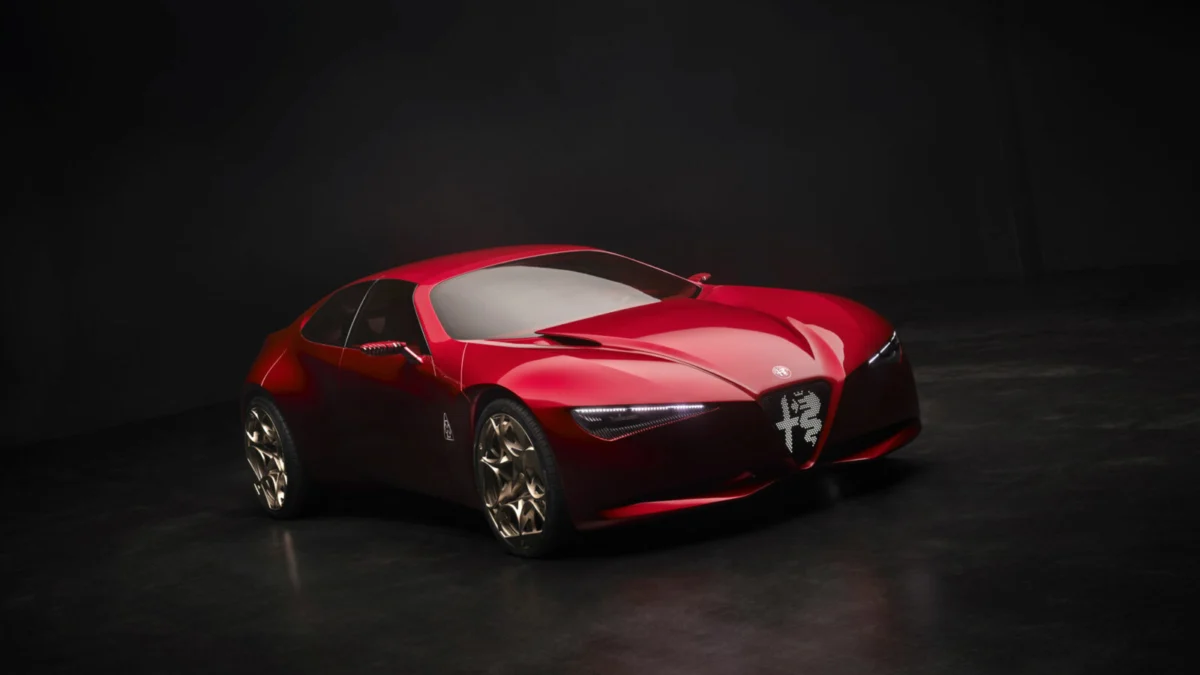
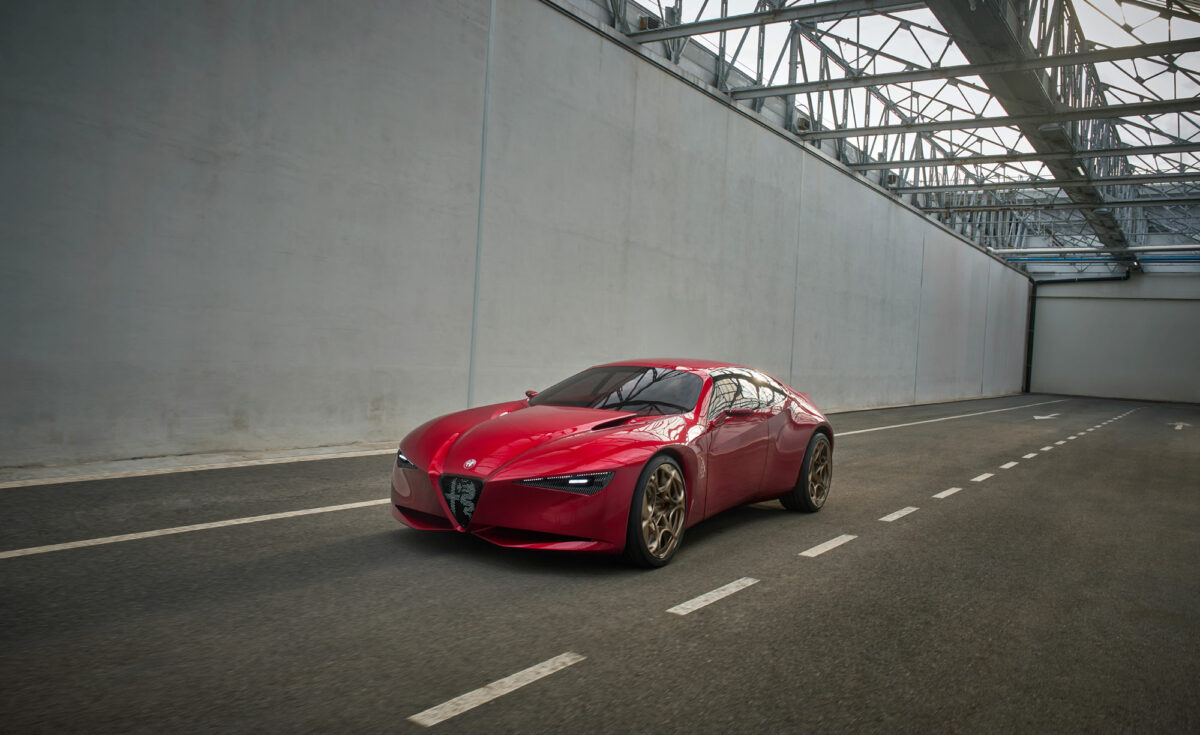
In a bold, late-night maneuver at the Hangar Y in Meudon, France, Stellantis staged a discreet, high-stakes reveal just hours before the opening of the Paris Motor Show. Amidst a collection of future-facing concepts—including the Citroën 2 CV, the DS F3VER, and a reimagined Peugeot RCZ—one machine commanded the room with unmistakable Italian authority: the Alfa Romeo Cuorerosso.
A sculptural, 4.70-meter grand tourer, the Cuorerosso serves as far more than a mere design exercise. It represents a definitive strategic pivot for the "Biscione" brand, effectively burying the previous mandate for a purely battery-electric future. By placing a high-performance hybrid V6 at the heart of this concept, Alfa Romeo has signaled its intention to reclaim its identity as a manufacturer of driver-focused, combustion-integrated sports machines.
The Chronology of a Strategic Pivot
The path to the Cuorerosso was neither linear nor simple. Under previous governance, Alfa Romeo had been firmly locked into a rapid, total conversion to electric powertrains. However, market realities and internal feedback regarding the loss of the "Alfa DNA" led to a significant shift in corporate strategy.
The event, dubbed "The Night Before," served as a decompression chamber for the automotive giant. While the rest of the industry was busy preparing for the electric-heavy corridors of Paris Expo, Alfa Romeo used the seclusion of the Hangar Y to present a vision that prioritizes the visceral sensation of driving over the clinical efficiency of pure electrification. The Cuorerosso is the physical embodiment of this internal rebellion, a project rushed to fruition to assure purists that the brand’s soul is not being sacrificed at the altar of battery weight and range anxiety.
Engineering the "Biscione" Spirit: Architecture and Design
Measuring 4,700 mm in length, 1,980 mm in width, and standing a mere 1,331 mm tall, the Cuorerosso’s dimensions are not accidental. They are a direct blueprint for the next generation of D-segment vehicles, specifically the successors to the current Giulia and Stelvio.
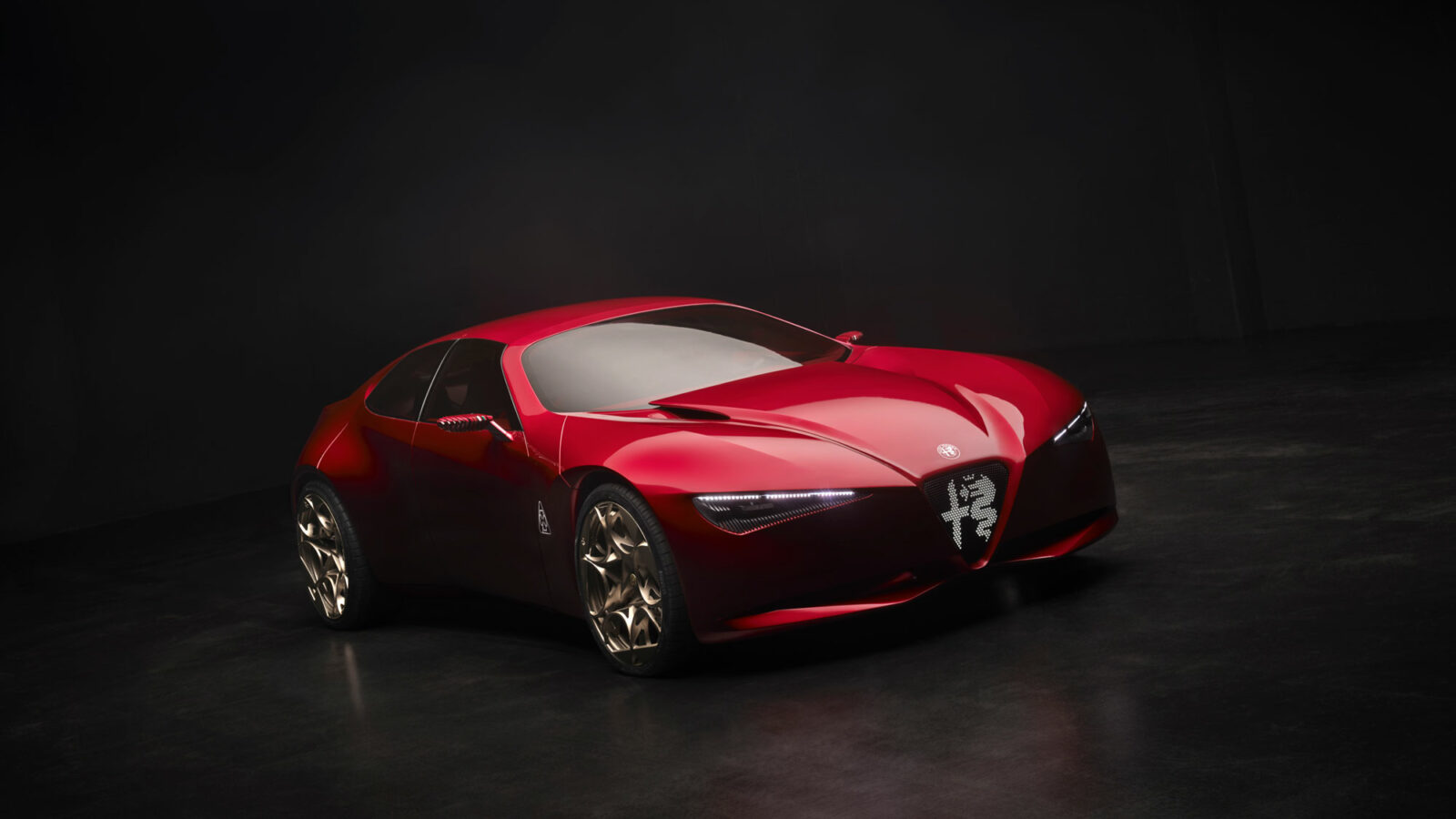
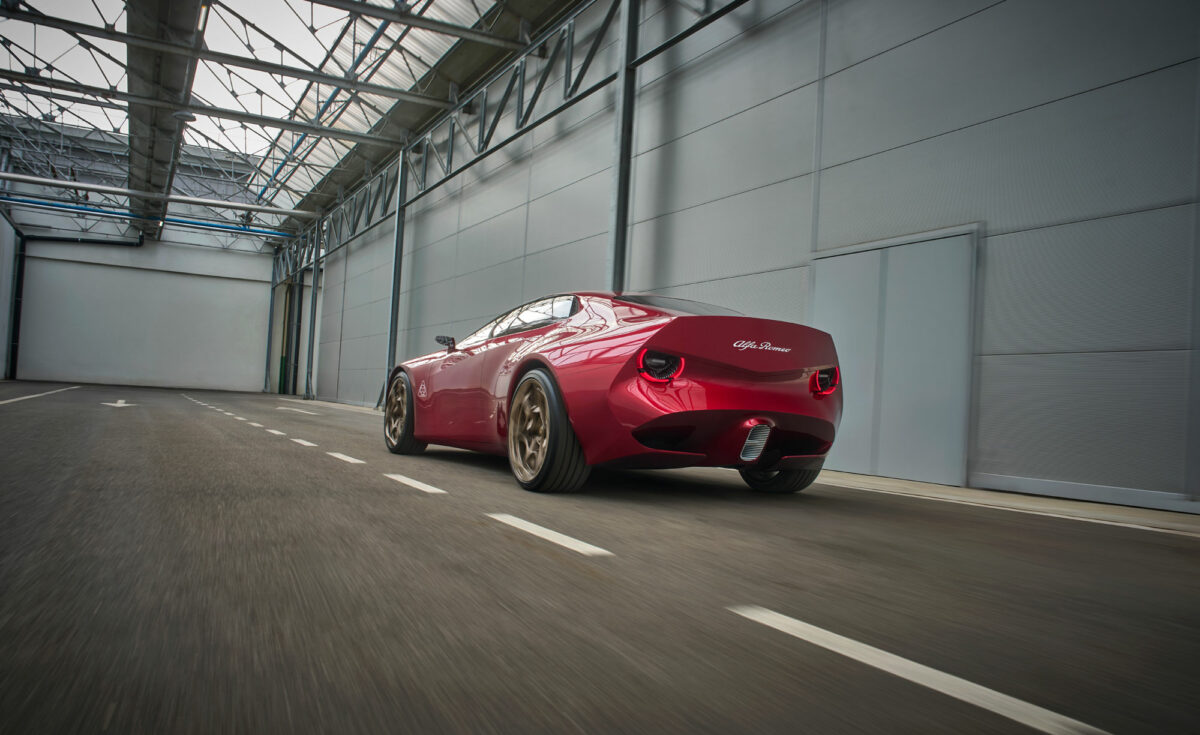
The Centro Stile at Alfa Romeo took an unconventional approach to the car’s development, skipping traditional 2D sketches to sculpt the vehicle directly in three dimensions. This "clay-first" methodology allowed designers to focus on aerodynamic efficiency without relying on "aero-add-ons." The result is a drag coefficient (Cx) of 0.28, achieved through a masterclass in clean surfacing, the signature "Coda Tronca" rear, and an integrated diffuser.
The exterior is devoid of traditional door handles, replaced by capacitive sensors discreetly tucked into the roofline. Perhaps most striking is the inclusion of suicide-style rear doors, which provide surprising access to a cabin designed for four full-sized adults. Even the wheels are a nod to heritage; the iconic "telephone dial" design has been modernized with a 2+2+2 open architecture, specifically engineered to dissipate heat from the massive carbon-ceramic Brembo brakes.
Mechanical Defiance: The V6 Hybrid Powerplant
The true shockwave of the Cuorerosso announcement lies under the hood. While the industry trends toward 100 kWh battery packs, Alfa Romeo has chosen a different path. The brand has confirmed that the Cuorerosso is built upon a flexible, multi-energy platform. This architecture is capable of supporting 100% electric, plug-in hybrid, or traditional combustion powertrains, ensuring that the brand can adapt to global market volatility.
The showpiece of this platform—and the heart of the future Quadrifoglio lineup—is a 2.9-liter biturbo V6 essence engine mated to a Full Hybrid system. This powertrain transmits power to all four wheels via the Q4 all-wheel-drive system, utilizing a traditional torque-converter automatic transmission and a lightweight carbon-fiber driveshaft. By refusing to follow the weight-heavy path of pure BEVs, Alfa Romeo has managed to keep the concept’s curb weight to a remarkably agile 1,750 kg.
Official Response: Santo Ficili’s Vision
Santo Ficili, who holds the joint leadership role for Alfa Romeo and Maserati, was unequivocal during the unveiling. His message was one of restoration: returning to a focus on the driver.
"With Cuorerosso, we are projecting our identity into the future—an future open to different energy solutions where technology, function, and quality remain at the service of emotion and driving pleasure," Ficili stated. "This is our vision of Bellezza Necessaria: creating automobiles designed for those who truly love to drive."
This statement marks the end of the illusion that Alfa Romeo would strictly become an electric-only brand. The message is clear: while electrification will play a role, it will not dictate the driving experience.
The Cabin: A Sanctuary of Analogue Emotion
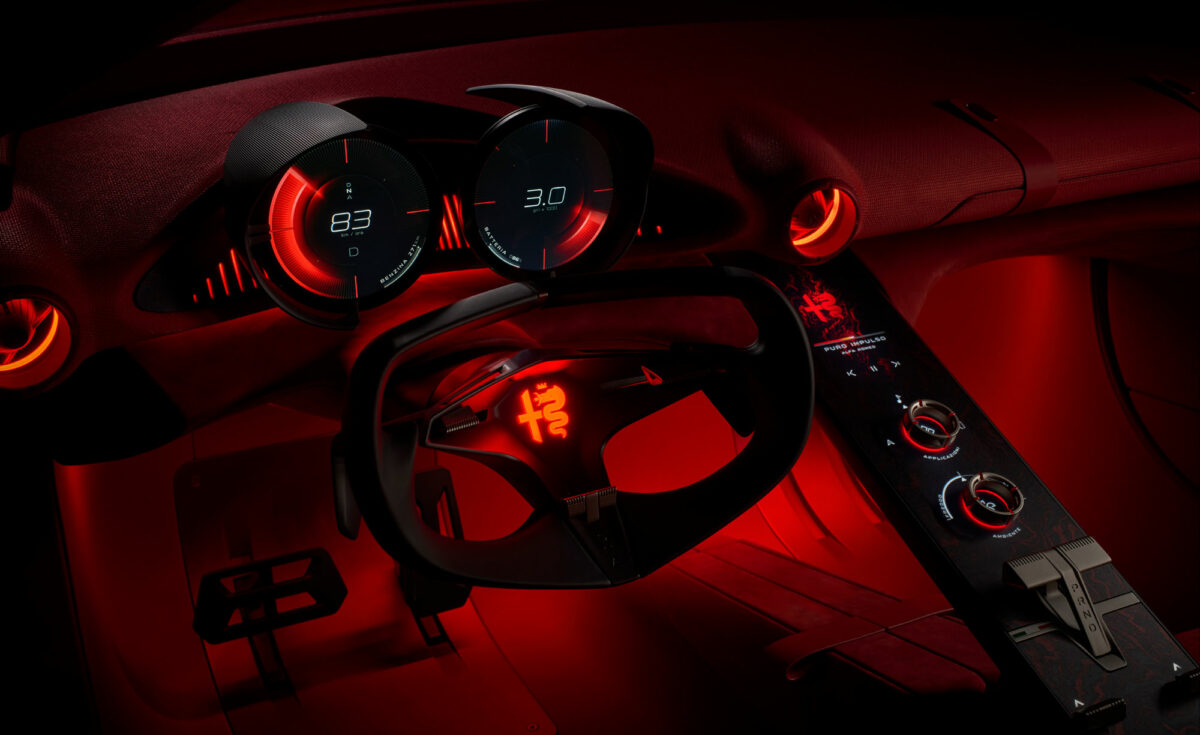
Inside the Cuorerosso, the design team launched a "purge" of the screen-heavy dashboards currently dominating the industry. The horizontal layout draws inspiration from the legendary 1967 33 Stradale, emphasizing simplicity and premium tactility.
The materials are a blend of high-fashion and high-performance: hand-patinated Poltrona Frau nubuck, technical monofilament fabric sourced from the Luna Rossa sailing team, and recycled carbon fiber cast in a striking red resin.
The centerpiece is the "Cannocchiale Vivente" (Living Binocular) instrument cluster. It features a physical cinematic mechanism:
- Immersivo Mode: The two historical dials provide a full suite of driving data.
- Concentrato/Quadrifoglio Mode: A servomotor physically merges the two dials into a single, minimalist central gauge, focusing solely on the tachometer and instantaneous speed.
The connection to the road is handled by a steer-by-wire system. While there is no physical steering column, the engineers have integrated haptic actuators into the three-spoke steering wheel to ensure the driver still feels the nuances of the front tires. The central tunnel, dubbed the "Magma Display," eschews touchscreens in favor of physical toggle switches and rotary dials with a satisfying mechanical "click," allowing for the precise adjustment of suspension and engine response.
Implications: A Strategic Rebirth
The inclusion of the carbon-fiber driveshaft—a component famously introduced with the "Giorgio" platform in 2015—is perhaps the most significant technical indicator for automotive analysts. While Stellantis had initially planned to phase out such expensive, bespoke components in favor of the more modular and cost-effective STLA Large platform, the survival of the carbon driveshaft proves that the Milanese engineering team has successfully lobbied to keep their most "noble" mechanical components.
This decision serves as a line in the sand against competitors like BMW and Porsche. It signals that Alfa Romeo is unwilling to sacrifice its competitive edge in vehicle dynamics for the sake of platform commonality.
Technical Specifications: Alfa Romeo Cuorerosso
| Parameter | Specification |
|---|---|
| Dimensions (L/W/H) | 4,700 mm / 1,980 mm / 1,331 mm |
| Wheelbase | 2,930 mm |
| Target Weight | 1,750 kg |
| Aerodynamics | Cx 0.28 (Coda Tronca, flat floor, integrated diffuser) |
| Chassis | 2+2 Coupe, suicide rear doors |
| Powertrain | 2.9L Biturbo V6 + Full Hybrid |
| Transmission | Q4 AWD, Torque Converter Auto, Carbon Driveshaft |
| Suspension | Pneumatic, Steer-by-wire |
| Braking | Brembo Carbon-Ceramic |
| Instrumentation | Mechanical ‘Cannocchiale Vivente’ |
The Road Ahead
The Alfa Romeo Cuorerosso is more than a concept car; it is a political and mechanical statement. It acknowledges that the transition to sustainable mobility does not require the abandonment of the "Cuore Sportivo"—the sporting heart. By investing in hybrid technology and maintaining the mechanical purity of the driveshaft and chassis, Alfa Romeo is positioning itself to cater to an enthusiast market that has felt alienated by the recent "software-defined" and "battery-only" mandates.
As the industry converges on Paris, the Cuorerosso stands as a reminder that luxury and performance are often defined by what a manufacturer chooses to exclude as much as what they include. In the case of Alfa Romeo, the decision to exclude excessive weight and screen-dominated interiors, while keeping the V6 at the center of the experience, may just be the key to the brand’s long-term survival in an increasingly crowded global market.
The "Biscione" is no longer just crawling toward an electric future; it is choosing its own path, fueled by both necessity and a burning desire for the mechanical soul that has defined Italian motoring for over a century.