

Main Facts
In the rarefied air of pre-war automotive history, few names evoke the romanticism, engineering brilliance, and competitive zeal of Alfa Romeo. Among the most revered of this golden era is the 6C 2500 platform, a machine that bridged the gap between sumptuous road-going grand tourers and uncompromising endurance racers. Recently, a remarkably realized, historically grounded re-creation of one of the rarest iterations of this lineage—a 1939 Alfa Romeo 6C 2500 Super Sport (SS) Tipo 256 Berlinetta Competizione—has emerged on the market, offering enthusiasts a tangible connection to the legendary battlegrounds of the Mille Miglia.
Originally birthed as one of a mere 279 Turismo five-posti sedans produced across a two-year manufacturing window, chassis number 913191 began its lifecycle far from the Italian circuits where its descendants would forge their legends, arriving new in Poland. Decades later, the stripped chassis—sadly bereft of its original beating heart—was discovered by renowned 6C expert Raoul San Giorgi. Recognizing the inherent potential resting within the bare metal, San Giorgi orchestrated the installation of a period-correct, highly desirable 2.5-liter Super Sport-specification inline-six engine, complete with dry-sump lubrication.

What followed was a decades-long international odyssey spanning continents, painstaking restorations, historic racing circuits, and prestigious concours lawns. Today, finished in a striking competition red livery bearing race number 76, chassis 913191 stands as a testament to coachbuilding artistry. It features an authentic Superleggera-style construction technique—utilizing a rigid steel-tube frame wrapped in hand-formed aluminum panels—meticulously sculpted to replicate the aerodynamic Touring-bodied berlinetta that secured an eighth-place finish in the punishing 1940 Mille Miglia.
Powered by a formidable 2,443cc twin-cam inline-six fed by triple Weber 40 DCO3 carburetors, and putting its power down through a four-speed manual transmission, this rolling work of art is equipped with four-wheel independent suspension, hydraulic drum brakes, 18-inch painted wire wheels, and functional race-bred touches like tube-frame seats upholstered in supple tan leather. Currently located in Doylestown, Pennsylvania, and offered on behalf of its owner by a BaT Local Partner, the car comes complete with an extensive archive of build photos, restoration invoices from its time in Australia, and a Montana title designating it as a 1939 Alfa Romeo 6C 2500.

Chronology
To fully appreciate the weight of chassis 913191, one must retrace the historical timeline that spans from pre-war Italian racing development to modern-day vintage motorsport campaigns.
- 1938–1939: The Genesis of Tipo 256
In response to shifting international and domestic racing regulations that increasingly favored naturally aspirated powerplants, Alfa Romeo—collaborating closely between its internal competition department, Alfa Corse, and the burgeoning motorsport empire of Scuderia Ferrari—began developing a dedicated racing variant of the newly minted 6C 2500 platform. Known as the Tipo 256, these machines featured shortened chassis, highly tuned triple-carbureted engines, and lightweight aerodynamic coachwork styled by Carrozzeria Touring. While a Touring-bodied berlinetta debuted at the 1939 24 Hours of Le Mans, the platform’s true competitive mettle would be proven on Italian soil the following year. - 1940: The Mille Miglia Milestone
During the 1940 Brescia Grand Prix (historically recognized as the surrogate Mille Miglia of that war-torn era), Tipo 256 variants dominated the leaderboard. While spiders claimed second, fourth, and seventh places, the aerodynamic Touring berlinetta variant charged home to an impressive eighth-place overall finish, cementing its design in motorsport lore. - Post-War Discovery and Rescue
Decades after World War II, chassis 913191—originally delivered to Poland as a standard Turismo sedan—was discovered in a derelict, engine-less state. Renowned Alfa Romeo 6C authority Raoul San Giorgi stepped in to salvage the chassis, sourcing and installing a period-correct 2.5-liter Super Sport-spec inline-six featuring dry-sump lubrication. The rolling project was subsequently acquired by an Australian enthusiast. - 2001–2009: The Comprehensive HVR Restoration
In 2001, the car changed hands once again within Australia, prompting a monumental, years-long refurbishment commissioned through Historic & Vintage Restorations (HVR) in Victoria. Master craftsmen utilized period photographs of the 1940 Mille Miglia-finishing Tipo 256 Berlinetta Competizione to construct a hand-formed aluminum body over a bespoke steel-tube frame. The engine was simultaneously overhauled to post-war competition specifications, receiving forged pistons, steel connecting rods, and triple Weber carburetors. - 2009–2023: Global Exhibition and Publication
Upon its completion in 2009, the completed machine immediately commanded international attention. It was profiled in the prestigious pages of The Automobile magazine and actively campaigned in historic demonstration events, including high-profile runs at the Australian Grand Prix and a celebrated appearance at the 2019 Motorclassica in Melbourne. - 2023–Present: Importation to the United States and Modern Concours
Exported to the United States in 2023, the Alfa Romeo continued its active lifestyle, being driven enthusiastically in track events at both Laguna Seca and Sonoma Raceway. Its prestige was further elevated by a formal invitation to the 2025 Danville Concours d’Elegance. Purchased by its current custodian in 2025, the car now prepares for its next chapter under the care of its Pennsylvania-based custodian.
Supporting Data
The mechanical and physical specifications of chassis 913191 reflect an uncompromising dedication to period-correct competition engineering:

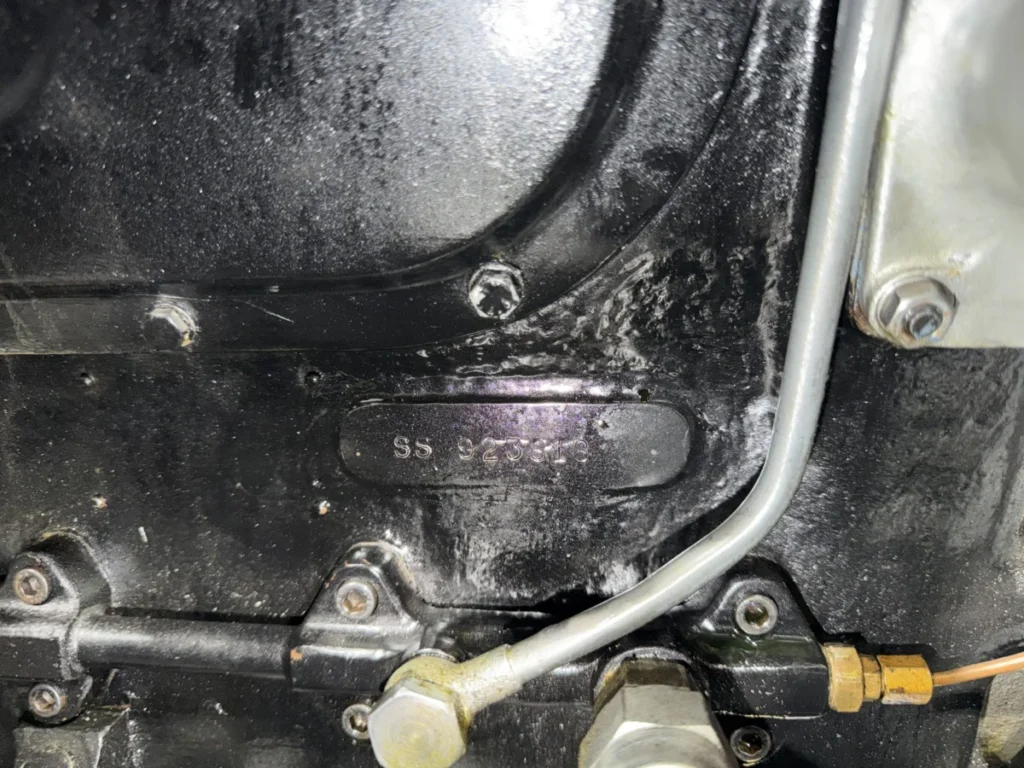
- Engine: 2,443cc (2.5-liter) DOHC inline-six featuring an aluminum cylinder head with hemispherical combustion chambers, dry-sump lubrication, forged pistons, steel connecting rods, and triple Weber 40 DCO3 carburetors (Engine Block Stamp: SS 923818).
- Transmission: Four-speed manual gearbox with floor-mounted shifter and exposed linkage.
- Chassis & Body: Modified lungo sedan chassis frame married to an HVR-constructed, Superleggera-style hand-formed aluminum body over a steel-tube framework. Features include a split V-shaped windshield, louvered front fender panels, leather hood retention straps, and a fastback tail housing a spare wire wheel.
- Suspension: Four-wheel independent layout comprising twin trailing arms with coil springs and hydraulic shock absorbers up front, paired with a swing-axle rear end utilizing torsion bars and telescopic dampers.
- Braking & Wheels: Hydraulic drum brakes on all four corners; 18-inch silver-painted wire wheels secured by two-eared knock-offs and wrapped in Dunlop Racing 5.50-6.00 tires.
- Interior: Right-hand-drive cockpit outfitted with tube-frame bucket seats featuring fold-down outer bolsters upholstered in tan leather, gray-painted and exposed aluminum surfaces, a Simpson five-point driver’s harness, passenger lap belt, Veglia instrumentation (200-km/h speedometer with inset clock and fuel gauge; tachometer with oil temperature and pressure gauges), and under-dash auxiliary gauges.
Official Responses and Expert Consensus
The historical validity and execution of chassis 913191 have earned widespread acclaim from prominent figures within the vintage Alfa Romeo community. When Raoul San Giorgi originally secured the chassis and mated it to a correct Super Sport inline-six, it preserved a foundational piece of pre-war engineering that might otherwise have been lost to scrap yards.
Furthermore, the rigorous documentation provided by Historic & Vintage Restorations (HVR) has been praised by automotive historians. By relying strictly on period photographic evidence and traditional coachbuilding techniques rather than modern fiberglass shortcuts, HVR ensured that the car’s aesthetic proportions and aerodynamic profile faithfully mirror the factory-backed Tipo 256 racers of 1939 and 1940. Independent validation from international concours judges and historic racing scrutineers—evidenced by its acceptance into premier events like Motorclassica, the Danville Concours d’Elegance, and track sessions at Laguna Seca—underscores the industry-wide consensus that this re-creation honors the spirit, mechanical complexity, and visual poetry of the original Alfa Corse masterpieces.

Implications
The offering of this 1939 Alfa Romeo 6C 2500 SS Berlinetta Competizione re-creation carries significant implications for the upper echelons of the collector car market and the vintage racing community.
As original, factory-bodied Tipo 256 models are virtually non-existent or securely locked away in private museum collections—with values that place them entirely out of reach for all but the world’s most affluent billionaires—meticulously researched and expertly executed re-creations like chassis 913191 serve a vital cultural and mechanical purpose. They democratize access to pre-war motorsport history, allowing contemporary drivers to experience the sensory symphony of a triple-carbureted DOHC inline-six, the tactile engagement of unassisted mechanical controls, and the raw visual drama of Touring-inspired Superleggera coachbuilding.

For historic racing organizations, vehicles of this caliber ensure that the sights, sounds, and technical innovations of the 1940 Mille Miglia continue to roar across asphalt rather than stagnate behind velvet ropes. Whether carving through the corkscrew at Laguna Seca, gracing the lawn of a premier concours, or joining exclusive vintage road rallies, chassis 913191 proves that automotive passion, when executed with unyielding craftsmanship, can successfully turn back the clock by nearly a century.
