In the gleaming, high-octane world of 1970s Los Angeles—a landscape defined by the decadence of Lincoln Continentals and the effortless grace of Rolls-Royce Silver Clouds—there existed an anomaly. It was a vehicle that arrived on the manicured gravel of Bel Air estates accompanied by the rhythmic clatter of a struggling engine, a wheezing exhaust, and the distinct scent of unburned fuel. To the masters of the house, it was an eyesore; to the man behind the wheel, it was the perfect psychological weapon.
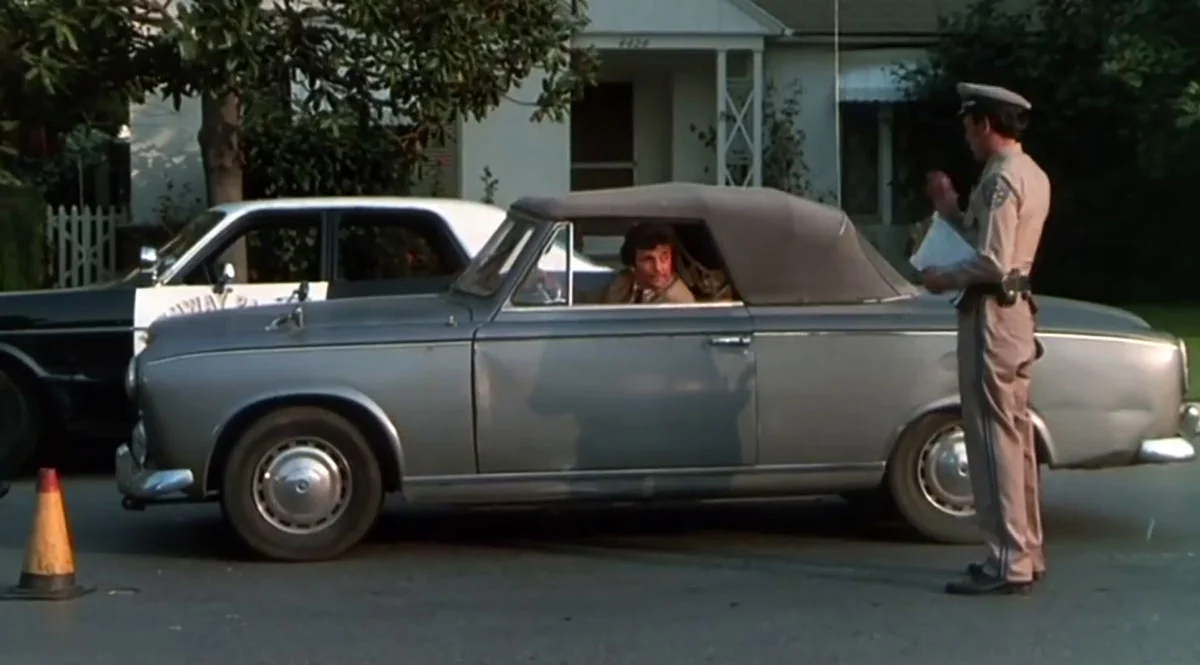
Lieutenant Columbo’s Peugeot 403 Cabriolet was more than just a prop. It was a calculated piece of dramatic theater, a crumbling French relic that served as the ideal camouflage for the smartest investigator in television history. Yet, beneath the layers of faux grime and intentional neglect lay a sophisticated piece of European automotive history—a vehicle once considered the pinnacle of bourgeois elegance.
The Genesis: A Pinin Farina Masterpiece
To understand the "aesthetic massacre" that Peter Falk orchestrated, one must first appreciate the original pedigree of the 403. When Peugeot approached the legendary Italian design house Pinin Farina in the mid-1950s, the goal was not to build a workhorse, but a statement.
Launched in 1956, the 403 Cabriolet was positioned as a luxury item. It was a car for the affluent, the style-conscious, and the discerning driver. With a price tag nearly double that of the standard 403 sedan, it was a rare beast. Meticulously assembled at the La Garenne-Colombes coachbuilding workshops, the car featured plush leather upholstery, impeccable chrome trim, and a dashboard painted to match the exterior—a hallmark of mid-century European chic.
Between 1956 and 1961, only 2,100 of these elegant machines were produced. They were never intended to roam the sun-baked highways of Southern California, let alone serve as the battered chariot for a rumpled detective.
Chronology of a Transformation
The transition from a high-society jewel to a Hollywood junker is a story of improvisation and the demands of television production.
1971: The Discovery
When production began on the first regular episode of Columbo in 1971, Peter Falk was presented with a variety of generic American sedans. He rejected them all. He wanted something that felt out of place, something that would immediately lower the guard of his wealthy suspects. While wandering through a dusty Universal Studios storage lot, he stumbled upon a derelict Peugeot 403 Cabriolet. It was a shell of its former self: missing tires, a shredded roof, and a body riddled with blisters.
Legend suggests the car had been imported by French comedian Roger Pierre years earlier before being abandoned to the studio’s fate. Falk saw the potential for a "moving prop" that could define his character’s status as an outsider.
The "Massacre"
The production team went to work, not to restore, but to dismantle. They applied a layer of dull, faded gray-blue paint, used varnish to bond "faux dirt" to the fenders, and used mallets to strategically dent the bodywork. The original, sophisticated chrome hubcaps were discarded, replaced by the nondescript look of a vehicle that had seen better days. The Pinin Farina masterpiece was officially transformed into a rolling wreck.
The Production Struggle
As the series gained popularity, the logistics of maintaining a 403 in the United States became a nightmare. Universal emissaries were dispatched across California to hunt for spare parts or any surviving 403s. When a second, functional car could not be found for stunts, the studio’s mechanics took a standard sedan and—in a move that would make any classic car enthusiast wince—took a grinder to the roof. This makeshift convertible lacked structural reinforcement; after a few high-speed turns on the set, the chassis would twist so severely that the doors refused to close.
Supporting Data: Mechanical Infamy
For the viewers, the Peugeot was a comedic foil. For the actors and crew, it was a mechanical recalcitrant. Peter Falk, who notoriously disliked driving, struggled with the 403’s four-speed column-shifted manual transmission.
- The Gearbox: Every shift was a gamble. Falk’s lack of familiarity with the column shifter resulted in the constant grinding of gears, sending metal shavings into the transmission fluid and creating a chorus of mechanical groans that were often picked up by the boom mics.
- The Engine: The 1.5-liter, 58-horsepower engine was frequently temperamental. When the Solex carburetor refused to feed the cylinders or the ignition system succumbed to the humidity, Falk was forced to improvise. Tapping the dashboard, shaking the key in the ignition, and muttering in character became part of the show’s authentic charm.
- The Rarity: With fewer than 2,100 ever built, the 403 Cabriolet is now a coveted collector’s item. The fact that the studio "sacrificed" several of these for the sake of a recurring gag is now viewed as both a tragedy and a stroke of genius in television history.
Official Responses and Behind-the-Scenes Lore
In later interviews, production staff noted that the car was treated as a member of the cast. It had to be "ugly enough" to be non-threatening, but "reliable enough" to complete a scene.
"The car was the first thing the audience saw," noted a production assistant in a 1980s retrospective. "If the car looked too good, the audience wouldn’t believe he was just a humble cop. If it looked too much like a prop, it ruined the immersion. It had to be a real, living, breathing piece of junk."
When the series was revived in the late 1980s, the producers searched for the original vehicle. It was discovered in the corner of a warehouse, still wearing its original dents and suffering from its characteristic engine hesitation. It was pressed back into service exactly as it was—a decision that delighted fans who viewed the car as a vital, non-human character in the Columbo universe.
The Implications: A Masterstroke of Characterization
The genius of the Peugeot 403 lay in its ability to function as a "Trojan Horse." By arriving in a vehicle that signaled poverty and incompetence, Columbo ensured that his suspects—mostly wealthy, arrogant members of the elite—would immediately dismiss him.
The car served as a psychological shield. It lowered the defenses of the antagonist, making them believe that a man who couldn’t even keep his own car running could never possibly unravel a complex, multi-million dollar murder plot. When Columbo would finally deliver his classic line—"She’s not a spring chicken, but if you keep an eye on the oil, she’ll take you to the end of the world"—he wasn’t just talking about the car. He was speaking about himself.
Conclusion: A Legacy of Rust and Respect
The Peugeot 403 Cabriolet serves as a reminder of the power of the "ugly prop." It was a vehicle that defied the Hollywood standard of glamour, choosing instead to represent the grit, the messiness, and the unpretentious nature of its driver.
Today, the 403 remains a symbol of the Columbo era. It is a testament to the fact that, in the world of storytelling, the most effective tools are often the ones that appear the least impressive. The car that once graced the driveways of the European elite found its true calling in the smog-filled streets of Los Angeles, becoming, in its own battered and leaky way, the most iconic, recognizable, and beloved vehicle in the history of the small screen.