Weather Forces Major Schedule Shift: 2026 Miami Grand Prix Start Time Pulled Forward
Suro Senen
May 25, 2025 • 7 MIN READ
By the Editorial Staff, MotorsInside Published: May 3, 2026, 12:11 PM
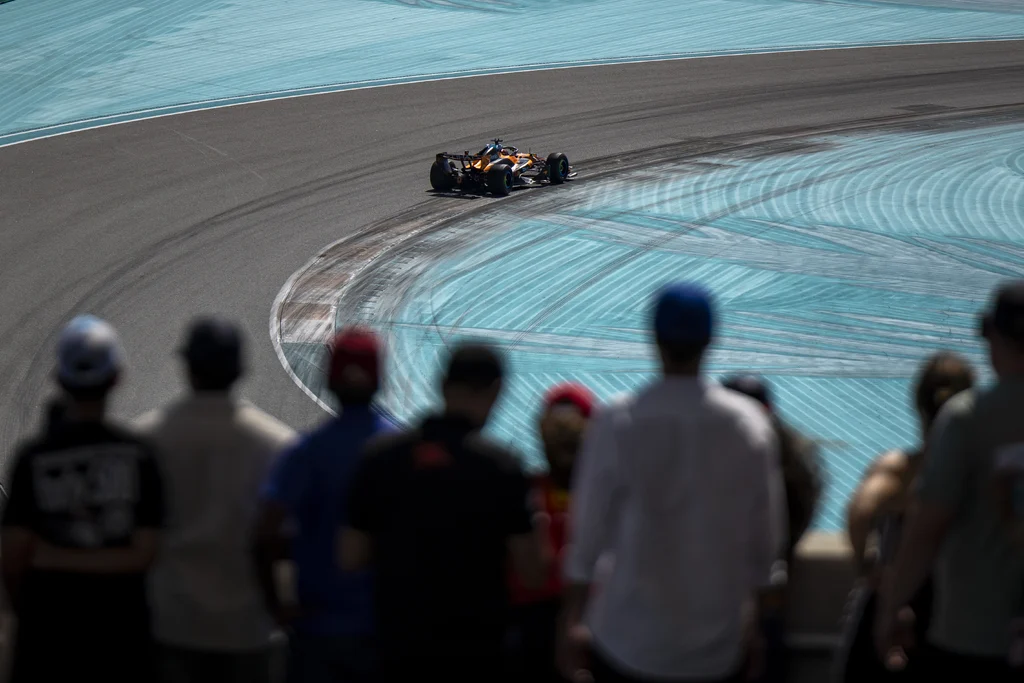
In a rare and significant adjustment to the Formula 1 calendar, the organizers of the 2026 Miami Grand Prix have officially announced an urgent schedule change. Citing severe weather patterns threatening the Florida coast, the FIA, Formula One Management (FOM), and local race promoters have moved the start time of the race forward by three hours. What was intended to be an afternoon spectacle under the Florida sun will now commence at 1:00 PM local time (7:00 PM in Paris) instead of the originally scheduled 4:00 PM local time (10:00 PM in Paris).
This decision, while disruptive to fans and logistics, underscores the sport’s unwavering commitment to safety in an era where climate volatility is increasingly influencing the global motorsport calendar.
The Core Facts: Why the Sudden Shift?
The decision was not taken lightly. According to internal reports and meteorological data, the atmosphere over the Miami International Autodrome is expected to become increasingly unstable as the day progresses. The primary concern is not merely heavy rainfall, but the high probability of severe, localized thunderstorms accompanied by dangerous lightning activity.
By advancing the start time, the race control aims to secure a wider "weather window," allowing the event to reach a natural conclusion before the most intense cells of the storm system move over the Hard Rock Stadium complex. If the race were to proceed at its original 4:00 PM slot, officials feared that the event might be severely truncated or, worse, abandoned entirely due to the deteriorating conditions later in the afternoon.
A Chronology of the Decision-Making Process
The escalation from a standard race day to a major scheduling disruption followed a tight, high-pressure timeline:
Early Morning (May 3, 2026): Meteorological models began showing a significant shift in the track of a storm front. While previous forecasts suggested potential light showers, the updated data indicated a high-intensity system developing rapidly.
Late Morning Consultations: A series of urgent virtual meetings took place between the FIA’s Race Director, senior officials from Formula One Management, and the local Miami Grand Prix promoter. During these discussions, the data was reviewed against the safety protocols governing outdoor events in Florida.
The Official Determination: By midday, it was determined that the risk of lightning and standing water exceeded the safety threshold for a 4:00 PM start.
The Announcement: A joint communiqué was released shortly thereafter, notifying teams, media, and ticket holders of the shift to 1:00 PM. This was immediately followed by logistical coordination to ensure that television broadcasters, fan zones, and team operational teams could adapt to the new timeline.
Supporting Data and Meteorological Context
Why is Florida’s weather so volatile for F1? The Miami Grand Prix is held in a unique climate zone where heat, humidity, and coastal proximity create the perfect recipe for "pop-up" thunderstorms.
According to analyses provided by RacingNews365, the threat level intensifies as the ground temperature rises throughout the day. While the circuit showed impressive drainage capabilities during the 2025 event—a year marked by similar but less severe weather—the current forecast predicts a "persistent degradation." Unlike typical tropical showers that pass through quickly, this system is characterized by deep convection, meaning that once the rain begins, it is expected to linger for several hours without a significant break.
Furthermore, the track’s infrastructure, while state-of-the-art, has physical limits regarding standing water on the asphalt. The decision to move the race forward is an effort to maximize the "track-time window," ensuring that the drivers can compete under conditions that are challenging but manageable, rather than dangerous.
Official Responses and Stakeholder Alignment
The coordination between the governing bodies has been praised as a model of crisis management. In a rare display of unified messaging, the joint statement emphasized the multi-layered priority of the event:
"Following discussions between the FIA, the FOM, and the Miami promoter, the decision was taken to advance the start of Sunday’s Grand Prix to 1:00 PM local time. This was done to ensure the highest possible chance of completing the race in its entirety, to minimize potential disruption, and, above all, to prioritize the safety of the drivers, fans, team personnel, and track marshals."
From the perspective of the teams, the change creates a logistical scramble. Race engineers must now condense their pre-race preparation routines, including final setup adjustments and grid walk activities, by three hours. However, the prevailing sentiment in the paddock is one of acceptance; when it comes to the safety of the drivers on a high-speed circuit, teams recognize that there is no room for compromise.
The "Lightning Rule": A Critical Safety Constraint
It is vital to note that the schedule change does not make the race immune to the weather. The event remains strictly bound by American safety regulations regarding lightning.
The protocol is clear: if a lightning strike is detected within a radius of eight miles (approximately 13 kilometers) of the circuit, an automatic 30-minute "hold" is triggered. Crucially, the clock resets with every subsequent lightning detection within that radius. This effectively creates a "rolling delay" that could potentially push the race into the evening hours regardless of the start time. Fans and teams remain on high alert, as a single lightning strike near the Hard Rock Stadium could halt proceedings immediately.
Historical Precedent and the Evolution of F1
This is not the first time Formula 1 has been forced to adapt its schedule due to the elements. The sport has increasingly had to contend with the unpredictable nature of global weather patterns.
A notable comparison is the 2024 Sao Paulo Grand Prix, where heavy rain and a chaotic qualifying session forced officials to move the qualifying session to Sunday morning, with the main race itself being brought forward by 90 minutes. That event demonstrated that when the safety of the field is at stake, the sport is capable of unprecedented agility.
The 2026 Miami scenario represents the next step in this evolution. As F1 continues to expand into regions with complex weather patterns, the ability to pivot—to move start times, shift sessions, and coordinate across continents—is becoming a core competency for the sport’s leadership.
Implications for the Championship
The shift to an earlier start time will undoubtedly impact the racing strategy. The track temperature at 1:00 PM will be significantly different from the conditions anticipated for a 4:00 PM start. Teams that had optimized their tire degradation models for the cooler, late-afternoon track surface will now have to recalculate for a hotter, more intense sun-drenched session, or conversely, prepare for a wet-weather race that starts under a darkening sky.
For the drivers, the challenge is amplified. Starting a race under the threat of an encroaching storm requires a different mindset. The pressure to gain positions early is higher, as no one knows how many racing laps will actually be possible before the weather turns.
As the grid prepares to line up three hours earlier than planned, the eyes of the sporting world are on Miami. While the race will certainly look different than what was on the original itinerary, the spirit of competition remains unchanged. In the world of Formula 1, the track is only half the battle; the other half is often fought against the sky itself.
Stay tuned to MotorsInside for live updates throughout the race weekend as the situation develops.