

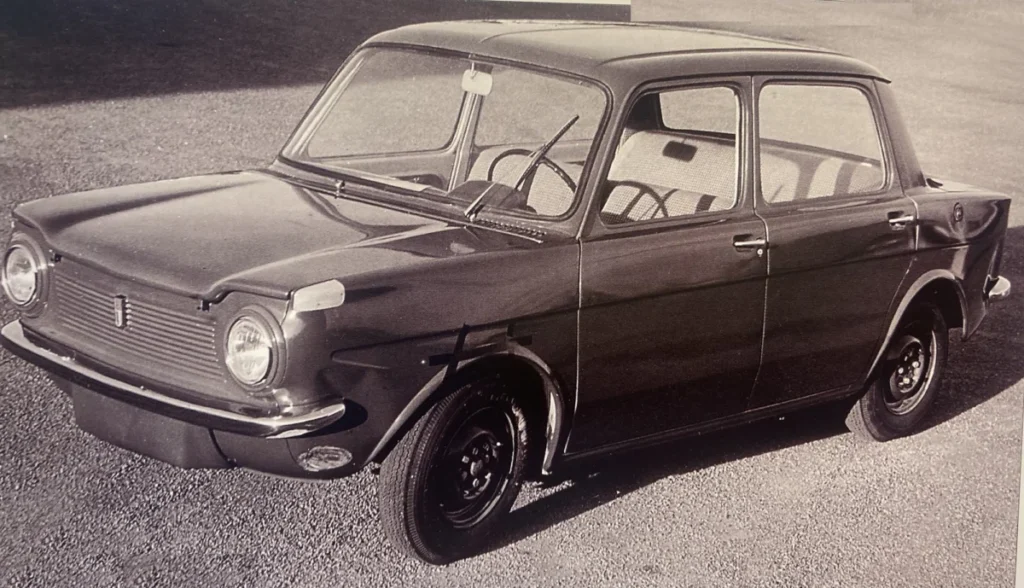
PARIS, France – In the high-stakes world of automotive design, where billions are invested and reputations are forged, the journey from initial sketch to showroom floor is rarely a linear one. A fascinating insight, recently explored by automotive historian Marco Visani in Gazoline magazine (N°346), reveals a pervasive truth: the "definitive study" model, often hailed as the penultimate vision of a new vehicle, almost invariably undergoes last-minute transformations before reaching mass production. This phenomenon, driven by a complex interplay of aesthetic ambition, economic realities, manufacturing constraints, and strategic directives, offers a rare glimpse into the often-invisible compromises and crucial decisions that shape the cars we drive.
Visani’s exposé, accompanied by archival photographs, promises to take readers on an unprecedented journey into the closely guarded (and often unknown) backstage of automotive styling. By juxtaposing the supposed "final" design study with its actual production counterpart across twenty diverse models from different eras, brands, and nations, the article uncovers the subtle yet significant shifts that define a vehicle’s ultimate character. It’s a testament to the dynamic, often turbulent, process of bringing a car to life, where a CEO’s decree, a marketing expert’s insight, or an engineer’s cost-saving measure can dramatically alter the fate of a design.
Main Facts: The Shifting Sands of Automotive Aesthetics
The central premise articulated by Marco Visani is that the concept vehicle, or "definitive study," that garners internal approval and often makes its way into internal presentations, is rarely the exact vehicle that consumers eventually purchase. This isn’t about early-stage prototypes or experimental concept cars designed purely for exhibition, but rather about the very last iteration of a design before it is frozen for production. These late-stage modifications, often executed just before tooling commences, are a critical, yet largely unacknowledged, part of automotive history.
The motivations behind these eleventh-hour alterations are multifaceted:
- Stylistic Refinements: Even a "definitive" design can be tweaked for improved visual appeal, better market fit, or to align with evolving brand aesthetics.
- Cost Reduction: Simplifying complex body panels, reducing the number of individual components, or substituting materials can lead to significant savings in mass production.
- Production Feasibility: Designs might need adjustments to accommodate manufacturing processes, assembly line efficiency, or supplier capabilities.
- Parts Commonality: Integrating shared components from other models within the same brand or automotive group can streamline production and reduce development costs.
- Regulatory Compliance: New safety standards, emissions regulations, or market-specific requirements can necessitate design changes.
Visani’s deep dive, leveraging what he describes as "author’s archives," focuses specifically on the "penultimate" design iteration, comparing it directly with the final production model. This approach deliberately excludes camouflaged test prototypes, as their purpose is deception, not design evolution. The article posits that these late-stage changes can range from barely perceptible nuances to remarkable transformations, with the ultimate judgment of "better" or "worse" left to individual taste – a subjectivity that Visani embraces, occasionally offering his own informed opinion.
Chronology: The Iterative Dance of Automotive Design
To fully appreciate the impact of these last-minute changes, it’s essential to understand the typical chronology of automotive design and development. This multi-year process is a delicate balance of artistic vision, engineering precision, and market strategy.

Phase 1: Conceptualization and Vision (Years 5-4 Before Production)
The journey begins with designers sketching myriad ideas, exploring themes, and envisioning future trends. This phase involves extensive research into market demographics, emerging technologies, and competitor offerings. Early 2D sketches evolve into basic 3D digital models, exploring proportions and overall stance. The goal is to capture a compelling vision that resonates with the brand’s identity and strategic objectives.
Phase 2: Refinement and Digital Modeling (Years 4-3 Before Production)
Selected concepts are refined through detailed digital modeling, allowing designers to experiment with surfaces, lighting, and aerodynamic properties. Full-scale clay models are often created, providing a tangible, three-dimensional representation that can be physically sculpted and evaluated. This is where the design starts to solidify, with internal reviews becoming more frequent and critical. Engineering teams begin preliminary feasibility studies, flagging potential challenges.
Phase 3: The "Definitive Study" and Executive Approval (Years 3-2 Before Production)
This is the pivotal stage where the design typically reaches what is considered its "definitive" form. A highly refined clay model, often painted and fitted with realistic wheels and lighting elements, is presented to senior management – including the CEO, heads of design, engineering, and marketing. This "definitive study" is meant to be the final artistic statement, embodying all the desired characteristics. Once approved, this design serves as the blueprint for engineering development, tooling design, and manufacturing planning. It’s the moment of triumph for the design team, believing their vision is now set in stone.
Phase 4: Engineering, Prototyping, and the Inevitable Tweaks (Years 2-1 Before Production)
Following the "definitive study" approval, engineering teams translate the aesthetic vision into a functional, manufacturable product. This involves designing the chassis, powertrain integration, interior architecture, and all the myriad components. Prototypes are built for extensive testing – crash tests, durability tests, aerodynamic assessments, and road trials. It is during this rigorous development phase that the "definitive study" often encounters its first real-world challenges. Issues related to manufacturing complexity, unexpected costs, regulatory hurdles, or even late-stage market feedback can trigger demands for design modifications. This is precisely the window Visani highlights, where the "penultimate" design – the "definitive study" that was initially approved – begins to diverge from what will eventually be produced.
Phase 5: Production Freeze and Launch (Year 1 to Production)
Once all modifications are integrated, tested, and re-approved, the design is "frozen." This means no further changes can be made without incurring massive costs and delays, as tooling and supplier agreements are finalized. The vehicle then enters pre-production and ultimately full-scale manufacturing, culminating in its official launch to the public.
It is the transition between Phase 3 and Phase 4, and specifically the adjustments made during Phase 4, that forms the core of Visani’s fascinating exploration. The "definitive study" represents the pinnacle of artistic intent, while the production model embodies the culmination of artistic vision and industrial reality.

Supporting Data: The Forces Behind the Tweaks
The reasons for these late-stage design modifications are as varied as the vehicles themselves, reflecting the multifaceted pressures inherent in automotive manufacturing.
Aesthetic Refinements and Brand Alignment
Sometimes, a design director or even the CEO might feel a particular line isn’t quite right, a grille lacks sufficient presence, or a headlight cluster could be more distinctive. These are often subtle tweaks – a sharper crease here, a slightly altered proportion there – but they can have a profound impact on the car’s perceived character. For instance, a brand might decide to unify its front fascia across the entire lineup, leading to last-minute adjustments to a model that had previously been granted a unique face. The pursuit of "brand DNA" or a consistent "family look" can override individual model distinctiveness late in the game.
Cost Reductions and Economic Imperatives
Perhaps the most common driver of late-stage design changes is cost. Even small adjustments can lead to substantial savings when multiplied by hundreds of thousands or millions of units. A complex stamping for a fender might be simplified to reduce tooling costs or cycle time on the production line. Chrome trim might be replaced with plastic, or an intricate lighting signature might be scaled back to a more conventional design. Interior components, often unseen by the casual observer, are particularly vulnerable to cost-cutting measures, leading to changes in material finishes, button layouts, or storage solutions. For example, a sculpted dashboard might be flattened slightly to reduce material usage or simplify wiring harness installation.
Manufacturing Feasibility and Production Efficiency
What looks stunning on a designer’s screen or in a meticulously crafted clay model might be incredibly difficult, or even impossible, to produce efficiently on a mass scale. Issues such as panel gap consistency, the ability to stamp complex curves without wrinkling metal, or the ease of assembly on a moving production line can all necessitate design revisions. A sleek, flush-fitting door handle might be replaced with a more conventional, easier-to-manufacture alternative if the original proves too complex or prone to quality issues during assembly. Similarly, the angle of a windshield or the curvature of a roofline might be altered to improve manufacturing tolerances or reduce material waste.
Marketing Demands and Competitive Landscape
Market research can reveal new trends or competitive threats late in the development cycle. A rival brand might launch a vehicle with a feature or design element that suddenly makes the upcoming model seem less appealing. Marketing teams might push for changes to differentiate the vehicle, appeal to a broader demographic, or address perceived weaknesses. This could manifest as a redesign of a bumper to incorporate new sensor technology, a change in wheel arch size to accommodate larger wheels for a sportier trim, or even a subtle alteration to the greenhouse to improve outward visibility, responding to consumer feedback.
Regulatory Compliance and Safety Standards
Automotive regulations are constantly evolving, particularly in areas like safety and emissions. A new safety standard for pedestrian impact protection, for example, might require a redesign of the front bumper, hood, or headlight assemblies. Changes in lighting regulations could mandate adjustments to headlight or taillight designs. These are non-negotiable changes that can arise late in the development process, forcing designers and engineers to adapt quickly.

Platform Sharing and Component Harmonization
In today’s automotive landscape, platform sharing is ubiquitous. To maximize economies of scale, brands within the same group often share fundamental architectures and numerous components. This means a design might need to be adjusted to fit existing chassis hardpoints, utilize a common steering column, or integrate a shared infotainment screen. While planned early, unforeseen integration challenges or strategic shifts in platform utilization can lead to late-stage exterior or interior design modifications to accommodate these shared elements.
Visani’s work, by focusing on the comparison between the "definitive study" and the production model, highlights these specific points of divergence. It’s not about the evolution from a wild concept car to a toned-down production model; it’s about the final, often painful, steps where an almost-finished product is molded into its ultimate commercial form.
Official Responses: The Unspoken Realities of Design
While automotive companies rarely openly discuss these late-stage design changes – preferring to present a seamless narrative of creation – the phenomenon is well-known within industry circles. For designers, these moments can be a source of both frustration and professional growth.
The Designer’s Dilemma
Imagine spending years meticulously crafting every line and surface, only for a senior executive to demand a significant alteration at the eleventh hour. For designers, this can be disheartening, a compromise of their artistic vision. Yet, it is also a fundamental part of the job. Top automotive designers learn to navigate these pressures, to adapt, and to find creative solutions within new constraints. They become masters of compromise, understanding that the ultimate goal is not just a beautiful design, but a successful, manufacturable, and profitable product. The unreleased "definitive study" often remains a cherished internal artifact, a testament to what "could have been."
The Role of Leadership
CEOs, design directors, and heads of product development wield immense power in these final decisions. Their perspectives are informed by a holistic view of the company’s strategy, market position, financial health, and brand direction. A CEO might see a last-minute opportunity to infuse a design with a stronger brand identity or to shave crucial production costs. A design director might make a difficult call to align a model with an emerging design language that wasn’t fully formed when the "definitive study" was approved. These are not arbitrary decisions; they are strategic interventions aimed at optimizing the vehicle for success in a fiercely competitive market.
The Culture of Silence
Automakers have a vested interest in presenting their new models as the product of a clear, singular vision. Acknowledging late-stage changes or compromises might suggest indecision or a lack of foresight. Therefore, these internal evolutions remain largely behind closed doors. Visani’s work for Gazoline magazine is valuable precisely because it dares to lift this veil, providing a rare glimpse into the often-hidden realities of the design process. It acknowledges the inherent tension between artistic purity and commercial viability, a tension that is resolved in the final, production-ready form.

Implications: From Drawing Board to Driveway
The implications of these last-minute design changes extend far beyond the drawing board, affecting brand identity, consumer perception, and even the historical legacy of a vehicle.
Impact on Brand Identity and Design Language
Even seemingly minor changes can subtly alter a car’s character and, by extension, its brand’s identity. A slightly altered grille or headlight shape can make a car appear more aggressive, more elegant, or more pedestrian. Over time, these cumulative small changes across a brand’s lineup contribute to its evolving design language. A brand might intend to project a certain image with its "definitive study," only for the production version to subtly deviate, potentially shifting how the brand is perceived by the public.
Consumer Perception and Market Success
Consumers rarely see the "definitive study"; they only see the production model. Therefore, their perception of a vehicle’s design is based entirely on the final outcome. Whether a late-stage change improved or detracted from the design is subjective, but it directly impacts the car’s initial reception and long-term market success. A bold feature toned down for production might disappoint some, while a practical refinement could broaden its appeal. These decisions, made in the final stages, are critical for determining whether a car is a hit or a miss.
Legacy, Collectibility, and the "What If" Factor
For automotive enthusiasts and collectors, the "definitive study" represents a fascinating "what if." Knowing that a beloved classic or a controversial design could have looked different adds another layer to its history. These unreleased designs become objects of intrigue, sparking discussions about aesthetic choices and industrial compromises. The archival images presented by Visani offer a tantalizing glimpse into these parallel universes of automotive design, enriching the narrative around each model.
The Art vs. Commerce Dilemma
Ultimately, Visani’s exploration underscores the perennial tension between art and commerce in the automotive industry. Design is an art form, driven by creativity, passion, and vision. But a car is also a product, subject to the unforgiving laws of economics, engineering, and market demand. The process of taking a "definitive study" to production is where these two forces converge, often in a delicate dance of negotiation and compromise. The result is a vehicle that is not just a work of art, but also a complex feat of industrial engineering and strategic planning.
In conclusion, the article in Gazoline N°346 offers a captivating and rare peek into the hidden world of automotive design. It reminds us that every vehicle on the road is the result of countless decisions, many of them made in the eleventh hour, shaping its character in ways the average driver may never realize. Marco Visani’s work invites us to look at cars not just as finished products, but as embodiments of an ongoing, dynamic, and often dramatic creative process, where the "definitive" is always subject to one last, crucial revision.
