

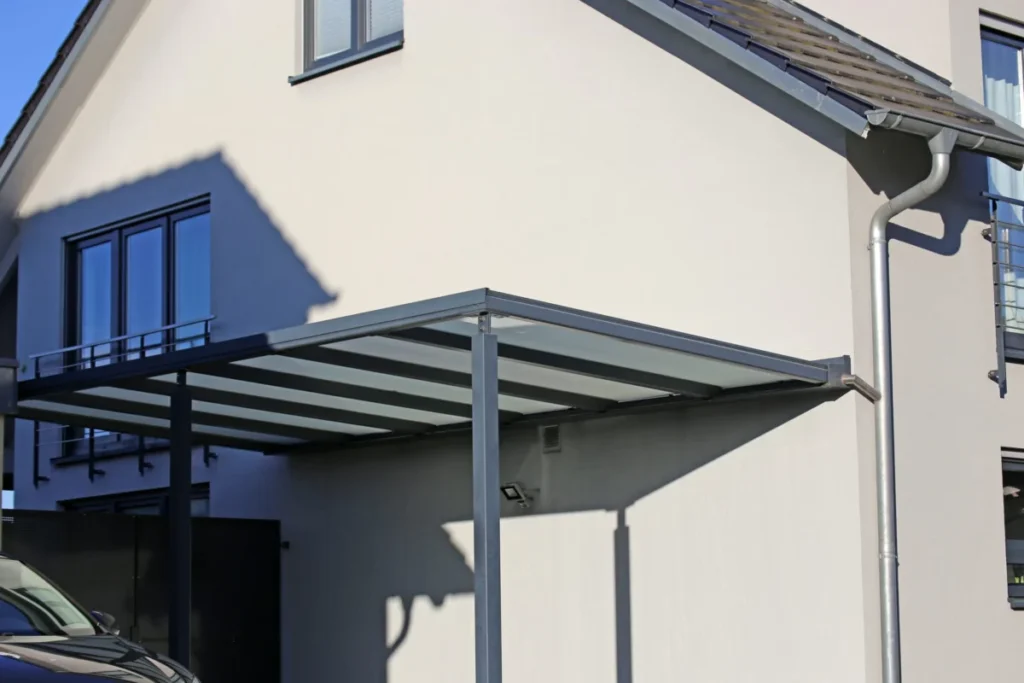
Main Facts
In an era where personal vehicles represent a substantial financial investment—often ranking as the second-largest purchase a household will make after real estate—protecting them from the elements has transitioned from a mere preference to an absolute necessity.
Vehicles left exposed to the relentless cycle of nature—scorching UV rays, torrential downpours, frost, hail, and acidic tree sap—suffer from accelerated wear and tear. Prolonged exposure to moisture triggers rust formation, particularly on the undercarriage and exposed metallic joints, leading to mechanical degradation and a severe drop in the vehicle’s resale value.
To combat this depreciation, homeowners increasingly turn to dedicated covered parking solutions. Among the choices available on the market, the carport has emerged as a versatile, cost-effective alternative to traditional enclosed garages. However, choosing the right structure requires careful consideration of the materials used.
While traditional wood has long held a sentimental place in landscape design, the modern market overwhelmingly favors aluminum. Lightweight yet exceptionally robust, infinitely recyclable, and virtually maintenance-free, aluminum carports are redefining how vehicle owners safeguard their automotive investments while enhancing their property’s aesthetic and ecological value.
Chronology: The Evolution of Vehicle Protection and the Rise of Aluminum
To understand why the aluminum carport has taken center stage in contemporary home improvement, it is helpful to look back at how vehicle shelter has evolved over the past century.
- The Early 20th Century (The Era of the Enclosed Garage): Following the mass production of automobiles, vehicles were initially housed in brick or stone garages, mimicking the architecture of the homes they served. These structures were heavy, permanent, and expensive to construct.
- The Mid-20th Century (The Birth of the Carport): Pioneered by visionary architects like Frank Lloyd Wright in his Usonian homes, the carport was introduced as an open-sided roofed shelter. Designed to integrate living spaces seamlessly with the outdoors, it offered functional protection without the claustrophobia or high cost of a fully enclosed garage.
- The Late 20th Century (The Wooden Boom): As prefabricated kits became popular in the 1980s and 90s, wood dominated the residential market. It was affordable, locally sourced, and easy to assemble. However, homeowners quickly discovered the heavy maintenance burden associated with exterior timber.
- The 21st Century (The Aluminum Revolution): Advances in metallurgy and powder-coating technologies ushered in the modern era of aluminum structures. Offering industrial-grade strength without the heavy footprint, aluminum quickly supplanted wood and steel in high-end architectural applications, leading to the sleek, customizable carports seen in modern subdivisions today.
Supporting Data: Wood vs. Aluminum Performance Metrics
When evaluating shelter options, industry analyses and consumer reports highlight stark operational and financial differences between traditional wooden carports and modern aluminum alternatives.
| Performance Metric | Wooden Carports | Aluminum Carports |
|---|---|---|
| Initial Cost | Moderate | Moderate to High |
| Lifespan | 10 to 15 years (with heavy maintenance) | 30+ years (virtually indefinite) |
| Maintenance Requirements | High (annual staining, sealing, pest control) | Low (annual or semi-annual rinse with soapy water) |
| Vulnerability to Pests | High (susceptible to xylophagous insects like termites) | Zero (metal is immune to wood-boring pests) |
| Weather Resistance | Moderate (prone to warping, rotting, and greying) | High (rust-proof, corrosion-resistant, UV-stable) |
| Recyclability | Low to Moderate (often treated with toxic chemicals) | 100% Recyclable (infinite life cycle without degradation) |
The Hidden Costs of Timber
At first glance, wood can appear to be an economically attractive option. Its natural aesthetic appeals to purists who want their outdoor structures to blend seamlessly into garden environments. However, wood is a living, breathing material that reacts dramatically to humidity and temperature fluctuations.
When left exposed to the elements, untreated wood quickly loses its luster, turning a weathered grey before succumbing to rot within a few short years. More critically, wood-boring insects (xylophages) can compromise the structural integrity of the roof supports. If a wooden carport collapses under the weight of accumulated snow or simply due to age, the falling timber poses a catastrophic risk to the vehicle parked beneath it.
To prevent this degradation, owners must commit to a rigorous maintenance schedule. This involves applying chemical fungicides, insecticides, stains, and protective varnishes every one to two years. Beyond the labor-intensive nature of this upkeep, these chemical treatments are rarely environmentally friendly; they often release volatile organic compounds (VOCs) and toxic residues into the surrounding soil and groundwater. When calculating the total cost of ownership over a 15-year period—factoring in both man-hours and the continuous purchase of chemical maintenance products—the wooden carport proves far more expensive than its initial price tag suggests.
Official Responses and Industry Perspectives
Architects, urban planners, and environmental agencies have increasingly weighed in on the shift toward lightweight metallic architecture in residential zones.
Architectural Versatility
Urban design specialists note that aluminum offers a distinct advantage in contemporary architecture. Far from looking industrial or out of place, modern aluminum carports can be anodized or powder-coated in a vast array of RAL colors, allowing them to match window frames, garage doors, and roofing tiles.
"The misconception that aluminum lacks warmth is rapidly disappearing," notes urban design consultant Marc Vandevelde. "With advanced thermal lacquering techniques, aluminum can complement traditional stone farmhouses just as easily as ultra-modern minimalist villas. Furthermore, its high strength-to-weight ratio allows for much wider spans without the need for intrusive central support pillars. This is a game-changer for owners of larger vehicles, such as recreational vehicles (RVs), camper vans, and multi-passenger vans."
Environmental Compliance and Sustainability
From an ecological standpoint, municipal authorities praise aluminum for its circular economy credentials. Unlike treated wood, which is notoriously difficult to recycle due to chemical impregnations, aluminum can be recycled infinitely without losing any of its mechanical properties. Recycling aluminum requires only about 5% of the energy used to produce primary metal from bauxite ore, making it a cornerstone material for sustainable construction initiatives.
Implications: Making the Right Choice for Your Property
Opting for an aluminum carport carries wide-ranging implications for property owners, extending far beyond simple vehicle preservation.
1. Minimal Maintenance and Maximum Peace of Mind
Because aluminum does not rust, warp, or rot, homeowners are liberated from seasonal upkeep chores. Routine maintenance is reduced to a simple garden-hose rinse or a gentle wipe-down with soapy water once a year to remove organic debris such as fallen leaves, dust, and bird droppings. This low-maintenance profile ensures that the structure retains its pristine, like-new appearance for decades.
2. Tailored Customization and Smart Spatial Integration
Modern manufacturing techniques mean that carports are no longer one-size-fits-all solutions. Custom fabrication allows homeowners to design a structure that aligns precisely with their spatial constraints and lifestyle needs:
- Dimensions: Whether housing a compact city car, a family SUV, or a towering camper van, custom-engineered widths and clearance heights ensure a snug, secure fit.
- Roofing Variations: Owners can choose from various roofing materials. Polycarbonate panels offer UV protection while letting in natural light; corrugated metal provides maximum durability; and green roofs (vegetated living roofs) enhance thermal insulation while promoting local biodiversity in urban and suburban gardens.
- Multifunctional Design: Advanced configurations now seamlessly integrate practical storage lockers, garden sheds, or bike shelters directly into the carport frame. This makes the structure an all-in-one outdoor management hub, optimizing space on smaller plots of land.
3. Thermal Comfort and Energy Efficiency
When a carport is attached directly to the main residential dwelling, its structural design can influence the home’s internal climate. Aluminum frames can be engineered to support insulated panels or green roofs, which act as a thermal buffer. This helps deflect harsh summer heat away from adjacent living spaces and windows, reducing reliance on indoor air conditioning and lowering household energy consumption.
Conclusion
Ultimately, protecting your vehicle is an investment in your financial future, mitigating depreciation and shielding your transport from premature aging. While traditional materials like wood carry sentimental appeal, their heavy maintenance demands and vulnerability to the elements make them less practical in the long run. By choosing an aluminum carport, homeowners secure a durable, elegant, environmentally responsible, and highly customizable shelter that stands the test of time—safeguarding vehicles, enhancing property value, and respecting the planet all at once.
