

By Maël Pilven (Adapted for International Publication)
Published: October 2026
Main Facts
In an alarming development that bridges the gap between digital cybersecurity and physical vulnerability, a massive database containing hundreds of thousands of French license plate numbers linked to sensitive personal data has surfaced on the dark web. Discovered on Saturday, October 24, 2026, the breach involves a cybercriminal operating under the pseudonym "ChimeraZ," who advertised the sale of the compromised records on a specialized cybercrime forum.
According to analyses conducted by the digital threat intelligence platform FrenchBreaches—which managed to inspect partial samples of the dataset—the archive contains roughly 905,097 individual records corresponding to 847,064 distinct license plates. The discrepancy in numbers is attributed to duplicate entries and multiple registrations tied to single vehicles or profiles.
The scope of the leaked information extends far beyond mere vehicular identifiers. If authenticated, the database exposes a toxic combination of personal identifiable information (PII). Alongside vehicle license plate numbers, the records allegedly feature:
- Full names (first and last names)
- Residential postal addresses
- Personal phone numbers
- Email addresses
- Specific geographical locators linking vehicles to exact residential properties
While license plate numbers are technically visible in public spaces—often dismissed by drivers as harmless pieces of data readable on any street corner—their integration with comprehensive identity dossiers creates an unprecedented vector for targeted cyber-fraud. Despite the severity of the claims, cybersecurity experts emphasize that the absolute authenticity of the entire database has yet to be independently verified by state authorities, and the exact origin of the leak remains shrouded in mystery.
Chronology of Events
The unfolding crisis follows a meticulously timed release of information by threat actors, tracing back through the following key milestones:
- Mid-October 2026: Vulnerabilities are reportedly exploited on an unidentified third-party web portal. The perpetrator, "ChimeraZ," successfully extracts user logs and database tables connecting vehicle registrations to private citizens.
- Saturday, October 24, 2026: ChimeraZ officially takes to a notorious underground cybercrime forum to announce the commercial availability of the initial batch of French vehicle data, boasting nearly 850,000 unique plates.
- Late October 2026: Threat intelligence monitors at FrenchBreaches intercept the advertisement, download sample sets, and begin reverse-engineering the data structure, confirming that the files contain structured pairings of administrative vehicle data and private contact details.
- Present Day: Independent automotive journalists and cybersecurity watchdogs raise the alarm across European media outlets, urging millions of French drivers to exercise heightened vigilance against sophisticated text-message (SMS) and email phishing campaigns. Meanwhile, the hacker threatens to release an even larger, secondary dataset.
Supporting Data and Technical Analysis
To understand the gravity of the FrenchBreaches findings, one must analyze the composition of the leaked data fragments. While the database lacks direct financial vectors—such as cleartext passwords, PIN codes, or full banking credentials—it establishes a direct bridge between physical assets (automobiles) and digital communication channels (smartphones and emails).
| Metric / Category | Data Point Details |
|---|---|
| Total Recorded Entries | ~905,097 rows |
| Unique License Plates | ~847,064 distinct vehicles |
| Associated Metadata | Names, physical addresses, emails, phone numbers |
| Financial/Credential Data | None explicitly identified in samples so far |
| Alleged Source | Third-party website vulnerability (non-state SIV database) |
| Escalation Threat | A secondary archive containing up to 2 million additional records |
Crucially, preliminary forensic evaluations indicate that the breach did not originate from the official, state-managed French Vehicle Registration System (Système d’Immatriculation des Véhicules—SIV). Instead, investigators suspect that the data was harvested through a third-party private platform—such as an online insurance broker, a car-pooling service, a private technical inspection booking portal, or an automotive e-commerce site—that cross-referenced user profiles with vehicle registration details.
Nevertheless, the hacker "ChimeraZ" has added fuel to the fire by claiming to hold a secondary, even larger database comprising nearly two million additional vehicle registrations. If proven true, this secondary leak would dramatically expand the attack surface, impacting millions more motorists across France.
Official Responses and Institutional Stance
As of this writing, official government bodies and institutional agencies are moving cautiously to assess the validity of ChimeraZ’s claims.
Because the leak does not appear to stem from core governmental architecture, state cybersecurity agencies (such as ANSSI in France) are treating the incident primarily as a massive third-party data breach rather than a direct penetration of sovereign public infrastructure. However, the indirect fallout heavily impacts public-facing services, particularly national traffic safety and fine-collection agencies.
The ANTAI (Agence nationale de traitement automatisé des infractions), which manages automated fine processing in France, has not reported a direct breach of its own servers. However, it remains on high alert as security analysts predict a sharp spike in sophisticated phishing attempts designed to exploit the compromised registry.

Government cyber-defense platforms, including Cybermalveillance.gouv.fr, have stepped up public awareness campaigns. They emphasize that no official public portal currently exists allowing individual motorists to query the leaked database to check if their specific vehicle is compromised. Consequently, citizens are advised to assume potential exposure and adopt defensive cybersecurity postures.
Implications: From Fake Fines to Advanced Identity Theft
The convergence of license plates and private contact information fundamentally changes the threat landscape for ordinary drivers. Security analysts have outlined several primary risk vectors that emerge from this breach:
1. Hyper-Realistic "Smishing" (SMS Phishing) and Fake Fines
Historically, fraudulent text messages claiming unpaid speeding tickets or toll road fees often relied on generic phrasing. While annoying, these scams were relatively easy to spot due to their lack of personalization.
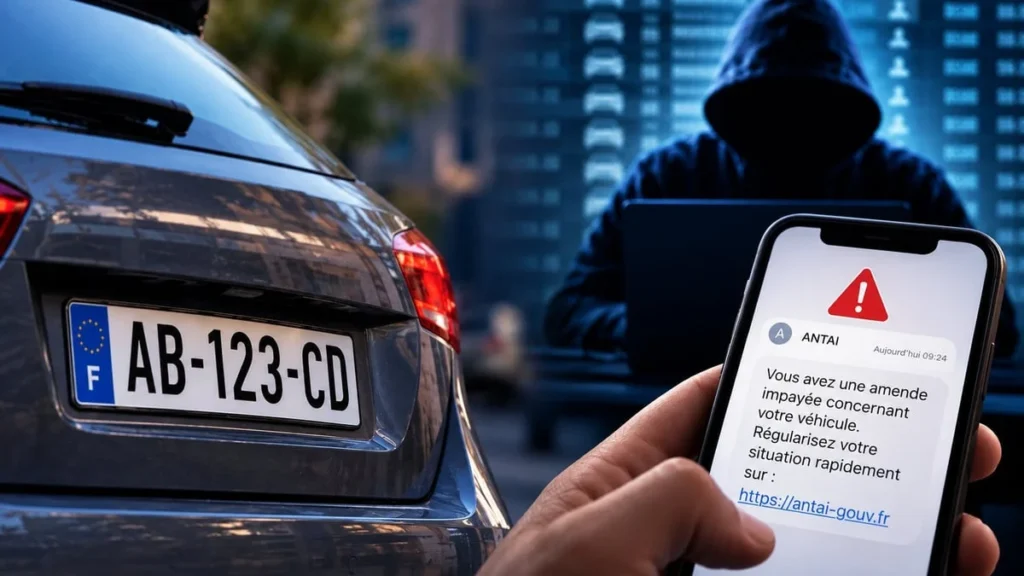
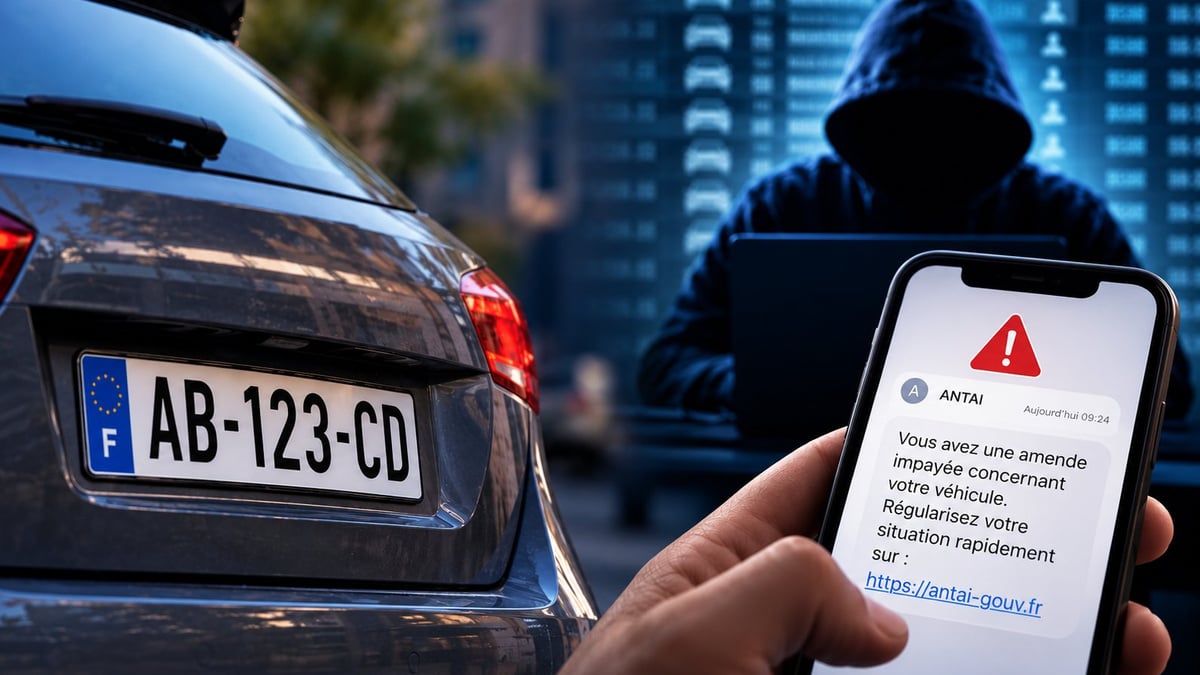
With access to a database linking a victim’s name, phone number, and actual license plate, scammers can execute high-precision attacks. Receiving an SMS that correctly cites your legal surname and exact vehicle registration number dramatically lowers psychological defenses. A message reading: "Mr. Dupont, vehicle AB-123-CD: Final notice for unpaid traffic infraction. Click here to settle EUR 35 immediately" carries an air of bureaucratic legitimacy that will likely trick thousands of unsuspecting victims.

2. Tailored Impersonation Scams
Beyond traffic fines, malicious actors can weaponize these files to impersonate trusted entities. Armed with home addresses and phone numbers, fraudsters posing as automobile insurers, repair garages, or administrative bodies can fabricate convincing scenarios regarding vehicle recalls, mandatory technical controls, or insurance policy adjustments.
3. Physical Security and Surveillance Risks
Perhaps the most unnerving aspect of the leak is the geographic mapping of vehicles to residential addresses. Knowing precisely where a specific vehicle is parked overnight allows bad actors to correlate physical assets with digital profiles. This opens the door to targeted burglaries, vehicle thefts, or localized stalking, as criminals can verify whether a high-value or specific model of car is consistently tied to a vulnerable residential location.
How Motorists Can Protect Themselves
Given that no centralized registry exists to confirm individual inclusion in the leaked file, cybersecurity experts recommend that all vehicle owners adopt a zero-trust mindset regarding communications concerning their vehicles:
- Never Click Links in SMS/Emails for Fines: Legitimate French public administrations (such as ANTAI) never send text messages demanding immediate payment via unverified links. Official fine notifications are sent via postal mail or can be tracked explicitly by logging directly into the official portal at antai.gouv.fr.
- Report Fraudulent Messages: Suspicious texts should be immediately forwarded to the national spam-reporting platform by sending them to 33700.
- Consult Security Portals: Victims of suspected fraud or identity compromise should visit Cybermalveillance.gouv.fr for step-by-step assistance, legal guidance, and recovery protocols.
- Monitor Personal Accounts: Routinely check bank statements, change online passwords associated with automotive service accounts, and remain deeply skeptical of any unsolicited calls referencing your vehicle details.
As the digital ecosystem continues to treat automobiles as connected, data-generating computers rather than simple mechanical machines, the "ChimeraZ" leak serves as a harsh reminder that vehicular data security is rapidly becoming just as critical as financial cybersecurity. Until authorities successfully trace the original source of the leak and force remediation, French drivers must remain vigilant on the digital highway.
