

Main Facts
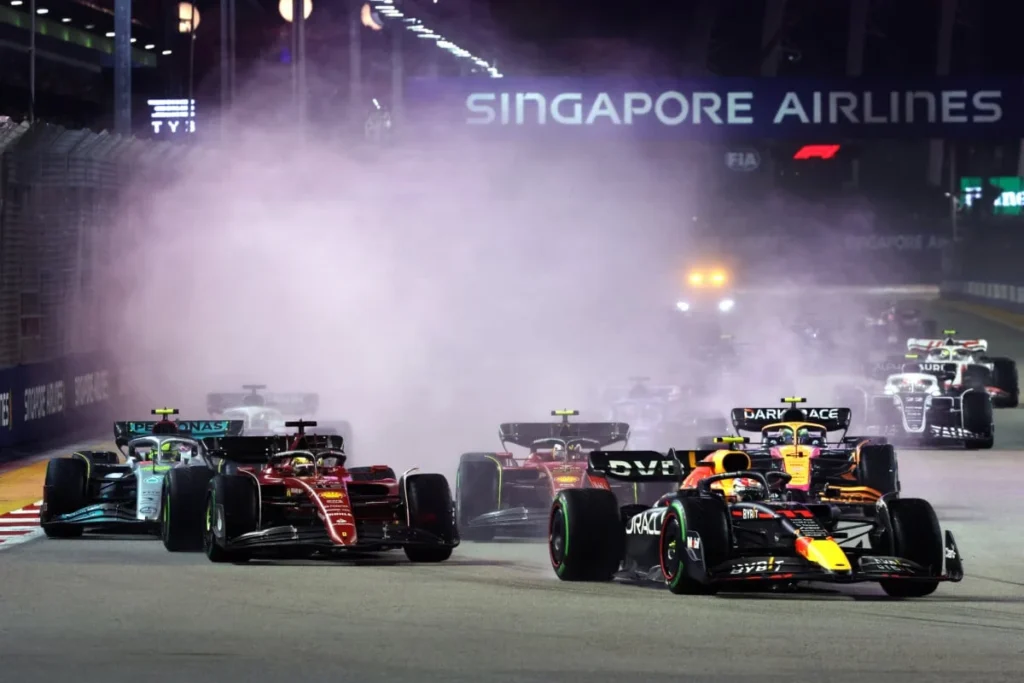
The neon-lit tarmac of the Marina Bay Street Circuit is poised to host one of the most demanding and strategically volatile weekends of the 2026 FIA Formula 1 World Championship. Scheduled from October 9 to 11, the Singapore Grand Prix marks the 17th round of an increasingly grueling global calendar. Teams arrive in Southeast Asia directly on the heels of Max Verstappen’s masterclass in the chaotic humidity of Sepang, with the championship battle tightening across both the Constructors’ and Drivers’ standings.
What makes the 2026 iteration uniquely fascinating is a massive paradigm shift in the weekend’s scheduling: for the first time in the history of the event, Marina Bay will host a Sprint weekend format. Traditionally known as a grueling, solitary endurance test under the floodlights, the Singapore Grand Prix will now offer zero margin for error. With only a single 60-minute Free Practice session on Friday morning before teams are thrust straight into Sprint Qualifying, engineers, strategists, and drivers will have to optimize their setups in record time.
The physical challenge of Marina Bay remains legendary. Carved through the public streets of Singapore, the 4.940-kilometer circuit features 19 technical, unforgiving corners where the concrete walls loom dangerously close. Drivers will face 62 punishing laps on Sunday, accumulating a race distance of 306.143 kilometers. Compounding this is the notorious local microclimate: ambient temperatures hovering between 28°C and 33°C, combined with suffocating humidity that can cause drivers to lose up to three kilograms of body weight through intense fluid loss over the course of the grand prix.
Meteorological forecasts for the second weekend of October suggest a dry track for the opening two days of action, setting the stage for pristine running during Friday’s Sprint Shootout and Saturday’s Sprint race. However, the probability of sudden tropical downpours increases significantly for Sunday afternoon and evening, threatening to introduce a chaotic wet-weather lottery to the grand prix itself.
Chronology: The Complete Weekend TV and Session Schedule (France & Belgium)
For European fans, the six-hour time difference between Paris/Brussels and Singapore is significantly mitigated by the nocturnal scheduling of the sessions, allowing for prime-time evening viewing without the need for middle-of-the-night alarm clocks. Below is the complete chronological guide to following every moment of the action live on television in France and Belgium.
Friday, October 9, 2026
- 10:30 AM – 11:30 AM (CET): Free Practice 1 (The sole practice session of the weekend)
- 02:30 PM – 03:14 PM (CET): Sprint Qualifying (Determines the grid for Saturday’s Sprint race)
Saturday, October 10, 2026
- 11:00 AM (CET): Sprint Race (Short-format race awarding crucial championship points)
- 03:00 PM – 04:00 PM (CET): Grand Prix Qualifying (Sets the definitive grid for Sunday’s main event)
Sunday, October 11, 2026
- 02:00 PM (CET): The 2026 Singapore Grand Prix (62 laps of high-stakes racing under the floodlights)
Where to Watch in France (Canal+ Group)
As the exclusive official broadcaster of Formula 1 in France, the Canal+ network will provide wall-to-wall coverage across its specialized channels:
- Friday: Coverage kicks off on Canal+ Sport at 10:15 AM for FP1, returning at 2:15 PM for Sprint Qualifying.
- Saturday: Canal+ Sport goes live at 10:30 AM ahead of the Sprint race, followed by the build-up to Grand Prix Qualifying starting at 2:40 PM.
- Sunday: The flagship broadcast begins on Canal+ at 12:53 PM with their signature pre-race show, “La Grille”. Lights out for the Grand Prix follows at 1:55 PM, capped off immediately afterward at 3:46 PM with “Formula One, le Mag” for expert debriefs, driver interviews, and paddock analysis.
Where to Watch in Belgium (RTBF / Tipik)
Motorsport fans in Belgium can follow the action via public broadcaster RTBF:
- Friday: Broadcast windows open on Tipik at approximately 2:25 PM for the afternoon’s competitive action.
- Saturday: Live coverage begins at 10:55 AM for the Sprint race, returning at 2:55 PM for Grand Prix Qualifying.
- Sunday: Pre-race and race coverage gets underway on Tipik at 1:55 PM, leading directly into the 62-lap showdown.
Supporting Data: Track Specifications and Technical Demographics
To truly understand why the Singapore Grand Prix is regarded as one of the ultimate tests on the Formula 1 calendar, one must examine the raw data and structural evolution of the Marina Bay Street Circuit.
Circuit Profile
- Official Name: Marina Bay Street Circuit
- Location: Singapore
- Circuit Length: 4.940 kilometers (3.069 miles)
- Race Distance: 306.143 kilometers (190.228 miles)
- Total Laps: 62
- Number of Corners: 19
- First Grand Prix Held: 2008 (F1’s maiden night race)
Track Layout Adjustments
Major civil engineering works completed three years ago radically altered the third sector of the lap. The notoriously tight, 90-degree complex spanning the old Turns 16 through 19 was permanently removed and replaced by a 397.9-meter straight running parallel to the grandstand. This permanent layout modification has measurably increased average speeds, lowered lap times, and introduced an additional heavy braking zone that has improved overtaking opportunities into what is now redefined as Turn 16.
Environmental and Physical Strain Data
- Ambient Temperature Range: 28°C to 33°C (82°F to 91°F)
- Cockpit Temperatures: Routinely exceed 50°C to 60°C due to engine heat entrapment and lack of airflow.
- Fluid Loss: Drivers can sweat out between 2.5 to 3.5 kilograms of body weight during the course of the 2-hour race.
- G-Force and Braking: The track features numerous heavy braking events interspersed with low-speed traction zones, placing immense cumulative strain on the neck muscles and carbon-ceramic brake systems, which must operate within precise temperature windows despite the tropical ambient conditions.
Official Responses and Stakeholder Perspectives
The decision by the Fédération Internationale de l’Automobile (FIA) and Formula One Management (FOM) to introduce a Sprint weekend at Marina Bay has elicited significant commentary from team principals, drivers, and circuit promoters alike.
Speaking on the unique logistical and sporting hurdles of the event, senior team technical directors have voiced both apprehension and excitement. "Adding a Sprint format to a track like Singapore completely alters our traditional preparation matrix," explained one leading race engineer. "Normally, you use Friday to methodically step through setup iterations, managing tire degradation on a green, evolving street track. With only one hour of practice before you lock your parc fermé setup during Sprint Qualifying, guessing the optimal ride height and mechanical balance becomes an absolute high-wire act."
Drivers, too, have shared mixed emotions regarding the physical toll of a double-header competitive weekend under extreme heat stress. Several prominent members of the Grand Prix Drivers’ Association (GPDA) pointed out that competing in high-intensity racing conditions twice in one weekend—combined with the cognitive load of navigating concrete canyons without a single millimeter of margin for error—pushes human physiology to the absolute brink.
Conversely, commercial stakeholders and event promoters have championed the innovation. Singapore Tourism Board representatives noted that transforming the weekend into a Sprint event dramatically elevates global viewership figures, fan engagement, and ticket sales, cementing the venue’s status as the crown jewel of Formula 1’s Asian leg.
Implications for the 2026 World Championship
The stakes heading into the 17th round of the season could not be higher. With the 2026 regulations continuing to bed in, the championship fights in both the Drivers’ and Constructors’ categories remain razor-thin.
Because Sprint weekends offer an elevated points-scoring structure—awarding points down to eighth place in the Saturday Sprint in addition to the traditional grand prix points on Sunday—a maximum of 34 points is available to a single driver over the course of the weekend. For chasers trying to hunt down the championship leader following Verstappen’s turbulent victory in Sepang, Marina Bay represents a golden opportunity to stage a dramatic turnaround, or conversely, a catastrophic banana peel.
Furthermore, the threat of Sunday afternoon rain adds an unpredictable layer of strategic volatility. Street circuits under wet conditions notoriously punish even the slightest lack of concentration, making Safety Cars and Virtual Safety Cars an absolute statistical certainty at Marina Bay. Strategists will need to remain hyper-flexible, balancing track position against the risk of wall impacts and the timing of intermediate or wet-weather tire transitions.
Once the chequered flag drops on the 62nd lap under the dazzling Singapore lights, the F1 circus will have precious little time to catch its breath. The paddock will instantly pack up its freight and leap across the globe to the Americas, where the next leg of the relentless autumn triple-header awaits from October 23 to 25. As the championship enters its final, decisive phase, every single tenth of a second at Marina Bay will reverberate all the way to the season finale.
