

The automotive industry stands on the precipice of a seismic shift. For over a decade, the lithium-ion battery has been the undisputed king of electric vehicle (EV) propulsion, enabling the modern transition toward sustainable transport. Yet, the limitations of current liquid-electrolyte technology—namely energy density, charging speed, and thermal stability—have remained persistent hurdles.
Enter BYD, the Chinese automotive titan that has fundamentally reshaped the global EV landscape. In a significant announcement that has captured the attention of engineers and investors alike, the company has confirmed plans to introduce its first vehicle equipped with solid-state battery technology as early as 2027. This development represents more than just a new battery pack; it signals the potential beginning of the end for the liquid-electrolyte era.
The Core Innovation: Moving Beyond Liquids
To understand the significance of BYD’s 2027 milestone, one must first grasp the fundamental difference between current batteries and the proposed solid-state architecture. Standard lithium-ion batteries rely on a liquid electrolyte to shuttle ions between the anode and cathode. While effective, this liquid is inherently volatile, sensitive to temperature fluctuations, and poses a risk of thermal runaway if damaged or overheated.
Solid-state batteries replace this flammable liquid with a solid electrolyte—in BYD’s case, a sulfide-based compound. This design allows for a more compact structure, higher energy density, and significantly improved safety profiles. Because the solid material is less prone to short-circuiting and does not require the heavy cooling systems mandated by liquid-based cells, manufacturers can theoretically pack more energy into a lighter, smaller space.
A Chronology of Innovation: From Lab to Production
BYD’s entry into the solid-state arena did not happen overnight. The company’s trajectory highlights a meticulous, decade-long commitment to R&D, overseen by its specialized battery division, FinDreams Battery.
- 2013: The inaugural phase of internal research begins, as BYD starts exploring the fundamental chemistry of solid-state electrolytes.
- 2016: The project moves from theoretical research to technical validation, as engineers begin testing the stability of sulfide-based materials.
- 2023-2025: Significant advancements are made in scaling up cell capacity and refining the interface between the electrolyte and the electrodes, a notorious bottleneck in solid-state chemistry.
- February 2026: A critical milestone is reached with the commissioning of a pilot production line in Pingshan, Shenzhen. This facility, boasting a 2 GWh annual capacity, serves as the testbed for industrial-scale manufacturing.
- Late 2026: BYD announces plans for a larger facility in Bishan, Chongqing, with a projected 20 GWh capacity, signaling the company’s intent to transition from prototype to mass production.
- 2027: The target year for the official presentation of the first commercial vehicle integrating solid-state technology.
Data-Driven Ambitions: The 400 Wh/kg Goal
The technical targets set by BYD are nothing short of aggressive. While current "Blade Battery" technology (lithium-iron-phosphate) typically sits around 200 Wh/kg in terms of energy density, BYD is aiming for 400 Wh/kg with its solid-state cells.
This leap in energy density is the "holy grail" of the EV industry. If successful, it would allow vehicles to achieve ranges exceeding 1,000 to 1,200 kilometers (based on the Chinese CLTC cycle) without the weight penalty of massive battery packs. Such an achievement would effectively neutralize "range anxiety," the primary psychological barrier preventing many consumers from switching to electric vehicles.
However, industry analysts urge caution. The 400 Wh/kg figure refers to individual cells. Once these cells are integrated into a battery pack—complete with structural housing, battery management systems, and thermal regulation—the net energy density will inevitably be lower. Furthermore, while the CLTC cycle provides a optimistic benchmark, real-world performance on European motorways (WLTP standards) remains the true litmus test for these batteries.
Official Stance: Stella Li’s Strategic Vision
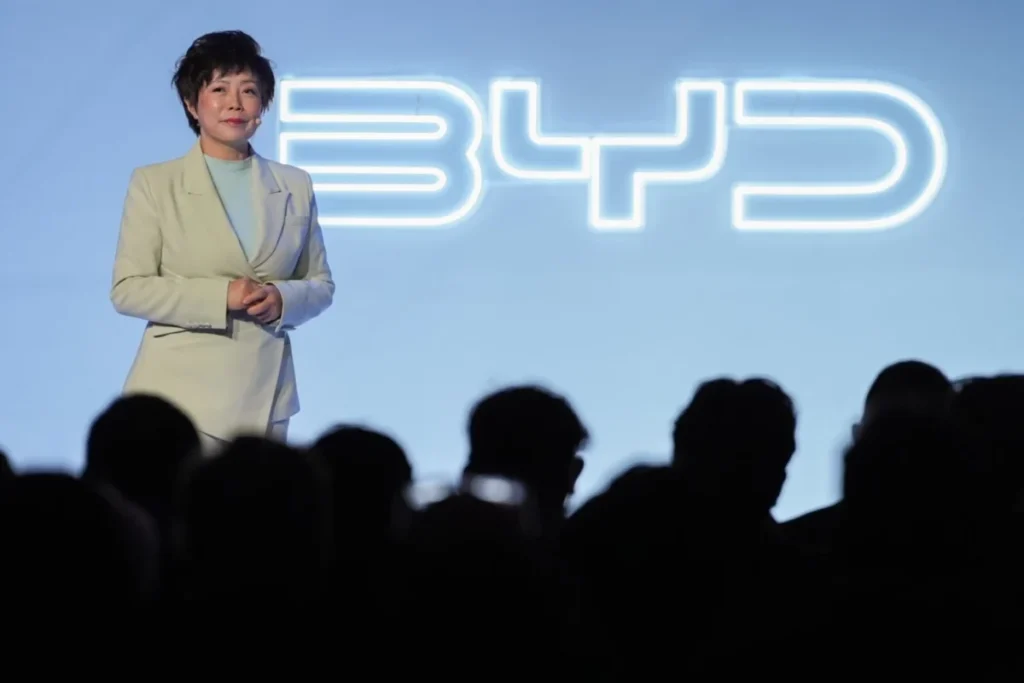
In an interview with Carwow in September 2026, BYD’s Executive Vice President, Stella Li, provided clarity on the company’s direction. She characterized BYD as a leader in the race for solid-state commercialization, emphasizing that the 2027 launch is a deliberate, calculated step.
Crucially, Li managed expectations regarding availability. The 2027 debut will not be a mass-market launch. Instead, it will be a high-end demonstration, likely reserved for flagship models within the Yangwang or Denza brands. These luxury lines offer the price elasticity required to absorb the high initial costs of solid-state manufacturing. BYD is playing a long game; by starting with low-volume, high-margin vehicles, they can refine the manufacturing processes, improve yields, and drive down costs before moving toward mass-market adoption around 2030.
Manufacturing Challenges: The Industrial Hurdle
The transition from a laboratory prototype to an assembly line is where most battery startups fail. Manufacturing solid-state batteries at scale requires extreme precision. The interface between the solid electrolyte and the electrodes must be perfect to ensure ion conductivity and long-term durability.
BYD’s focus on its Pingshan and Bishan facilities highlights their awareness of this challenge. By achieving a manufacturing yield rate of over 90% in their pilot plant, they have demonstrated that their sulfide-based chemistry is potentially viable for mass production. However, scaling this to tens of thousands of units per month—a requirement for the global automotive market—is a task that requires an entirely new set of industrial tools and clean-room environments.
Implications for the Global Automotive Market
The implications of BYD’s 2027 deadline extend far beyond the company itself. If BYD succeeds, it will put immense pressure on traditional Western and Japanese automakers.
- Competitive Pressure: Rivals such as Toyota, which has long championed solid-state development, and CATL, which is also rapidly iterating its battery tech, will be forced to accelerate their timelines to maintain market relevance.
- Consumer Expectations: The announcement sets a new standard for what consumers will expect from EVs. As the 1,000 km range becomes a tangible reality, the benchmark for "acceptable" range will rise, forcing laggard manufacturers to innovate faster.
- Supply Chain Shift: A move toward solid-state technology will eventually shift the demand for raw materials. While lithium remains critical, the specific compositions of solid electrolytes may alter the reliance on nickel, cobalt, or manganese, potentially shifting global mining strategies.
- A Multi-Faceted Strategy: It is important to note that BYD is not "betting the house" on solid-state. They continue to refine their LFP Blade Batteries and explore sodium-ion chemistry for budget-friendly models. This diversified portfolio ensures that BYD remains competitive at every price point, regardless of the speed of the solid-state transition.
Conclusion: A Measured Optimism
The year 2027 will mark a watershed moment in the history of the electric car, but it is not the "end of history." The introduction of BYD’s solid-state battery will be an evolutionary step—a proof of concept that validates years of painstaking research.
For the average motorist, the immediate impact will be minimal; you will not see these cars in every driveway by 2028. However, the path has been cleared. BYD has demonstrated that the transition to higher energy density, safer chemistry, and increased efficiency is not only possible but inevitable. As the company moves to validate these technologies in real-world conditions, the global automotive industry will be watching closely. Whether this leads to a rapid transformation of the market or a gradual integration over the next decade remains to be seen, but one thing is certain: the era of the solid-state battery has officially begun.
