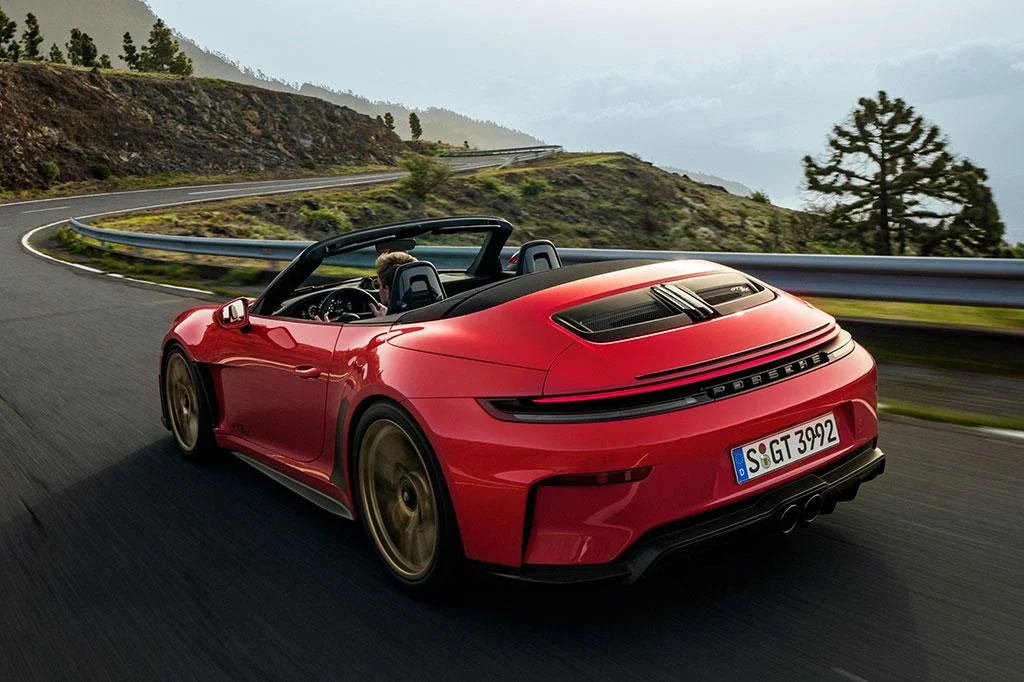
Porsche has once again shattered the expectations of the automotive world. With the unveiling of the 911 GT3 S/C, the Stuttgart-based manufacturer has bridged the gap between the high-octane precision of the GT3 and the soulful, lightweight ethos of the S/T. This unprecedented convertible variant is not merely a "topless" sports car; it is a mechanical symphony designed for those who find the connection between man, machine, and the open road to be the ultimate driving ambition. By blending the raw, atmospheric power of the 992.2 generation with the nimble, weight-conscious engineering of the limited-run S/T, Porsche has created a sensory masterpiece that promises to redefine the convertible segment.
The Genesis of a New Icon: Main Facts
At the heart of the 911 GT3 S/C—a moniker interpreted by enthusiasts as either "Sport Classic" or "Street Concept"—lies a commitment to purity that has become increasingly rare in the modern automotive landscape. Unlike the standard 911 Cabriolet, which serves as a grand tourer, the S/C is a dedicated biplace (two-seater), a configuration that harkens back to the spirit of the 991 Speedster of 2019.
The vehicle is powered by the legendary 4.0-liter naturally aspirated flat-six engine, sourced directly from the latest 911 GT3 (992.2). This powerplant churns out 510 horsepower (375 kW) and 450 Nm of torque. In a bold rejection of the dual-clutch transmission (PDK) dominance, Porsche has opted exclusively for a short-throw six-speed manual gearbox. The result is a visceral driving experience that prioritizes driver engagement over sheer split-second shift times. Performance metrics remain blistering, with a 0 to 100 km/h sprint completed in 3.9 seconds and a top speed of 313 km/h.
A Chronological Evolution: From Speedster to S/C
To understand the significance of the GT3 S/C, one must look at the lineage of Porsche’s open-top performance cars.
- 2019: The 991 Speedster. This marked the last time Porsche offered a strictly two-seater, open-air, high-performance variant. It set the blueprint for the "purist" approach, utilizing the GT3 engine in a specialized chassis.
- 2023: The 911 S/T. Celebrated as the lightest 992-generation 911, the S/T demonstrated how aggressive weight-saving measures could transform the character of the flat-six engine.
- 2024: The 911 GT3 S/C. Integrating the lessons learned from the S/T, Porsche engineers successfully ported the weight-reduction philosophy into a convertible body style. This represents the culmination of a decade of research into how to balance structural rigidity with the "flyline" aesthetic that Porsche owners demand.
Engineering Excellence: The Obsession with Weight
One of the most daunting challenges in creating a high-performance convertible is weight management. Traditional convertibles suffer from the added mass of hydraulic mechanisms and structural reinforcements. However, the S/C defies these constraints, tipping the scales at an astonishingly low 1,497 kg.
This feat of engineering was achieved through a systematic "cannibalization" of the S/T’s parts bin:
- Carbon Fiber Dominance: The hood, front fenders, and doors are crafted from carbon fiber-reinforced plastic (CFRP), significantly reducing curb weight without compromising structural integrity.
- Structural Optimization: The anti-roll bars and rear shear panel are also composed of carbon fiber, further centralizing mass and improving handling dynamics.
- Performance Components: The inclusion of Porsche Ceramic Composite Brakes (PCCB) as standard saves 20 kg of unsprung mass, while bespoke magnesium wheels account for an additional 9 kg reduction.
- Electrical Efficiency: A 40 Ah lithium-ion starter battery contributes a final 4 kg saving, proving that no detail was too small for the Stuttgart engineering team.
Aesthetic and Aerodynamic Innovation
The S/C introduces a revolutionary automatic soft-top mechanism. Utilizing flat magnesium bows, the roof retains the fluid "Flyline" silhouette of the 911 Coupé, effectively eliminating the visual "hump" often associated with convertible models. The hydraulic system is engineered for efficiency, allowing the roof to be deployed or retracted in just 12 seconds, even at speeds of up to 50 km/h.
Visually, the vehicle is distinguished by a blacked-out windshield frame and the muscular fender arches inherited from the S/T. A critical technical detail is the retractable rear spoiler, which features a Gurney Flap—a first for a 911 convertible. This small lip significantly improves downforce and aerodynamic balance, ensuring that the car remains planted even when the top is down at high speeds.
Interior Design: The Art of Essentialism
Inside the cabin, the atmosphere is one of deliberate minimalism. Porsche has stripped away non-essential creature comforts to focus on the driver’s interface. Features include lightweight carpeting, fabric door-pull straps, and perforated black leather upholstery.
The instrument cluster features the specialized "Track Screen" mode, which condenses vital driving data, minimizing distractions and allowing the driver to focus entirely on the road ahead. For those seeking an elevated level of bespoke luxury, the optional "Street Style" pack offers:
- Pyro Red decorative accents.
- Four-color braided leather seating.
- A wooden laminated gear shifter.
- An 80-liter leather-lined storage compartment in the rear, replacing the traditional rear seats.
Official Perspectives and Market Positioning
Porsche’s strategy with the GT3 S/C represents a shift in market philosophy. Unlike the ultra-limited Speedster editions of the past, the GT3 S/C is not restricted by a production cap. By opting for an "unlimited" production run, Porsche is signaling a desire to make this pure driving experience accessible to a broader range of collectors and enthusiasts.
Priced at 276,500 euros (excluding taxes and ecological penalties), the car sits at the premium end of the 911 spectrum. Industry analysts suggest that this pricing reflects the high cost of the carbon fiber components and the specialized nature of the manual drivetrain. Porsche representatives have emphasized that the S/C is not meant to replace the GT3, but to act as a parallel offering for those who value the auditory experience of the atmospheric engine above all else.
Implications for the Future of the 911
The launch of the 911 GT3 S/C has profound implications for the future of the 911 lineup. It confirms that despite the industry-wide shift toward electrification and turbocharging, Porsche remains committed to the atmospheric flat-six. By successfully integrating the S/T’s lightweight technology into a convertible, the company has proven that "open-air" does not have to mean "heavy" or "compromised."
Furthermore, the decision to offer the car without a production limit suggests that Porsche is listening to its customer base, which has been vocal about the frustration of missing out on limited-edition models. This car serves as a bridge: it maintains the exclusivity of the brand while providing a more sustainable path for collectors to acquire a "halo" vehicle.
As the automotive world pivots toward autonomous driving and digital interfaces, the 911 GT3 S/C stands as a defiant statement. It is a car that demands focus, rewards skill, and celebrates the mechanical purity of a bygone era. For the driving enthusiast, it is not just a new model; it is a reminder of why we fell in love with driving in the first place—the wind, the sound of the engine, and the perfect mechanical connection between driver and road.