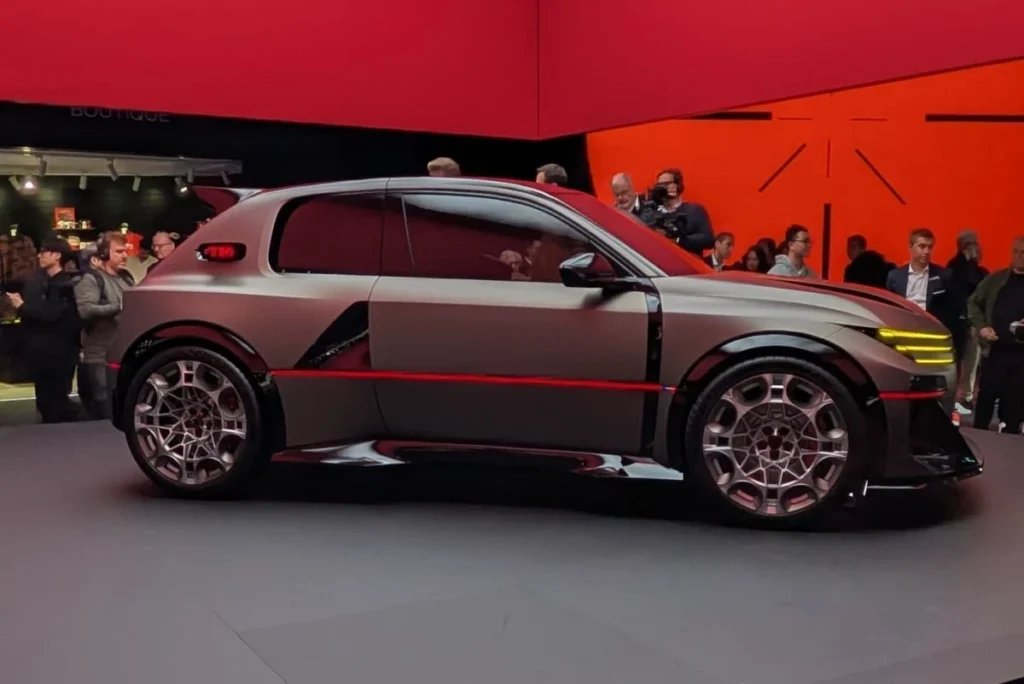
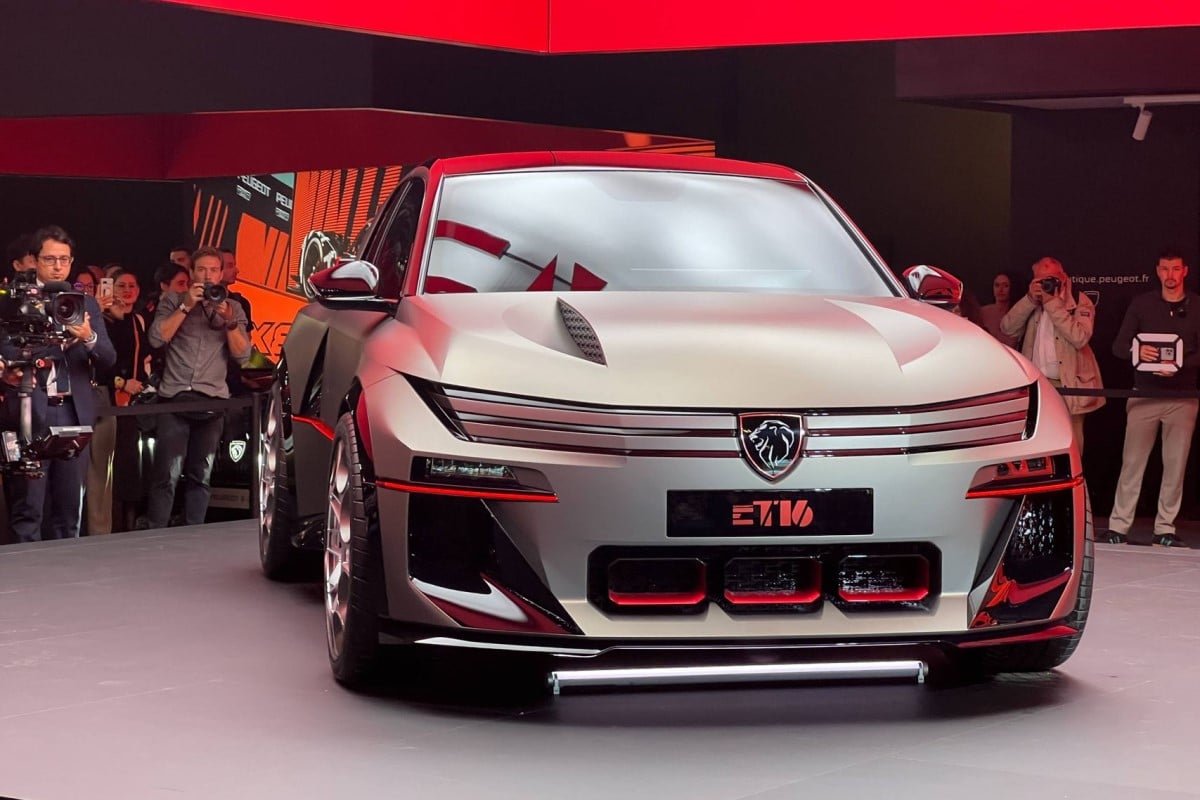
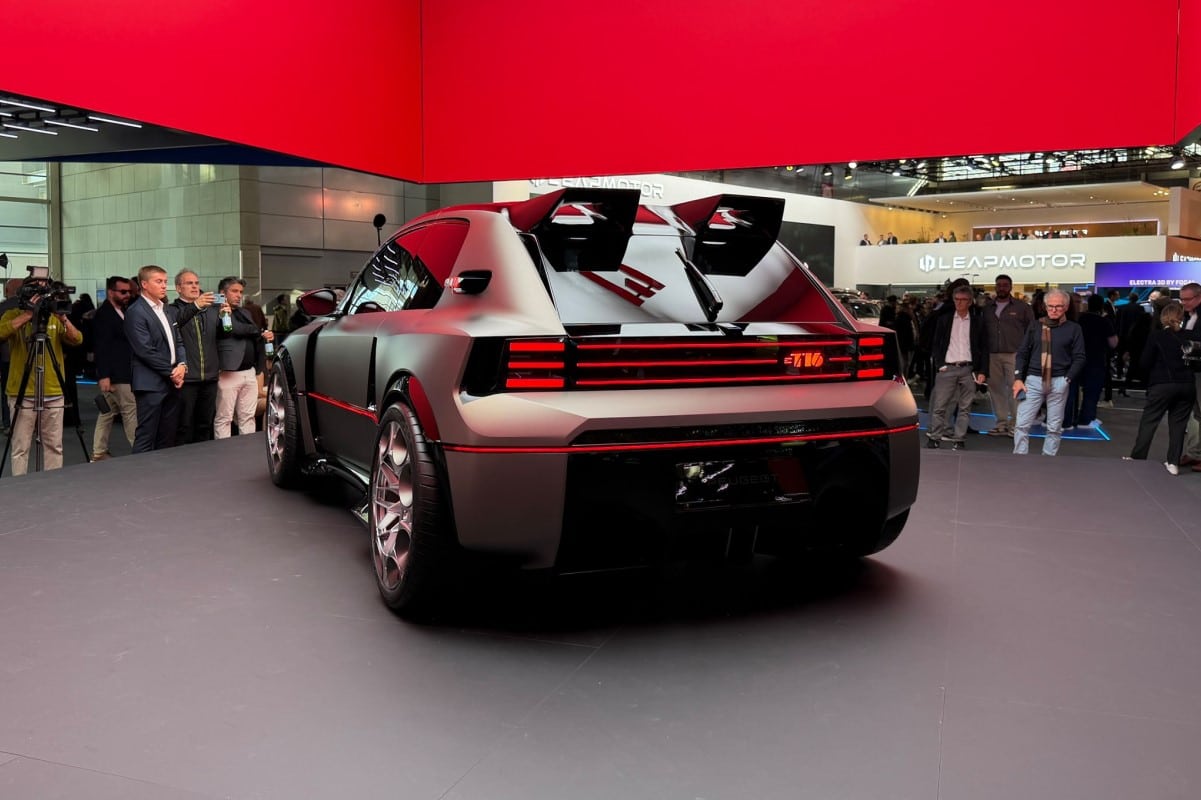
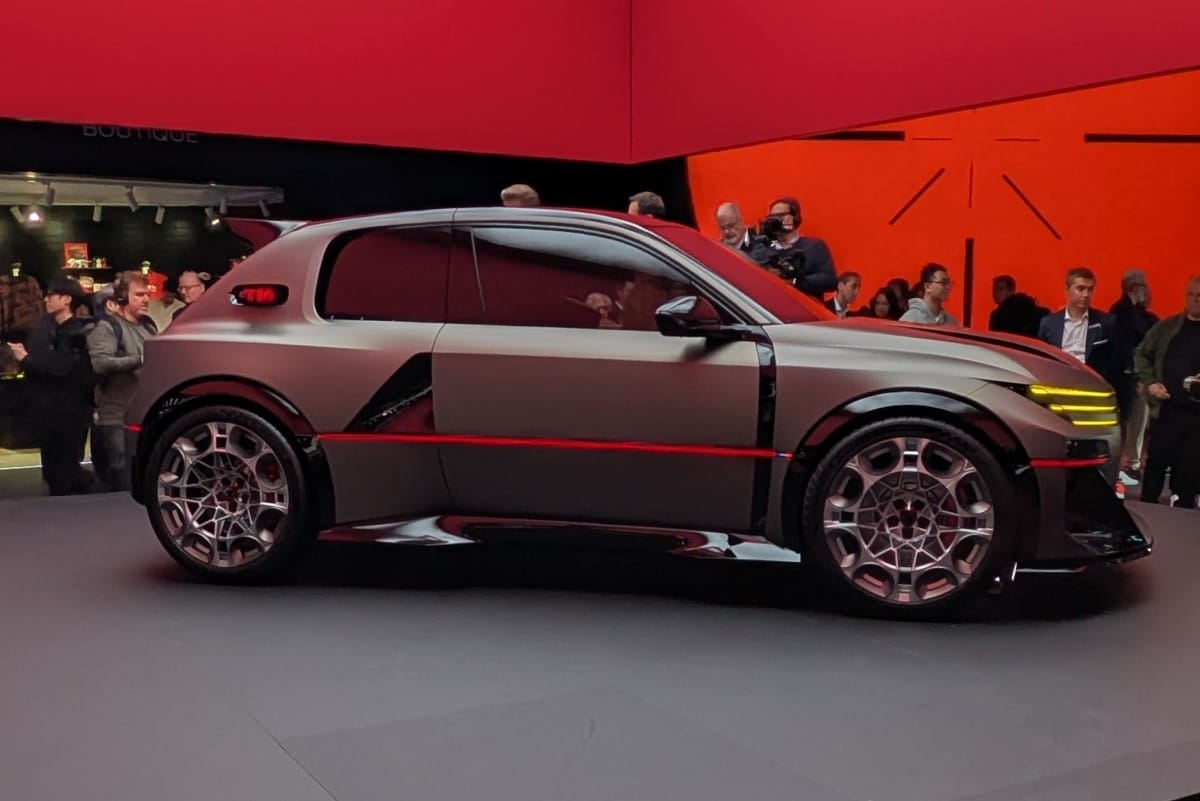
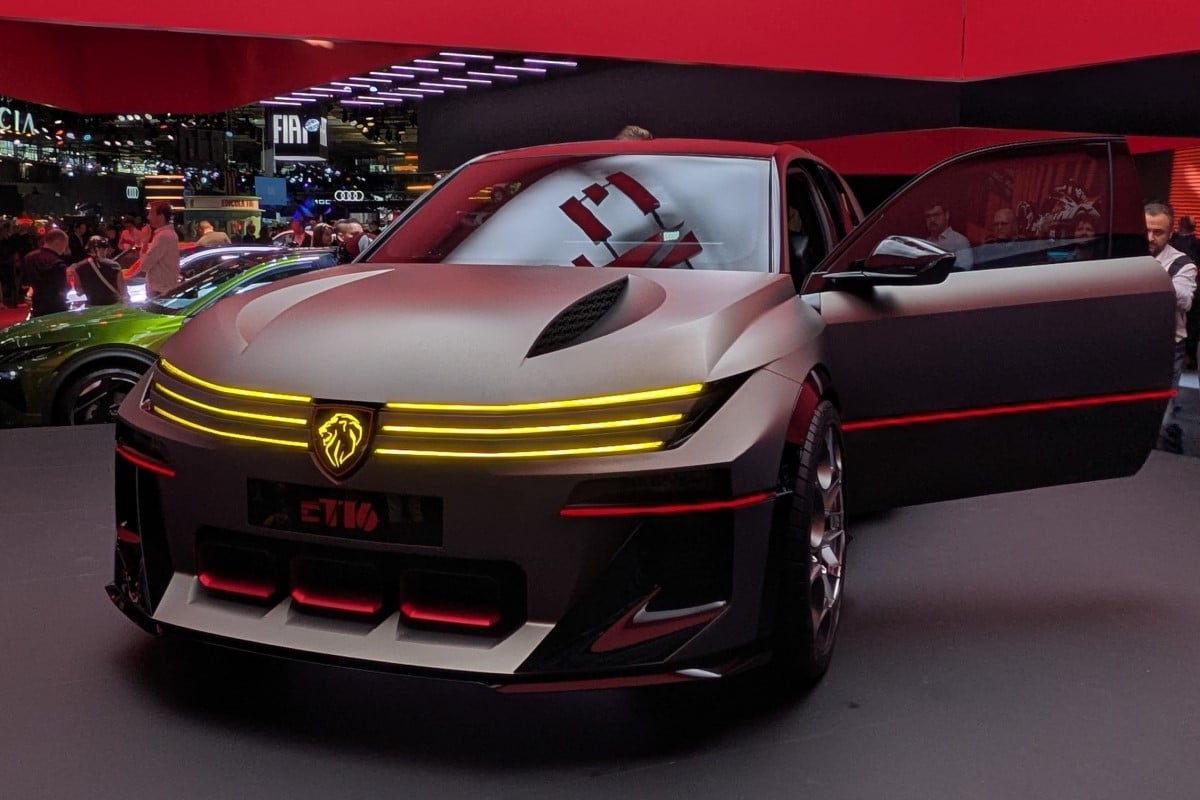
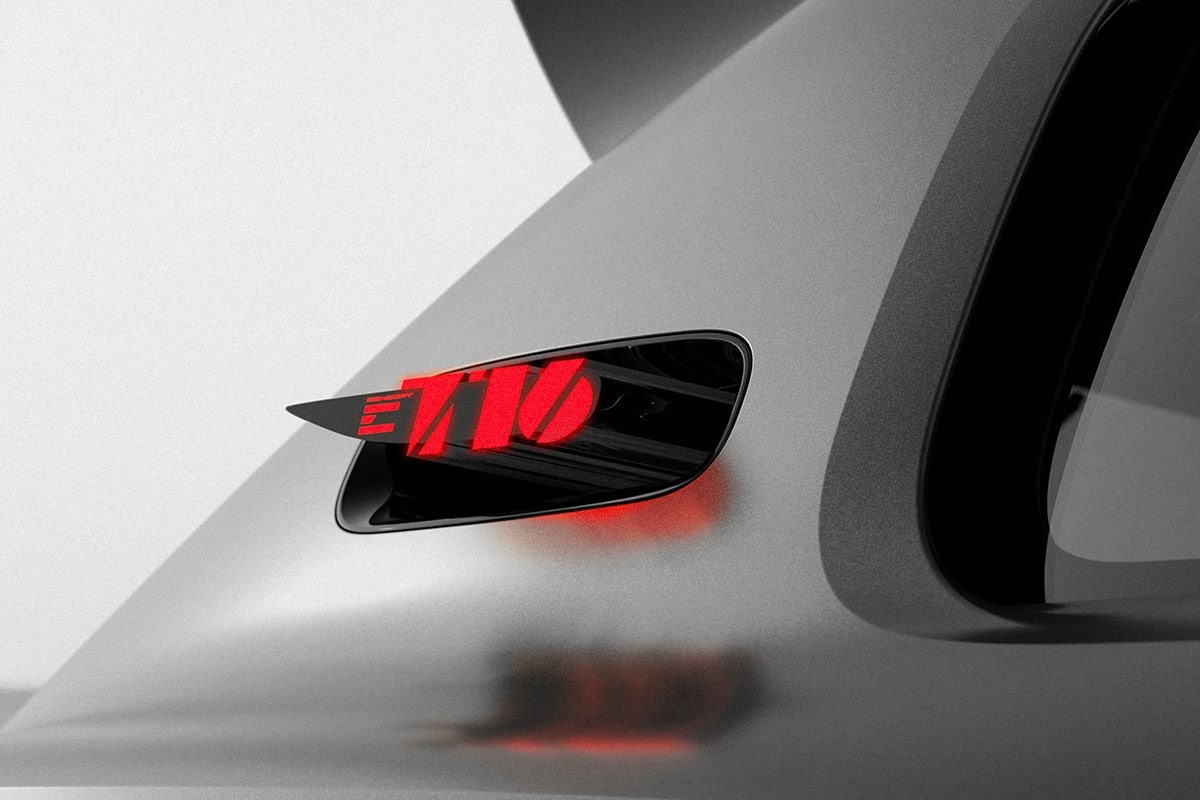
PARIS — At Hall 4 of the Paris Expo Porte de Versailles, beneath towering black architectural trusses designed to signal a seismic shift in automotive philosophy, Peugeot has staged one of the most compelling emotional counter-offensives of the decade. The centerpiece of their 1,300-square-meter stand isn’t a volume-selling crossover or an incremental software update; it is the Peugeot E-T16, a blindingly aggressive, 816-horsepower electric concept car that unashamedly channels the grease-and-glory DNA of Group B rally monsters.
Surrounded by frantic photographers convinced the vehicle might suddenly sprout wings and bolt for the exit, the E-T16 anchors a three-pronged concept offensive that includes the RCZ Vision. Yet, for all its visual violence and track-bred pedigree, the E-T16 occupies a complex space: it is simultaneously a celebration of a golden motorsport era, a technological tour de force, and a masterclass in corporate distraction designed to ease the sting of shifting EV timelines.
Here is the complete, deep-dive chronicle of Peugeot’s sensational Paris showcase, the technology driving its future, and the stark reality behind its glittering stand.
Main Facts: The Anatomy of the Peugeot E-T16
To understand the E-T16 is to understand Peugeot’s dual personality in 2026: pragmatic manufacturer of everyday hybrids on one hand, and romantic custodian of motorsport heritage on the other.
Powertrain & Performance: The E-T16 utilizes a radical tri-motor layout—one electric motor on the front axle and two independently managed units on the rear. Together, they unleash a combined 816 horsepower with precise torque vectoring across the rear wheels.
Straight-Line Metrics: The sprint from 0 to 100 km/h is obliterated in just 2.5 seconds—matching the acceleration figures of a Porsche 911 Turbo S—while the 0 to 300 km/h run is dispatched in a breathtaking 16 seconds.
Thermal Endurance: Abandoning the traditional EV Achilles’ heel of rapid thermal degradation under heavy load, the E-T16 introduces Side Cooling technology—a lateral cell-cooling system allowing the car to complete three consecutive laps of the Nürburgring Nordschleife (over 60 kilometers) with zero power derating.
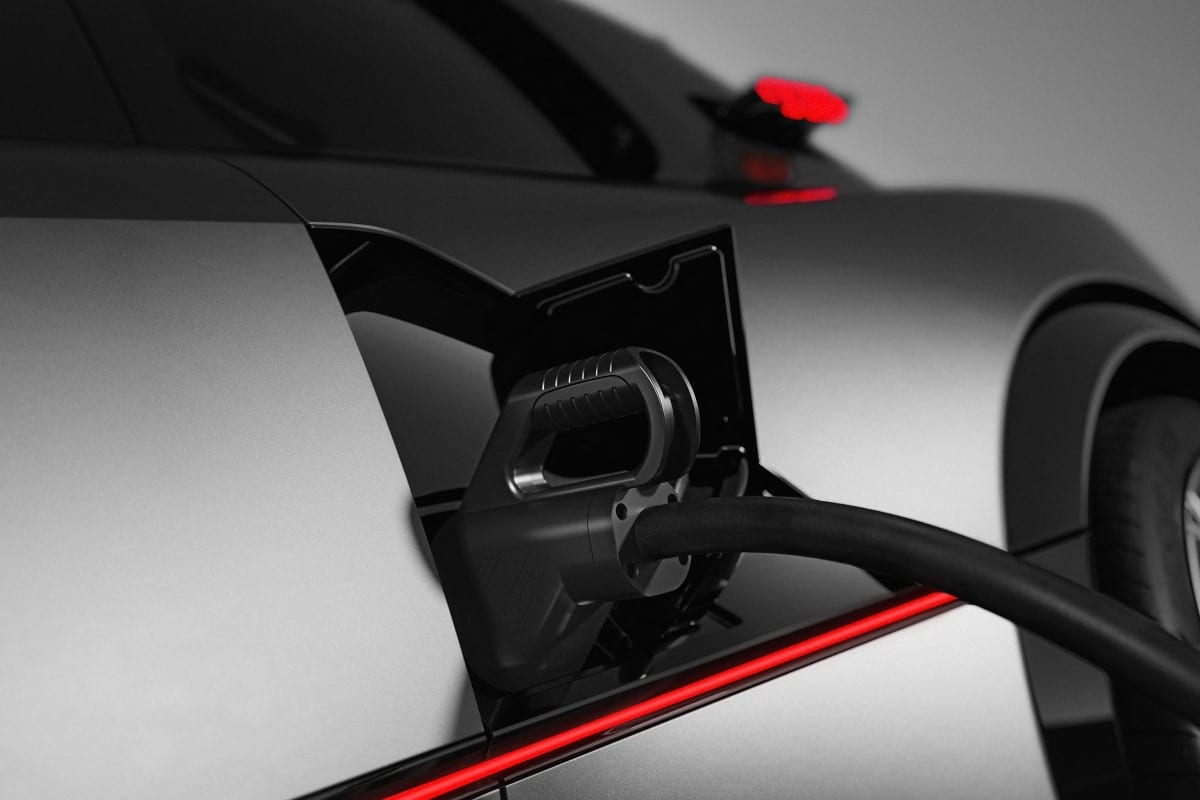
Architecture & Charging: Built around an 800-volt electrical architecture, it packs an 85 kWh battery pack offering a theoretical WLTP range of 400 kilometers and DC fast-charging capabilities from 10 to 80 percent in under 15 minutes.
Weight & Footprint: Tipping the scales at 1,610 kg, it achieves an enviable power-to-weight ratio of under 2 kg per horsepower, utilizing 380mm brake discs, aggressive Michelin rubber (275mm front, 315mm rear), a steer-by-wire system, and a dramatic vertical hydraulic handbrake.
Chronology: From Group B Glory to the Paris Stage
The Heritage Roots (1985–1986)
The conceptual justification for the E-T16 is deeply rooted in Peugeot’s golden age of rallying. The brand is officially celebrating the 40th anniversary of the 205 T16’s consecutive World Rally Championship Manufacturer and Driver titles in 1985 and 1986. Driven by legends like Timo Salonen and Juha Kankkunen, the mid-engine, tube-frame Group B terror defined an era of unbridled horsepower and spectator danger.
The Evolution of the Concept (2023–2026)
While the inspiration is historical, the foundation is ultra-modern. The E-T16 directly evolves from the Polygon Concept, a rolling laboratory that Peugeot has utilized over the past year to test advanced steer-by-wire mechanics and the revolutionary rectangular Hypersquare steering controller. By translating the Polygon’s architecture into an extreme hatchback body style, Peugeot’s design teams bridged the gap between tomorrow’s production tech and yesterday’s rally icons.
The Paris Reveal (October 2026)
Unveiled at the Mondial de l’Auto in Paris alongside the all-electric E-208 GTi (281 hp, 0-100 km/h in 5.5 seconds) and a pristine 1986 205 GTI, the E-T16 dominated headlines. It formed a generational family portrait: the vintage grandmother, the high-voltage granddaughter, and the terrifying muscle-bound cousin kept strictly away from polite society.
Supporting Data: Specifications Breakdown
Feature
Peugeot E-T16 Concept
Renault 5 Turbo 3E (Reference)
Powertrain
Tri-motor (1 Front, 2 Rear) Electric
Single-motor Rear Electric
Power Output
816 horsepower
547 horsepower
0–100 km/h
2.5 seconds
~3.5 seconds
Battery Capacity
85 kWh (800V architecture)
70 kWh
Curb Weight
1,610 kg
1,450 kg (approx.)
Production Status
Pure Concept (Not for sale)
Limited to 1,980 units (Client orders open)
Official Responses and Strategic Shifts
Beneath the flashing lights of the exhibition hall lies a significant corporate pivot. Peugeot’s presence in Paris is much more than a celebration of speed; it is a carefully orchestrated distraction from a changing industrial landscape.
Revising the 2030 Electric Roadmap
Alain Favey, CEO of Peugeot, recently confirmed that the brand has officially revised its rigid 2030 all-electric strategy, judging initial timelines to be unrealistic. Moving forward, Peugeot will continue to offer non-electric and hybrid internal combustion engine (ICE) options well beyond the turn of the decade.
"The transition to full electrification is taking longer than initially projected," industry insiders note. Having secured a dominant position in the French hybrid market—and ranking second in Europe right behind Toyota—Peugeot executives recognized the financial peril of abandoning transitional powertrains too hastily.
The Value of a Manifesto
Because the path to total electrification has slowed, Peugeot required a high-octane "fireworks display" to reassure enthusiasts that zero-emission mobility does not spell the death of driving passion. The E-T16 serves as a rolling manifesto: it proves that engineers can extract supercar-shredding performance from electrons while honoring the brand’s competitive lineage.
However, as critics have wryly pointed out, a concept car manifesto has one distinct advantage over a production vehicle: it never has to pass government homologation or periodic technical inspections.
Design Language: Nostalgia Meets Sci-Fi
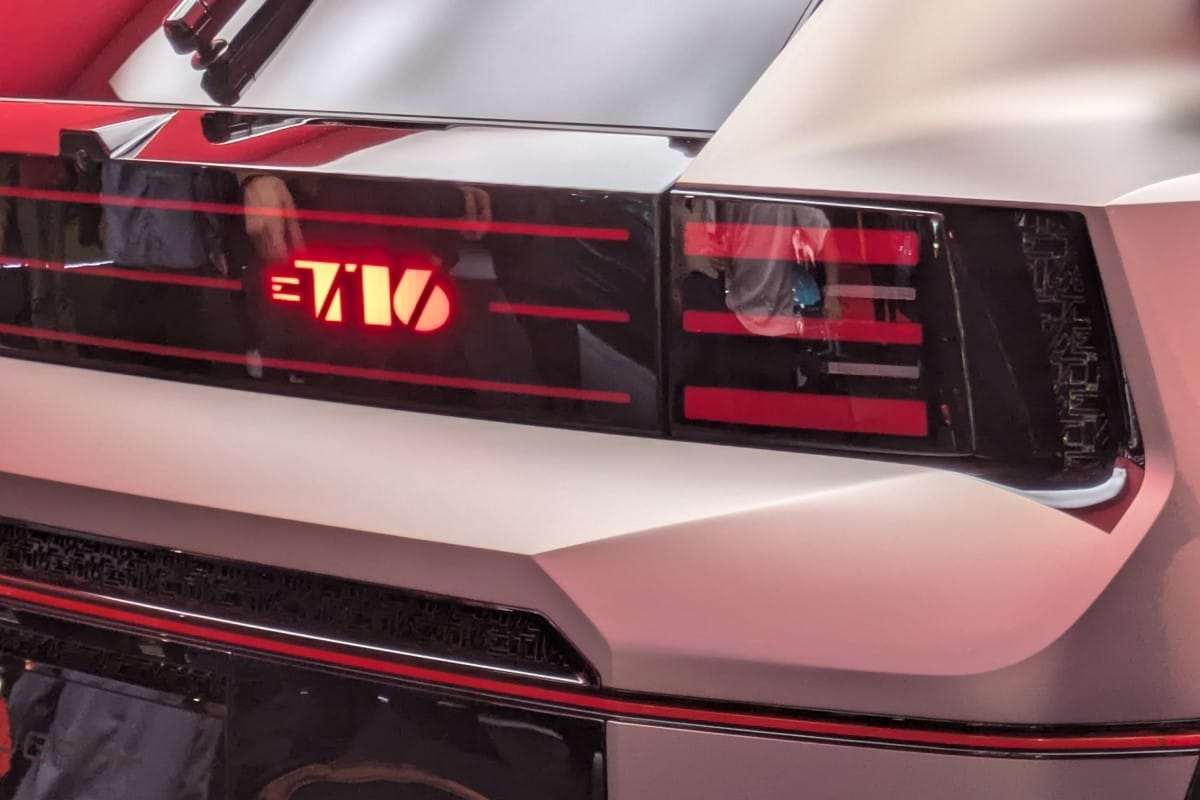
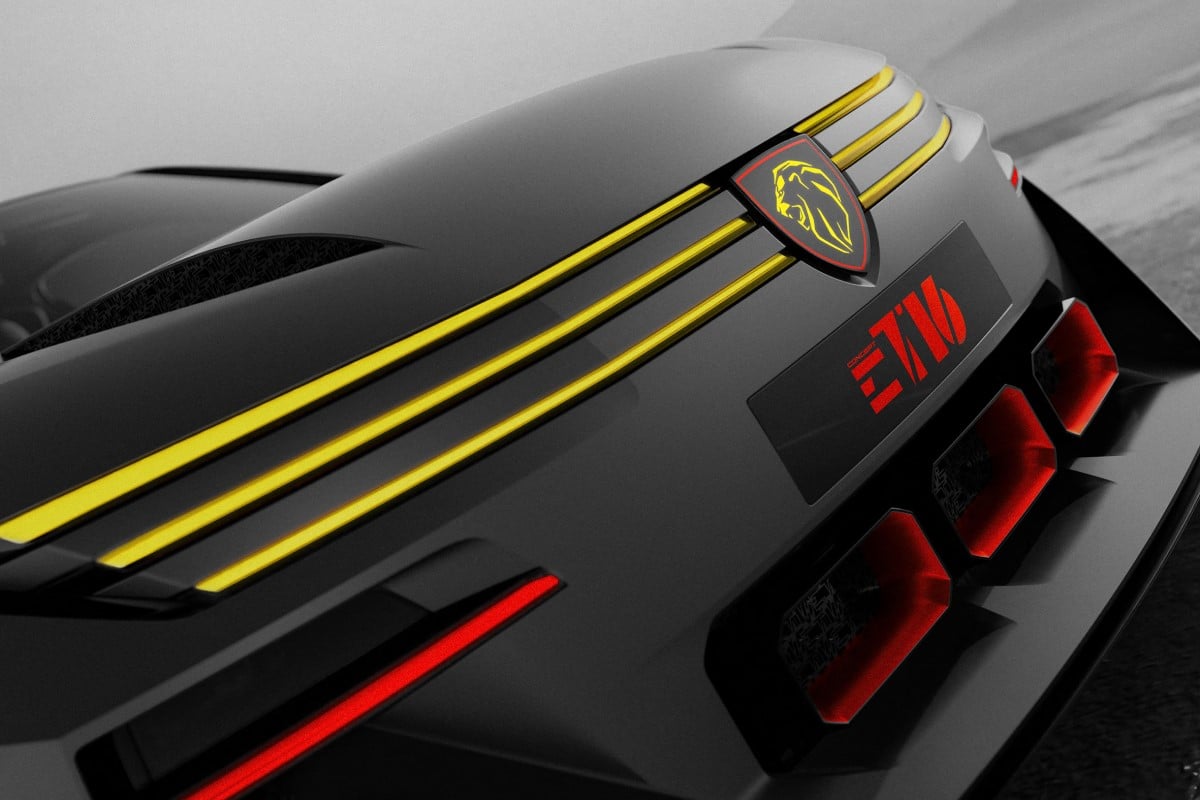
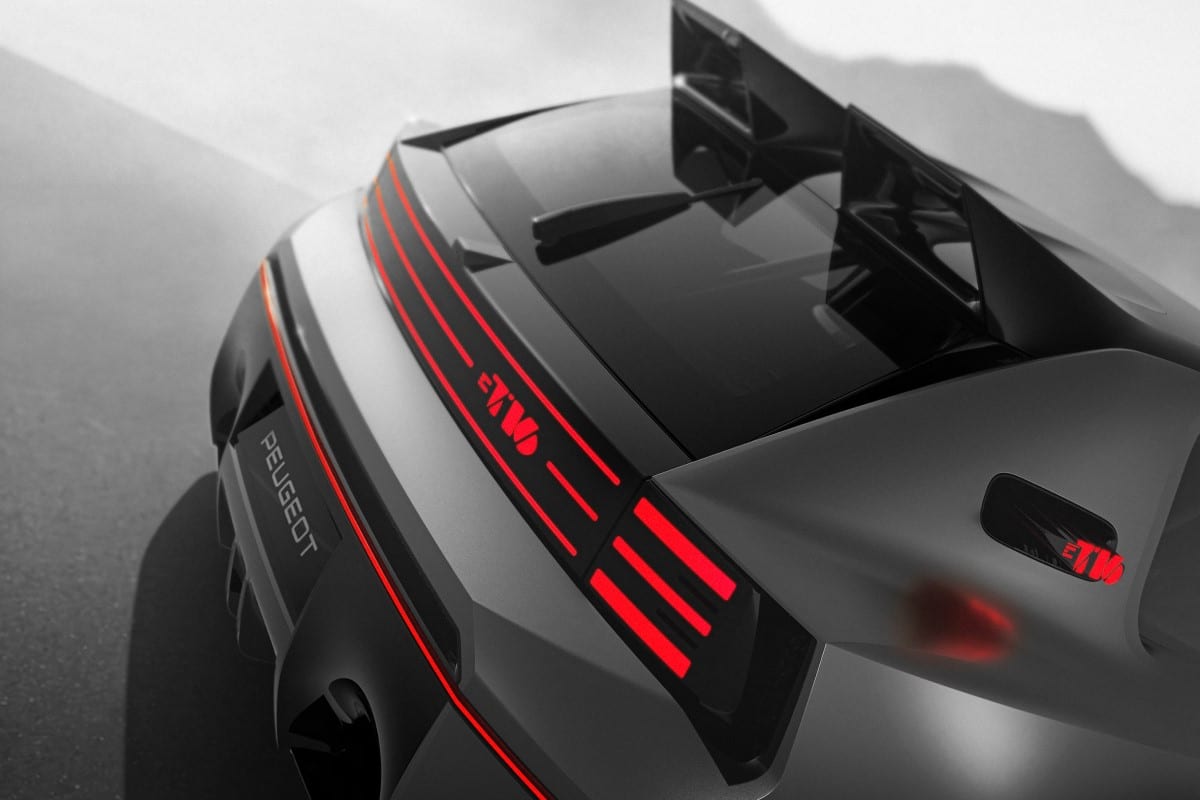
Aesthetically, the E-T16 leaves no nostalgic stone unturned. The exterior is finished in a specialized Winchester Mat Grey, offset by a razor-thin luminous red lighting strip that encircles the vehicle’s perimeter. The rear wing is a direct nod to the iconic "cat’s ears" aerodynamic stabilizers of the original Group B rally car.
In a further homage, the entire rear clamshell bodywork tilts backward to reveal the internal mechanics. However, where a screaming four-cylinder turbo engine once resided, engineers have packed twin electric motors and complex suspension geometry.
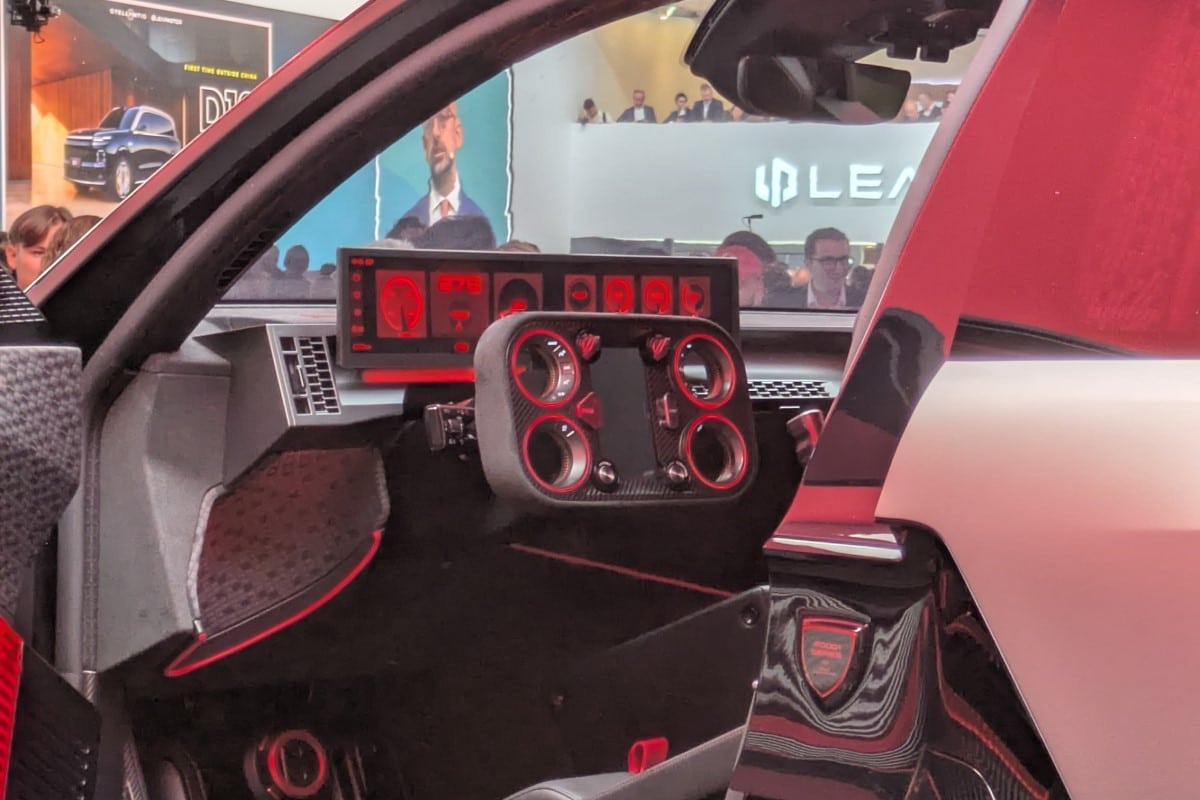
Inside, the cabin is stripped down to the essentials: carbon fiber bucket seats, four-point racing harnesses (necessitating the removal of standard steering wheel airbags), and a sprawling 21-inch curved display. The interface is controlled via the controversial Hypersquare—a rectangular steer-by-wire yoke that replaces traditional circular steering wheels.
Matthias Hossann, Peugeot’s Director of Design, explained the vehicle’s broader aesthetic mission:
"The E-T16 reinterprets the design language of our future urban EVs by pushing every proportion to absolute extremes. It is the ultimate visual projection of what our compact segment can become."
Implications: What the E-T16 Means for Your Future E-208
While the E-T16 itself will never see a production line—remaining a one-off museum piece unlike its commercially available rival, the Renault 5 Turbo 3E—its existence holds massive implications for everyday drivers.
1. Previewing the 2027 E-208
The stylistic cues, aggressive stance, and lighting signatures seen on the E-T16 are direct precursors to the next-generation Peugeot E-208, expected to debut around 2027. While your future daily driver will not feature 816 horsepower or quad-exhaust-style aero ducts, it will inherit the sharper lighting graphics, athletic stance, and next-generation i-Cockpit layout. Peugeot is targeting an accessible sub-€30,000 price point and over 500 km of range for that upcoming production hatchback.
2. The Standardization of Steer-by-Wire
The futuristic Hypersquare control yoke tested on the Polygon and showcased inside the E-T16 is not science fiction; it is officially slated for integration into production Peugeot models starting in 2027. Drivers will soon have to adapt to rectangular, electronic-link steering systems across the brand’s portfolio.
3. The "Hyperhatch" Mirage
By inventing the term "Hyperhatch" to describe the E-T16, Peugeot has successfully carved out a digital segment where it stands completely alone. Yet, the absence of a production run stings. While Renault is actively taking checks for the R5 Turbo 3E, Peugeot is content with collecting pure, unadulterated public admiration.
Verdict
The Peugeot E-T16 is a masterclass in automotive theater. It reminds the world that Peugeot’s design department remains among the boldest in the industry, capable of fusing rally heritage with cutting-edge 800V EV engineering. Yet, when the Paris Motor Show concludes and the concept is loaded back into its transport trailer, reality will resume.
When you walk into a showroom in 2027, you won’t be buying an 816-horsepower rally weapon with a vertical hydraulic handbrake. You will likely drive home in a sensible, highly efficient E-208—though, for better or worse, you will probably have to get used to that rectangular steering wheel.