

The automotive landscape is currently witnessing a series of dramatic strategic recalibrations as the initial euphoria surrounding a total transition to Electric Vehicles (EVs) meets the sobering reality of global market fluctuations. Among the most significant of these pivots is that of Lotus. The legendary British marque, once steadfastly committed to an all-electric future under its "Vision80" plan, has officially adjusted its course.
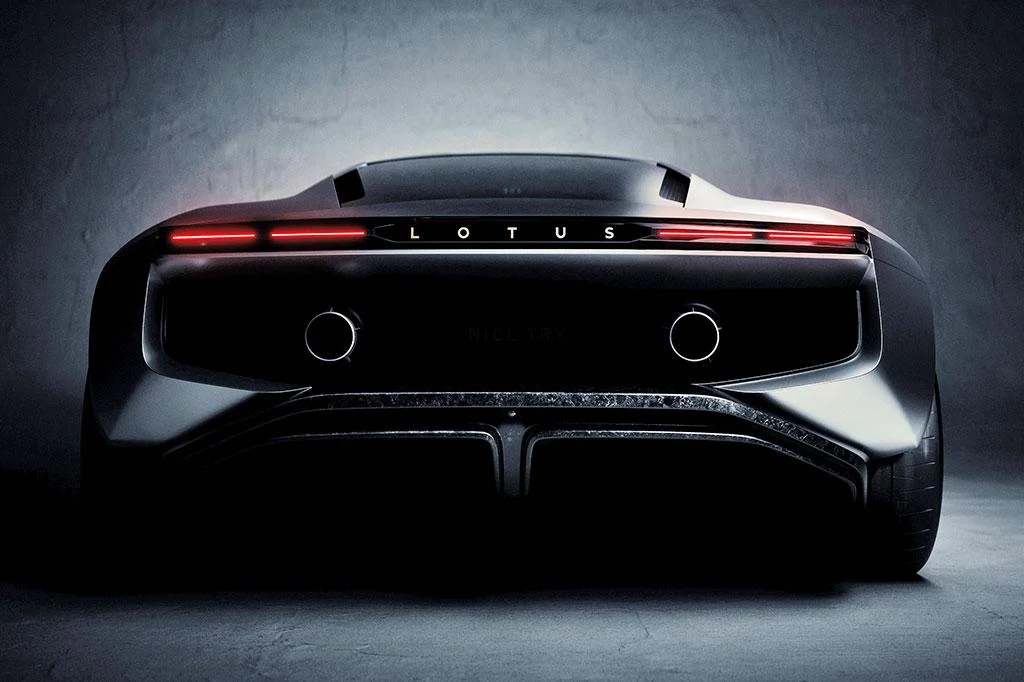
With the unveiling of the "Focus 2030" strategy, Lotus is reintroducing internal combustion—albeit in a highly electrified, high-performance format—and reaffirming its commitment to the visceral mechanical soul that defined the brand under its founder, Colin Chapman. This shift is headlined by the shocking announcement of a new 1,000-plus horsepower V8 hybrid supercar, the Type 135, signaling a pragmatic retreat from the "EV-only" mandate.
Main Facts: A Strategic U-Turn for Hethel
The core of the "Focus 2030" strategy is a move away from the rigid 100% battery-electric vehicle (BEV) roadmap that was established following the acquisition of Lotus by the Chinese automotive giant Geely. While the brand remains committed to electrification, the definition of that term has broadened significantly to include high-performance hybrids and range-extender technologies.
The Type 135: A V8 Powerhouse for the Modern Era
The most electrifying news for enthusiasts is the confirmation of the Type 135. Originally conceptualized as a pure electric successor to the Elise and Exige spirit, the Type 135 has been reimagined. While it will still utilize an advanced electric platform, it will now feature a V8 hybrid powertrain capable of delivering more than 1,000 horsepower. This move places Lotus directly in competition with the likes of the Revuelto from Lamborghini and the SF90 from Ferrari, targeting a demographic that demands both cutting-edge technology and the acoustic drama of a combustion engine.
The X-Hybrid Architecture
Central to this new era is the "X-Hybrid" technology. This is not a conventional hybrid system but a high-performance 900V architecture designed to bridge the gap between internal combustion and pure electric power. The system is designed for ultra-fast charging and long-range capabilities, addressing the primary concerns of the luxury buyer: convenience and performance.
Sustaining the Thermal Legacy
Contrary to previous rumors of its imminent demise, the Lotus Emira—the brand’s final "pure" internal combustion sports car—is set to receive a stay of execution and a significant upgrade. Lotus has teased a new iteration that will be the "most powerful and lightest" Emira ever produced, ensuring that the brand maintains its connection to its lightweight, driver-centric roots.
Chronology: From Vision80 to Focus 2030
To understand the magnitude of this shift, one must look at the timeline of Lotus’s modern transformation:
- 2017: Geely Holding Group acquires a majority stake in Lotus, injecting much-needed capital and access to global manufacturing resources.
- 2018: Lotus announces "Vision80," a ten-year plan to transform the niche British sports car builder into a global, all-electric luxury performance brand by its 80th anniversary in 2028.
- 2019–2021: The Evija hypercar is unveiled as a halo BEV, followed by the announcement of the Emira as the final internal combustion engine (ICE) model.
- 2022–2023: Lotus launches the Eletre "Hyper-SUV" and the Emeya "Hyper-GT," both produced in Wuhan, China. These models represent a departure from Hethel’s traditional lightweight sports cars, aiming for high-volume luxury segments.
- 2024: Market data begins to show a cooling of EV demand in the luxury sector, particularly in Europe and North America. Supply chain costs and infrastructure hurdles lead to a re-evaluation of the "all-in" EV strategy.
- 2025 (Present): Lotus officially transitions to "Focus 2030." This new strategy acknowledges that while the future is electrified, the path to get there must be flexible, incorporating hybrid powertrains to satisfy global demand and ensure financial sustainability.
Supporting Data: The Metrics of the Hybrid Pivot
The "Focus 2030" plan is not merely a change in philosophy; it is backed by rigorous technical specifications and ambitious commercial targets.
Technical Prowess of the X-Hybrid System
The X-Hybrid system is the technological cornerstone of the revised lineup. Its specifications are designed to outperform current PHEV (Plug-in Hybrid Electric Vehicle) standards:
- Voltage: 900V high-voltage system (allowing for thinner wiring and faster energy transfer).
- Pure Electric Range: Up to 350 km (approx. 217 miles) on a single charge.
- Total Combined Range: Over 1,200 km (approx. 745 miles), virtually eliminating range anxiety for grand touring.
- Charging Speed: The ability to charge from 20% to 80% in just 9 minutes using ultra-fast DC chargers.
Sales and Production Goals
Lotus is moving away from the "niche" label and aiming for the "volume luxury" category. The "Focus 2030" plan sets a clear target:
- Annual Sales Volume: 30,000 units globally. This is a massive leap from the few hundred or thousand cars Lotus traditionally sold per year in the pre-Geely era.
- Sales Mix: The brand anticipates a short-to-medium term sales split of 60% Plug-in Hybrids (PHEV/X-Hybrid) and 40% Battery Electric Vehicles (BEV).
- Manufacturing Footprint: While the mass-market Eletre and Emeya will continue production in China, Lotus has signaled that the Type 135 supercar will likely be built in Europe (specifically Hethel), preserving the brand’s "Made in UK" prestige for its flagship models.
Official Responses and Strategic Rationale
Lotus leadership has framed this shift as a "pragmatic evolution." In briefings regarding Focus 2030, the company emphasizes that the luxury segment operates under different pressures than the mass market.
"Our customers in the luxury performance segment are looking for an uncompromising experience," a company spokesperson suggested. "While they appreciate the torque and tech of an EV, many still desire the emotional engagement of an engine and the freedom of long-distance travel without infrastructure constraints."
Industry analysts suggest that Geely, which also owns Volvo and Polestar, is applying a "multi-pathway" strategy across its portfolio. By allowing Lotus to adopt hybrids, Geely is hedging its bets against a slower-than-expected global EV rollout and potential tariffs on Chinese-made EVs in Western markets. The restructuring of the company—merging Lotus UK and Lotus Technology into a single, streamlined entity—is also a move to cut "bureaucratic fat" and reach profitability faster.
Implications: What This Means for the Industry and the Purists
The Lotus pivot is a bellwether for the broader automotive industry. It carries several profound implications:
1. The "Death of the EV Mandate" in Luxury
Lotus’s retreat from an EV-only lineup suggests that for high-end manufacturers, the engine is not just a power source; it is a luxury "complication," much like the movement in a mechanical watch. If a brand as committed to the future as Lotus is reintroducing V8s, it indicates that internal combustion will remain a staple of the supercar world well into the 2030s.
2. The Survival of "Light is Right"
One of the primary criticisms of the Eletre and Emeya was their weight—a direct consequence of massive battery packs. By utilizing hybrid systems with smaller batteries but high-efficiency engines, Lotus has a better chance of returning to the "lightweight" philosophy of Colin Chapman. The Type 135, even with a V8 and electric motors, will likely be engineered with a much higher power-to-weight ratio than a pure BEV equivalent.
3. Geopolitical Maneuvering
By planning to produce the Type 135 in Europe, Lotus is insulating its most prestigious model from potential trade wars. As the EU and US consider higher tariffs on vehicles manufactured in China, having a high-value, European-made flagship is a vital insurance policy for the brand’s global viability.
4. A New Competitive Landscape
Lotus is no longer just competing with Alpine or Porsche’s mid-tier offerings. With a 1,000-hp V8 hybrid, Lotus is parking its tanks on the lawns of Maranello and Woking. The Type 135 represents a move upmarket, transforming Lotus from a "sports car builder" into a "supercar powerhouse."
Conclusion: A Bold New Chapter
The "Focus 2030" strategy represents a sophisticated balancing act. Lotus is attempting to marry the digital, electrified future demanded by modern regulations with the mechanical, high-octane heritage demanded by its loyal fanbase.
By introducing the X-Hybrid system and reviving the V8 for the Type 135, Lotus is not admitting defeat in the face of electrification. Rather, it is asserting its independence and agility. For a brand that has spent much of its history on the brink of financial ruin, this pragmatic, market-driven approach may be the very thing that finally secures its place among the world’s elite automotive giants. As the first V8 hybrid prototypes begin testing toward 2026, the world will be watching to see if Lotus can truly deliver "Simplified, then added lightness" in a high-voltage, eight-cylinder world.
