By: Automotive & Energy Desk
Published: October 2023
Introduction: The Shift Toward Residential Charging
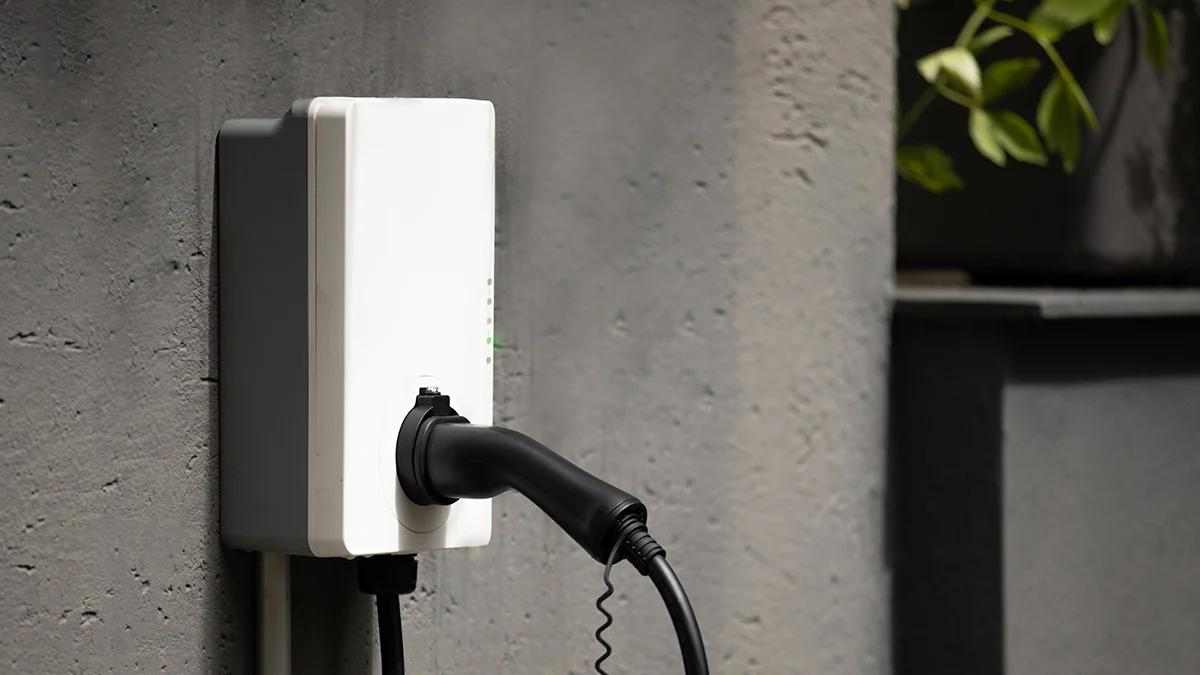
Despite ongoing public investments designed to densify and expand public charging networks across the country, the reality for everyday electric vehicle (EV) drivers remains fraught with frustration. Public terminals are frequently situated inconveniently far from residential areas, and they are regularly plagued by out-of-service statuses, high utilization fees, or long queues. For these reasons, installing a dedicated home charging station—commonly referred to as a Wallbox—has rapidly transitioned from a luxury convenience to an absolute necessity for modern EV ownership.
Opting for a domestic charging solution fundamentally transforms the ownership experience. It guarantees vehicle readiness every morning, maximizes convenience, and slashes the ongoing cost of fueling compared to both public infrastructure and traditional fossil fuels. However, transitioning to home charging is not without its hurdles. It requires a significant upfront financial commitment encompassing hardware acquisition, professional installation, and an inevitable adjustment to household electricity consumption patterns.
1. Main Facts: Decoding the Investment in a Home Charging Station
When considering the transition to residential EV charging, consumers must evaluate three core financial pillars: the cost of the hardware itself, the price of professional installation, and the ongoing operational impact on household utility bills.
The Cost of the Hardware (Wallboxes)
The market for residential charging stations is robust, highly competitive, and diverse. Because Wallboxes vary drastically in power output, build quality, and smart capabilities, there is no single fixed price tag. Generally, hardware costs range anywhere from €500 to €5,000.
- Entry-Level Units (€500 – €600): These basic models are designed for budget-conscious consumers. They provide core charging functions without advanced frills, often featuring a simple built-in screen that displays fundamental charging metrics such as voltage, amperage, and energy delivered.
- Mid-Range, Smart Terminals (€950+): The most popular class of chargers among modern EV owners features adjustable power outputs ranging from 3.7 kW to 22 kW. These units often include remote-control capabilities via smartphone applications, allowing users to schedule charging cycles. Prices for these versatile, connected models typically start around €950.
- High-End Luxury Units (Up to €5,000): Premium systems incorporate state-of-the-art technologies, dynamic load balancing, high-end architectural designs, and robust weatherproofing or advanced biometric access controls.
Professional Installation Fees
Unlike plugging a standard appliance into a wall socket, installing a high-capacity Wallbox requires specialized labor. On average, standard professional installation fees hover around €700. This baseline figure typically includes mounting the unit, running standard cabling, minor trenching, and basic civil engineering tasks required to link the charger to the domestic electrical panel.
However, installation costs can skyrocket if a home’s electrical infrastructure is antiquated. Properties requiring main breaker upgrades, heavy-duty rewiring, or long-distance trenching from a detached garage to the main meter will see significantly higher estimates.
Ongoing Energy Consumption Costs
Moving away from public networks means absorbing the energy costs directly onto your residential electricity bill. While electricity remains drastically cheaper than gasoline or diesel, it still increases monthly utility expenditures.
The average cost of a kilowatt-hour (kWh) ranges between 14 and 19 euro cents, heavily dependent on your energy provider and tariff structure. By strategically utilizing "off-peak" hours—when electricity demand and pricing drop—drivers can optimize their charging budgets. For instance, charging a compact electric vehicle like a Renault ZOE costs roughly €3 per 100 km during standard peak hours, but this drops to approximately €2 per 100 km during off-peak windows, translating into substantial long-term savings.
2. Chronology: The Evolution and Implementation of Home EV Charging
Understanding how the residential charging market matured helps explain current pricing structures and regulatory frameworks.
- Phase 1: The Era of Standard Wall Outlets (Pre-2015): In the early days of modern mass-market electric mobility, most drivers relied on standard domestic power sockets (Mode 1 or Mode 2 charging). These setups were notoriously slow, taking upwards of 12 to 24 hours to fully replenish a battery, and posed severe overheating risks to older residential electrical wiring.
- Phase 2: The Emergence of Dedicated Wallboxes (2015–2018): As EV battery capacities expanded past 30 kWh, automotive manufacturers and specialized tech firms introduced dedicated AC Wallboxes. These units standardized 7 kW to 22 kW charging speeds, drastically cutting charging times down to 4 to 8 hours. Prices during this era remained high due to lower manufacturing volumes.
- Phase 3: The Smart Grid and Regulatory Standardization (2019–2021): Governments began enacting strict safety certifications for home installations. In many European jurisdictions, professional certification requirements (such as the IRVE standard in France) were codified into law to prevent electrical fires and grid destabilization. Simultaneously, Wi-Fi and Bluetooth connectivity became standard, allowing chargers to integrate with smart home ecosystems and dynamic tariff structures.
- Phase 4: Mass Market Adoption and Price Diversification (2022–Present): Today, the market has bifurcated into ultra-accessible entry-level models and hyper-connected smart chargers. Online comparison tools have emerged, allowing consumers to cross-shop hardware instantly, while national subsidies and tax credits in various countries help offset initial installation barriers.
3. Supporting Data & Market Analysis
A granular look at the data reveals clear financial trends regarding hardware, labor, and energy consumption.
Comparative Cost Matrix of Wallbox Categories
| Category | Price Range | Power Output | Key Features | Target User |
|---|---|---|---|---|
| Entry-Level | €500 – €600 | 3.7 kW – 7.4 kW | Basic charging, integrated LED/LCD screen | Budget-focused, simple plug-and-charge needs |
| Mid-Range (Popular) | €950 – €1,500 | 3.7 kW – 22 kW | Wi-Fi/Bluetooth, mobile app control, dynamic load management | Daily commuters wanting smart scheduling |
| High-End | €2,000 – €5,000 | Up to 22 kW+ | Premium aesthetics, commercial-grade durability, solar integration | Tech enthusiasts, multi-EV households |
Energy Consumption Metrics (Renault ZOE Case Study)
- Peak Hour Rate (Approx. 19 cents/kWh): €3.00 per 100 km driven.
- Off-Peak Hour Rate (Approx. 14 cents/kWh): €2.00 per 100 km driven.
- Annual Savings Potential: Assuming an average annual mileage of 15,000 km, shifting exclusively to off-peak home charging saves a motorist approximately €150 to €300 annually compared to peak-hour residential charging, and thousands compared to public fast-charging stations.
4. Official Responses and Industry Guidelines
Navigating the installation of a high-power residential appliance requires strict adherence to safety protocols and regulatory guidelines issued by electrical authorities and industry bodies.
The Mandate for Certified Professionals (IRVE)
Regulatory bodies across Europe and North America have issued clear directives regarding who is legally permitted to install charging equipment. In regions utilizing the IRVE (Infrastructure de Recharge de Véhicule Électrique) framework, any charging station delivering an output greater than 3.7 kW must be installed by a certified professional electrician.
Attempting DIY installation for units exceeding this threshold not only voids hardware warranties and home insurance policies but also introduces severe risks of electrical shock, short circuits, and structural fires. Certified installers are tasked with:
- Evaluating the home’s main electrical panel capacity.
- Installing dedicated circuit breakers and differential protection switches.
- Ensuring proper grounding and physical wiring integrity.
- Issuing compliance certificates required by local authorities and insurance companies.
Consumer Protection and Bidding Best Practices
Industry consumer watchdogs strongly advise against accepting the first installation quote presented by a hardware vendor. While most Wallbox manufacturers and retailers partner with approved installers to streamline the process, consumers possess the legal right—and economic incentive—to seek independent quotes.
Consumer protection agencies recommend obtaining a minimum of three distinct quotes from certified local electricians. This creates healthy market competition, often driving down labor costs and uncovering innovative solutions for complex electrical layouts.
5. Implications: Economic, Environmental, and Lifestyle Impacts
The decision to install a home charging station ripples across multiple facets of modern life, influencing household budgets, real estate values, and national energy grids.
Economic and Real Estate Implications
While the initial outlay of €1,200 to €2,500 (combined hardware and standard installation) can feel daunting, the return on investment (ROI) is rapid. Public fast chargers frequently bill users at premium rates (often exceeding 40 to 60 cents per kWh), turning public-only charging into an expensive habit. Home charging leverages domestic utility rates, cutting fuel costs by up to 70%.
Furthermore, real estate experts note that a pre-installed, high-capacity Wallbox adds tangible value to residential properties. As the housing market rapidly electrifies, homes equipped with ready-to-use EV charging infrastructure are viewed as future-proofed, appealing directly to modern, eco-conscious homebuyers.
Grid Stability and Environmental Impact
On a macro level, the widespread adoption of smart home chargers plays a pivotal role in the energy transition. Because modern Wallboxes can be programmed to draw power during off-peak hours (typically late at night or during midday solar production peaks), they help balance the electrical grid. Instead of exacerbating peak-hour blackouts, smart charging systems act as flexible energy sinks, absorbing excess renewable energy from wind and solar farms.
Conclusion
Installing a home charging station is the definitive cornerstone of a seamless electric vehicle ownership experience. While consumers must navigate a complex landscape of hardware tiers, strict certification mandates, and varying electricity tariffs, the long-term convergence of convenience, safety, and financial savings makes the residential Wallbox an indispensable asset for the sustainable future of transport.