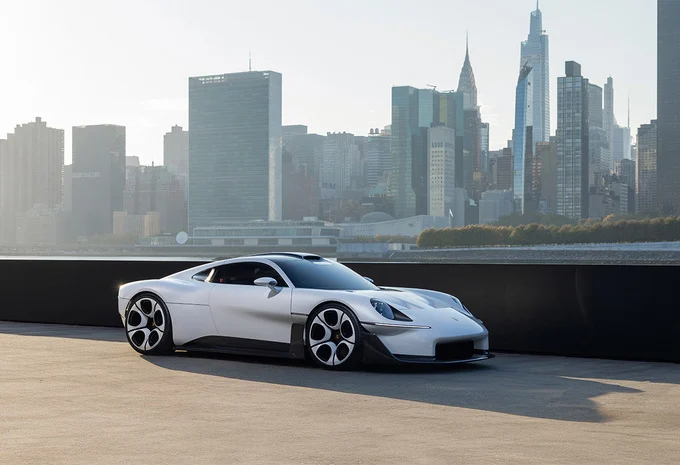
In the world of automotive engineering, few names carry the weight of Porsche. Throughout its storied history, the Stuttgart-based manufacturer has defined the pinnacle of performance through legendary machines like the Carrera GT and the 918 Spyder. However, these were fleeting chapters—limited-run halo cars that vanished as quickly as they set benchmarks. Now, Porsche is changing the narrative. With the unveiling of the "Mission S" concept in New York—a location steeped in the brand’s American history—Porsche has signaled its intention to permanently occupy the ultra-high-performance segment with a new, mass-produced mid-engine supercar.
The Mission S is not merely a design study; it is the manifestation of the "Sportwagenschmiede 35" strategy, a roadmap designed to solidify Porsche’s identity for the next decade and beyond. By stripping away the digital bloat prevalent in modern automotive design, Porsche is betting on a future where the driver is once again the primary focal point of the machine.
1. The Strategic Pivot: A Permanent Pillar
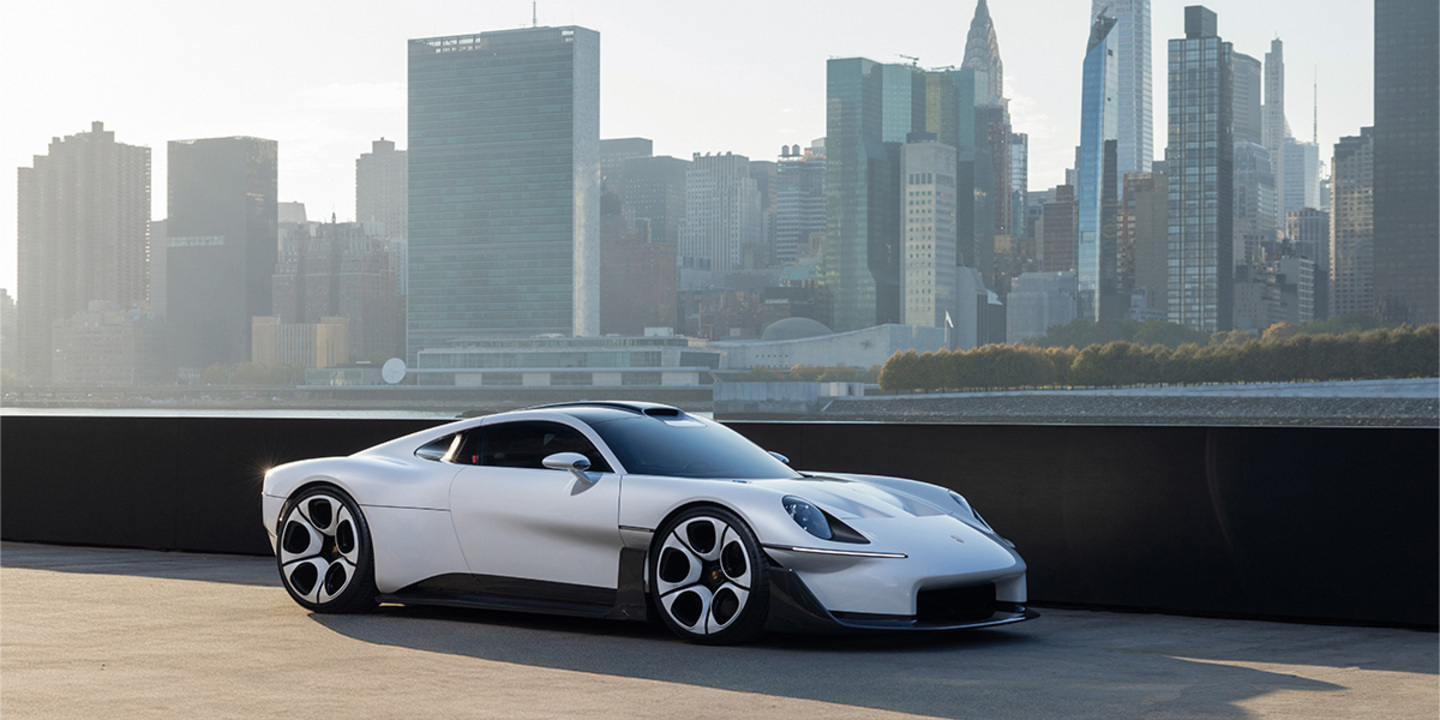
For years, Porsche’s hierarchy was clearly defined: the 911 sat at the summit of the regular production lineup, while specialized hypercars arrived as rare, collector-grade events. The Mission S fundamentally alters this architecture. By introducing a dedicated mid-engine platform, Porsche intends to create a permanent, non-limited production model that sits above the 911.
This shift is not just about power or speed; it is about commercial positioning. In an era where legacy manufacturers are fighting to maintain margins, Porsche is moving aggressively toward the "luxury-plus" market. The Mission S represents a commitment to exclusivity and high-margin engineering, aiming to recapture the prestige that defines the world’s most desirable sports car brands. While technical specifications regarding the powertrain remain a closely guarded secret, the move toward a mid-engine layout suggests an uncompromising focus on chassis balance and track-focused dynamics that the rear-engined 911, despite its brilliance, approaches differently.
2. Chronology: From Queens to the Future
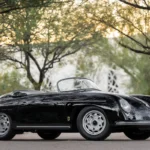
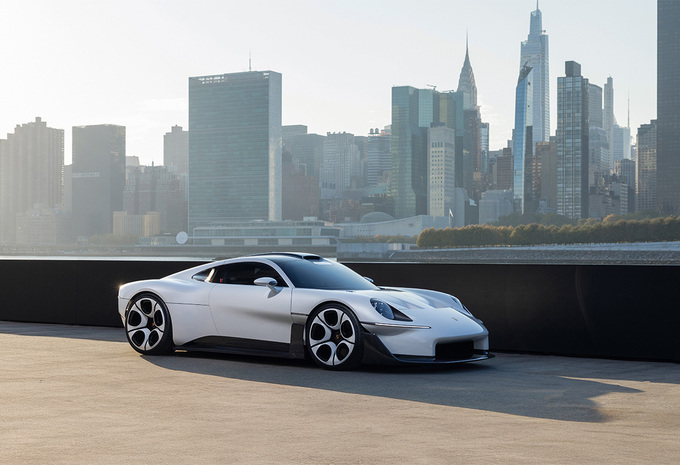
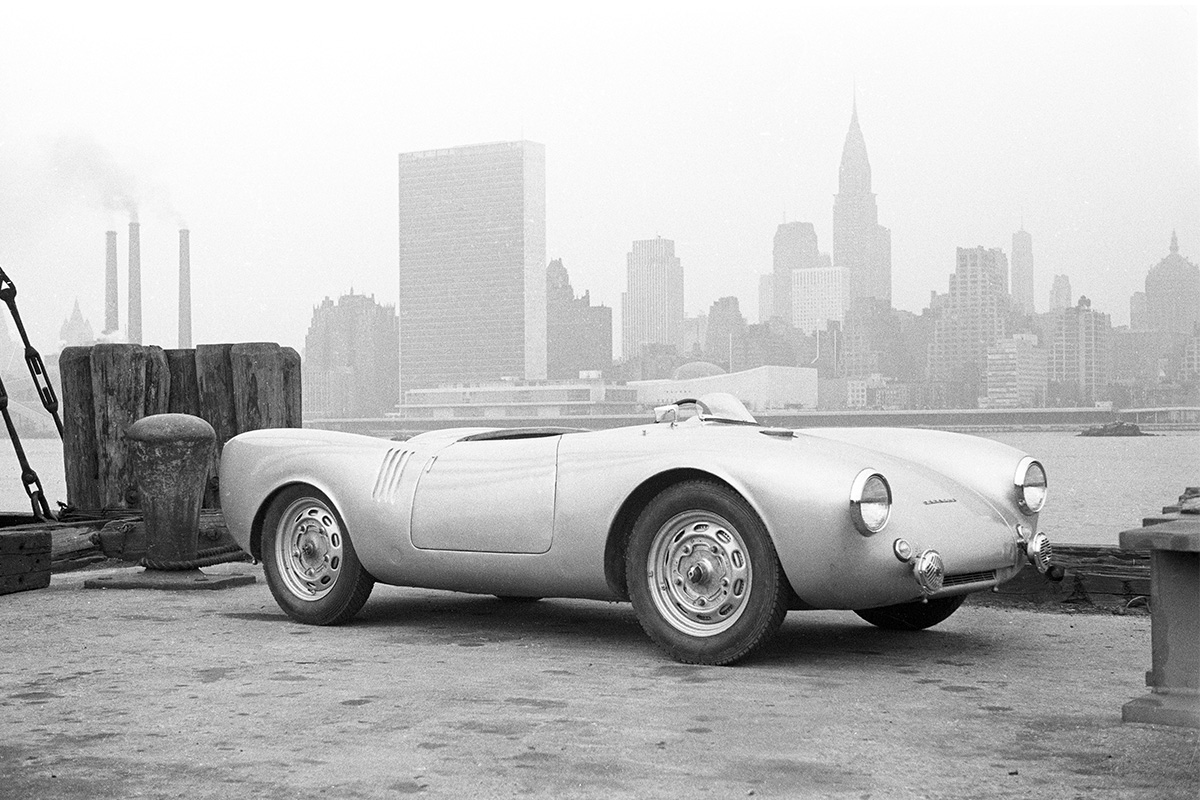
To understand the significance of the Mission S, one must look at the location of its reveal. The car was debuted on a quay in the Queens district of New York, the exact spot where the first Porsche 550 Spyders were photographed upon their arrival in the United States in 1953.
- 1953: The arrival of the 550 Spyder in New York, marking the beginning of Porsche’s American romance.
- 2003-2006: The era of the Carrera GT, Porsche’s last true, visceral mid-engine, V10-powered flagship.
- 2013-2015: The reign of the 918 Spyder, which showcased hybrid potential but remained a limited-run project.
- October 2026: The unveiling of the Mission S, signaling the end of "limited-only" flagship status and the birth of a permanent mid-engine production line.
This historical connection is not accidental. By choosing this venue, Porsche is telling its clientele that the Mission S is not a tech-heavy experiment, but a spiritual successor to the cars that built the brand’s reputation for raw, mechanical purity.
3. Design Philosophy: A Synthesis of Heritage
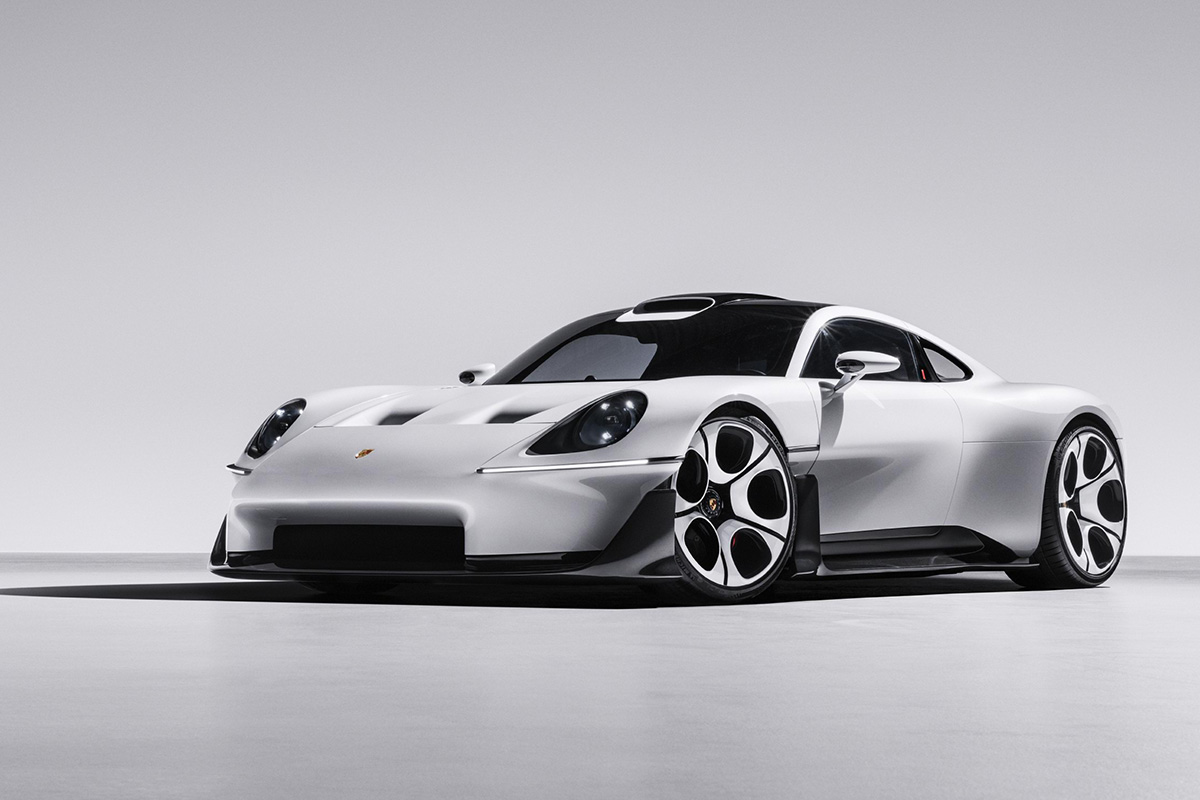
The aesthetic of the Mission S is a masterclass in evolutionary design. Rather than adopting the aggressive, angular geometry of modern competitors, the Mission S looks backward to move forward.
The Exterior Silhouette
The car’s visual language is a curated museum of Porsche’s greatest hits:
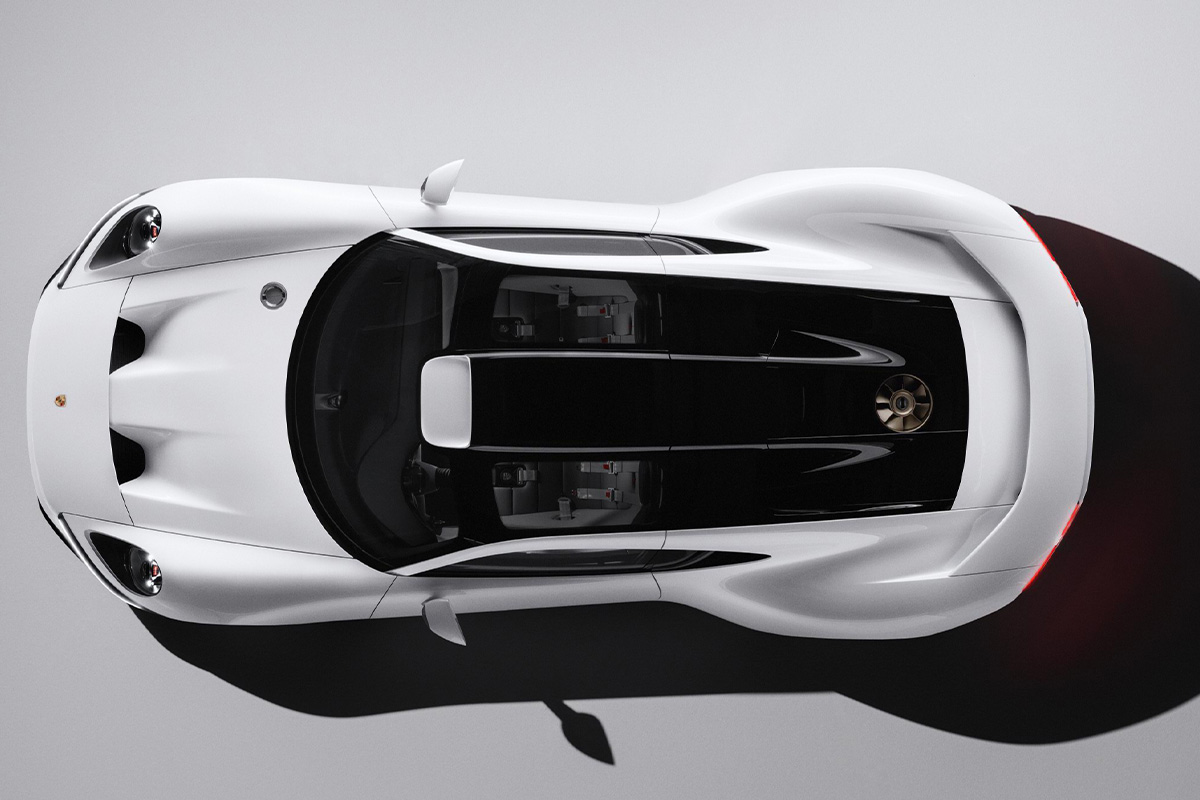
- The Frontal Identity: The bulging front fenders and signature round headlamps are a direct nod to the 911 lineage, providing immediate brand recognition.
- The GT1 Influence: The flattened, aerodynamic nose section mimics the legendary 911 GT1, a car that dominated endurance racing in the late 1990s.
- The 959 Legacy: The roofline, which sweeps elegantly into an integrated rear wing, pays homage to the 959, the technological tour-de-force of the 1980s.
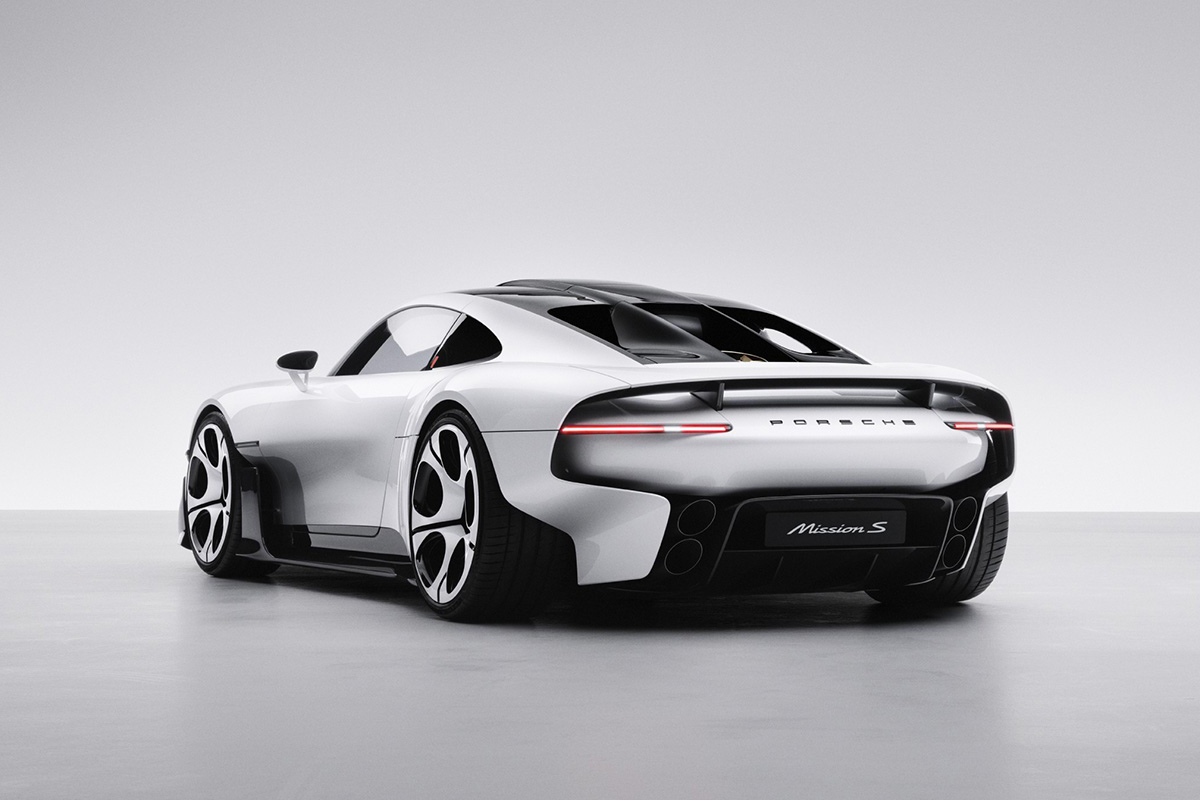
- Mechanical Integrity: The wheel design is an explicit tribute to the 928, emphasizing low unsprung mass and a lightweight structural aesthetic.
Perhaps most striking is the cooling solution, which utilizes a fan-based mechanism reminiscent of the 917. This, combined with a wide, low-slung stance, confirms that the design was dictated by the requirements of a mid-mounted engine rather than digital styling trends.
4. The Interior: Minimalism as a Luxury
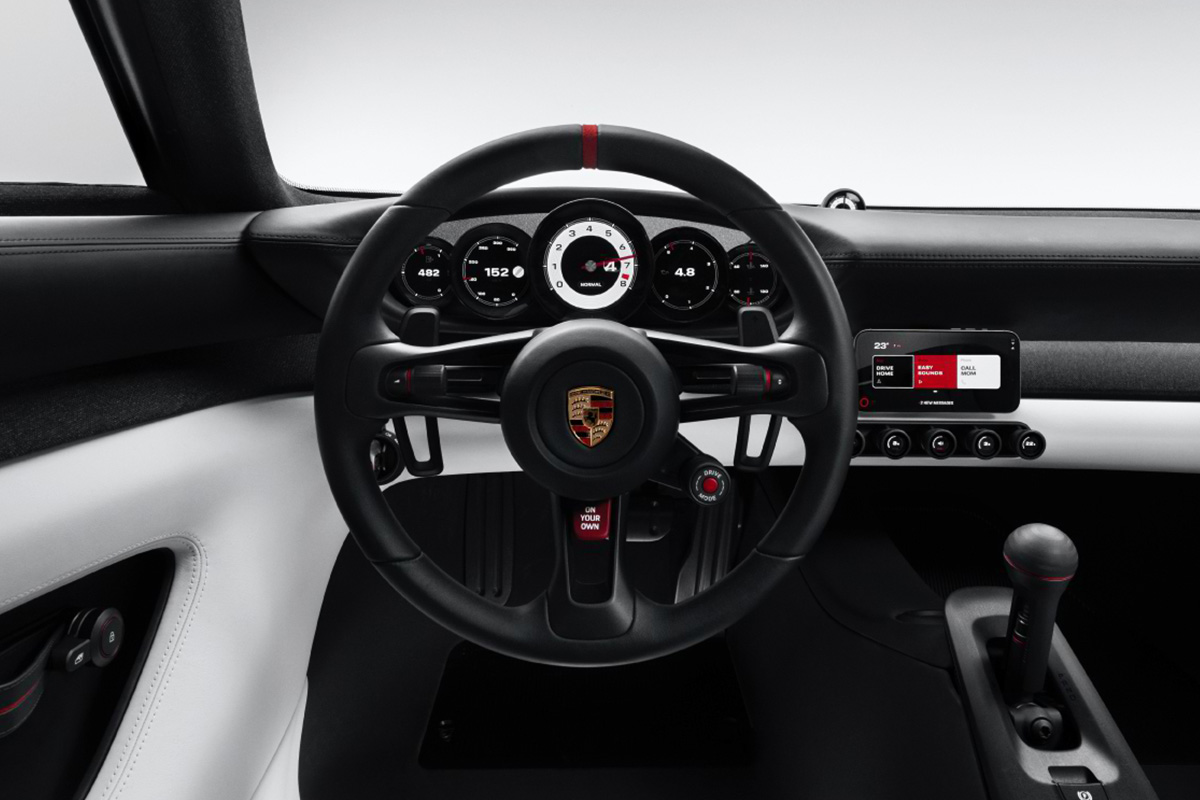
Perhaps the most controversial and daring aspect of the Mission S is its cabin. In a market where manufacturers compete on the size and resolution of their infotainment screens, Porsche has chosen to excise the center console display entirely.
The Analog-Digital Bridge
The cockpit is designed for one person: the driver. It takes inspiration from the 356 and 550 Spyder, favoring an immersive, "analog-first" experience:
- Five Circular Gauges: Behind the steering wheel sits a cluster of five circular instruments. The central tachometer is the star, featuring a physical needle supplemented by a digital readout. This gauge is not static; it is modular and physically shifts toward the driver based on the selected drive mode.
- The Smartphone Integration: In place of a fixed, permanent screen, Porsche offers a retractable MagSafe-compatible dock. This allows the driver to use their smartphone as a navigation and telematics hub only when necessary. This serves a dual purpose: it declutters the cabin and ensures the car’s interior technology does not become obsolete the moment a newer version of the car’s infotainment system is released.
- Ergonomic Traditions: The ignition remains on the left side of the steering wheel, a nod to Le Mans-style starts, and the interior features new push-pull controls that emphasize tactile feedback over touch-capacitive surfaces.
5. Supporting Data and Market Implications
While the technical specs are withheld, the economic strategy is clear. Porsche is navigating a difficult transition period in the automotive industry. By focusing on "Sportwagenschmiede 35," the company is insulating itself against the commoditization of the electric vehicle market.
Economic Factors
- Margin Expansion: By positioning the Mission S as a permanent, high-end offering, Porsche expects to improve its profit per unit compared to the high-volume Macan and Cayenne lines.
- Brand Desirability: The scarcity of "true" driver-focused sports cars in the modern era creates a high-demand vacuum. The Mission S is designed to fill this void, appealing to purists who have been alienated by the increasing digitalization of other high-end manufacturers.
6. Official Responses and Industry Outlook
Porsche’s leadership has been notably reserved regarding the specific powertrain of the Mission S. However, during the New York reveal, company representatives emphasized that the goal was "the pursuit of the driving experience," rather than the pursuit of specific horsepower or torque numbers.
"We are not here to build a calculator on wheels," one spokesperson noted. "We are here to build a machine that bridges the gap between the mechanical honesty of the 1950s and the precision of the 2030s."
The Road Ahead
Industry analysts suggest that the Mission S will likely be the flagship for Porsche’s synthetic fuel (e-fuel) initiatives or a cutting-edge hybrid powertrain. Because the platform is designed to be permanent, it must be future-proofed to meet increasingly stringent emissions regulations globally, without sacrificing the sensory feedback that defines the brand.
The implications for the industry are significant. If Porsche succeeds in selling a permanent, high-margin, analog-centric supercar, it will force other premium manufacturers to reconsider their reliance on massive digital dashboards and autonomous features as the sole pillars of "luxury."

Conclusion: A New Chapter for Stuttgart
The Mission S is a bold statement. By looking to its past to define its future, Porsche is reinforcing the idea that a car is more than the sum of its electronic parts. It is a promise to the enthusiast that, even in an age of automation and software-defined vehicles, the visceral thrill of a mid-engine, driver-centric machine remains the ultimate expression of the automobile.
Whether it will be powered by a high-revving naturally aspirated engine, a turbocharged unit, or a revolutionary hybrid system, the Mission S succeeds in its first mission: it has made the world stop and wait for what comes next. For now, the automotive world must content itself with the silhouette of a machine that refuses to be ignored, proving that the heart of Porsche still beats with the fire of the 550 Spyder.