Main Facts
Automobile ownership has long served as a powerful socioeconomic indicator. For many, a vehicle is a tangible symbol of personal accomplishment, a rolling statement of financial stability parked right outside the front door. However, this very visibility transforms cars into stationary assets—valuable commodities left exposed to the elements, and increasingly, to opportunistic criminals.
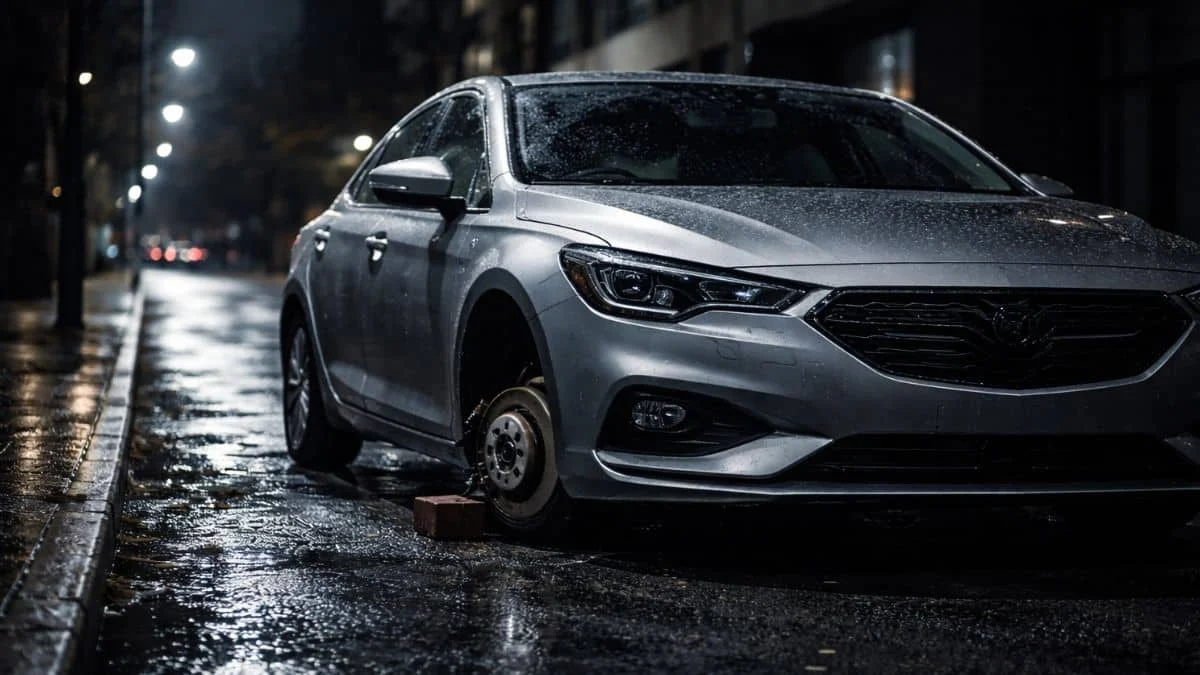
According to recent data published by Capital, automobile-related thefts in France are projected to surge by a staggering 10% in 2025. This alarming upward trajectory has sent shockwaves through law enforcement agencies, insurance providers, and everyday motorists alike. Far from the cinematic tropes of grand theft auto—where entire luxury sedans are hotwired and driven across international borders—the modern automotive crime wave is far more granular. Today’s thieves are targeting individual components, stripping vehicles of high-value parts in a matter of minutes while they sit parked on public streets.
The economic engine driving this illicit trade is the lucrative black market for spare parts. Figures compiled by automotive publication Auto Plus reveal the staggering profitability of these operations: a stolen bumper can easily fetch around €500 on the underground market, while advanced headlights routinely command upward of €1,000. For organized criminal networks and opportunistic thieves alike, dismantling a modern vehicle parked in a residential area represents a low-risk, high-reward enterprise capable of rapidly generating substantial tax-free cash at the direct expense of honest citizens.
Chronology of an Epidemic: How Automotive Theft Evolved
To understand the current crisis in 2025, it is necessary to examine how vehicle criminality has shifted over the past decade.
- The Early 2010s (The Era of Hotwiring and Joyriding): Automotive theft was traditionally dominated by professional rings stealing entire vehicles for exportation or amateur joyriders targeting older models with weaker security systems. Security relied heavily on mechanical steering locks and basic immobilizers.
- The Mid-to-Late 2010s (The Rise of Digital Relay Attacks): As manufacturers introduced keyless entry and push-button start systems, thieves adapted by utilizing electronic relay boxes to capture and amplify the signal from key fobs left near house doors. Entire vehicles continued to be the primary target, but electronic vulnerability became the new frontier.
- The Early 2020s (Supply Chain Shocks and Parts Shortages): Global supply chain disruptions, compounded by pandemic-era manufacturing slowdowns and geopolitical conflicts, created unprecedented scarcity in the automotive supply chain. Waiting lists for replacement body panels, microchips, and optical units stretched for months. This macro-economic squeeze catalyzed the secondary market for stolen parts, making chop-shops and street-side stripping immensely profitable.
- 2024 (The Shift to Micro-Thefts): Law enforcement began registering a sharp decline in complete car thefts relative to a massive spike in targeted component theft. Catalytic converters (prized for their precious metals), airbags, multimedia touchscreens, and exterior sensors became the primary loot.
- 2025 (The Current Crisis): With a confirmed 10% year-on-year increase in overall automotive asset crimes, thefts have reached a tipping point. Criminals no longer need to steal the whole car; stripping specific, high-tech exterior modules from popular models has become the preferred methodology of urban and suburban thieves.
Supporting Data: Targets, Geography, and Economics
The anatomy of modern automotive theft defies conventional wisdom. Public perception often assumes that criminal enterprises focus exclusively on high-end luxury brands—such as Porsche, Mercedes-Benz, or BMW. However, hard data tells a vastly different story.
The Paradox of Popular Targets
At the top of the national vulnerability ranking sits the Renault Clio 5. Far from being an exclusive super-luxury vehicle, it is one of the most common hatchbacks on French roads. Why is it a primary target? The answer lies in accessibility and design standardization.
Specifically, components like the Clio 5’s integrated reversing camera are engineered for quick factory assembly, which paradoxically makes them exceptionally easy to dismantle by individuals equipped with basic tools. Thieves prioritize items that can be detached rapidly without triggering complex alarm systems or requiring heavy-duty cutting equipment. Mirrors, bumpers, optical units, and exterior driver-assistance sensors are systematically targeted because they can be removed in under three minutes.
A Geographic Divide: The Vulnerable South
Geography plays a decisive role in the distribution of these crimes. Not all regions of France face equal exposure. Data indicates that the south of the country—characterized by dense urban centers, high tourist volumes, and sprawling residential street parking—suffers disproportionately from component vandalism and theft.
While specific municipal rankings fluctuate, coastal corridors and major metropolitan areas in the Provence-Alpes-Côte d’Azur and Occitanie regions consistently occupy the top spots for reported automotive component stripping. The combination of narrow streets, limited private garage availability, and high seasonal population influxes creates an ideal hunting ground for mobile criminal gangs.
The Black Market Valuation
The economics of the spare parts black market explain why this phenomenon is so difficult to suppress:
- Headlights / Optical Blocks: Valued at approximately €1,000 per pair on the secondary market. Modern LED and Matrix headlights contain expensive electronic control units.
- Bumpers and Body Panels: Valued around €500, especially when painted in standard, high-volume factory colors that require no immediate post-theft repainting before resale.
- Advanced Driver-Assistance Systems (ADAS) Sensors & Cameras: Ranging from €300 to over €1,200 depending on the brand, these delicate electronic eyes are critical for modern vehicle safety and command premium prices due to ongoing manufacturing delays.
Official Responses and Law Enforcement Recommendations
Faced with mounting frustration from motorists and an overwhelmed judicial system, French law enforcement agencies have issued urgent directives and practical guidelines. Police and gendarmerie units emphasize that while absolute immunity from theft is impossible, proactive measures can significantly deter criminals and reduce the likelihood of victimization.
Essential Self-Defense Reflexes for Motorists
Authorities recommend a multi-layered approach to vehicle security, urging drivers to adopt strict daily habits:
- Strategic Parking Choices: Whenever possible, avoid parking in dimly lit, isolated, or unmonitored streets. Opt for secure, well-lit public parking structures equipped with closed-circuit television (CCTV) surveillance.
- Wheel Alignment and Steering Positioning: When parking in tight urban spaces, turn your front wheels sharply toward the curb or at an angle. This physical obstruction makes it significantly harder for thieves to access underlying bumper fasteners or wheel-arch components.
- Physical Anti-Theft Accessories: Consider investing in physical deterrents such as heavy-duty steering wheel locks or pedal clamps. While professional thieves can bypass these, opportunistic vandals frequently abandon targets that present visible mechanical resistance.
- Component Marking: Micro-dotting or chemical engraving of expensive parts (such as catalytic converters and catalytic glass) makes stolen goods easily identifiable by law enforcement, drastically reducing their resale value on the black market.
- Home Security Integration: For those who park in private driveways or courtyards, installing motion-activated floodlighting and security cameras acts as a powerful deterrent against nocturnal stripping crews.
Implications: Insurance, Technology, and the Future of Mobility
The 10% surge in automotive component thefts in 2025 carries profound implications for vehicle owners, insurance markets, and automotive manufacturers alike.
The Financial Sting for Consumers
Beyond the immediate frustration of waking up to find a crippled vehicle, victims face compounding financial penalties. Insurance premiums across high-risk regions are climbing steadily to absorb the rising volume of claims. Furthermore, many comprehensive insurance policies carry high deductibles (franchises), meaning the car owner is often forced to absorb a significant portion of the repair costs out of pocket—even when the stolen item is just a single bumper or camera module.
A Design Challenge for Automakers
The current wave of thefts serves as a harsh critique of modern automotive engineering. For decades, manufacturers prioritized ease of assembly and modular replacement to lower factory production costs and post-accident repair times. In doing so, however, they inadvertently created an aftermarket paradise for thieves.
The automotive industry faces mounting pressure from consumer advocacy groups and law enforcement to redesign exterior fittings. Future vehicle design must integrate tamper-proof fasteners, recessed sensor housings, and software-locked components that become entirely useless if disconnected from the vehicle’s master computer network. Without digital serialization—where replacement parts must be cryptographically paired to a specific vehicle’s VIN—the black market will continue to thrive.
Conclusion: Vigilance as the Best Defense
As France navigates the complex security challenges of 2025, the message to motorists is clear. The vulnerability of modern vehicles extends far beyond the traditional risk of hotwiring. By understanding the motivations and methods of contemporary thieves—and by implementing rigorous daily precautions—drivers can better safeguard their rolling investments against the rising tide of component theft.