

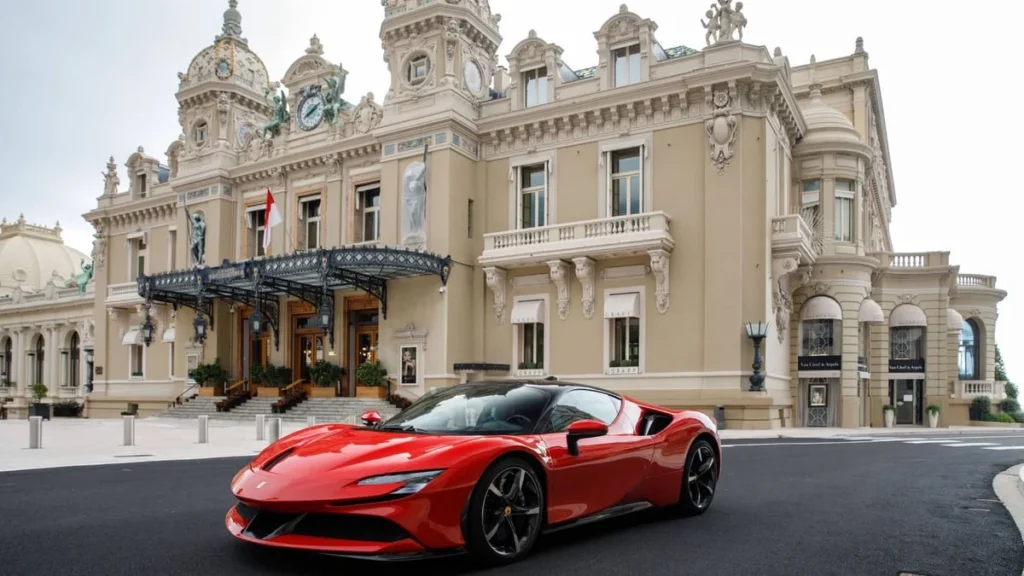
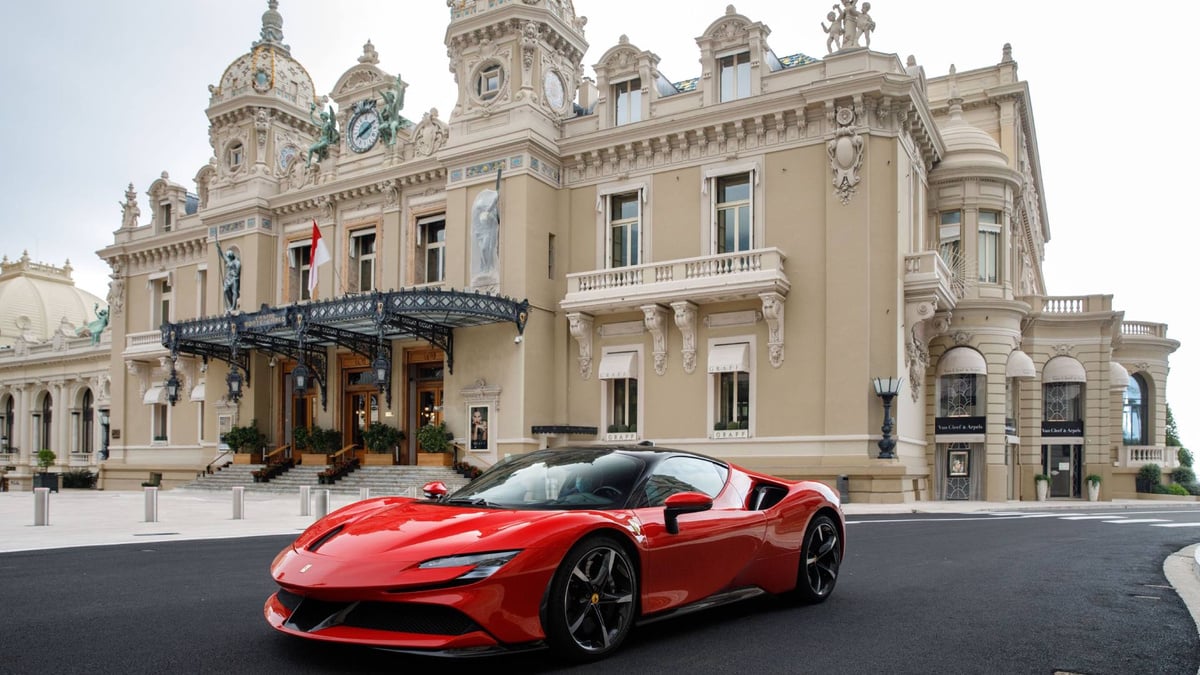
Monaco is synonymous with high-octane luxury. Picture the palm-lined hairpin turns of the Grand Prix circuit, the Mediterranean sun glinting off the polished chrome of a Ferrari 296, the guttural roar of a Lamborghini Aventador echoing through the tunnels, and the understated elegance of a Bentley parked outside the Casino de Monte-Carlo. For millions of tourists and automotive enthusiasts worldwide, the Principality is a living museum of internal combustion excellence—a playground where horsepower reigns supreme.
Yet, behind this glossy, gasoline-fueled postcard image, a quiet crisis is unfolding. Monaco is rapidly running out of fuel.
Following the definitive closure of a historic filling station earlier this year, and with another imminent shutdown on the horizon, the microstate is hurtling toward a scenario where only two operational gas stations will remain within its densely packed two-square-kilometer borders. This impending fuel drought has sent shockwaves through the Monegasque government, triggered heated debates in the National Council, and left owners of high-performance luxury vehicles wondering where they will soon be able to fill their tanks.
Main Facts: The Shrinking Landscape of Monegasque Fuel
The geography of Monaco is defined by its extreme verticality and hyper-dense urban planning. Squeezed between the Mediterranean Sea and the steep cliffs of the Maritime Alps, every square meter of land is intensely contested. In an environment where real estate commands astronomical sums, gas stations—which require large underground storage tanks, safety perimeters, and considerable surface area—are increasingly viewed as an inefficient use of space by urban developers.
The contraction of Monaco’s fuel distribution network is not a theoretical threat; it is an accelerating reality:
- The Stade Louis-II Closure: On August 31, 2026, the Esso filling station located at the foot of the iconic Stade Louis-II stadium shut its doors permanently. Operating for nearly half a century, this station was a primary refueling hub for residents of the Fontvieille district and motorists entering from the western approaches. It was sacrificed to make way for comprehensive modernization and construction works planned within the sports complex, with zero provisions for relocation.
- The Îlot Charles-III Project: The squeeze will tighten further with the temporary closure of the station situated near the municipal cemetery. This site is slated to be dismantled to facilitate the massive urban renewal project of the Îlot Charles-III district.
- The Lasting Survivors: Once these transitions are fully realized, Monaco’s fuel infrastructure will be reduced to a bare minimum. Only two service stations—Romano Energy and Pit Stop—are projected to remain operational across the entire Principality.
For a territory that sees thousands of high-end vehicles traversing its streets daily, dropping down to just two fueling points creates an unprecedented logistical bottleneck.
Chronology of a Crisis: How Monaco Lost Its Pumps
To understand how Monaco arrived at this precarious juncture, one must look at the timeline of urban development and regional disruptions that have systematically dismantled the local fuel supply chain.
The Decades of Abundance
For years, Monaco maintained a modest yet functional network of service stations scattered across its various wards—Monte-Carlo, La Condamine, Fontvieille, and Monaco-Ville. These stations catered not only to the daily commuting needs of locals and cross-border workers but also to the thirsty, high-displacement engines of the Principality’s affluent car culture.
The Turning Point: The 2020s Redevelopment Boom
As Monaco’s population density reached critical mass, the government pivoted toward aggressive urban expansion projects, including offshore land reclamation (such as the Portier eco-district) and the restructuring of older neighborhoods. Large-scale infrastructure projects required land, and industrial footprints like gas stations became prime targets for conversion.
- 2023 (The Regional Shock): The fragility of the broader regional network was exposed when a major rockslide severed the Moyenne Corniche, forcing the indefinite closure of the strategic TotalEnergies service station in neighboring Cap-d’Ail. Monegasque motorists who occasionally relied on cross-border options suddenly found their alternatives diminished.
- August 2026 (The Stade Louis-II Shutdown): The closure of the historic Esso station marked the beginning of the end for widespread fuel accessibility within Monegasque borders.
- Late 2026 and Beyond (The Îlot Charles-III Transition): The upcoming closure for urban restructuring leaves the Principality on the razor’s edge, prompting emergency discussions at the highest legislative levels.
Supporting Data: Density, Demographics, and the EV Paradox
The gravity of Monaco’s fuel shortage becomes starker when analyzed through economic, geographical, and automotive data.
The Real Estate Impossibility
Opening a modern service station involves far more than paving a driveway and dropping in a pump. Strict European and Monegasque safety regulations mandate:
- Subterranean double-walled storage tanks equipped with continuous leak detection systems.
- Vapor recovery systems to prevent atmospheric contamination.
- Generous turning radiuses and queueing lanes to prevent traffic spillover onto adjacent public roads.
In Monaco, where land values are among the highest on planet Earth, allocating hundreds—if not thousands—of square meters of prime urban real estate to hydrocarbon storage is a financial and logistical impossibility.
The Automotive Paradox: ICE, Hybrids, and EVs
Irony defines Monaco’s current automotive ecosystem. For years, the government has aggressively incentivized the adoption of low-emission vehicles through tax breaks, free public parking, and charging infrastructure.
According to registration data for 2025:
- Pure Electric Vehicles (EVs): Accounted for 21.9% of all new car registrations in the Principality.
- Internal Combustion Engines (ICE): Maintained an identical 21.9% market share, demonstrating that traditional petrol cars remain deeply entrenched among drivers who value performance, range, and heritage.
- Hybrid Powertrains: Occupied the remaining balance, with gasoline-electric hybrids enjoying surging popularity.
While the rise of EVs signals a changing tide, hybrids and traditional combustion supercars still rely entirely on liquid fossil fuels. The total phase-out of gas stations is premature, creating a dangerous mismatch between infrastructure decline and actual vehicular demand.
Official Responses: Panic in the National Council
The impending reduction to just two service stations has moved past the realm of urban planning trivia and erupted into a major political talking point. During debates surrounding the 2026 rectificative budget, members of the Monegasque National Council didn’t mince words.
The Economic Ministry’s Dilemma
Faced with intense questioning from elected officials, Frédéric Cottalorda, Government Counselor-Minister of Economy and Finance, delivered a blunt assessment before the assembly. He acknowledged that the government is fully aware of the crisis but admitted that "no simple solution exists" to replace the lost stations. Finding a plot of land large enough, safe enough, and politically palatable enough to host a new fuel depot in contemporary Monaco is essentially an unsolvable equation.
Innovative Proposals and Monopoly Fears
Demonstrating the urgency of the matter, Thomas Brezzo, President of the National Council, urged the administration to think outside the box—specifically suggesting that the government explore legal and engineering frameworks to preserve existing underground fuel storage tanks during redevelopment projects rather than filling them in permanently.
Meanwhile, Jean-Louis Grinda, Vice-President of the National Council, sounded the alarm on a different front: the economic threat of market consolidation. Grinda warned that reducing the market to a duopoly—Romano Energy and Pit Stop—creates a genuine risk of a quasi-monopoly.
While no explicit price gouging or artificial inflation has been proven at this early stage, economists and lawmakers alike note that a lack of competitive pressure inevitably weakens consumer protections. When motorists have only two choices within the entire country, the ability to shop around for competitive pricing vanishes.
Implications: Traffic Gridlock and Regional Spillover
The fallout from Monaco’s disappearing gas stations extends far beyond the borders of the Principality, threatening to exacerbate regional traffic issues and inconvenience thousands of daily commuters.
The Great Exodus to France
If local stations become perpetually congested or shutter entirely, Monegasque motorists will be forced to cross the border into France to refuel. Neighboring municipalities such as Cap-d’Ail and Roquebrune-Cap-Martin are bracing for an influx of foreign-plated supercars, SUVs, and commuter vehicles seeking cheaper or simply more accessible fuel.
However, this regional escape valve is far from reliable. As noted earlier, the critical TotalEnergies station on the Moyenne Corniche in Cap-d’Ail has remained shuttered since a devastating rockslide in 2023. Displacing thousands of Monegasque drivers onto surrounding French roads risks creating severe bottlenecks on already saturated coastal arteries.
Traffic Gridlock within the Microstate
Within Monaco itself, funneling all internal combustion and hybrid traffic into just two remaining stations creates a recipe for gridlock. The physical queues waiting to access Romano Energy or Pit Stop threaten to block critical urban thoroughfares, disrupting bus routes, emergency vehicle pathways, and daily commerce.
Conclusion: A Hyper-Modern Future with a Fossil Fuel Hangover
Monaco stands at a fascinating cultural and infrastructural crossroads. As the microstate marches toward a greener, more sustainable future, it finds itself wrestling with the very physical realities of its legendary automotive identity.
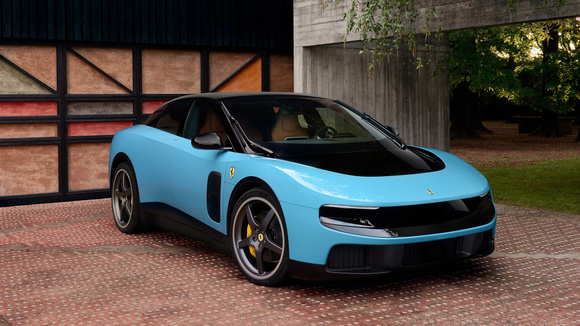
In a poetic twist of irony, the automotive press has noted that the most heavily criticized vehicle in Ferrari’s recent stable—its high-tech, pure-electric luxury saloon, the Luce—might soon become the most practical daily driver in the Principality. While purists continue to champion the V8 and V12 symphonies that soundtrack Monaco’s streets, the infrastructure required to feed those beasts is evaporating beneath them.
Unless the Monegasque government can engineer an unprecedented spatial miracle, the days of casually pulling up to a local pump to fill a supercar are coming to an end. For the residents of the world’s most glamorous zip code, the road ahead looks increasingly electric—not entirely by choice, but out of absolute necessity.
