Main Facts
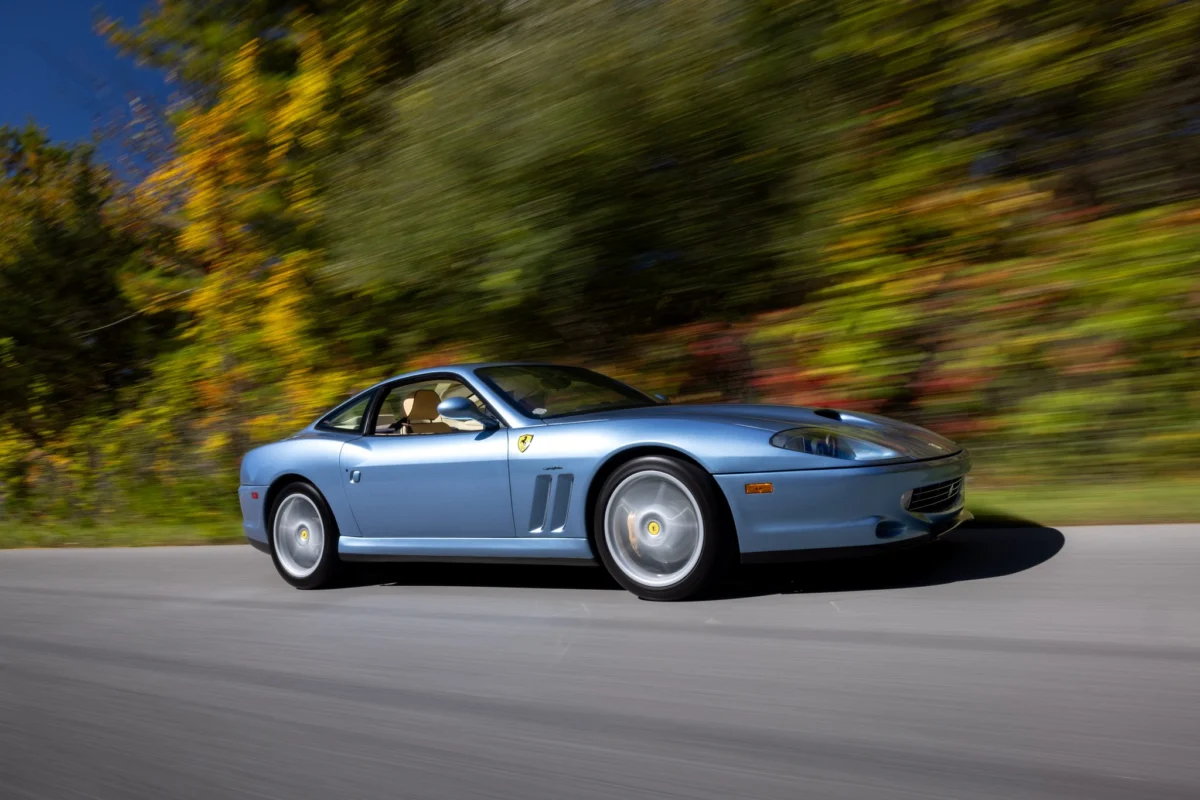
For automotive enthusiasts and purists, few configurations evoke as much reverence as a front-engine, V12 Ferrari paired with an open-gate manual transmission. Currently crossing the auction block via a Bring a Trailer (BaT) Local Partner based in New York, a rare and distinctively specified 2000 Ferrari 550 Maranello has captured the attention of the collector car community. Finished in the mesmerizing, non-standard shade of Azzurro California over a beige leather interior, this grand tourer represents an era when analog mechanical purity reigned supreme before the onset of lightning-fast dual-clutch transmissions and heavy electronic driver aids.
Underneath the sculpted, Pininfarina-penned bonnet lies a naturally aspirated 5.5-liter F133A quad-cam V12 engine. Factory-rated at a formidable 485 horsepower and 419 lb-ft of torque, this powerplant sends its considerable energy to the rear wheels exclusively via a six-speed manual transaxle and a limited-slip differential. The car features iconic aesthetic touches, including a central hood scoop, Scuderia Ferrari front-fender shields, a crosshatch grille, a quad-outlet exhaust, and silver 18-inch five-spoke alloy wheels wearing yellow prancing horse center caps and wrapped in modern Michelin Pilot Sport rubber.
However, what makes this specific 550 Maranello stand out just as much as its striking color palette is its intriguing history. Offered at no reserve with a clean Carfax report (complementing its paper trail) and a Montana title carrying a "Rebuilt Salvage" brand, this Maranello offers a unique opportunity for enthusiasts willing to look past a checkered administrative history in exchange for a pure, driver-focused Italian legend.

Chronology
To fully understand this 2000 Ferrari 550 Maranello, one must trace its timeline from its assembly in Maranello, Italy, through its eventful two-decade journey across American highways and repair shops.
The Turn of the Millennium and Early Factory Life
Rolled off the production line in 2000, this 550 Maranello was built during the twilight years of the model’s initial production run. Ferrari designed the 550 to recapture the magic of legendary front-engine V12 grand tourers like the 365 GTB/4 "Daytona," a lineage that had been interrupted by mid-engined flat-12 and V12 models like the Testarossa and 512TR. Initially delivered to its first owner in a striking configuration featuring Azzurro California paint and power-adjustable Daytona-style seats with black piping, the car spent its early years enjoying the open road as Maranello intended.
The 2004 Turning Point
The trajectory of this grand tourer shifted dramatically in August 2004. According to state records and historical vehicle reports, the car sustained damage significant enough to prompt the state of Florida to issue a salvage title. While the precise details of the incident leading to the salvage designation remain unrecorded in public summaries, the vehicle’s structural and cosmetic integrity required intensive intervention. Subsequent to this event, as the car was bought, repaired, and registered in various states over the ensuing years, additional salvage and rebuilt titles were issued, marking a permanent chapter in the vehicle’s provenance. Decades later, the selling dealer noted a concrete repair resulting from this history: the right quarter panel was replaced during one of its restorative phases.

Modern Mechanical Revitalization (2022–2026)
Despite its turbulent structural history, the car has received consistent and thorough mechanical attention in recent years, ensuring that its V12 heartbeat remains as potent as ever.
- 2002: Mechanics performed targeted maintenance, including replacing the catalytic converters, hood struts, engine mounts, and intake hoses.
- 2003: The vital drive belts and belt tensioner were replaced—a critical service item for any vintage Ferrari V12.
- 2026: Ahead of its current auction offering, the fuel pumps and fuel filters were completely replaced to ensure reliable delivery to the high-pressure fuel system. This was followed by a comprehensive oil change in July 2026.
Now residing in New York under the care of a BaT Local Partner, the car is being offered to a new custodian at no reserve, accompanied by a Montana title featuring the "Rebuilt Salvage (09)/AZ" brand designation.
Supporting Data
Evaluating a vintage Ferrari requires diving deep into the numbers—from the engine specifications down to the wear-and-tear items documented during inspection.

Powertrain & Performance Specifications
- Engine Type: 5.5-liter (5,474cc) F133A quad-cam 65-degree V12
- Engine Management: Bosch Motronic 5.2 fuel injection
- Lubrication System: Dry sump
- Power Output: 485 horsepower at 7,000 rpm
- Torque: 419 lb-ft at 5,000 rpm
- Transmission: Rear-mounted six-speed manual transaxle with an aluminum gated shifter
- Differential: Limited-slip differential
Chassis, Suspension, & Brakes
- Layout: Front-engine, rear-wheel-drive grand tourer
- Suspension: Independent front and rear unequal-length wishbones, coil springs, anti-roll bars, and electronic-control telescopic shock absorbers
- Brakes: Cross-drilled and ventilated steel rotors on all four corners with black Ferrari-branded calipers
- Wheels: 18-inch five-spoke alloy wheels finished in silver
- Tires: Michelin Pilot Sport performance tires (featuring 2022 and 2023 date codes)
Interior Amenities & Condition Notes
The cabin showcases a sophisticated blend of luxury and driver-centric design. Beige leather wraps the power-adjustable Daytona-style bucket seats, complemented by contrasting black piping that flows onto the lower dashboard, center console, and door panels.
- Instrumentation: A Jaeger analog gauge cluster sits behind the leather-wrapped steering wheel, featuring a 220-mph speedometer, a 10,000-rpm tachometer, and auxiliary gauges for coolant temperature and oil pressure. An analog clock, along with gauges for oil temperature and fuel level, crowns the center stack.
- Odometer Reading: The six-digit mechanical odometer displays approximately 17,000 miles. However, the selling dealer explicitly notes that true mileage is unknown and cannot be verified as accurate due to historical gaps or instrument replacements during its salvage rebuilds.
- Cosmetic Wear: Photos in the documentation gallery reveal visible wear on the driver and passenger seating surfaces, minor blemishes on the dashboard, and a few tears in the leather. The leather-wrapped steering wheel also exhibits some loose trim, reflecting the car’s age and use history.
Official Responses and Dealer Transparency
When dealing with a collector-grade exotic vehicle that carries a salvage history, transparency from the seller is paramount to maintaining trust within the online auction community. The selling dealer, acting as a BaT Local Partner, has taken a proactive approach in disclosing the vehicle’s past without reservation.
Disclosure of Title Status
Rather than burying the vehicle’s administrative history, the listing clearly and upfront addresses the paperwork. The Carfax report corroborates a series of rebuilt and salvage title issuances dating back to August 2004. Furthermore, the current Montana title officially carries the brand: "Rebuilt Salvage (09)/AZ".

Addressing Structural History
To answer potential buyer inquiries regarding the extent of the 2004 Florida salvage event, the selling dealer provided specific structural disclosures. Most notably, confirmation was given that the right quarter panel has been replaced. This acknowledgment gives prospective buyers a clear roadmap of where structural repair work took place, allowing independent pre-purchase inspectors to focus their evaluations on the frame alignment, panel gaps, and weld integrity of the right-side chassis structure.
No-Reserve Format
By listing the vehicle at no reserve, the selling dealer has placed the ultimate valuation of the car directly into the hands of the open market. This strategy acknowledges that while the salvage title will deter risk-averse collectors seeking museum-grade, pristine examples, it simultaneously creates an inviting entry point for drivers who prioritize seat time, manual transmissions, and rare color combinations over pristine paperwork.
Implications
The appearance of this 2000 Ferrari 550 Maranello at a no-reserve auction carries broader implications for the vintage supercar market, highlighting shifting attitudes toward title brands, driving enjoyment, and the escalating value of analog gated-shifter Ferraris.

1. The "Driver’s Car" Phenomenon vs. Collector Purity
For decades, the collector car hobby operated under a strict hierarchy: a salvage or rebuilt title instantly decimated a vehicle’s market value, often turning it into a pariah among institutional collectors. However, the modern market—fueled by platforms like Bring a Trail—has evolved. As pristine, low-mileage manual V12 Ferraris climb into stratospheric price brackets (often fetching hundreds of thousands of dollars), enthusiast-grade drivers are looking for discounted alternatives. A salvaged title on a 550 Maranello strips away the pressure of preserving a "投資級" (investment-grade) garage queen, freeing the next owner to actually drive, enjoy, and track the car the way Enzo Ferrari intended.
2. The Resurgence of Azzurro California and Analog V12s
The 550 Maranello is widely credited with reviving Ferrari’s classic front-engine V12 grand tourer formula. With a gated six-speed manual gearbox becoming an increasingly rare commodity in the modern automotive landscape—where automated manuals and dual-clutch units dominate—the mechanical engagement of the F133A drivetrain is heavily coveted. Paired with a rare, highly desirable paint code like Azzurro California, this car possesses aesthetic appeal that transcends its paper history.
3. Market Valuation and Risk Assessment
The final hammer price of this 550 Maranello will serve as an intriguing case study for market resilience. Prospective buyers must weigh the cost of potential hidden structural compromises against the pleasure of owning a 485-horsepower V12 Italian icon. For the right buyer—someone equipped with a trusted mechanic, a willingness to overlook cosmetic imperfections, and a desire to experience one of the greatest grand tourers ever built—this Azzurro California Maranello represents a rare opportunity to acquire a legendary driving experience at a fraction of the cost of a clean-title counterpart.