

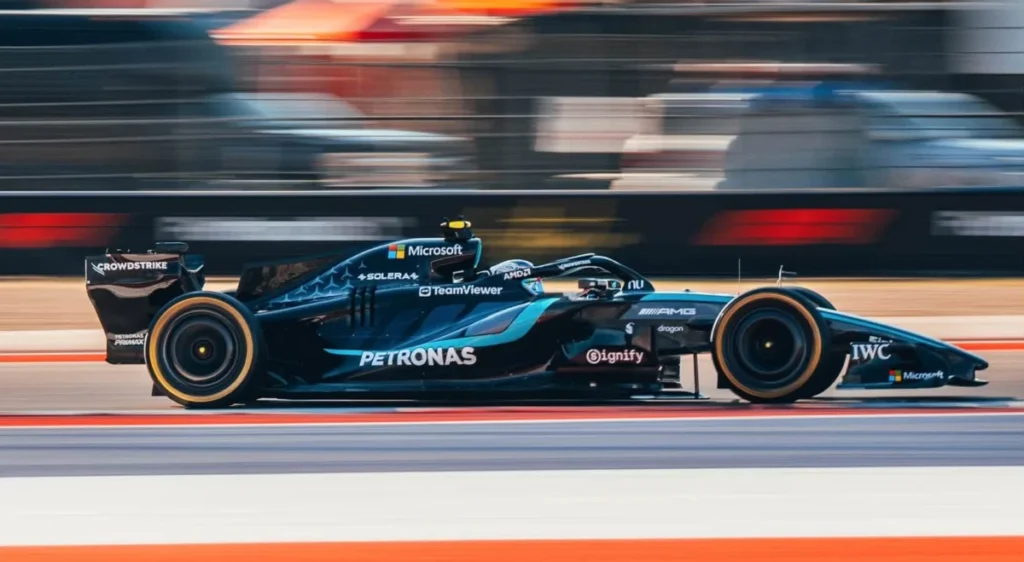
In the high-stakes world of Formula 1, where legends are forged in carbon fiber and rubber, a new name has begun to echo through the paddock with undeniable authority. Andrea Kimi Antonelli, the young Italian prodigy, once again demonstrated a level of maturity and precision that belies his tender years, delivering a masterclass in race craft to secure his ninth victory of the season.
At the latest Grand Prix, the Mercedes pilot did more than just win; he dismantled the tactical gambits of his rivals, proving that the championship leader is not merely leading by points, but by sheer, unadulterated talent. With this dominant performance, Antonelli has all but locked the championship title, leaving his competitors scrambling in his wake as he edges closer to a historic coronation.
The Strategic Chess Match: One Stop Versus Two
The weekend began with high tension as the grid lined up under the lights. Antonelli, starting from pole position, displayed nerves of steel, holding his ground against a fierce challenge from Max Verstappen. The opening laps saw a frantic exchange in the first sector, where Charles Leclerc—in a display of remarkable aggression—drove a daring maneuver through the fast esses to briefly snatch second place from the Red Bull driver. However, the Dutchman responded with characteristic tenacity, reclaiming his position with a late-braking masterclass in the technical, sinuous sections of the track.
As the race settled into its rhythm, the strategic divergence became the defining narrative. Verstappen, utilizing a set of soft-compound tires, initiated an aggressive "two-stop" strategy, ducking into the pits as early as the 13th lap to bolt on a fresh set of softs. This move forced the hand of the frontrunners. Ferrari and McLaren followed suit, matching the Red Bull’s pace, while Antonelli, who had started on the more durable medium compound, opted to extend his stint.
A Chronology of Control
The race evolved into a battle of endurance and tire management. Verstappen, fresh on his new rubber, tore through the field, dispatching George Russell—who was enduring a miserable afternoon plagued by track-limit penalties—and his teammate, Isack Hadjar.
By the 24th lap, Antonelli made his decisive move, diving into the pits to switch to the hard-compound tires. This set the stage for a tactical showdown: could Antonelli’s "one-stop" gamble hold up against the raw pace of Verstappen’s two-stop strategy? The tension was palpable. Behind him, Isack Hadjar found himself in a heated confrontation with his race engineer over team strategy. The Frenchman’s frustration was audible over the radio, and his race further unraveled upon exiting the pits, where a power unit anomaly hampered his acceleration, effectively ending his hopes of a podium finish.
As the laps ticked by, the narrative shifted. Verstappen began to report issues with engine braking, his pace stagnating as he struggled to bridge the gap to the leaders. By the 32nd lap, the Red Bull pilot was forced into his second stop, switching to hard tires. It was here that Antonelli’s brilliance truly shone. With clear air and the advantage of his strategy, the young Italian proceeded to carve through the field, overtaking Leclerc and immediately opening a significant gap.
The Late-Race Surge and the Neutralization
The final fifteen laps offered a masterclass in composure. With a 12-second lead over Lando Norris, Antonelli showed no signs of tire degradation. Meanwhile, a late-race charge from Charles Leclerc added a layer of drama to the closing stages. The Monegasque driver, showing blistering pace, systematically dismantled the opposition, dispatching Lando Norris and eventually hunting down Max Verstappen. Leclerc’s overtake on the Red Bull in the 49th lap was a clinical display of driving, executed with surgical precision.
However, the race was not without its administrative hurdles. The immobilization of Valtteri Bottas’s Cadillac necessitated a virtual safety car period. The recovery process proved agonizingly slow, as track marshals struggled with the stranded vehicle before eventually deploying a crane. This neutralization proved a bitter pill for Lewis Hamilton, who had been on a charge and was rapidly closing the gap to the podium places. When the green flag finally waved for the final three laps, the momentum had been broken, allowing Antonelli to cross the finish line with a commanding 10-second lead.
Supporting Data and Performance Metrics
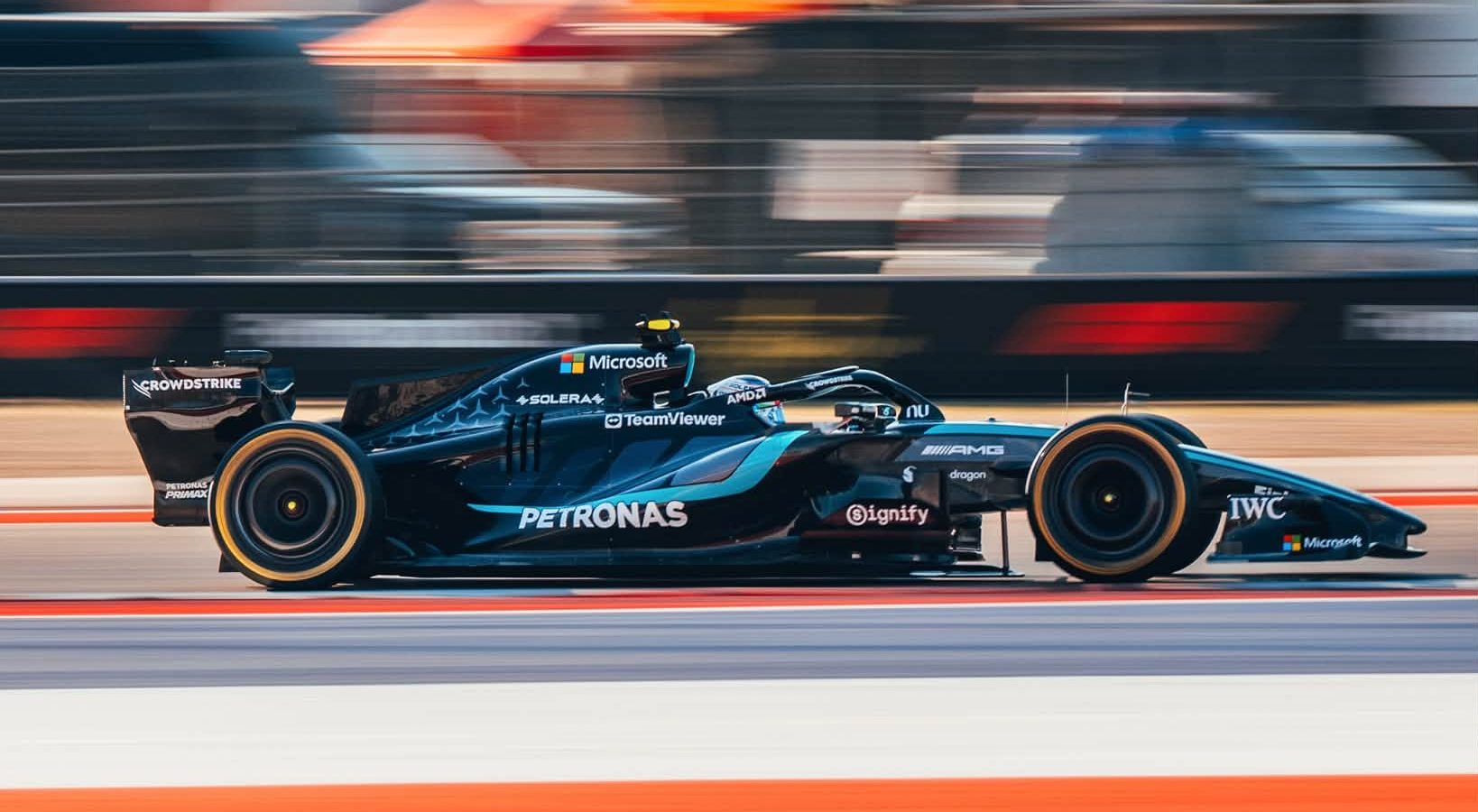
The final classification paints a clear picture of the current competitive landscape. Antonelli’s victory was the result of a perfectly executed one-stop strategy, completing the 62-lap distance in 1:35:16.650.
| Pos | Driver | Team | Gap |
|---|---|---|---|
| 1 | Kimi Antonelli | Mercedes | Winner |
| 2 | Charles Leclerc | Ferrari | +13.078s |
| 3 | Max Verstappen | Red Bull | +17.485s |
| 4 | Lewis Hamilton | Ferrari | +18.515s |
| 5 | Lando Norris | McLaren | +30.521s |
While the podium was filled with familiar faces, the underlying data suggests a shift in the hierarchy. The performance of the Mercedes W17, combined with Antonelli’s tire management, has proven to be the class of the field. Conversely, the "best of the rest" battle remains intensely competitive, with Liam Lawson and Pierre Gasly continuing to extract maximum performance from mid-field machinery.
Implications for the World Championship
The mathematical reality of the championship has become stark. With five races remaining, Andrea Kimi Antonelli has established a 123-point lead. Given that a maximum of 125 points remain on the table, the Italian is effectively within touching distance of his maiden world title. The question is no longer if he will win, but where he will officially secure the trophy.
The fight for the remaining podium spots in the Drivers’ Championship is where the true drama now resides. George Russell, despite his recent struggles, remains in second place with 242 points, but he is under immense pressure from a hungry pack:
- Lewis Hamilton: 241 points
- Max Verstappen: 236 points
- Charles Leclerc: 233 points
This four-way battle for the runner-up spot promises to be the defining narrative of the season’s final sprint.
In the Constructors’ Championship, Mercedes has effectively cemented their dominance with 607 points, leaving Ferrari (474 points) a distant second. The most compelling narrative is the dead heat between Red Bull and McLaren, both locked at 355 points. This rivalry will likely dictate the technical development focus for the remainder of the year as both teams fight for the lucrative second-place finish in the team standings.
Official Commentary and Paddock Reactions
The mood in the paddock post-race was one of resignation among rivals and jubilance at Mercedes. While Verstappen’s frustration was evident in his brief, clipped comments regarding the car’s engine braking issues, the consensus among observers was that the race was won on the pit wall and in the cockpit of the leading Mercedes.
"Kimi drives with a level of calm that we usually only see in multiple world champions," noted one veteran paddock reporter. "The way he managed his tires in the middle stint, knowing exactly when to push and when to conserve, was not the driving of a rookie. It was the driving of a master."
For Isack Hadjar, the day was one to forget. His public frustration with the team’s strategy, followed by the technical issues during his pit stop, underscores the pressure cooker environment at Red Bull as they struggle to maintain their competitive edge.
Conclusion: A New Star is Born
As the Formula 1 circus moves to the next venue, the spotlight remains firmly fixed on Andrea Kimi Antonelli. He has navigated the complexities of the 2024 season with a level of poise that suggests the sport is entering a new era. With his championship lead insurmountable in all but name, the focus will now shift to whether he can cap off this dominant campaign with a series of record-breaking performances in the final five rounds.
For the fans, the spectacle has been revitalized. While the title fight may have reached its conclusion, the fierce competition between the veterans—Hamilton, Verstappen, and Leclerc—ensures that the remaining races will be anything but a procession. The 2024 season will be remembered as the year of the Italian prodigy, a season where a young talent didn’t just participate in history, but actively wrote it with every turn of the wheel.
