

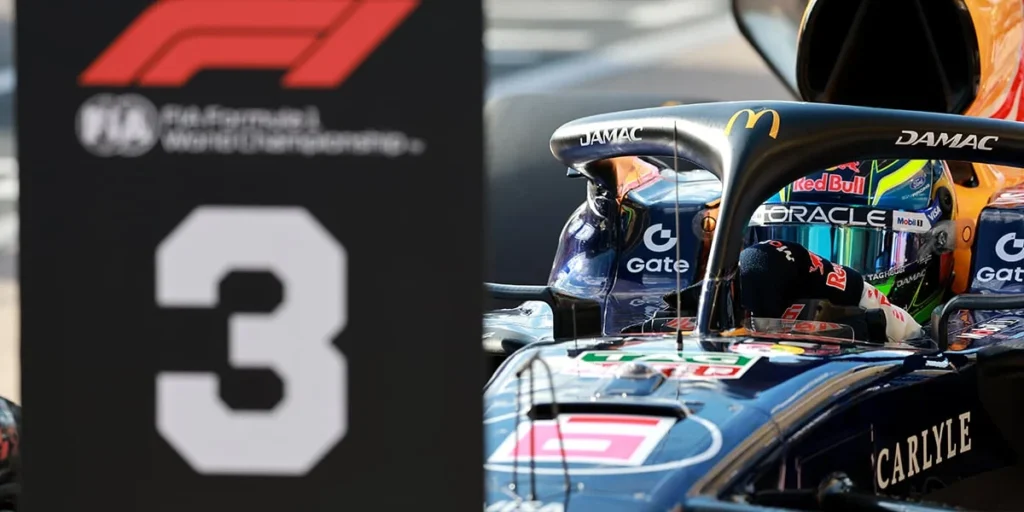
In the high-stakes world of Formula 1, the difference between a disastrous weekend and a career-defining performance often comes down to the final minutes of a qualifying session. For Isack Hadjar, the United States Grand Prix at the Circuit of the Americas (COTA) was a microcosm of this volatility. After battling severe balance issues, erratic car behavior, and a brush with the stewards that threatened his composure, the Red Bull driver pulled off a stunning recovery to secure third on the starting grid.
The Narrative of Resilience: From Despair to P3
The journey to the second row of the grid was anything but straightforward. For the majority of the weekend, the Frenchman looked out of sorts, struggling to tame his RB22. The car, which has been a benchmark of engineering excellence for much of the season, appeared uncooperative, forcing Hadjar into a series of setup experiments that yielded more frustration than pace.
"This weekend has been a disaster for me," a candid Hadjar admitted in the media pen following the session. "My lap times were being deleted, I was struggling with track limits, and this morning, I couldn’t even put a clean lap together on the soft tires. It felt like we were chasing ghosts."
Despite the gloomy outlook heading into Saturday afternoon, the Red Bull garage underwent a radical shift in philosophy. By the time the lights went out for Q3, the car had been transformed, allowing Hadjar to clock a time that placed him firmly behind pole-sitter Kimi Antonelli and his own teammate, Max Verstappen.
Chronology of a Turbulent Weekend
Friday: The Struggle for Equilibrium
The trouble began early in the practice sessions. The RB22 was plagued by a distinct lack of front-end grip, particularly in the rapid-fire opening sector of the Austin circuit. The engineers noted significant overheating in the front tires during high-speed transitions, which made the car unpredictable and prone to oversteer. Throughout Friday, Hadjar was seen fighting the steering wheel, unable to find the rhythmic flow required to navigate the technical COTA layout.
Saturday Morning: The Boiling Point
The situation reached a nadir during the final free practice session. Already stressed by the car’s handling, Hadjar found himself in a heated on-track incident with Williams’ Alexander Albon. Approaching the tight first corner, a braking error forced Hadjar to lock his wheels; in the ensuing scramble to regain control, he drifted sharply into the path of the Williams.
The incident was immediately placed under investigation by the FIA. The resulting tension added a psychological layer to an already difficult morning, as the young driver struggled to keep his focus while his engineering team scrambled to find a setup that wouldn’t "eat" its tires.
Saturday Afternoon: The Turnaround
Qualifying was the ultimate test of character. The team opted for a high-risk, high-reward adjustment to the suspension geometry and wing levels, aiming to mitigate the thermal degradation that had haunted them for 48 hours. The gamble paid dividends. As the fuel loads dropped and the track temperature stabilized, Hadjar finally found the "sweet spot" of the RB22, resulting in a clinical performance that saw him punch his ticket to the second row.
Supporting Data and Technical Analysis
The telemetry from the qualifying session highlights the sheer scale of the turnaround. In early practice, Hadjar was losing nearly three-tenths of a second in the Sector 1 "esses" compared to the Mercedes of Antonelli. By Q3, that deficit was halved.
- The Surcharge Factor: The RB22’s struggle with front-tire thermal management was the primary culprit for the lack of pace. By adjusting the rake of the car, the team improved the aerodynamic load on the front axle, preventing the overheating that had caused the car to wash out in corners 3 and 4.
- The Margin: Hadjar finished just 36 milliseconds behind Max Verstappen. This narrow gap is a testament to the fact that while he struggled for balance, he never lost his fundamental pace.
- The Stewards’ Verdict: Following the incident with Albon, the FIA issued an official warning for "erratic driving." While a penalty could have resulted in a grid drop, the stewards deemed that the lock-up was a result of technical instability rather than malice or incompetence, allowing Hadjar to keep his starting position.
Official Responses and Reflections
"We have really worked in depth on the settings," Hadjar reflected after the session. "We tried an enormous number of things this weekend—some worked, some were absolute failures—but we stuck with it. To end up in P3 after where we were on Friday is incredibly satisfying. I have to apologize to my mechanics and engineers; I was not the easiest person to work with over the last two days. They kept their cool when I was losing mine, and this result belongs to them."
The team’s engineering director echoed these sentiments, noting that the data collected during the "disastrous" practice runs actually provided the blueprint for the successful qualifying setup. "We had to go to the edge of the cliff to understand where the limit was," the director remarked. "Once we understood the thermal threshold of the front tires, we built the car around that."
Implications for the Grand Prix
As the field prepares for the race, the implications of Hadjar’s P3 qualification are significant. The grid is set up for a tactical masterclass, with the Mercedes of Kimi Antonelli sandwiched between two hungry Red Bulls.
Strategic Considerations
The race at COTA is notoriously hard on tires, particularly with the high-speed lateral loads of the first sector. Hadjar’s ability to manage his tire temperatures—the very issue that plagued him on Friday—will be the defining factor in his race pace. If he can maintain the balance he found in qualifying, he will be in a prime position to challenge for the lead.
The Team Dynamic
With Max Verstappen sitting in P2 and Hadjar in P3, Red Bull possesses a strategic advantage. They can force Mercedes to defend on two fronts, potentially allowing them to split strategies or engage in "team games" to compromise Antonelli’s race. Hadjar, despite his regrets over a slightly botched Q3 run where a strong tailwind in sectors 13 and 15 cost him a potential front-row start, is hungry to prove he belongs at the sharp end of the grid.
"I’m still a little disappointed," Hadjar admitted. "I think there was more in the car. But third is a solid foundation. Tomorrow is where it counts. We have the pace, we have the car, and we have a point to prove."
As the dust settles on a chaotic Saturday in Texas, one thing is clear: Isack Hadjar has matured. Moving past the frustration of a difficult setup and the pressure of a stewards’ investigation, he demonstrated the kind of mental fortitude required of a championship contender. Whether he can convert this momentum into a podium finish—or perhaps even a victory—will be the central question when the lights go out on Sunday. For now, the Frenchman has silenced his critics and ensured that the second row will be a focal point of the opening lap.
