

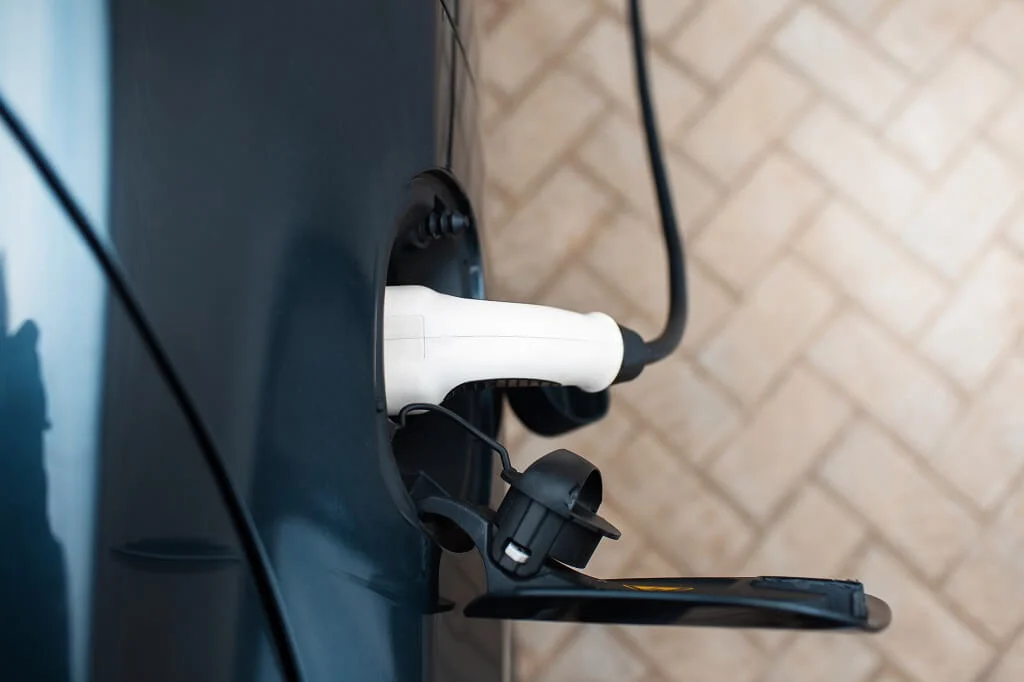
Introduction: The Residential Charging Revolution
As the global automotive industry accelerates its definitive pivot away from internal combustion engines, the urban and suburban landscape is undergoing a quiet, profound infrastructure transformation. Electric vehicles (EVs) are no longer a niche market for early adopters; they are rapidly becoming the dominant mode of personal transport across major metropolitan areas. While public charging stations have sprouted across city streets, commercial parking lots, and highway corridors, a complementary revolution is taking place behind closed doors—literally.
An increasing number of EV owners are opting to install dedicated charging infrastructure directly at their residences. This shift from public dependency to domestic autonomy is reshaping how drivers interact with their vehicles, managing everything from daily commuting patterns to household energy consumption. Moving beyond the convenience factor, home charging touches upon critical elements of grid management, financial planning, environmental sustainability, and regulatory compliance.
To fully understand this shift, one must examine the core technical specifications of residential charging units, the multi-faceted advantages of domestic installations, the regulatory frameworks governing them, and the broader implications for the future of energy and transportation.
Main Facts: Decoding Residential Charging Technology
At the heart of the home charging ecosystem is the Wallbox—a specialized residential supply equipment designed to safely and efficiently transfer alternating current (AC) electricity from the domestic grid to the vehicle’s onboard charger. Unlike standard domestic three-prong sockets, which are notoriously slow and potentially hazardous when subjected to continuous high-draw loads, dedicated home charging stations are engineered for safety, speed, and durability.
The capacity of these units is measured in kilowatts (kW), dictating the speed at which energy is transferred. Understanding these power tiers is essential for tailoring an installation to specific driving habits and electrical system limitations:
- The 3.7 kW Charger (Standard Home Solution): Operating typically on a single-phase 16-amp circuit, this entry-level option is well-suited for drivers with modest daily mileage or those who leave their vehicles plugged in for extended periods, such as overnight. While slower, it places minimal strain on the home’s overall electrical infrastructure.
- The 7 kW Charger (The Balanced Standard): Representing the sweet spot for the vast majority of residential installations, a 7 kW single-phase charger (drawing 32 amps) can comfortably replenish a standard mid-size EV battery from empty to full over the course of a single night (approximately 6 to 8 hours). It offers a robust compromise between charging speed and electrical demand.
- The 22 kW Charger (High-Performance/Three-Phase): Designed for properties equipped with three-phase electrical supplies, the 22 kW unit delivers rapid charging capabilities. While highly efficient for vehicles equipped with onboard chargers capable of handling high AC input, it requires a significant upgrade to the domestic electrical panel and is less common in standard residential settings.
A crucial operational fact regarding these installations—particularly for high-capacity units like the 22 kW systems—is the strict requirement for professional expertise. In many jurisdictions, installation must be executed by certified professionals, such as IRVE-certified technicians (Infrastructure de Recharge de Véhicules Électriques), to ensure compliance with stringent safety codes. Furthermore, certain energy providers mandate inspection and verification of the setup before activation to safeguard the local electrical grid against overloads.
Chronology: The Evolution of Domestic Infrastructure
To contextualize the current boom in home charging, it is helpful to trace the timeline of how EV refueling has evolved over the past two decades:
- Phase 1: The Outlier Era (Early 2010s): When modern mass-market electric vehicles first emerged, public infrastructure was virtually nonexistent. Early adopters relied almost exclusively on standard household 3-pin plugs (Level 1 charging), enduring agonizingly slow charge times of 12 to 24 hours. Range anxiety was at its peak.
- Phase 2: The Public Push (Mid-2010s): Governments and municipalities poured billions into public charging networks. The focus was heavily weighted toward urban street-side chargers and DC fast-charging stations along major thoroughfares, creating a mindset that EVs required public refueling much like traditional petrol cars.
- Phase 3: The Grid Congestion Reality (Late 2010s): As adoption scaled, public chargers began suffering from maintenance issues, vandalism, queuing, and unpredictable pricing structures. Cities realized that relying solely on public spaces was unsustainable for high-density residential areas without off-street parking.
- Phase 4: The Domestic Renaissance (2020–Present): The market pivoted decisively toward residential solutions. Manufacturers standardized smart-charging protocols, and governments introduced subsidies for home installations. Today, home charging is recognized as the foundational pillar of EV ownership, with public infrastructure serving primarily as a supplement for long-distance travel.
Supporting Data: Economic, Environmental, and Operational Metrics
The transition to home charging is heavily supported by quantitative data highlighting financial savings, operational efficiency, and environmental impact.
Financial Architecture and Long-Term Savings
Public fast-charging networks carry significant overhead costs—including land leasing, high-speed hardware maintenance, and peak-demand electricity pricing—which are passed directly to the consumer. Consequently, public sessions can cost up to three times more per kilowatt-hour than residential electricity rates.
By utilizing a home charger, owners can leverage stable, predictable domestic tariffs. Many energy providers offer "time-of-use" (TOU) tariffs, allowing EV owners to program their wallboxes to initiate charging during off-peak hours (typically late at night), when electricity prices plummet. Over a span of several years, the cumulative savings on fuel costs can easily offset the initial capital expenditure of purchasing and installing the wallbox.
Additionally, secondary financial benefits are emerging. Certain progressive insurance providers have begun factoring home-charging installations into their risk assessment models, occasionally offering premium discounts. This is attributed to the reduced risk profile of vehicles parked securely in private garages overnight compared to those left unattended in public spaces.
Convenience and Operational Metrics
Data tracking daily driving habits reveals that the average commuter travels less than 50 kilometers per day. A 7 kW home charger can recover this daily mileage in roughly one to two hours. This operational reality eliminates the cognitive load associated with route planning around charging stops. Instead of carving out time specifically for refueling, the vehicle absorbs energy passively while the owner is sleeping or tending to domestic responsibilities.
Carbon Accounting and Renewable Integration
From an environmental perspective, the carbon footprint of an electric vehicle is inextricably linked to the source of the electricity used to charge it. While public charging hubs draw from the regional grid indiscriminately, home installations offer a unique opportunity for localized micro-generation. Homeowners increasingly pair their wallboxes with rooftop photovoltaic (solar) panel systems and domestic battery storage units. This synergy allows drivers to power their vehicles with zero-emission, locally generated renewable energy, fundamentally maximizing the ecological dividends of the energy transition.
Official Responses and Regulatory Frameworks
As residential charging transitions from a fringe hobby to a critical component of national energy grids, regulatory bodies and utility companies are responding with a mix of incentives, safety mandates, and grid-management protocols.
The Regulatory Push for Safety and Standards
Because high-draw electrical appliances introduce potential fire and shock hazards if improperly installed, national regulators have tightened the legal framework surrounding residential charging. Authorities emphasize that DIY installations are strictly discouraged and often illegal under local building codes.
Certified professional installers—such as those holding recognized accreditations like IRVE—are legally mandated in many regions to ensure that circuit breakers, residual current devices (RCDs), and earthing systems are correctly specified. Furthermore, grid operators increasingly require notification or formal approval before a high-power 22 kW residential station is commissioned, allowing utilities to monitor local transformer capacity and prevent neighborhood blackouts.
Government Subsidies and Financial Incentives
Recognizing that the upfront cost of purchasing and installing a dedicated wallbox can be a barrier for middle- and lower-income households, numerous national and local governments have implemented robust subsidy programs. These financial instruments often take the form of direct tax credits, cash-back rebates, or zero-interest loans specifically earmarked for home charging hardware and labor costs. These official interventions are designed to accelerate the democratization of clean transport infrastructure.
Implications: The Future of Energy, Grid Stability, and Urban Design
The widespread adoption of home charging carries profound implications that extend far beyond individual household budgets.
Grid Management and Vehicle-to-Home (V2H) Technologies
The cumulative load of millions of homes charging vehicles simultaneously poses a formidable challenge to electrical grids. If unmanaged, evening peak hours could see unprecedented surges in electricity demand. To mitigate this, the industry is rapidly moving toward "smart" home chargers. These internet-connected devices communicate with utility providers in real-time, automatically pausing or reducing charging speeds during peak grid strain and ramping up when renewable generation is high and demand is low.
Looking further ahead, residential chargers are serving as the gateway to Vehicle-to-Home (V2H) and Vehicle-to-Grid (V2G) technologies. In these advanced paradigms, the EV battery ceases to be merely a load; it becomes a mobile energy storage unit capable of powering a household during a blackout or feeding surplus energy back into the grid for financial compensation.
Urban Disparities and Real Estate Value
While single-family homeowners with private garages enjoy seamless integration into the home-charging ecosystem, residents of multi-unit apartment complexes face structural disadvantages. The "charging divide" between suburban homeowners and urban renters is emerging as a major social and urban planning challenge. Consequently, real estate markets are already reflecting this shift: properties equipped with dedicated off-street parking and pre-installed charging infrastructure command higher valuations and experience faster turnover than those lacking such amenities.
Conclusion
Residential electric vehicle charging has evolved from a luxury convenience for tech enthusiasts into the linchpin of modern sustainable mobility. By delivering unmatched comfort, predictable long-term financial savings, and deeper integration with renewable energy sources, home charging stations empower drivers to take control of their energy consumption. As regulatory standards mature and smart-grid technologies advance, the home charger will remain the quiet engine driving the global transition toward a cleaner, electrified future.
