By Marco Visani
In the annals of automotive history, few vehicles occupy a position as distinctive as the Mercedes-Benz SLC (C107). Often misunderstood as a mere derivative of the R107 SL roadster, the SLC was, in reality, a bold strategic maneuver by Stuttgart to bridge the gap between an aging luxury lineup and a future that demanded both prestige and compliance. It is a car defined by a singular, ambitious architectural choice: taking a nimble roadster and stretching its wheelbase by an unprecedented 36 centimeters to create a personal luxury coupe that prioritized grand touring comfort over raw agility.
Main Facts: The Anatomy of a Grand Tourer
The Mercedes-Benz SLC, and specifically the refined 280 SLC variant, stands as the flagship coupe of the S-series lineage during the 1970s. At its core, the vehicle is an engineering hybrid. While it shares the iconic face and mechanical DNA of the R107 cabriolet, it is fundamentally a different animal.
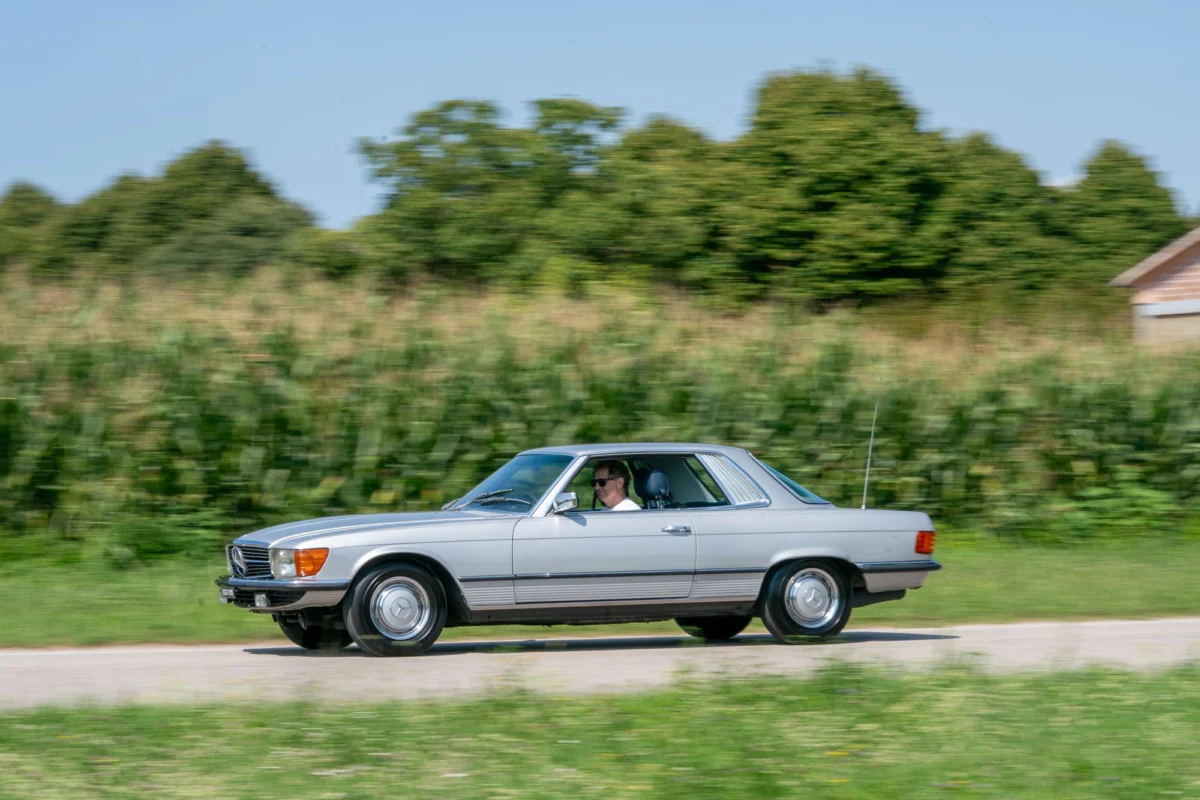
The most striking feature of the SLC is its elongated silhouette. By adding 36 cm to the wheelbase, Mercedes engineers were able to carve out a legitimate rear-seat passenger compartment, transforming the sports-focused R107 into a genuine four-seat "personal luxury" vehicle. This was not just a cosmetic stretch; it was a structural overhaul. The integration of a fixed, rigid roof necessitated a complete redesign of the greenhouse.

Visually, the SLC is defined by its unique C-pillar treatment. The rear side windows, designed to be fully retractable, sit behind a pillar that features a distinctive, louvered trim—a "Venetian blind" aesthetic that has become a hallmark of the model. This stylistic flourish, while purely decorative, effectively masks the massive length of the vehicle, lending the car a visual lightness that belies its substantial curb weight.
On the road, the 280 SLC distinguishes itself from its V8-powered siblings. While the SLC range was heavily populated by powerful eight-cylinder engines, the 280 SLC utilized a refined six-cylinder powerplant. This engine prioritized silence, torque, and smooth power delivery, perfectly aligning with the car’s primary mission: high-speed, long-distance touring.
Chronological Context: A Brand at a Crossroads
To understand why the SLC was created, one must look at the state of Mercedes-Benz in the early 1970s. The company found itself in a precarious position. Its "low-end" offering, the W115/W114 series (introduced in 1968), was modern and successful. However, the top of the range was anchored by a sedan dating back to 1965 and a coupe that traced its lineage to 1961.
By 1970, the age of the luxury coupe was painfully obvious. The sedan replacement, the W116, was not slated for release until late 1972, and the corresponding coupe would likely not appear until 1974. Faced with the prospect of selling a 13-year-old design for another four years, Mercedes engineers turned to the R107.

The R107 roadster, which replaced the legendary "Pagoda" (W113) in April 1971, was a robust, heavy, and technologically advanced platform. It was designed with the burgeoning US market in mind, adhering to stringent new safety and emissions regulations. This forced the engineering team to accept a significant weight penalty—the R107 weighed roughly 1,600 kg, compared to the 1,380 kg of its predecessor.
The "SLC" was the solution to the "coupe gap." By taking the R107 platform and stretching it, Mercedes-Benz could introduce a luxury coupe quickly without the massive expense of developing a dedicated, all-new platform. The SLC effectively filled the void, serving as the high-end coupe offering from 1971 until the arrival of the C126 in 1981.
Supporting Data: The Weight of Innovation
The development of the R107 and its derivative, the C107, was a reaction to the shifting geopolitical and regulatory landscape of the 1970s. The "Super Leicht" (SL) nameplate became ironic given the vehicle’s mass. The shift from the W113’s lightweight six-cylinder engines to the V8-heavy R107 lineup was a necessity of the era.
- Engineering Shift: The transition to V8 architecture (pioneered in the 600 "Grosser" and the 300 SEL 6.3) was essential to compensate for the weight added by safety features, such as reinforced A-pillars and crumple zones required for international homologation.
- The 350 SL vs. The Pagoda: The 350 SL launched with a 3,499 cc engine delivering 200 hp, capable of 212 km/h. By contrast, the top-tier W113 280 SL offered 170 hp and 200 km/h. Despite the weight gain, the technological leap was undeniable.
- The US Market Compromise: The American market received the "350 SL 4.5," which featured an additional liter of displacement but produced 5 fewer horsepower and suffered a 10% increase in fuel consumption. This highlighted the struggle to balance performance with the stifling emissions equipment of the time.
- The 280 SLC Advantage: The 280 SLC, utilizing the M110 dual-overhead-cam six-cylinder engine, offered a more balanced, albeit less aggressive, driving experience. It provided an answer to consumers who found the V8s to be too thirsty and, in some cases, too front-heavy for balanced handling.
Official Perspectives: The Philosophy of Stuttgart
Mercedes-Benz executives of the era frequently framed the SLC not as a sports car, but as a "Grand Tourer" of the highest order. The official stance was that the car was a "four-seat SL." This was a masterclass in marketing; by tethering the SLC to the sporting prestige of the SL, the company ensured that the new coupe would inherit the brand’s hard-won reputation for performance and luxury.

Internally, the design brief for the SLC was clear: create a vehicle that looked like an SL but functioned as a sedan. The decision to retain the louvers on the rear quarter windows was a deliberate aesthetic choice. By breaking up the solid metal surface of the elongated rear section, the designers avoided the "limousine" look that a standard, flat pillar would have created. This was a critical design decision that contributed to the car’s longevity and its continued appreciation by collectors today.
Implications: The Legacy of the SLC
The legacy of the Mercedes-Benz SLC is a complex one. For years, it lived in the shadow of its roadster sibling, often dismissed by purists as a "heavy, bloated coupe." However, historical perspective has been kind to the model.
The SLC was a bridge. It bridged the gap between the hand-built, delicate machines of the 1960s and the mass-produced, technology-focused luxury cars of the 1980s. Its existence allowed Mercedes-Benz to maintain its presence in the high-end coupe market during a decade of extreme volatility.
Furthermore, the SLC’s success in international rallying—including a surprising victory in the 1978 Vuelta a la América del Sud—proved that the "heavy, long" coupe was more than capable of handling extreme conditions. This cemented its status as a robust, over-engineered piece of machinery.

Today, the 280 SLC is increasingly recognized for what it truly is: a beautifully proportioned, comfortable, and historically significant grand tourer. It offers a driving experience defined by effortless cruising, where the six-cylinder engine provides a muted, melodic backdrop to the journey. As classic car values shift toward vehicles that are usable and reliable, the SLC has found a new generation of admirers who value its unique blend of "heteroclite" charm and undeniable Stuttgart build quality.
It remains a testament to a time when Mercedes-Benz was willing to take risks, even if those risks involved welding an extra 36 centimeters into a chassis to see what might happen. The result was not just a placeholder, but an icon of 1970s automotive elegance.
For the complete analysis, including detailed technical specifications and historical records, please refer to Gazoline issue #351. You can purchase this edition through the official Gazoline store.