Author: Bernard Fournol Translated and Adapted for International Publication
Main Facts: Honda’s Strategic Pivot and Return to Paris
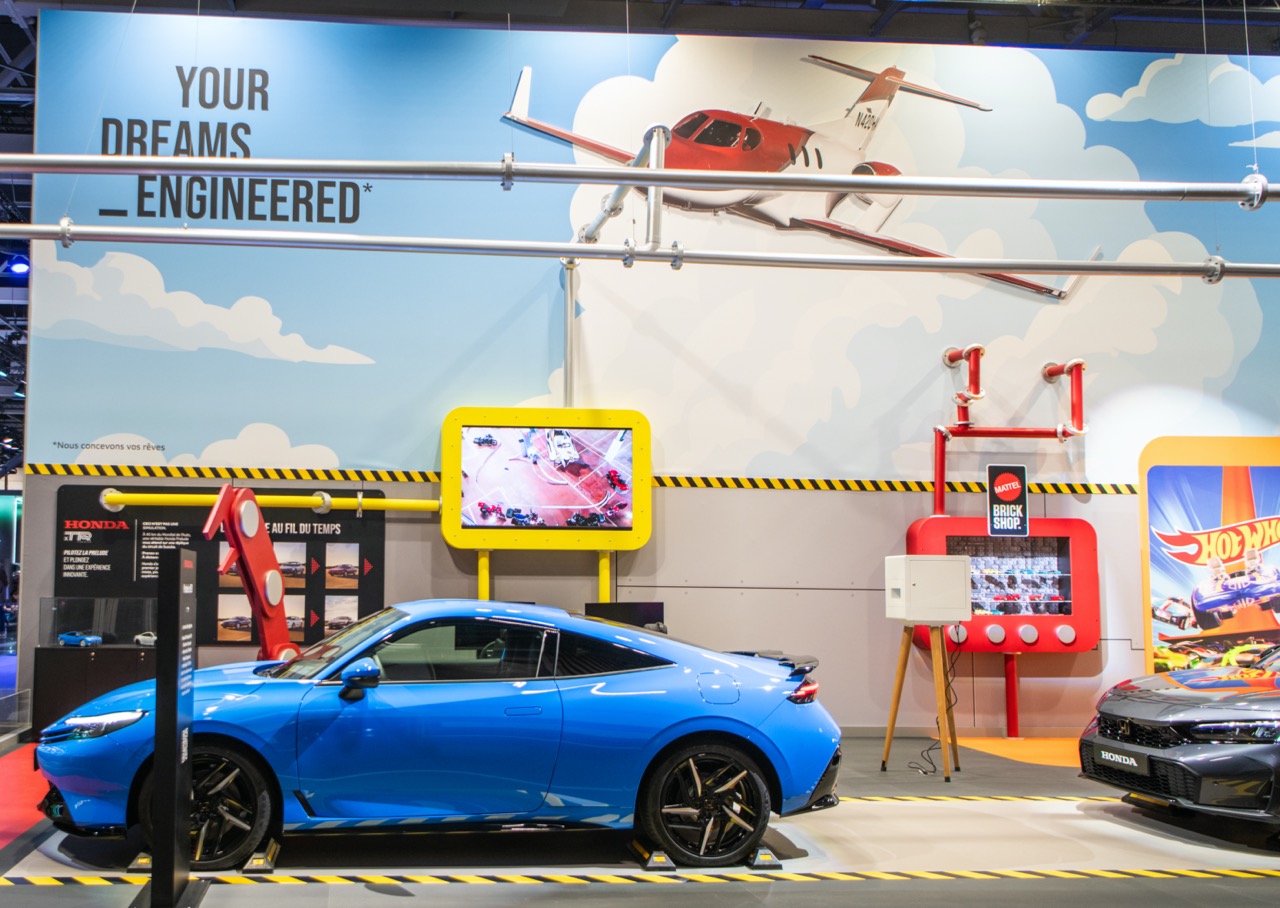
After an eight-year absence that left industry analysts speculating about the Japanese manufacturer’s long-term commitment to the continent, Honda has made a triumphant return to the European stage. At the Mondial de l’Auto 2026 in Paris, the brand did not merely occupy exhibition space; it staked a definitive claim on the future of mobility.
At the heart of Honda’s European strategy is a nuanced balancing act: doubling down on highly efficient hybrid technologies, redefining its market positioning around understated driving pleasure, and carefully timing its expansion into the 100% electric vehicle (EV) segment.
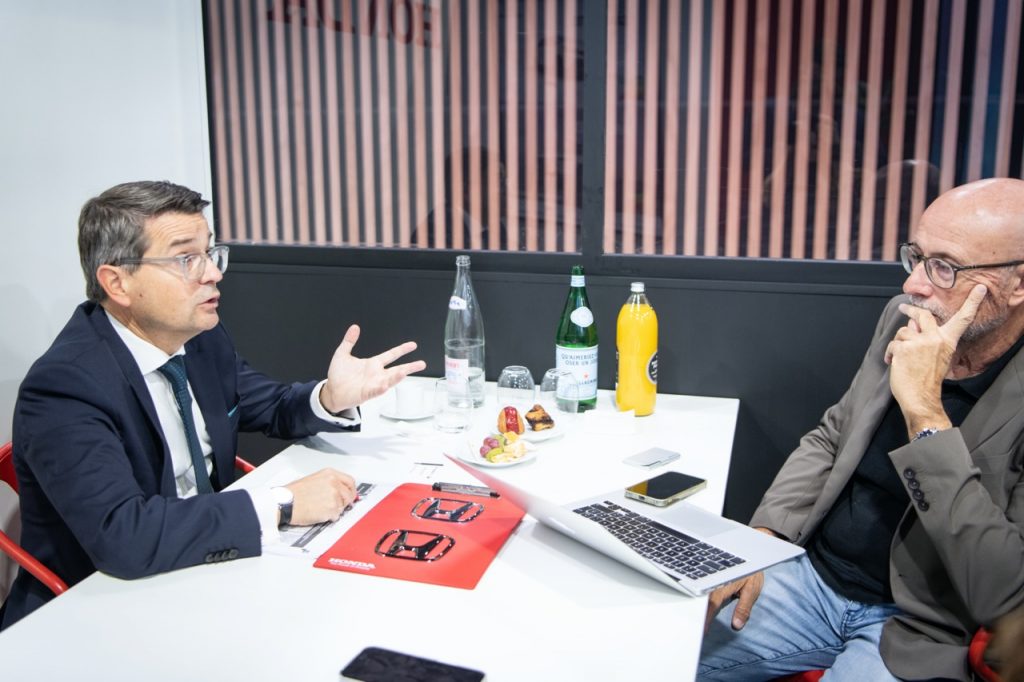
In an exclusive, wide-ranging interview with Jean-Marc Streng, Senior Vice President of Honda Motor Europe, Le Blog Auto explored the forces steering the brand’s resurrection in Europe. Far from chasing reckless volume growth, Honda is targeting a sustainable, highly profitable footprint of around 100,000 unit sales annually across Europe. Driven by a new corporate signature—“Your Dreams_Engineered”—and backed by structural reorganization, multi-sector partnerships (including a landmark agreement with Nissan), and a pipeline of 15 new models by 2030, Honda is positioning itself not as a fading relic of the traditional combustion era, but as a diversified, agile mobility leader.
Chronology of a Turnaround: From 2000s Peaks to 2026 Resurgence
To understand Honda’s current trajectory in Europe, one must examine the volatility of its historical timeline on the continent:
The Mid-2000s Peak: Honda enjoyed a golden era in Europe, fueled by popular iterations of the Civic and Accord, alongside robust brand loyalty rooted in mechanical reliability and engineering prowess.
The 2022–2023 Valley: Facing stringent European Union emissions regulations, supply chain disruptions, and the rapid, state-subsidized acceleration of Chinese and domestic European EVs, Honda hit a severe low. Market share dipped, leading industry gossips to openly question whether the marque would follow other Japanese brands in exiting the European passenger car market entirely.
April 2025 (Management Restructuring): Honda Motor Europe implemented a radical shift in its internal hierarchy, establishing a unified European management team with direct, high-level lines of communication straight to Tokyo headquarters, eliminating bureaucratic layers.
The 2026 Re-entry (Mondial de l’Auto): Marking precisely eight years since its last major Paris exhibition, Honda returned to capitalize on a surprising metric: a renewed 11% sales growth in France, alongside even stronger surges in Belgium, Italy, and Poland.
The Horizon to 2030: Honda has officially mapped out the launch of 15 new models globally, with a prioritized product refresh cycle kicking off in Europe with the upcoming next-generation HR-V, followed by upgraded iterations of the CR-V and Civic.
Supporting Data and Market Metrics
Jean-Marc Streng’s vision for Honda Motor Europe is underpinned by concrete figures that reveal a disciplined, margin-focused strategy rather than an obsessive pursuit of volume:
1 Million Total Touchpoints: Across all of its corporate divisions—spanning automobiles, motorcycles, marine engines, power equipment, and aerospace endeavors—Honda actively touches roughly 1 million customers in Europe annually.
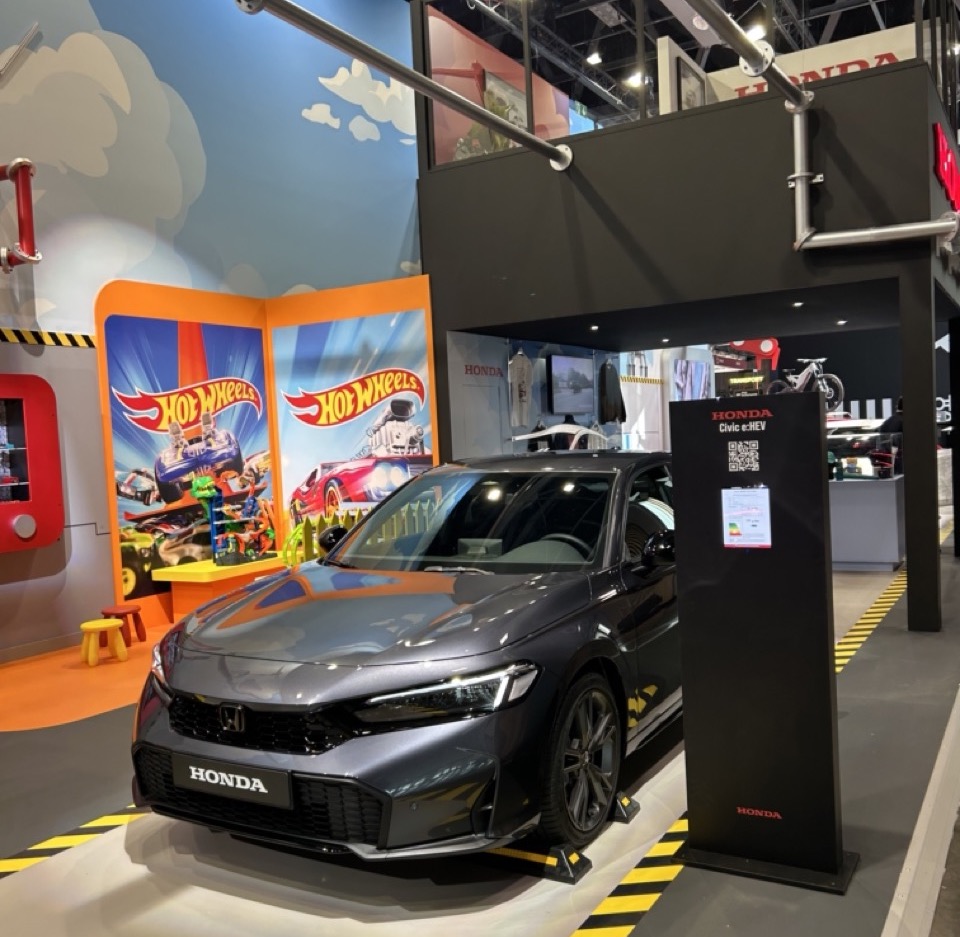
43% Hybrid Market Share: Full hybrid powertrains now represent 43% of the overall European car market. Honda has positioned this technology directly at the core of its current lineup, driving systemic efficiency and consumer adoption.
Retail-First Philosophy: Approximately 73% of Honda’s European automotive sales are made directly to private retail customers (B2C), rather than heavily discounted, margin-crushing corporate fleet channels. This model preserves vehicle residual values, safeguarding customer investments and retailer profitability.
The 100,000-Unit Milestone: Honda is deliberately capping its European automotive ambitions at a sustainable ceiling of 100,000 units, prioritizing qualitative ownership experiences over mass-market saturation.
The "Super-N" Pilot: In the UK—a strategic testbed featuring right-hand-drive infrastructure analogous to Japan—Honda allocated an initial batch of 3,000 units of its all-electric "Super-N" (derived from Japanese Kei car architecture). The allocation sold out rapidly in a segment that previously did not exist.
26 Million Engines Annually: Demonstrating the immense industrial scale of the parent corporation, Honda manufactures a staggering 26 million engines every year across its diverse global product lines.
Global Marine Footprint: Within the marine division, where Honda continues to invest heavily in high-performance V6 and V8 gasoline engines, the brand stands proudly as the No. 3 manufacturer globally and No. 4 in Europe.
Official Responses: Insights from Jean-Marc Streng
The dialogue between Le Blog Auto and Jean-Marc Streng sheds critical light on corporate intent, design philosophy, and strategic patience.
On the Decision to Return to Paris After Eight Years
"We are returning for three important reasons," Streng explained. "First of all, because we have a new range signature, ‘Yours Dreams_Engineered,’ which we are presenting here. Honda is a brand that prioritizes passion and driving pleasure, and which designs dreams.
We are also here to showcase our entirely hybrid range—a motorization experiencing global growth that now represents 43% of the European market. It is today at the heart of Honda’s proposition.
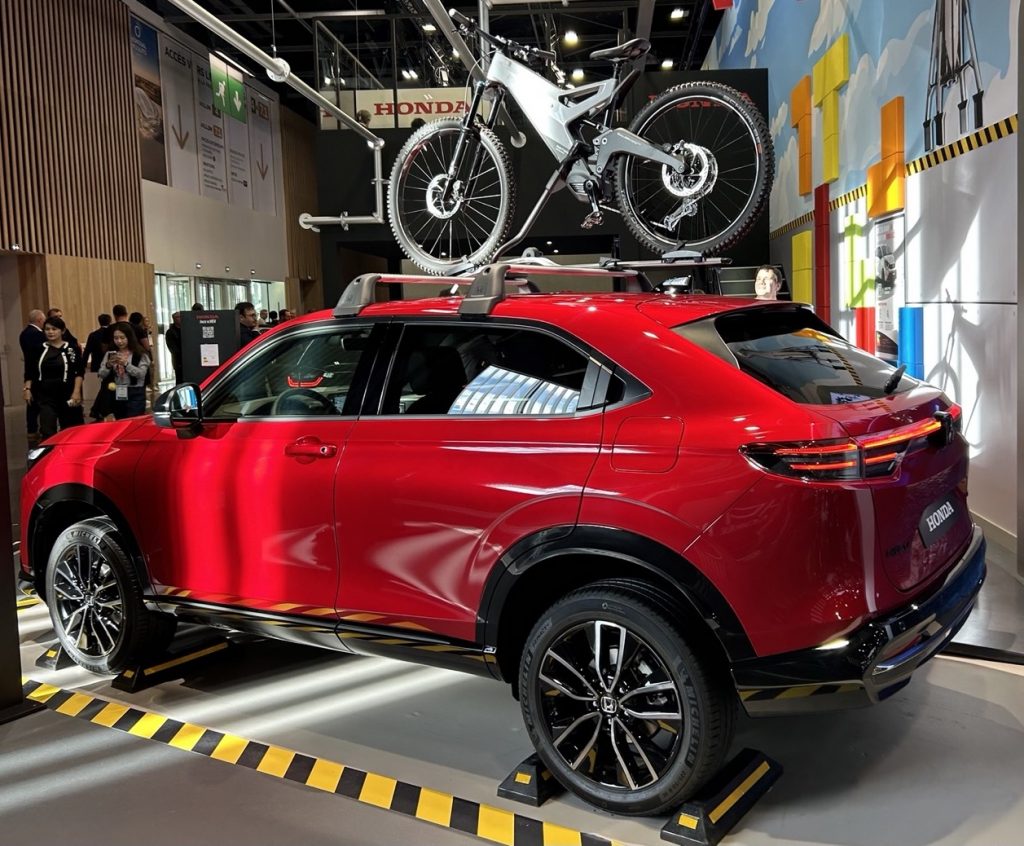
Finally, the Paris Mondial is an event that extends far beyond strict French borders. The media and public coverage is vastly superior to our market share, and the show allows us to introduce other products, such as our new Electric Mountain Bike."
On European Viability and the Shift Toward Compact Mobility
Addressing past rumors of a European exit, Streng was unequivocal: "Automotive is just one of our divisions where we are reaffirming our presence, and growth is back. In France, it is up by 11%, and even more so in Belgium, Italy, or Poland. Importantly, this is not happening at the expense of global profitability or the stability of our dealer network… The range certainly does not cover every single segment, but the ‘Super-N,’ derived from a Kei Car, is currently being tested in England. The consumer trend is pointing decisively toward smaller vehicles. That is something we view very favorably."
On the Timing of Electric Vehicles (EVs)
Recognizing the market’s insatiable appetite for electrification, Streng noted a pragmatic recalibration: "Honda, like other manufacturers, has revised its plans. This does not mean we are turning our backs on 100% electric power; it is entirely a question of timing.
We launched the 100% electric Super-N in England, a test market where vehicles are right-hand-drive like in Japan. The debut is promising, with 3,000 cars allocated in a segment that essentially did not exist. We could see this type of offering arrive in continental Europe and France, even though a final decision has not been taken to date."
On Thermal Engines and Marine Dominance
While electrification dominates headlines, Honda refuses to abandon internal combustion where demand dictates: "We continue to work on gasoline engines because they complement our hybrids and because demand remains strong in specific divisions. This is the case for our Marine branch, where we have just launched V6 and V8 engines… Our power equipment products also hold an important place."
Strategic Implications for the Future
Honda’s 2026 strategy at the Mondial de l’Auto signals several profound implications for the automotive landscape:
1. The Death of Volume Chasing for Niche Brands
By consciously capping its ambitions at 100,000 units in Europe and focusing heavily on private retail buyers, Honda is establishing a blueprint for Asian manufacturers who lack the massive industrial footprint of domestic European giants. By protecting residual values and prioritizing dealer health, Honda ensures brand longevity over short-term sales spikes.
2. The Pragmatic Transition to Software-Defined Vehicles (SDVs)
Honda’s partnership with Nissan—aimed at standardizing Electronic Control Units (ECUs) essential for Software-Defined Vehicles—highlights an industry-wide realization: fighting the digital transition alone is financially unsustainable. By pooling resources with domestic rivals, Honda secures its technological competitiveness without inflating development costs.
3. Diversified Mobility Ecosystems
Honda is no longer just a carmaker. By leveraging cross-divisional successes (Marine V6/V8 engines, electric mountain bikes, commercial drones, and Fastport last-mile mobility solutions), the brand insulates itself against automotive market volatility. The automobile serves as the psychological anchor in North America, but in Europe, Honda is cultivating a lifestyle mobility brand.
4. Cultural Alignment and Unostentatious Pleasure
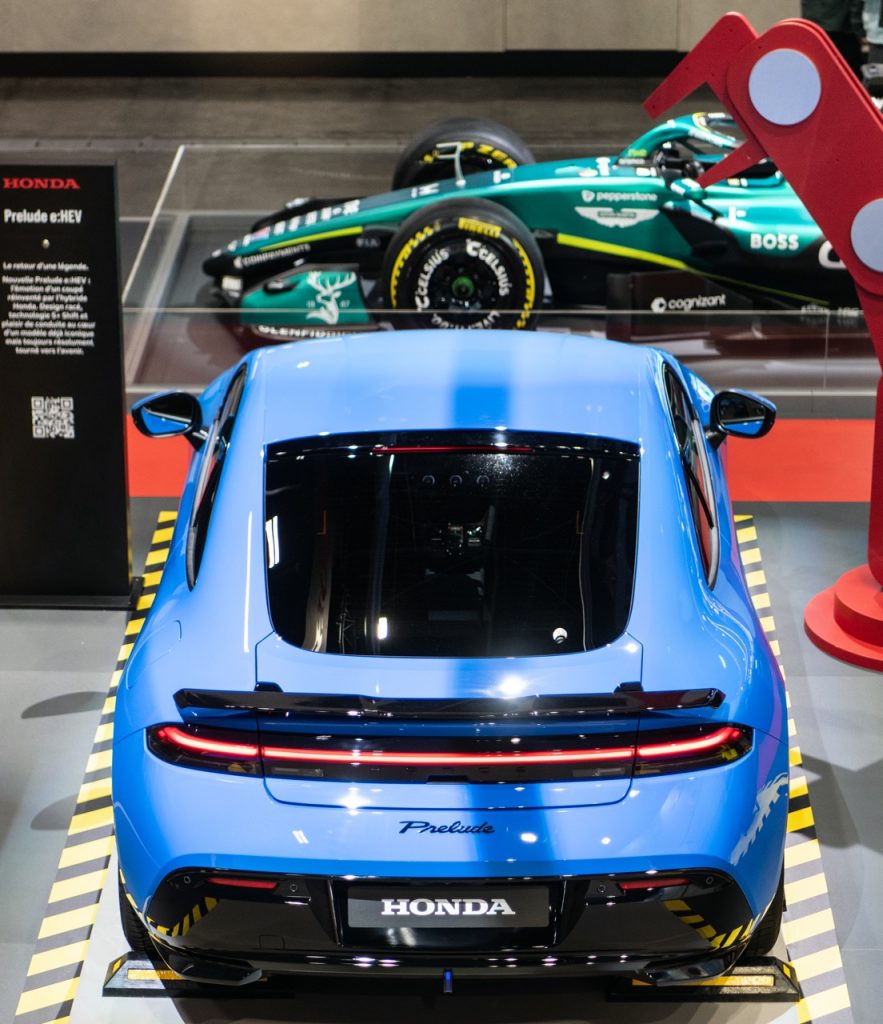
Perhaps the most telling remark from Streng involves Honda’s core European clientele: a demographic deeply attached to "unostentatious, alternative pleasure" and driving well-being. Models like the newly debuted Honda Prelude serve as the emotional torchbearers for this philosophy. In a market increasingly saturated by aggressive styling and tech-heavy digital dashboards, Honda’s promise of harmonious, balanced development offers a refreshing, highly differentiated alternative.