

By Editorial Staff
Published July 20, 2026
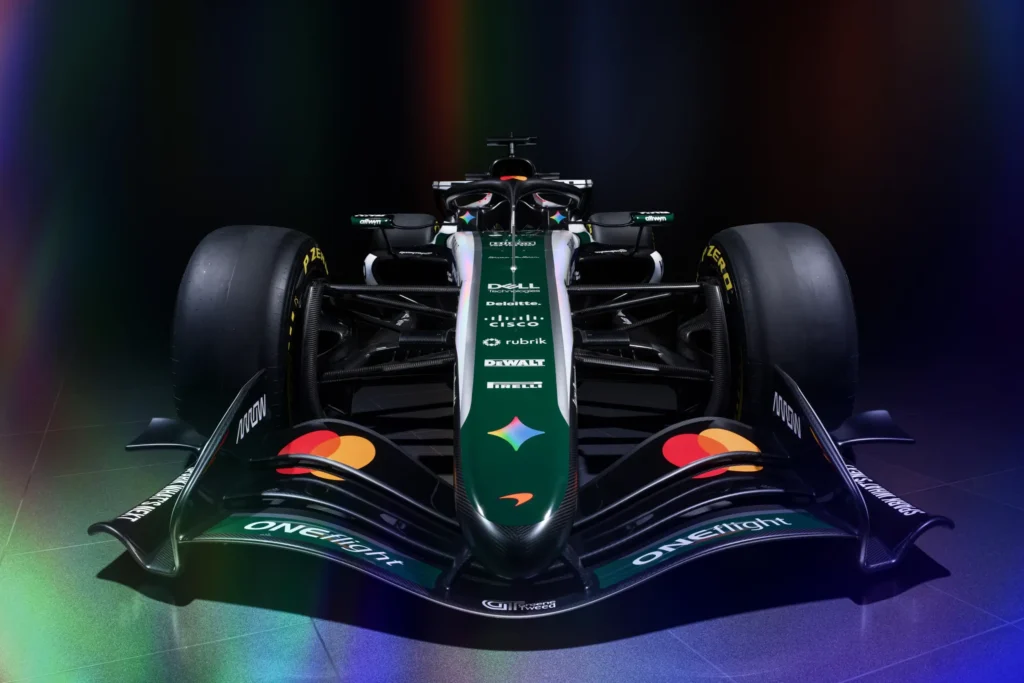
In a striking fusion of heritage and hyper-modern technology, McLaren Racing has unveiled a special, one-off livery for the 2026 British Grand Prix. The visual transformation of the MCL40 is more than a simple aesthetic choice; it represents a deliberate bridge between the team’s humble, pioneering origins in 1966 and its current status as a data-driven titan of Formula 1. Developed in close collaboration with Google Gemini, the initiative—aptly titled "Spark What’s Next"—seeks to honor the M2B, the team’s maiden chassis, while showcasing the artificial intelligence capabilities that define the team’s modern-day operational efficiency.
The Historical Genesis: From the M2B to the MCL40
The selection of Silverstone as the venue for this tribute is steeped in historical significance. In 1966, the landscape of Formula 1 was vastly different. Bruce McLaren, a visionary driver and engineer, had founded his own team, stepping into the premier class with the M2B. Designed by the legendary Robin Herd, the M2B was a testament to the "garage-built" spirit of the era—a small, agile team fueled by ambition rather than the massive corporate infrastructure seen today.
The M2B made its debut at the 1966 Monaco Grand Prix. While the car’s mechanical reliability was a challenge, its significance was cemented later that year at the British Grand Prix, where Bruce McLaren secured the team’s very first championship point. That single point acted as the bedrock upon which one of the most storied dynasties in motorsport was built.
By running a livery inspired by the M2B, McLaren is effectively "bookending" sixty years of progress. The juxtaposition is stark: the minimalist, raw engineering of 1966 against the aerodynamic complexity of the 2026 MCL40. Yet, the team argues that the internal philosophy remains unchanged. Whether it was the M2B or the current MCL40, the goal has always been the same: to iterate, to test, and to break the limits of what is considered possible.

Chronology of a Legacy: A Season of Reflection
This tribute is the latest chapter in a year-long celebration of McLaren’s legacy. The 2026 season has served as a milestone-heavy campaign for the Woking-based outfit. Earlier this year, during the Monaco Grand Prix, the team celebrated its 1,000th Grand Prix start.
The festivities in the Principality were highlighted by an emotional demonstration, where two-time World Champion Mika Häkkinen took to the track in the original M2B. Watching the iconic vehicle navigate the tight streets of Monte Carlo provided a visceral reminder of how far the sport—and the team—has evolved. As the circus moves to the high-speed, demanding nature of Silverstone, the narrative shifts from looking back to looking forward. The "Spark What’s Next" campaign is designed to show that while the team respects its history, it is not defined by it; instead, it uses the past as a catalyst for future innovation.
The Engine Room: Google Gemini as a Performance Catalyst
While the livery serves as the visual centerpiece, the partnership with Google Gemini is the true engine behind the operation. The collaboration is not merely a marketing arrangement; it is a fundamental integration of Artificial Intelligence into the team’s daily workflow.
AI in the Creative Process
McLaren’s design and marketing teams have been utilizing Google’s AI suite—specifically Gemini Nano and Omni—to streamline the conceptualization phase. In an era where brand identity must be agile and visually arresting, the team has used these tools to iterate through design variations faster than ever before.
Data Analytics and Real-Time Strategy
Beyond the aesthetic, the technical application of Gemini is where the team finds a competitive edge. McLaren has implemented Gemini Enterprise to aid in real-time decision-making. During a race weekend, an F1 team is bombarded with an overwhelming volume of data. The ability to parse this information is the difference between a podium finish and a mid-pack result.

Key areas of AI implementation include:
- Regulatory Analysis: McLaren and Google Cloud have developed a bespoke tool that allows trackside engineers to instantly query complex, multi-page sporting regulations. What previously required manual searching through documents can now be done via natural language queries.
- Performance Optimization: The team is currently testing an interface capable of aggregating data from disparate internal systems. By reducing the time taken to cross-reference lap metrics, telemetry, and tire degradation, engineers can provide the drivers with actionable insights within seconds.
The scale of this development is immense. McLaren estimates that a modern F1 car undergoes roughly 18,000 design modifications over the course of a single season. Managing this cadence of change requires the kind of cognitive support that only advanced AI can provide.
Official Perspectives: Aligning Heritage with Future Tech
The partnership has received strong support from the leadership of both organizations. Louise McEwen, Director of Marketing at McLaren Racing, emphasized the symbiosis between the brand’s history and its digital transformation.
"Our Silverstone livery celebrates our beginnings and everything we have built since," McEwen stated. "The McLaren M2B represents the start of a journey defined by constant innovation, and this design brings that spirit to life. Our partnership with Google Gemini rests on these same principles. We are exploring how technology can open new ways to iterate and progress performance, both on and off the track."
Marvin Chow, Vice President of Consumer and AI Marketing at Google, underscored the practical nature of the partnership. "McLaren shows what it means to harness the power of AI," Chow remarked. "From generating creative ideas to transforming complex datasets into real-time insights, we are thrilled to continue exploring how Gemini can nourish their strategy."

Implications: The Future of the "Smart" Racing Team
The implications of this move extend beyond a one-off race weekend. By publicizing their use of AI in such a visible way, McLaren is signaling to the rest of the grid that the "arms race" in Formula 1 has moved firmly into the digital sphere.
As the sport becomes increasingly complex, the teams that can most effectively leverage AI to handle data-heavy tasks will likely gain a decisive advantage. The use of natural language interfaces to query complex car systems suggests that we are moving toward a future where the gap between the human driver and the machine’s vast internal data is bridged by an AI assistant.
Furthermore, the public activation at the "Gemini Paddock" at the Truman Brewery in London demonstrates the team’s commitment to engaging the next generation of fans. By making these high-tech concepts accessible to the public, McLaren is not just selling a car brand; they are selling a vision of a technologically integrated future.
As the cars line up at Silverstone this weekend, the M2B-inspired livery will serve as a poignant reminder of the team’s origins. But as the lights go out, the focus will be on the cold, calculated efficiency of the 2026 machines—machines that are, quite literally, being driven by the intelligence of the future. The "spark" that started in 1966 is still there, but in 2026, it is burning with the power of silicon and synthetic intelligence.
