

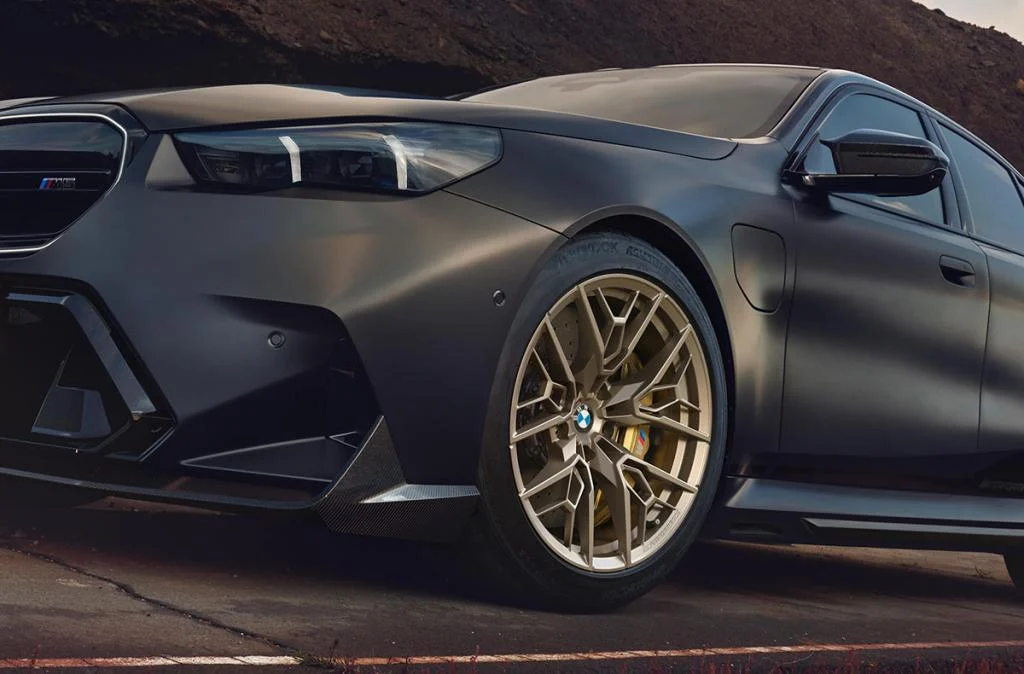
October 2, 2026 – In the rarefied world of high-performance automotive engineering, innovation often arrives in the form of increased horsepower or advanced aerodynamics. However, BMW M, the performance division of the Bavarian giant, has chosen a different path to push the boundaries of the new M5. By turning the humble wheel into a laboratory of material science, BMW is unveiling a new generation of M Performance wheels that promise to redefine the relationship between unsprung mass and vehicle dynamics.
Developed in collaboration with German firm Entec-Stracon GmbH, this breakthrough is not merely a styling upgrade. It represents a paradigm shift in industrial manufacturing, promising significant gains in weight reduction, mechanical integrity, and environmental sustainability. As the automotive industry grapples with the increasing weight of electrified platforms, BMW’s innovation arrives as a timely technological lifeline.
The Genesis of High Pressure Casting (HPC)
At the heart of this innovation lies a proprietary manufacturing process known as High Pressure Casting (HPC). Traditionally, alloy wheels are cast using gravity or low-pressure methods that require lengthy cooling cycles and extensive post-production heat treatment to ensure the structural integrity of the metal.
BMW’s HPC process, however, is a masterclass in efficiency and precision. By utilizing vacuum-assisted high-pressure injection, the process can form an entire wheel in a staggering 0.05 seconds. This rapid-fire production is governed by a network of 80 advanced sensors and a sophisticated artificial intelligence system that monitors every microscopic detail of the molten alloy as it fills the mold.
Eliminating the Heat Treatment Bottleneck
One of the most radical departures from industry norms is the complete elimination of post-molding heat treatment. In conventional manufacturing, heat treatment is necessary to "relax" the internal stresses of the metal and improve its crystalline structure. Through the precise application of pressure and temperature control within the HPC mold, BMW has engineered a process where the molecular grain of the aluminum is naturally refined to the desired specification during the cooling phase.
This not only slashes production time but also significantly reduces the energy footprint of the factory floor, aligning with BMW’s broader corporate sustainability initiatives. By bypassing the furnace, the manufacturer lowers the carbon intensity of every unit produced, proving that performance parts can indeed be produced with a leaner environmental impact.
Engineering the Unsprung Mass: A 20% Weight Reduction
To understand why a 20% reduction in wheel weight is a seismic shift for the BMW M5, one must look at the physics of "unsprung mass." In automotive dynamics, any weight not supported by the vehicle’s suspension—most notably the wheels, tires, and brake components—has a disproportionate effect on how a car handles.
The Physics of Agility
When a wheel hits a bump, the suspension must react to that mass. A lighter wheel has less inertia, meaning it can react faster to road imperfections, keeping the tire in contact with the pavement more consistently. For the BMW M5—a vehicle that, as a plug-in hybrid, carries the substantial weight of a high-capacity battery—reducing unsprung mass is the "holy grail" of handling.
By achieving a 20% weight reduction per wheel, BMW has effectively compensated for a portion of the hybrid system’s weight penalty. This leads to:
- Enhanced Steering Precision: Lower rotational inertia allows for sharper turn-in response.
- Superior Braking: With less mass to bring to a stop, the brake system experiences less load and more consistent performance.
- Improved Comfort: By reducing the vertical energy transmitted to the chassis through the dampers, the ride quality is refined even at high speeds.
Aesthetic Freedom: The Design Paradox
Historically, wheel designers have been shackled by the limitations of casting molds. Complex, thin-spoke designs often lacked the structural rigidity required for a high-torque performance sedan. With HPC technology, these limitations have effectively evaporated.
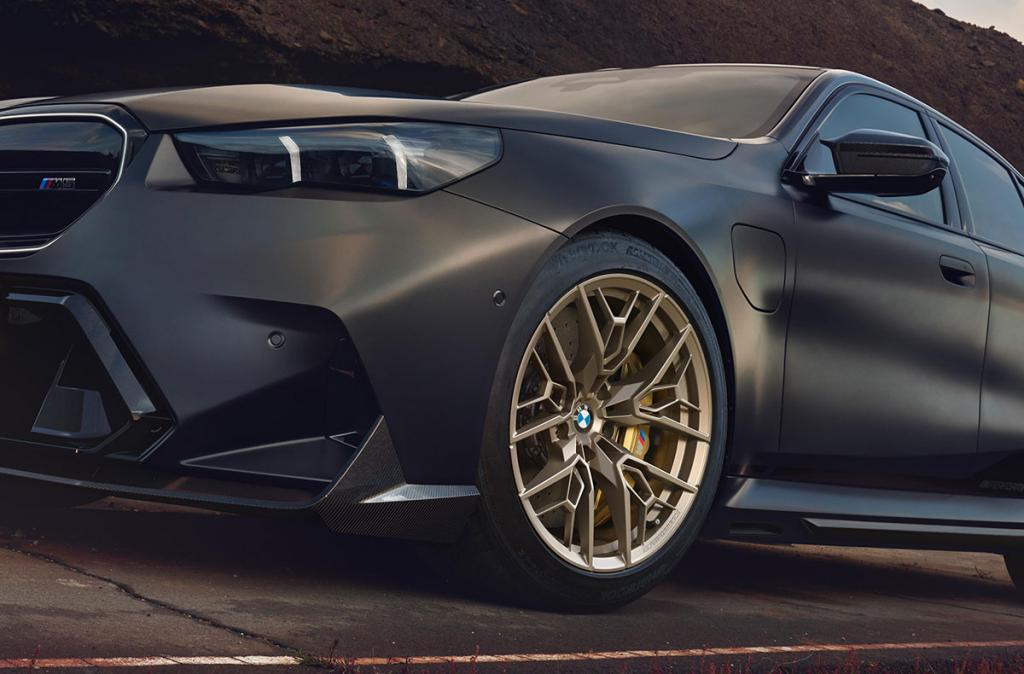
BMW engineers have stated that the material properties of the HPC-cast aluminum allow for "geometries that were previously impossible." The new 1075 M design features up to 70 razor-thin, intricate spokes that form a complex, lattice-like structure. These designs are not only visually striking but also aerodynamically optimized to guide airflow around the wheel arches, reducing drag and improving cooling for the massive M-performance braking system.
Available in 20 and 21-inch diameters, the wheels come in two distinct finishes: Gold Bronze and Jet Black. While the aesthetic is undoubtedly aggressive, it poses a challenge for the owner: the intricate web of 70 spokes will require meticulous care to keep clean—a small price to pay for what is arguably the most advanced wheel ever fitted to a production BMW.
Chronology of the M5 Wheel Innovation
- Q1 2024: Initial collaboration between BMW M and Entec-Stracon begins, focusing on the potential of AI-driven vacuum casting.
- Q3 2025: Prototype wheels undergo rigorous stress testing, exceeding all standard safety metrics despite a 20% reduction in material volume.
- Q2 2026: Final validation of the HPC production line; the 1075 M design is finalized for production.
- October 2, 2026: Official global unveiling of the HPC M Performance wheels for the G90 and G99 platforms.
- Autumn 2026: Commercial availability begins for the M5 Sedan (G90) and M5 Touring (G99) through M Performance Parts centers.
Official Responses and Industry Implications
BMW M’s Chief Technical Officer remarked during the launch, "The wheel is the only point of contact between our technology and the road. By reinventing how we manufacture this component, we aren’t just making a lighter car; we are fundamentally changing the sensory feedback the driver receives."
Industry analysts have noted that this move could signal a wider trend. As EVs and PHEVs continue to push vehicle weights upward, the focus on lightweighting unsprung mass will become a primary battleground for luxury performance brands. If BMW can successfully scale the HPC process to other models in the M range, it could render traditional flow-forming and forging techniques obsolete for certain performance applications.
Future Outlook: Beyond the M5
While the M5 serves as the flagship for this technology, the ripple effects are already visible across the BMW portfolio. The introduction of the new BMW iX4 M60 xDrive and the ongoing expansion of the Neue Klasse lineup suggest that BMW is looking to unify its manufacturing processes across both internal combustion and electric platforms.
The integration of M Performance parts—like those recently debuted for the new 3 Series (G50)—into the broader BMW ecosystem demonstrates that the company is not just selling cars; they are selling a modular, upgradeable performance experience. Whether it is a 600-hp iX3 or a high-tech M5, the philosophy remains the same: use data, precision manufacturing, and material science to strip away the unnecessary and amplify the essential.
For the enthusiast, the arrival of these wheels in the autumn of 2026 marks more than a simple parts update. It serves as a reminder that even in an era of software-defined vehicles, the physical laws of performance remain supreme. As these 70-spoke wonders hit the streets, they will stand as a testament to the fact that when engineering is pushed to its absolute limit, the result is nothing short of art in motion.
