

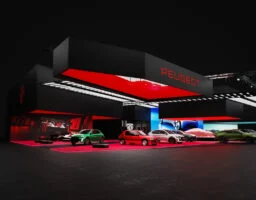
For his debut at the Paris Motor Show as the CEO of Stellantis, Antonio Filosa faced a starkly different reality than his predecessor, Carlos Tavares. Gone are the days of triumphantly brandished Excel spreadsheets and profit-margin bragging rights. The 53-year-old Neapolitan engineer has inherited a colossus currently grappling with a €22 billion devaluation—a move intended to purge the legacy of the previous administration—and a customer base left exasperated by recurring engine failures. In a series of candid interviews, the new CEO has signaled a decisive break from the past, embracing transparency and pragmatic industrial restructuring over the previously rigid, cost-cutting doctrine.
The Industrial Bombshell: Shared Factories and the Chinese Partnership
The most seismic shift in Filosa’s strategy involves the future of the company’s French production sites. Faced with a European automotive sector staring down the potential loss of 75,000 jobs by 2035, Filosa has rejected the politically toxic path of plant closures. Instead, he is proposing a radical "open-factory" policy.
"We have excess capacity in certain sites, but we will not close factories," Filosa declared. "We are going to share underutilized lines with partners who want to build their cars in our facilities."
This strategy effectively turns Stellantis into a white-label manufacturer. The plan is most visible at the historic Poissy plant, which is currently undergoing a major renovation, and the Rennes site, where partnerships with Chinese giants like Dongfeng and Leapmotor are already taking shape. Seeing Chinese-branded vehicles rolling off European assembly lines is no longer an academic hypothesis; it is the tactical price the group is willing to pay to maintain its industrial footprint. For the unions, which have long feared a hollowed-out domestic manufacturing base, this "industrial hospitality" is both a relief and a sign of the changing global order.
A Chronology of Crisis and Correction
The transition under Filosa can be viewed through a timeline of necessary "purges" and strategic pivots:
- Q1-Q2 2024: Mounting pressure from consumer associations and regulatory bodies regarding the 1.2 PureTech engine—notoriously plagued by timing belt issues—reaches a boiling point. Simultaneously, the industry-wide Takata airbag recall crisis exacerbates the group’s brand reputation issues.
- Summer 2024: Filosa initiates a massive "de-risking" strategy, taking a €22 billion write-down to clean the balance sheet and signal a fresh start.
- October 2024 (Paris Motor Show): Filosa officially pivots toward a "customer-first" communication strategy, issuing formal apologies for engine reliability issues and pledging a 30% improvement in quality metrics.
- 2025-2026 Outlook: The rollout of the "Smart Car" platform, aimed at the sub-€15,000 electric vehicle segment, is positioned as the primary lever for reclaiming market share.
The PureTech Mea Culpa and the Quality Mandate
Perhaps the most significant departure from the Tavares era is the tone regarding product defects. As the former global head of quality for FCA, Filosa is intimately familiar with the cost of technical negligence. With Stellantis still commanding a 29% share of the French market, the brand cannot afford to ignore the collapse of its secondary market value.
"First and foremost, I offer our customers our apologies for the past problems they have encountered," Filosa stated. "Secondly, I assure them of our massive investment in quality improvements."
He claims that technical corrections have already been implemented, resulting in a 30% improvement in quality indicators since the beginning of the year. While skepticism remains among insurance experts and legal collectives, the shift from a culture of denial to one of accountability marks a critical first step in rebuilding consumer trust.
The Return of the 2 CV: Democratizing Electrification
To replenish order books, Filosa is banking on nostalgia infused with high-tech pragmatism. The project, dubbed the "E-Car," is a spiritual successor to the legendary Citroën 2 CV. Built on the "Smart Car" platform, the vehicle is designed to bypass the prohibitively high costs of current European battery architectures.
"The original design brief was genius," Filosa noted. "It had to transport four people at 60 km/h while carrying 50 kg of potatoes and a basket of eggs without breaking one. You had to be able to get in and out without taking off your hat. While people don’t wear big hats anymore, the comfort will be there."
With a target price point under €15,000, the car is a direct response to the "fuel poverty" currently driving European consumers away from gas pumps. With fuel prices lingering around €2.50 per liter, the demand for affordable electric mobility has never been higher, and Stellantis intends to capture the segment before Chinese imports dominate it entirely.
Strategic Hierarchy: The "Champions League" of Brands
Inside the vast portfolio of fourteen brands, Filosa is clarifying the hierarchy with ruthless efficiency. Not all brands are destined to receive the same level of investment or technological priority.
"Peugeot is in the Champions League! Right alongside Fiat, RAM, and Jeep," he asserted. These four brands will serve as the group’s global pillars, receiving the lion’s share of R&D funding, including the new STLA One platform and next-generation software cockpits.
Citroën will operate in a "second tier," focusing on cost-efficient development. Most notably, DS Automobiles—the brand previously tasked with challenging the German luxury trio—is being demoted. DS will shed its aspirations of high-end, bespoke engineering to become a "specialty brand" focused on synergies with Citroën. Similarly, Lancia will follow the path of Fiat, acting as a premium-styled iteration on shared platforms rather than a standalone engineering powerhouse.
Implications: The "Smart Car" as a Geopolitical Shield
The backbone of this entire strategy is the Smart Car platform, which effectively acts as a geopolitical firewall against low-cost Asian competition. Originally engineered for markets like India and South America, this architecture favors simplicity: conventional steel, reduced stamping complexity, and the use of Lithium-Iron-Phosphate (LFP) batteries.
By adapting this lean, low-cost platform to meet stringent European crash-test standards, Stellantis is effectively importing the production efficiency of Shenzhen into the heart of Europe. This allows the group to match the price points of Chinese rivals while maintaining a "Made in Europe" badge—a crucial factor for both political stability and supply chain resilience.
Summary Table: Key Strategic Arbitrations
| Strategic Dossier | Official Decision / Declaration |
|---|---|
| French Plants | No closures; sharing assembly lines with partners (Dongfeng, Leapmotor). |
| PureTech & Takata | Formal apology; claimed 30% quality improvement since early 2026. |
| Citroën 2 CV EV | E-Car project on Smart Car platform; target price <€15,000. |
| Global Champions | Priority investment for Peugeot, Fiat, RAM, and Jeep. |
| DS Automobiles | Reclassified as a "specialty brand" with shared synergies. |
| Autonomy | Rejection of the "no-steering-wheel" fantasy; dual focus on human-centric driving. |
Conclusion: A New Era of Pragmatism
Antonio Filosa’s arrival at the helm of Stellantis represents a pivot from the "super-profit" era to an era of "industrial sustainability." By openly acknowledging the failures of the past, leveraging underutilized capacity for third-party production, and ruthlessly prioritizing his most profitable brands, Filosa is attempting to steer a massive ship through treacherous waters.
The strategy is not without risks. The reliance on Chinese partners in French factories will surely spark debate in political circles, and the "Smart Car" platform must prove it can deliver both profit and consumer satisfaction. However, in an industry facing existential threats, Filosa’s willingness to break taboos suggests that the "new" Stellantis is betting on flexibility and humility to survive the transition to the electric age.
