

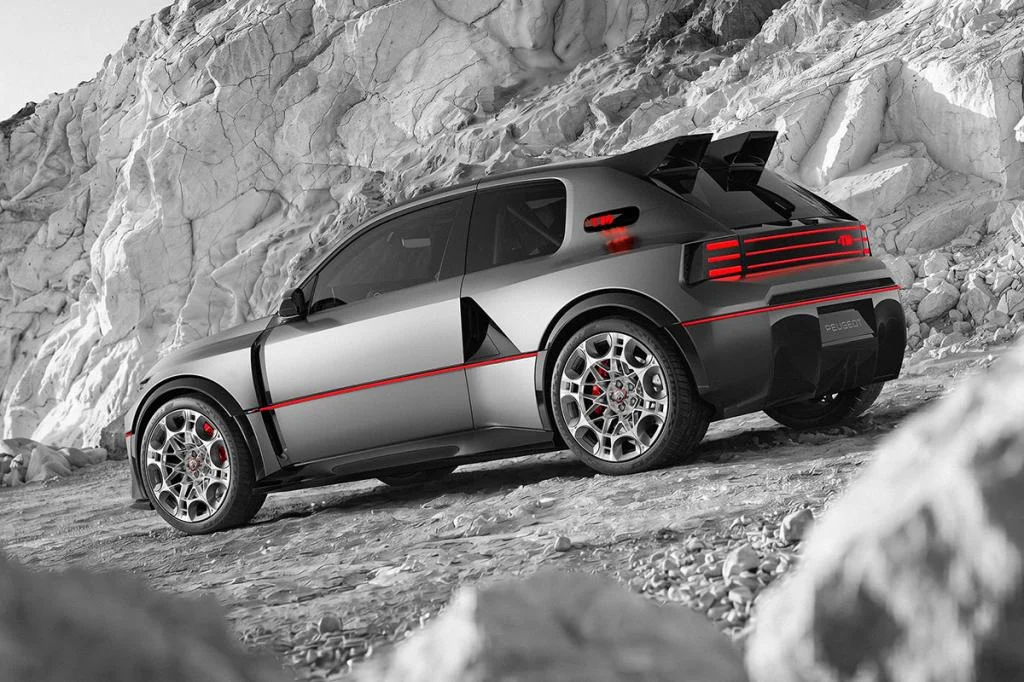
October 12, 2026 — Forty years after it terrorized the World Rally Championship, the legendary Peugeot 205 Turbo 16 has been spiritually resurrected for the electric age. Unveiled today, the Peugeot E-T16 Concept is far more than a simple retro pastiche. Developed in close collaboration with Peugeot Sport, this radical electric prototype punches out an astonishing 816 horsepower, shatters the 0 to 100 km/h sprint in just 2.5 seconds, and rockets to a top speed of 300 km/h in a mere 16 seconds.
While this jaw-dropping specification sheet firmly places the E-T16 in the territory of hypercars, it serves a dual purpose. Beneath its aggressively flared bodywork lies a breathtaking preview of the design language destined for the upcoming, next-generation Peugeot E-208. Though production models will inevitably dial back the sheer insanity of an 816-hp powertrain, the French automaker has made one thing abundantly clear: Peugeot’s passion for high-performance driving is charging headfirst into the electric era.
Main Facts: Engineering the Ultimate "Hyperhatch"
The Peugeot E-T16 Concept defies traditional automotive categories. Rejecting the standard hatchback or crossover monikers, Peugeot has coined a brand-new term for the vehicle: the "Hyperhatch."
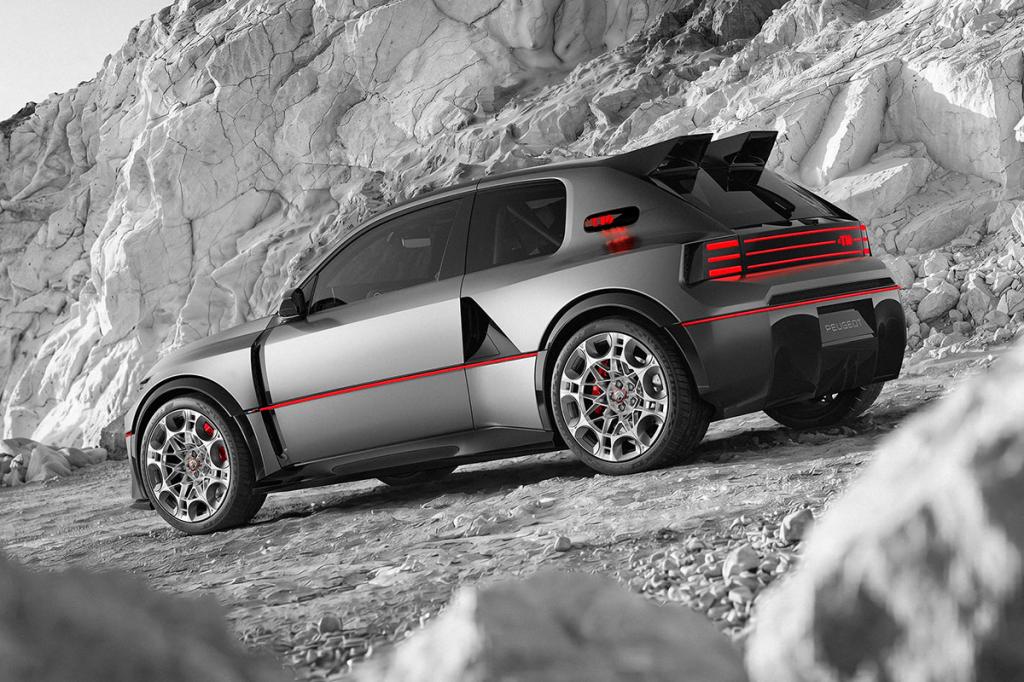
At the mechanical core of this concept are three high-performance electric motors—one mounted on the front axle and two on the rear. Together, they unleash a combined output of 816 horsepower and a relentless flood of instantaneous torque. Thanks to lightweight engineering and advanced composite materials, the E-T16 achieves an enviable power-to-weight ratio sitting comfortably below 2 kg/ch.
Performance Breakdown:
- 0 to 100 km/h: 2.5 seconds
- 0 to 300 km/h: 16.0 seconds
- Powertrain: Tri-motor layout (1 front, 2 rear) with intelligent Torque Vectoring
- Architecture: 800-volt electrical system
- Battery Capacity: 85 kWh
- WLTP Range: Approximately 400 km
- Charging: 10% to 80% in under 15 minutes
Despite its track-focused orientation, the E-T16 is built on a practical foundation. The 800V architecture enables rapid charging capabilities, allowing the battery to replenish from 10% to 80% in under 15 minutes, ensuring that track days do not involve endless hours tethered to a charging station.
Chronology: From Group B Royalty to Electric Dominance
To fully appreciate the significance of the E-T16 Concept, one must look back at the pedigree it inherits.

- 1985–1986: The original Peugeot 205 Turbo 16 dominates the World Rally Championship, claiming back-to-back manufacturers’ and drivers’ titles during the ferocious Group B era. To satisfy FIA homologation rules, Peugeot builds a road-going series of 200 units of the 205 T16, cementing its status as an automotive icon.
- The Intervening Decades: Peugeot maintains its hot-hatch lineage through legendary models like the 205 GTi, 309 GTi, and later the 208 GTi and 308 GTi, balancing everyday usability with sharp dynamic handling.
- October 2026: Peugeot bridges its glorious motorsport history with its electrified future. The E-T16 Concept is revealed as a celebration of the 40th anniversary of the 205 T16’s world championship victories, introducing groundbreaking thermal management and aerodynamic designs that point directly toward the brand’s next generation of compact sports cars.
Supporting Data & Technical Prowess: Defeating Thermal Degradation
One of the greatest challenges facing high-performance electric vehicles is thermal throttling—the systematic reduction of power output (derating) when battery and motor temperatures spike during heavy use. Peugeot Sport tackled this hurdle head-on with cutting-edge racing technology.
The "Side Cooling" Innovation
Rather than cooling battery cells from their base, the E-T16 Concept adopts a "Side Cooling" technology derived from top-tier motorsport programs. By circulating coolant along the lateral walls of the cells, heat is dissipated far more efficiently.
This engineering feat allows the E-T16 to complete three consecutive full-attack laps of the legendary Nürburgring Nordschleife (exceeding 60 kilometers of punishing driving) in "Perfo" mode without experiencing a single watt of power reduction.

Chassis, Brakes, and Aerodynamics
To keep 816 horsepower under control, the chassis has been heavily reinforced and equipped with race-derived hardware:
- Braking System: Four massive 380 mm brake discs paired with a vertical hydraulic handbrake inspired by modern rally cars.
- Grip: Specialized Michelin performance tires measuring a massive 275 mm wide at the front and 315 mm wide at the rear.
- Aerodynamics & Access: The entire rear bodywork tilts backward in dramatic fashion, offering unobstructed access to the dual rear electric motors, suspension geometry, and structural framing—a direct nod to the mid-engine layout and rear clamshell opening of the original 205 T16.
Inside, the cabin showcases a minimalist, driver-centric cockpit. The steering duties are handled by an Hypersquare control yoke integrated with a Steer-by-Wire electronic steering system—technology heavily influenced by Peugeot’s experiences with the 9X8 Hypercar in endurance racing. A massive 21-inch HD panoramic display handles telemetry, lap timers, and vehicle diagnostics, while carbon-fiber bucket seats with four-point harnesses keep the occupants pinned during high-G cornering.
Official Responses and Sustainable Innovation
Peugeot is keen to emphasize that high performance does not need to come at the expense of environmental responsibility. Throughout the E-T16 Concept, the brand highlights the integration of advanced sustainable materials.

The bucket seats, for instance, are upholstered in PELINOVA®, an innovative material upcycled from leather scraps discarded by the luxury leather-goods industry. By repurposing waste streams that would otherwise go to landfills, Peugeot demonstrates that circular economy principles can coexist with ultra-high-performance machines.
Furthermore, the vehicle’s visual presentation honors its ancestry while boldly stepping forward. Finished in Winchester Matt Grey—a direct tribute to the historic color of the original 1985 rally cars—the exterior is framed by a backlit red pincer line that encircles the entire body, echoing the iconic red pin-stripe of the classic 205 T16.
Implications: What Does the E-T16 Mean for Future Peugeots?
As breathtaking as the E-T16 Concept is, company executives readily admit that an 816-horsepower, tri-motor hyperhatch will not make it to mass production in this exact guise. It remains a design study and a technological testbed.
However, its implications for the brand are profound:
- The Design Blueprint for the E-208: The E-T16 introduces Peugeot’s "Feline Future" design language. The evolution of the iconic "three-claw" light signature into a sharper, horizontal layout flanking an illuminated brand badge will directly influence the styling of the next-generation Peugeot E-208.
- The Future of GTi and Sport Models: As automotive enthusiasts mourn the fading era of pure internal combustion engines, Peugeot is carving out a thrilling alternative path. Following recent discussions surrounding the future direction of Peugeot Sport Engineered (PSE) and upcoming electric hot hatches, the E-T16 proves that battery-electric vehicles can deliver visceral, engaging, and enduring driving dynamics.
- Challenging Industry Norms: By proving that an EV can run flat-out for multiple laps at the Nürburgring without thermal fatigue, Peugeot is dismantling the myth that electric sports cars are one-trick ponies capable only of straight-line drag races.
Conclusion
The Peugeot E-T16 Concept is a roaring declaration of intent. By marrying the legendary DNA of the 205 Turbo 16 with state-of-the-art electric propulsion, advanced thermal management, and sustainable luxury, the French marque has proven that the soul of the hot hatch is alive and well. Whether elements of this 816-horsepower beast trickle down to a future E-208 GTi or simply inspire the next generation of road cars, one thing is certain: the Lion is wide awake, and the electric road ahead has never looked more exciting.
