

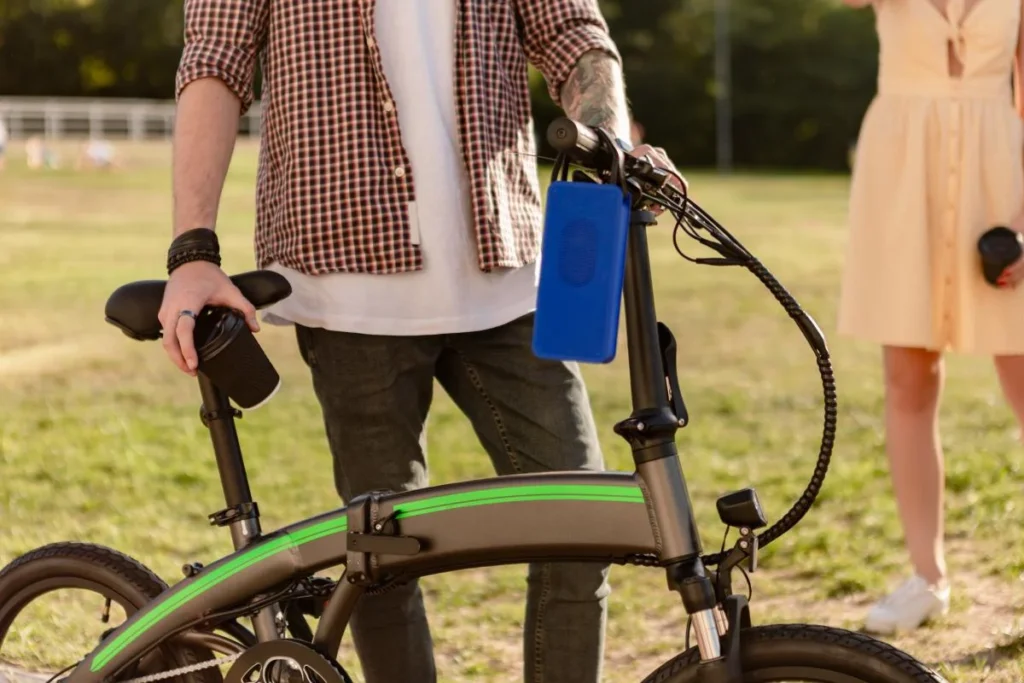
The moment a driver’s license is secured, a surge of independence usually follows. For generations, the ability to operate a motor vehicle has been the ultimate rite of passage—a golden ticket to freedom. However, in the modern urban landscape, this dream is increasingly colliding with the harsh realities of economic strain and logistical friction. As fuel prices fluctuate, insurance premiums skyrocket, and the daily commute becomes a battle against gridlock, a new generation of drivers is questioning the necessity of a car for every journey.
Enter the electric bicycle (e-bike), a transformative mode of transport that is redefining what it means to be mobile in the 21st century. Far from being a mere hobbyist’s toy, the e-bike has emerged as a sophisticated, cost-effective, and environmentally conscious alternative that is challenging the automotive hegemony in cities worldwide.
The Reality of Urban Mobility: A Shift in Paradigm
For many young adults, the initial excitement of car ownership quickly dissipates under the pressure of maintenance costs, the search for elusive parking spaces, and the mental exhaustion of navigating congested city centers. The "freedom" of the car often feels like a tether to a depreciating asset.
Data from urban planning studies suggest that over 60% of daily trips in metropolitan areas are under five kilometers—a distance that is arguably inefficient to cover in a two-ton combustion-engine vehicle. As young people enter the workforce or navigate their university years, they are finding that the e-bike offers a "Goldilocks" solution: the speed and convenience of motorized transport, paired with the agility and low overhead of a bicycle.
The Mechanics of Efficiency
The brilliance of the e-bike lies in its pedal-assist technology. For those who are not seasoned cyclists or who dread arriving at a meeting drenched in sweat, the electric motor provides the perfect boost. It flattens hills, shortens distances, and removes the physical barriers that previously discouraged cycling as a viable commuting option.
Chronology of a Shift: From License to Lifestyle
The transition from "car-first" to "multi-modal" thinking follows a distinct, often predictable, trajectory for young adults today:
- The Licensing Milestone: The acquisition of the driving license remains a core achievement. It provides the legal right to operate a vehicle and serves as a vital form of identity and autonomy.
- The Economic Wake-up Call: Within the first six to twelve months of ownership, the reality of the "Total Cost of Ownership" (TCO) sets in. When accounting for insurance, fuel, tolls, and maintenance, young drivers often find that their budget is stretched to its limit.
- The Alternative Discovery: During this phase, many encounter the e-bike. Often, it begins as a trial—a shared bike scheme or a rental—to bypass a particularly bad traffic day.
- The Integration: Recognizing the time saved, the user begins to integrate the e-bike into their daily routine. The car is relegated to long-distance trips or weekend excursions, while the e-bike becomes the primary tool for the "last mile" and daily urban commuting.
- The Behavioral Change: Long-term, this leads to a shift in mindset where the vehicle is chosen based on the need of the moment rather than a default reliance on the car.
Supporting Data: The Case for the E-Bike
The growth of the e-bike market is not merely anecdotal; it is backed by significant metrics. According to recent industry reports, the global e-bike market is projected to reach unprecedented valuations by 2030, driven by rapid urbanization and the rising cost of traditional fuel.
Economic Comparison (Estimated Monthly Costs)
- Small City Car: Insurance (€80), Fuel (€100), Parking/Maintenance/Depreciation (€150+). Total: ~€330/month.
- Electric Bicycle: Electricity for charging (<€2), Maintenance (average of €20/month), Low-cost insurance. Total: ~€25–€40/month.
The disparity is clear. A young professional could save upwards of €3,000 per year by switching their primary mode of transport to an e-bike. Beyond the wallet, the time-efficiency factor is undeniable. In a city where traffic speeds average 15 km/h, the e-bike’s ability to use cycle lanes and bypass stationary traffic makes it the fastest way to travel from point A to point B in a dense urban environment.
Perspectives from Urban Planning and Environmental Bodies
Official responses from transportation departments and environmental agencies, such as the ADEME (French Agency for Ecological Transition), underscore the importance of this shift. Urban planners are increasingly prioritizing "soft mobility" infrastructure, recognizing that a car-centric city is fundamentally unsustainable.
"We are seeing a move away from the ‘car-centric’ model of the mid-20th century toward a more resilient, multi-modal system," says one urban policy consultant. "The goal is not to ban cars, but to provide high-quality alternatives that make the car the least logical choice for short, intra-urban commutes."
Environmental bodies have highlighted that, even when compared to electric cars, e-bikes have a significantly lower carbon footprint in terms of manufacturing, energy consumption per kilometer, and the space they occupy on public roadways. This makes them a cornerstone of the modern "green" city initiative.
Implications for the Future: A New Culture of Safety
A critical, yet often overlooked, advantage of the e-bike for young drivers is the development of "situational awareness." When a young person learns to navigate a bicycle in traffic, they gain a perspective that is impossible to acquire from behind a windshield. They learn the vulnerabilities of other road users, the importance of non-verbal communication with drivers, and the necessity of anticipating hazards before they manifest.
This creates a more empathetic and safety-conscious driver. When these individuals do eventually get back into a car, they are far more likely to respect cycle lanes, check for cyclists before opening doors, and maintain a safe distance. In this sense, the e-bike acts as an advanced driving school, reinforcing the principles of road safety and shared infrastructure.
Conclusion: Reimagining Autonomy
The narrative that "the car equals freedom" is becoming obsolete. True freedom in the modern city is the ability to choose how, when, and where you move without being beholden to traffic jams or predatory fuel prices.
For the new generation of drivers, the e-bike is not a compromise; it is an upgrade. It offers the speed of a machine with the intimacy of a bicycle. It empowers the user to reclaim their time, protect their finances, and contribute to a healthier, quieter, and more breathable urban environment.
As we look toward the future, it is clear that the most "liberated" individuals will be those who view their transportation options as a toolbox. By keeping a driver’s license for the occasions that demand it, while embracing the e-bike for the daily grind, young people are proving that they don’t have to choose between their personal independence and the greater good. The future of mobility is here, and it is powered by a small motor, a set of pedals, and a new way of seeing the world.
