

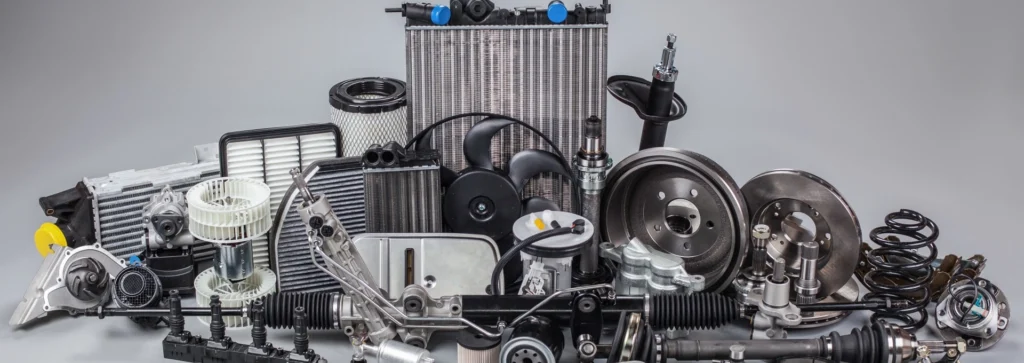
The American automobile is more than just a means of transportation; it is an icon of cultural history, defined by raw power, distinctive aesthetics, and a rugged engineering philosophy. From the thundering V8 engines of muscle car classics to the imposing stature of modern SUVs, these vehicles demand a specific level of care to maintain their performance benchmarks. As any enthusiast will attest, the secret to longevity for these machines lies in the meticulous selection of maintenance and replacement parts.
In an increasingly globalized automotive aftermarket, where budget-friendly alternatives are plentiful, the importance of sourcing high-quality components has never been more critical. Choosing the right parts is not merely a technical preference; it is a vital strategy for preserving the vehicle’s integrity, safety, and long-term market value.
The Engineering DNA of American Vehicles
To understand why "standard" aftermarket parts often fall short, one must first appreciate the specific design philosophy behind American engineering. These vehicles are built to endure vast geographical distances, varying climate extremes, and, historically, a "do-it-yourself" culture that prioritizes accessibility and mechanical robustness.
Structural Integrity and Material Science
American automotive components are typically engineered with a focus on durability. Unlike vehicles designed for lightweight efficiency in dense urban environments, American platforms often feature thicker-gauge metals and reinforced transmission and suspension architectures. When a part fails, replacing it with a thinner, lighter, or less robust component can introduce structural weaknesses that lead to accelerated wear and tear elsewhere in the vehicle’s ecosystem.
Scaling for Power and Heat
The traditional American engine is characterized by larger displacement and higher thermal output. Cooling systems, electrical wiring, and ignition components are designed to manage loads that significantly exceed those of smaller, high-revving European or Asian counterparts. Consequently, components must be manufactured to withstand higher operating temperatures and electrical voltages. Using parts that do not meet these specific thermal and electrical thresholds is a recipe for premature system failure or, in extreme cases, electrical fires.
Chronology of Maintenance: When and Why to Replace
Maintaining the "muscle" of an American car is not a reactive process; it is a disciplined chronology of care. Understanding the life cycles of critical components is the first step in effective fleet management.
- The Break-in Period (0–50,000 km): Focus on fluid integrity. High-performance American engines require specialized viscosity oils and detergents to keep massive internal surfaces lubricated.
- The Performance Baseline (50,000–100,000 km): This is the window where suspension components, such as control arms and bushings, begin to show fatigue. Replacing these with high-performance aftermarket upgrades—often featuring polyurethane rather than standard rubber—can significantly tighten handling.
- The Heavy Duty Phase (100,000+ km): Systems like the cooling apparatus (water pumps, radiators) and fuel delivery (injectors, high-pressure pumps) reach their functional limits. Upgrading these to high-flow versions ensures that the engine continues to receive the air-fuel mixture required for optimal combustion.
Supporting Data: The ROI of Premium Components
Critics often argue that "premium" parts are merely an up-sell by manufacturers. However, industry data suggests a compelling Return on Investment (ROI) for those who choose quality over the lowest price point.
The Durability Multiplier
Studies comparing aftermarket components show that premium-grade parts—often identified by their use of aerospace-grade aluminum, titanium, or specialized PEEK (polyetheretherketone) polymers—consistently outperform standard counterparts by a factor of 2:1 or even 3:1. For example, a high-quality ceramic brake pad may last 70,000 km, whereas a budget metallic pad may degrade after 30,000 km. When factoring in the labor costs of repeated replacements, the premium part proves to be significantly cheaper over a five-year ownership cycle.
Efficiency and Performance Gains
Upgrading to performance-oriented air intakes and high-precision fuel injectors does more than just enhance the "growl" of the engine; it improves volumetric efficiency. Data indicates that properly calibrated, high-flow systems can yield a 5% to 10% improvement in fuel economy by ensuring that the combustion cycle is as complete as possible. This efficiency minimizes carbon buildup, which is a common "silent killer" of high-displacement V8 engines.
Expert Perspectives: The Role of Certification
We reached out to industry specialists regarding the importance of standardization. According to automotive engineering consultants, the lack of rigorous certification on "no-name" parts is a primary cause of diagnostic headaches for mechanics.
"The modern American vehicle is a rolling computer," notes a senior powertrain technician. "When you install a sensor or an actuator that isn’t engineered to communicate perfectly with the vehicle’s ECU (Engine Control Unit), you aren’t just risking a ‘Check Engine’ light. You are potentially inducing a feedback loop that causes the engine to run lean or rich, which can destroy pistons and catalytic converters in a matter of miles."
Experts emphasize that owners should look for parts that carry certifications equivalent to Original Equipment Manufacturer (OEM) standards. These certifications signify that the part has undergone stress-testing for vibration, thermal shock, and electromagnetic interference—criteria that are often ignored by mass-market, uncertified manufacturers.
Critical Components: What to Monitor
For those looking to maintain their vehicle’s performance, four areas demand constant vigilance:
1. Suspension and Handling
American roads, while vast, can be punishing. Suspension components are the primary interface between the vehicle’s weight and the road. Upgrading to gas-charged, adjustable dampers allows the driver to maintain that signature smooth American ride while gaining the stability required for modern highway speeds.
2. Braking Systems
Given the weight of many American vehicles, stopping power is a safety imperative. High-capacity braking systems, particularly those utilizing high-friction, low-dust ceramic pads, are essential for preventing "fading"—the loss of braking efficacy under repeated use.
3. Air Intake and Filtration
The "cold air intake" is a staple modification for a reason. By increasing the density of the air entering the engine, the vehicle achieves better power delivery. However, the quality of the filter media is paramount; cheap filters allow microscopic debris to enter the combustion chamber, leading to internal scarring over time.
4. Electronic Synchronization
Every electronic part, from oxygen sensors to throttle position sensors, must be compatible with the vehicle’s proprietary communication protocols. Using parts that offer "plug-and-play" compatibility with the specific ECU version of your vehicle is non-negotiable for modern diagnostics.
Implications for the Future
The decision to invest in high-quality components has broader implications than just the mechanical health of your vehicle.
Market Value and Resale
The used-car market is increasingly sophisticated. Potential buyers now request service logs and proof of parts used during maintenance. A vehicle that has been serviced with premium, branded, or high-performance components retains a significantly higher resale value. It serves as a "stamp of approval" that the owner cared for the vehicle, suggesting that the engine has not been subjected to the stresses of neglect.
Environmental Impact
While it may seem counterintuitive, high-quality parts are more environmentally friendly. By lasting longer, they reduce the volume of industrial waste generated by frequent replacements. Furthermore, by ensuring the engine runs within optimal parameters, these parts keep emissions levels within the manufacturer’s design specifications, preventing the pollution associated with poorly tuned, older engines.
Conclusion: A Commitment to Excellence
Maintaining a powerful American automobile is a long-term commitment. While the initial cost of premium components might appear higher, the benefits—prolonged engine life, enhanced safety, superior handling, and retained resale value—far outweigh the temporary savings of budget parts.
For the enthusiast, the journey of ownership is defined by the feel of the steering, the sound of the engine, and the confidence that the car will perform when pushed. By choosing parts that reflect the same high standards of engineering as the vehicle itself, owners do more than just maintain a machine; they preserve a piece of automotive heritage. In the world of high-performance American motoring, the adage holds true: you get exactly what you put into it. Choose quality, and your vehicle will reward you with years of unparalleled performance.
