

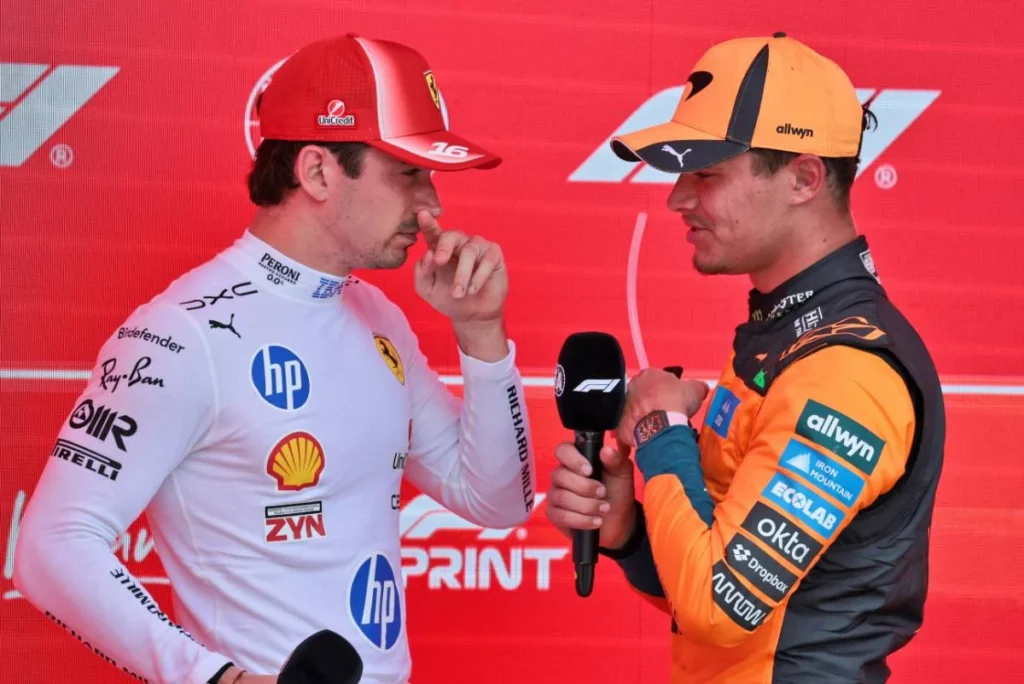
Formula 1 stands at a critical juncture. As the sport experiences an unprecedented surge in global popularity, the men behind the wheel—the very athletes who define the spectacle—are demanding a more significant seat at the table. While the FIA, Liberty Media, and the ten competing teams hash out the future of the championship behind closed doors, a growing chorus of drivers, led by figures like Lewis Hamilton and Lando Norris, are calling for a structural shift in how the sport’s regulatory and technical future is determined.
The Core Conflict: Sporting Instinct vs. Economic Realism
The friction stems from a fundamental misalignment between those who race and those who run the business. Since the introduction of the current technical regulations—designed to promote closer racing through ground-effect aerodynamics—the feedback from the grid has been mixed. While the regulations successfully tightened the field, they introduced new challenges: increased car weight, complex power unit energy management, and a diminishing ability to race wheel-to-wheel without inducing excessive tire wear.
For the drivers, the priority is simple: they want machines that allow for raw, aggressive, and natural racing. However, as Lando Norris candidly admits, the governance of modern Formula 1 is a multi-layered beast. The sport is no longer just a racing series; it is a multi-billion-dollar global entertainment enterprise.
"From the first to the last on the grid, we all want the same thing," Norris explains. "We want to be able to push to the limit and offer fans tight, unpredictable battles. That is what the sport is fundamentally about."
Yet, Norris offers a nuanced counterpoint to the growing chorus of dissent. He acknowledges that while drivers are experts in the craft of racing, they often lack the "big picture" visibility required to manage the economic and political machinery of the sport.
A Chronology of Growing Discontent
The push for a greater voice is not a sudden development, but rather the culmination of years of mounting frustration regarding the direction of the sport.
- 2021–2022: As the transition to the new, heavier ground-effect cars began, initial excitement was tempered by reports of "porpoising" and concerns regarding the cars’ weight and lack of agility.
- Early 2023: Conversations regarding the 2026 engine regulations began to dominate the paddock. Drivers expressed concerns that the increased focus on electrical energy might lead to bizarre racing scenarios, such as cars needing to downshift on straights to recharge batteries.
- The Miami Catalyst (2024): Following a series of heated discussions in the paddock, the FIA and teams were forced to scramble to adjust minor technical parameters to address racing quality. This highlighted a glaring oversight: the drivers were being consulted as an afterthought rather than a primary stakeholder.
- The Present: Through the Grand Prix Drivers’ Association (GPDA), the collective voice of the drivers has moved from informal complaints to a formal request for a seat at the governing table.
Supporting Data: Why the Drivers Feel Excluded
The disconnect is quantifiable. When looking at the decision-making process within the F1 Commission, the structure is heavily weighted toward the FIA and the teams.
- The F1 Commission: This body, which approves rule changes, consists of the FIA, Formula 1 Management (FOM), and the ten teams. Drivers have zero voting power and, historically, very limited formal consultation time.
- Regulatory Complexity: Current technical regulations (the "Regs") are hundreds of pages long, covering everything from sustainable fuel ratios to the cost-cap compliance of factory personnel. Drivers argue that their specific "track-side" expertise—how a car feels in a high-speed corner or how dirty air affects following distance—is often buried under pages of commercial and engineering jargon.
- The Commercial Imperative: The sport’s growth has been fueled by the cost-cap (introduced in 2021), which has made teams more profitable. However, the cost-cap also limits development, meaning teams are often more concerned with the financial impact of a rule change than the racing impact.
Official Responses and the Stance of the GPDA
The Grand Prix Drivers’ Association (GPDA) has become the primary vehicle for this movement. While the GPDA is famously discreet, its influence has grown as the drivers have found unity in their desire to shape the spectacle.
Lewis Hamilton has been the most vocal proponent of this shift. He has repeatedly noted that the people making the rules are rarely, if ever, the ones who have to fight for grip at 200 mph. "We should have a seat at the table," Hamilton stated in a recent briefing. His argument is that by excluding the drivers, the sport risks creating a product that is technically perfect from an engineering or financial standpoint, but soulless from a competition perspective.
Lando Norris, representing the younger generation of drivers, has taken a more conciliatory approach. He insists that the drivers do not want to become team principals or FIA regulators. "We aren’t looking to dictate the rules," Norris clarifies. "We are looking to influence the direction. We have the data that no simulator can replicate: the sensory feedback of the car."
The FIA, for its part, has maintained that it values driver input, citing various working groups and safety committees where drivers are present. However, the drivers argue that these groups are often focused on safety or minor tweaks, rather than the "big picture" philosophy of what makes a Formula 1 car "fun" to drive.
The Implications for the Future of F1
If the drivers fail to secure a more formal role in governance, the implications could be significant for the sport’s long-term health:
1. The Risk of Stagnation
If the rules continue to be written solely by engineers and accountants, the racing may become increasingly sterile. Cars that are too heavy or too reliant on energy management can lead to "processional" races, which ultimately hurts the fan experience and long-term commercial value.
2. The Talent Exodus
If the world’s best drivers feel that their input is being ignored, or if they feel that the cars they are required to drive are not a reflection of their true capability, the sport risks losing its prestige. The "best drivers in the world" need to be in the "fastest, most agile cars in the world."
3. A Potential Power Struggle
The push by the GPDA could lead to a broader labor dispute. If drivers feel their concerns regarding the technical evolution of the cars continue to be sidelined, we could see more coordinated public statements or, in extreme scenarios, a formal refusal to participate in promotional activities, creating a public relations nightmare for Liberty Media.
A Path Forward: Finding the Middle Ground
The solution likely lies in a structured, advisory role for the GPDA within the F1 Commission. By creating a dedicated "Driver Advisory Board," the sport could ensure that every major technical or sporting regulation is subjected to a "Driver Impact Review."
This would not give the drivers veto power, but it would ensure their concerns are formally documented and addressed before any vote is taken. It would bridge the gap between the boardroom and the cockpit.
As Lando Norris aptly summarizes: "Most of the things we ask for are beneficial to both the drivers and the fans. We aren’t asking for the world; we are asking for a seat where our expertise is treated with the same respect as the data on a computer screen."
The future of Formula 1 depends on its ability to balance the cold, hard realities of the business with the visceral, human element of the sport. The drivers have made their position clear. Now, the question is whether the governing bodies are willing to share the power to ensure the sport remains not just a profitable business, but the pinnacle of racing.
