
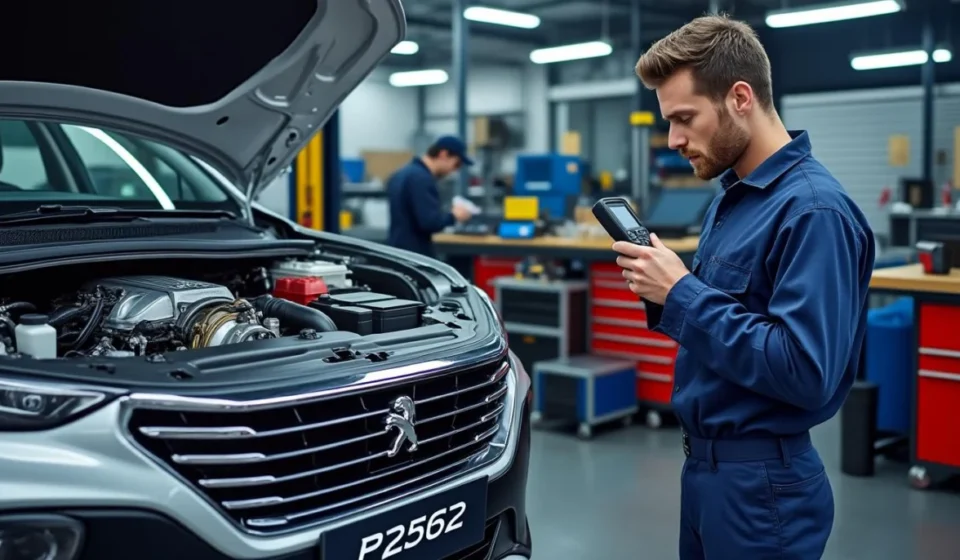
Decoding the Peugeot P2562 Error: A Comprehensive Guide to Turbocharger System Integrity

The P2562 error code is a significant diagnostic trouble code (DTC) often encountered by Peugeot owners. It signals a critical malfunction within the turbocharger’s variable geometry system. As modern internal combustion engines rely heavily on precision-tuned forced induction to balance performance with stringent emission standards, any deviation in turbo pressure regulation can have immediate consequences. If left unaddressed, the P2562 fault can lead to a drastic reduction in engine output, increased fuel consumption, and, in worst-case scenarios, catastrophic failure of the turbocharger assembly.
This article provides an exhaustive examination of the P2562 code, tracing its technical origins, common symptoms, diagnostic methodologies, and the most efficient pathways for repair. By understanding the mechanical and electronic nuances of this error, owners can move beyond simple code-clearing and address the root cause, thereby preserving the longevity of their vehicle’s powertrain.
1. Understanding the P2562 Error: The Mechanics of Variable Geometry
At its core, the P2562 code identifies a discrepancy detected by the Engine Control Unit (ECU) regarding the position of the turbocharger’s variable geometry actuator.
The Role of Variable Geometry Turbocharging (VGT)
Since the mid-2010s, models such as the Peugeot 308, 3008, and 508 have utilized VGT technology to optimize engine efficiency. Unlike fixed-geometry turbos, VGT systems feature adjustable vanes that alter the angle of exhaust gas flow into the turbine wheel. This allows the turbo to provide high boost pressure at low RPMs (reducing "turbo lag") while preventing over-boost at high engine speeds.
The Source of the Discrepancy
The ECU monitors this system through a feedback loop. It sends a signal to the actuator to move the vanes to a specific position and monitors a sensor that reports the actual physical position. The P2562 code is triggered when the ECU identifies a consistent "out-of-range" signal or a deviation between the commanded position and the actual position of the actuator. This mismatch forces the engine into "limp mode" to prevent internal damage, effectively neutering the vehicle’s performance.
2. Chronology of Failure: Why P2562 Occurs
The onset of a P2562 error is rarely instantaneous. It is typically the culmination of a gradual degradation process within the engine bay.
- The Early Stage (Carbon Build-up): In vehicles frequently used for short urban commutes, incomplete combustion leads to excessive soot and carbon deposits. These deposits accumulate on the turbo vanes, causing them to stick.
- The Intermediate Stage (Actuator Fatigue): As the vanes become harder to move due to friction, the electric actuator must work harder. Over time, the internal gears of the actuator or the electrical contacts within the position sensor begin to fail due to thermal stress and vibration.
- The Trigger Stage: The ECU finally registers a delta between commanded and actual movement that exceeds factory-set tolerances. This is when the "Check Engine" light illuminates, and the driver experiences a sudden loss of power.
3. Symptom Analysis: Identifying the Warning Signs
Early detection is the primary defense against expensive turbo replacements. Peugeot drivers should be vigilant regarding the following symptoms:
| Symptom | Severity | Impact on Vehicle |
|---|---|---|
| Sudden Power Loss | High | Difficulty in overtaking or maintaining highway speeds. |
| Check Engine Light | Moderate | Immediate notification; mandates diagnostic scan. |
| Engine Stuttering/Jerking | Medium | Irregular power delivery during acceleration. |
| Increased Fuel Consumption | Moderate | Poor combustion efficiency leads to higher costs. |
| Limp Mode | Critical | ECU severely restricts RPM to protect the engine. |
In many cases, the P2562 code is accompanied by secondary codes related to mass airflow (MAF) sensors or fuel trim, as the ECU attempts to compensate for the incorrect turbo pressure by adjusting the fuel-to-air ratio.
4. Diagnostic Methodologies: A Precision Approach
A professional diagnostic routine is essential to avoid the "parts cannon" approach, where components are replaced needlessly.
Step-by-Step Diagnostic Protocol:
- OBD-II Scan: Using a specialized tool like the PSA-approved Diagbox, technicians extract the P2562 code and check for "freeze frame" data. This data captures the engine speed, temperature, and throttle position at the exact moment the fault occurred.
- Vacuum/Pressure Test: Technicians inspect the pneumatic hoses and the intercooler circuit. A leak in the intake system can mimic a P2562 error by preventing the turbo from reaching the desired pressure.
- Actuator Mobility Test: Using diagnostic software, the technician commands the actuator to sweep through its full range of motion. If the movement is jerky or incomplete, it confirms a physical obstruction in the vanes.
- Wiring Harness Inspection: The electrical connector for the turbo actuator is prone to corrosion, especially in regions with high humidity or road salt. Checking for pin continuity and voltage drop is a vital, low-cost step.
5. Repair Strategies and Financial Implications
The cost of repair varies significantly depending on whether the issue is electronic (the sensor) or mechanical (the vanes).
- Replacing the Position Sensor/Actuator: This is the most common fix. Modern actuators are often integrated into the turbo assembly, though some can be replaced separately.
- Estimated Cost: €150 – €300 (Parts & Labor).
- Cleaning the VGT Vanes: If the turbo is otherwise healthy, a specialized "decarbonizing" treatment or manual cleaning can sometimes free the vanes.
- Estimated Cost: €200 – €400.
- Turbocharger Replacement: If the internal turbine shaft has play or the variable geometry mechanism is permanently seized, a full replacement is required.
- Estimated Cost: €1,000 – €1,800.
6. Official Perspectives and Implications
Peugeot’s technical bulletins emphasize that the P2562 code is often a secondary result of poor maintenance rather than a manufacturing defect. The reliance on variable geometry requires a high-quality oil that can withstand the intense heat of the turbo housing. If oil change intervals are missed, the resulting sludge accelerates the wear of the turbo’s internal bushings, which eventually leads to the P2562 fault.
Furthermore, driving the vehicle while the P2562 light is active can cause "over-boosting," which puts excessive stress on the head gasket and piston rings. Consequently, the long-term implications of ignoring this code extend far beyond the turbocharger itself, potentially leading to total engine failure.
7. Prevention: Best Practices for Turbo Longevity
To avoid the recurrence of P2562 and ensure your Peugeot remains reliable, implement the following maintenance habits:
- Respect Warm-up and Cool-down: Avoid heavy acceleration until the oil has reached operating temperature. After long drives or highway usage, allow the engine to idle for 30–60 seconds before shutting it off; this allows the oil to dissipate heat from the turbo bearings.
- Use Manufacturer-Approved Oil: Always adhere to the specific viscosity and certification standards recommended in your Peugeot owner’s manual. Lower-grade oils break down faster under turbo temperatures, increasing soot production.
- Highway Exercise: If your vehicle is primarily used for short city trips, take it on a highway for a 20-minute drive at consistent, higher RPMs once a week. This helps "blow out" the exhaust system and prevents carbon build-up in the VGT vanes.
- Proactive Inspection: During every annual service, ask your mechanic to inspect the turbo vacuum lines for cracks or brittleness. Replacing a €30 hose today can prevent a €1,500 turbo replacement tomorrow.
Conclusion
The Peugeot P2562 error code serves as a vital diagnostic indicator that your vehicle’s forced induction system requires attention. While it may seem intimidating, it is a manageable issue provided it is diagnosed with precision and handled through a logical, step-by-step repair process. By maintaining your engine with the correct fluids and practicing mindful driving habits, you can mitigate the risk of this failure and enjoy the full performance capabilities of your Peugeot for years to come. When in doubt, prioritize professional diagnostic tools over guesswork—your engine’s longevity depends on it.