
The 1970s occupy a unique, transitional space in the history of the automobile. It was an era where the romantic, analog charm of the post-war period began to yield to the rigorous engineering and safety-conscious design of the modern age. For enthusiasts and collectors today, these cars represent the ultimate "sweet spot": vehicles that possess distinct personalities while remaining reliable and usable enough to drive on contemporary roads.
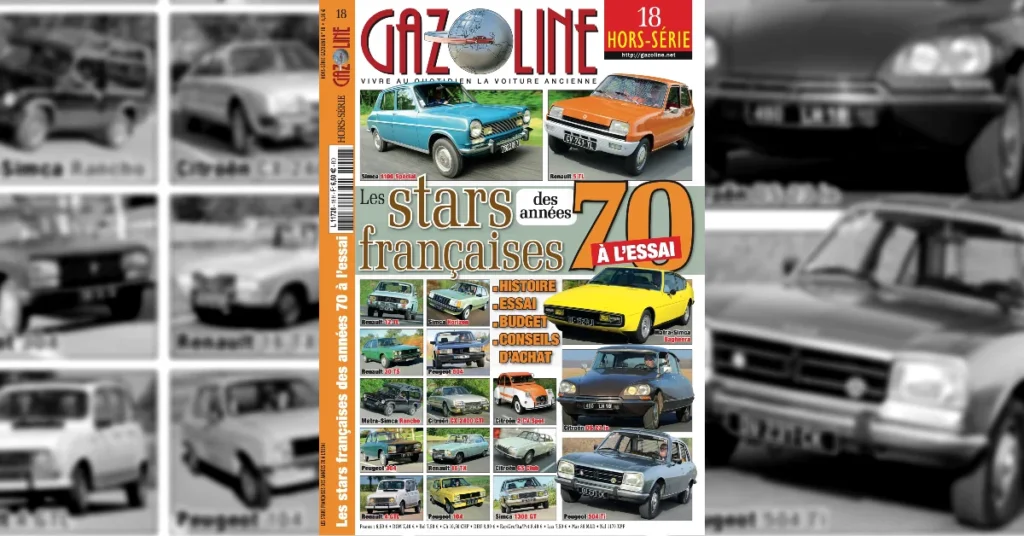
Gazoline magazine’s latest special edition, Hors-série No. 18, serves as a definitive guide to this transformative decade. By curating a selection of the most significant models to hit the asphalt between 1970 and 1979, the editorial team has provided a masterclass in automotive heritage, offering readers an expert lens through which to evaluate their next potential classic acquisition.
The Main Facts: Why the 70s Still Matter
The 1970s were defined by a duality in automotive design. On one hand, manufacturers were still experimenting with the flowing, organic lines that dominated the 1960s. On the other, the global oil crisis of 1973 and evolving crash-test regulations forced engineers to prioritize fuel efficiency, aerodynamics, and structural rigidity.
The vehicles featured in this Gazoline collection highlight this shift. From the avant-garde hydropneumatics of the Citroën GS to the pragmatic, space-efficient architecture of the Peugeot 104, the decade was characterized by a bold willingness to innovate. These were not just transport machines; they were social statements reflecting a world in flux.
The "Usability" Factor
Unlike pre-war antiques that often require mechanical sympathy bordering on clairvoyance, 1970s automobiles are remarkably "apprehendable." Their steering is more direct, their braking systems are generally assisted, and their engines—while carbureted—benefit from more refined cooling and lubrication systems. This accessibility makes them the ideal entry point for the modern enthusiast looking to step into the world of classic car ownership.
Chronology of a Revolution: A Decade in Motion
To understand the 1970s, one must look at the progression of key models that defined the landscape of European—and specifically French—motoring.
- 1970-1972: The Dawn of Modernity: The decade opened with the introduction of the Citroën GS, a "superior mid-size" car that brought hydropneumatic suspension to the masses. Simultaneously, the Peugeot 304 and the Renault 12 were perfecting the art of the family sedan, blending traditional comfort with updated front-wheel-drive dynamics.
- 1973-1975: Innovation and Excess: The mid-70s saw the birth of the Matra-Simca Bagheera, a three-abreast sports coupe that defied convention, and the Renault 30 TS, which insisted on six-cylinder luxury in a post-crisis market. This was a time when manufacturers were confident enough to experiment with high-end luxury and quirky sports configurations.
- 1976-1979: The Refinement Phase: By the end of the decade, the focus shifted toward optimization. Models like the Citroën CX 2400 GTi and the Simca Horizon demonstrated a clear intent to marry performance with aerodynamics, setting the blueprint for the hatchbacks and executive sedans of the 1980s.
Supporting Data: The Essential Portfolio
Gazoline’s special issue breaks down these vehicles by their technical merits and historical legacy. Below is an overview of the key vehicles categorized by their manufacturers:
The Citroën Lineup
- DS 23 ie Pallas (1972-1975): Often cited as the pinnacle of the DS lineage, featuring the sophisticated electronic fuel injection (ie) system.
- CX 2400 GTi (1977-1983): The marriage of the futuristic CX body style with the high-performance GTi engine.
- 2 CV Spot (1976): A vibrant reminder that even the simplest cars were receiving stylistic updates to stay relevant.
The Peugeot Influence
- 504 Ti (1968-1979): The gold standard for rear-wheel-drive reliability and comfort.
- 604 (1975-1985): Peugeot’s "flagship" vessel, attempting to challenge the German dominance in the luxury segment.
- 104 (1972-1988): A masterclass in packaging—fitting the soul of a Peugeot into just 3.58 meters.
The Renault Legacy
- Renault 5 TL (1972-1984): The car that defined the "supermini" segment, offering a vitamin-enriched driving experience.
- Renault 16 TX (1973-1980): A vehicle that prioritized "image and sound," blending executive comfort with a hatchback’s practicality.
The Simca Perspective
- Simca 1308 GT (1975-1979): A star that was arguably eclipsed by later models but remains one of the most balanced designs of the era.
- Matra-Simca Rancho (1977-1984): The precursor to the modern SUV/crossover, marketed as the "green car" for adventure seekers.
Official Perspectives: The Expert’s Take
The editorial team at Gazoline emphasizes that choosing a 1970s classic is not just about the badge on the hood; it is about finding a machine that aligns with the driver’s intent.
"We didn’t just want to provide a list of specs," the editors noted in their introduction. "We wanted to provide a guide to the experience. Through the rigorous testing protocols of our staff, we have evaluated these vehicles on real-world roads. Whether it’s the ‘tranquil insolence’ of the Peugeot 504 or the ‘ultramodern attitude’ of the Simca 1100 Special, each car carries a specific driving profile that can either delight or frustrate depending on the driver’s expectations."

The consensus among the experts is clear: the 1970s represent the last bastion of cars that are "analog enough to feel," yet "modern enough to live with."
Implications for the Collector
For the prospective buyer, this era offers a unique set of implications regarding maintenance and market value.
1. Market Accessibility
Unlike the hyper-inflated values of 1950s sports cars, many 1970s models remain within the reach of the average enthusiast. The "entry-level" classic market is currently anchored by models like the Renault 4 GTL and the Peugeot 304, which offer high joy-per-euro ratios.
2. Maintenance and Parts Availability
The 1970s saw a massive production volume for these vehicles, meaning that the parts network—particularly for French marques—is remarkably robust. Clubs and specialty suppliers continue to manufacture essential components, making restoration and upkeep significantly more feasible than for more exotic, low-volume machinery.
3. The Future of the Classic Hobby
As we move further into an era of electrification and autonomous driving, the mechanical engagement of a 1970s internal combustion engine becomes increasingly precious. These cars represent a "tactile" bridge. They offer the feedback of the road through the steering wheel, the scent of the interior, and the mechanical symphony of carbureted engines—features that are quickly vanishing from the modern automotive landscape.
Conclusion: Making the Choice
Whether you are drawn to the "vessel" luxury of the Peugeot 604 or the compact vitality of the Renault 5, Gazoline Hors-série No. 18 serves as the essential companion for those looking to invest in a piece of automotive history. The 1970s may have been a decade of transition, but for the collector, they have become the decade of destination.
For those eager to dive deeper into these mechanical marvels, the full issue provides comprehensive testing notes, historical context, and restoration tips. It is time to look back at the 1970s—not as a relic of the past, but as a roadmap for the future of classic car enjoyment.
For more information and to secure your copy of this collector’s edition, visit the official Gazoline boutique.
