

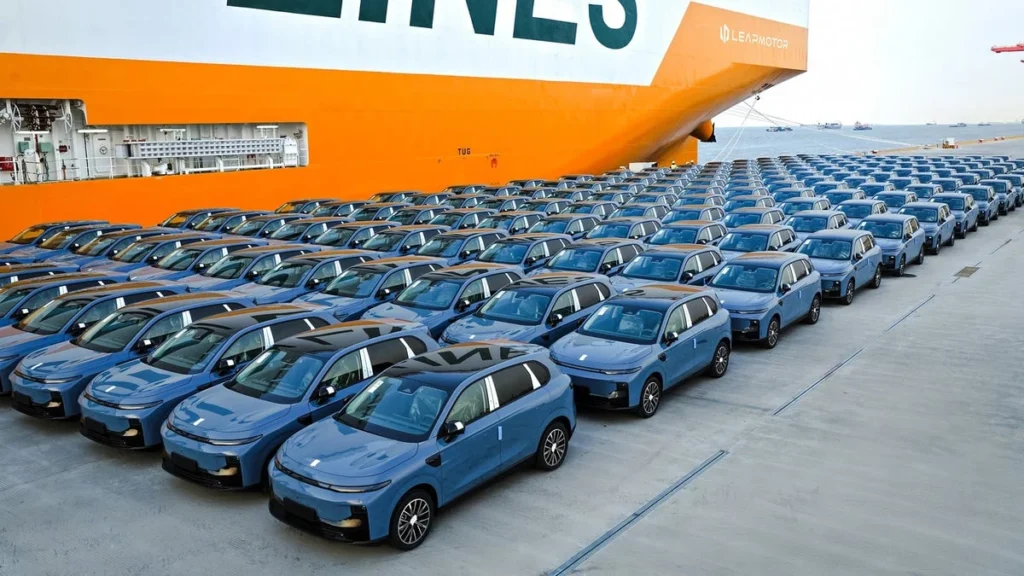
Introduction: The Unlikely Marriage That Shocked the Industry
When former Stellantis CEO Carlos Tavares engineered the improbable joint venture with Chinese electric vehicle (EV) startup Leapmotor, the move was met with a mixture of skepticism and awe. Tavares, known for his fierce protectionism and relentless focus on cost-cutting, framed the partnership as a calculated chess move. His mantra at the time was clear: "We are going to observe a very strong offensive from Chinese manufacturers. We want to make sure it happens to our benefit and not to our detriment."
Yet, looking at the automotive landscape today, that strategic gamble has evolved into a fascinating—and deeply controversial—industrial reality. The very vehicles that Western automakers once feared as an existential threat to European manufacturing are now rolling off European assembly lines, draped in the mantle of localized production.
The latest development in this saga has sent shockwaves through the French and European automotive sectors. The newly updated list of French Certificats d’Économies d’Énergie (CEE) subsidies—effectively funded by everyday French citizens through their energy bills—now includes a vehicle of Chinese origin assembled in Spain: the Leapmotor B10. This milestone marks the first time a Chinese-backed electric vehicle has accessed these specific energy-transition incentives in France.
While Stellantis celebrates a pragmatic victory that bypasses punitive European Union tariffs, critics are left asking a hard question: Has Europe’s automotive giant invited a Trojan horse into its own backyard, potentially cannibalizing its own domestic models like the Peugeot e-2008?
Main Facts: The Leapmotor B10 and the CEE Subsidy Milestone
The intersection of Chinese engineering, European manufacturing, and French energy subsidies has created a unique market phenomenon.
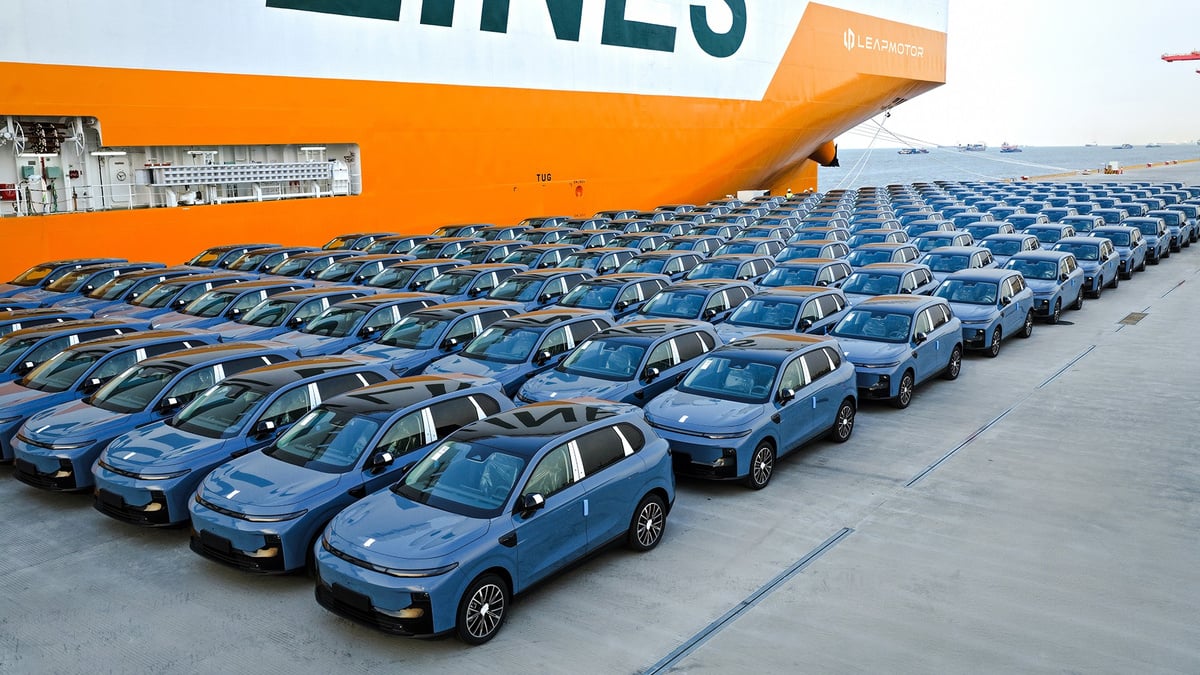
- The Vehicle: The Leapmotor B10 is a fully electric compact SUV offering impressive specifications. The base model delivers an estimated 400 kilometers of range, while the "ProMax" variant stretches that capability to 450 kilometers.
- The Location Shift: Initially conceptualized as an import model, the B10 is now assembled directly within the European Union. Specifically, it rolls off the production lines at the Stellantis manufacturing plant in Zaragoza, Spain, circumventing the logistical hurdles and heavy tariffs traditionally associated with Chinese automotive imports.
- The Subsidy Scheme: Through a recent update to the French Official Journal, the Leapmotor B10 has been cleared to benefit from CEE (Certificats d’Économies d’Énergie) subsidies. Although the French government has gradually stepped back from direct state-funded EV purchasing bonuses for mass-market cars, CEE schemes function via energy suppliers who redistribute funds to consumers and manufacturers based on energy-saving initiatives.
- The Pricing Disruption: Thanks to European assembly and the inclusion of CEE backing, the Leapmotor B10 maintains its hyper-competitive pricing strategy. The base model starts at a startling €25,750 with the CEE incentive, dropping as low as €22,400 for qualifying low-income households eligible for maximum assistance. This undercuts domestic rivals like the Renault 4, not to mention larger segments occupied by the Renault Scenic or the Peugeot e-3008.
Chronology: From Polish Kits to Spanish Assembly Lines
To understand how the Leapmotor B10 arrived on European showroom floors with local subsidies, one must trace the rapid timeline of the Stellantis-Leapmotor alliance.
- Phase One – The Genesis of the Partnership: Under Carlos Tavares, Stellantis acquired a 21% stake in Leapmotor and established a majority-owned joint venture (Leapmotor International), granting Stellantis exclusive rights to export, sell, and manufacture Leapmotor products outside of Greater China.
- Phase Two – The Polish Experiment: Initially, Leapmotor attempted to secure a foothold in Europe by utilizing a low-volume "SKD" (Semi-Knocked Down) assembly method in Tychy, Poland, utilizing the Leapmotor T03 city car. The goal was to test the regulatory waters and gauge whether pseudo-local assembly could qualify for ecological bonuses. However, strict environmental scoring ("écoscore") regulations made true state-backed bonuses difficult to secure for vehicles with deep Chinese supply chain ties.
- Phase Three – The Spanish Pivot: Recognizing the limits of kit-assembly in Poland, Leapmotor accelerated its European footprint by moving production directly into the Stellantis industrial ecosystem in Spain. Utilizing the Zaragoza facility—and with plans to build the upcoming B05 compact sedan at the Figueruelas plant—Leapmotor secured a blueprint for massive industrial scale.
- Phase Four – The CEE Breakthrough: With vehicles now officially manufactured on Spanish soil, regulatory hurdles were systematically bypassed. The inclusion of the B10 on the French CEE registry represents the culmination of this strategy, transforming a Chinese brand into a recognized recipient of European energy-transition funds.
Supporting Data: Comparative Market Realities
The economic implications of this manufacturing shift become starkly apparent when comparing the Leapmotor B10 to established European offerings built by the exact same parent company.
| Vehicle Model | Manufacturing Origin | Starting Price (Est.) | Base Range | Subsidy Eligibility |
|---|---|---|---|---|
| Leapmotor B10 | Zaragoza, Spain (Stellantis) | €25,750 (with CEE) / €22,400 (max aid) | 400 km | Yes (CEE Eligible) |
| Peugeot e-2008 | Zaragoza / Vigo, Spain (Stellantis) | > €35,000 | 405 km | Varies / Higher baseline |
| Renault 4 (Electric) | France / Europe | Significantly higher than B10 | Comparable | Standard local frameworks |
As the data demonstrates, the Leapmotor B10 offers a competitive—if not superior—battery range and technological package compared to the Peugeot e-2008, yet it commands a price tag that is nearly €10,000 lower. For consumers facing cost-of-living pressures and high inflation, the choice between a domestic brand and a Chinese-backed European-assembled alternative becomes exceedingly clear.
Official Responses and Stakeholder Perspectives
The reaction to the Leapmotor B10’s subsidy eligibility has exposed deep fissures regarding industrial policy in Europe.
The Consumer and Economic Perspective
From an economic standpoint, critics argue that French and European citizens are inadvertently financing foreign industrial expansion through their energy bills. Because CEE funds are collected via mandatory contributions on energy suppliers and passed down to consumers, French ratepayers are indirectly subsidizing the purchase of a vehicle engineered by a Chinese firm, even if final assembly occurs in Spain. Protectionists lament that while the vehicles are built within EU borders, the broader economic spillover for countries funding the CEE programs remains negligible, limited mostly to retail distribution rather than deep supply-chain job creation.

The Regulatory Counter-Perspective
Proponents of the arrangement point out the geopolitical complexity of the automotive market. While France implemented strict "écoscore" rules to filter out carbon-heavy supply chains, neighboring European nations like Germany and Italy have maintained much looser state-backed bonus structures that do not strictly penalize vehicle origin. Furthermore, because Leapmotor vehicles are produced rapidly on European soil, the European Union misses out on potential 30% customs duties that would have applied to direct imports from China.
The Stellantis Corporate Strategy
For Stellantis, the move is a masterclass in pragmatism. By embedding Leapmotor into its underutilized Spanish manufacturing assets, the multinational automotive group hedges its bets against the unstoppable rise of competitive Chinese EV makers. Since Stellantis holds a controlling stake in the joint venture and owns over a fifth of Leapmotor itself, every unit sold in Europe directly contributes to the group’s bottom line—regardless of whether the buyer chooses a Peugeot, a Citroën, or a Leapmotor.
Implications: A Calculated Risk or a Threat to European Autonomy?
As the automotive world digests this new paradigm, long-term implications are beginning to emerge for both Stellantis and the wider European industrial base.
1. Internal Cannibalization and Brand Dilution
Stellantis is a sprawling conglomerate encompassing 14 distinct automotive brands, ranging from premium labels like Alfa Romeo to mass-market staples like Fiat, Opel, and Peugeot. Introducing an aggressive, low-cost Chinese-engineered brand into this ecosystem creates a profound internal conflict. When a consumer can purchase a feature-rich Leapmotor B10 built in the same Spanish factory as a Peugeot e-2008—at a fraction of the cost—sales figures for traditional European models are bound to feel the pinch.
2. The Complexity Trap
Managing fourteen brands requires immense industrial discipline and financial resource allocation. By adding Leapmotor to European production lines, leadership risks increasing operational complexity. If the easy profitability of importing and locally assembling Chinese-backed models diverts attention from the grueling task of making homegrown European EVs genuinely affordable, Stellantis could find its legacy brands marginalized in their own home markets.

3. A Precedent for Future Partnerships
The success of the Leapmotor model in Spain serves as a blueprint for other legacy automakers seeking to survive the Chinese EV onslaught. Rather than engaging in a protracted trade war or lobbying exclusively for prohibitive tariffs, Western groups may increasingly opt for "frenemy" joint ventures—absorbing Chinese intellectual property and manufacturing capabilities to keep their own factories running.
Whether this strategy preserves European industrial leadership or merely accelerates the outsourcing of automotive engineering remains the defining question for the decade ahead. For now, one thing is certain: the Leapmotor B10 has permanently blurred the lines between Chinese innovation and European manufacturing.
