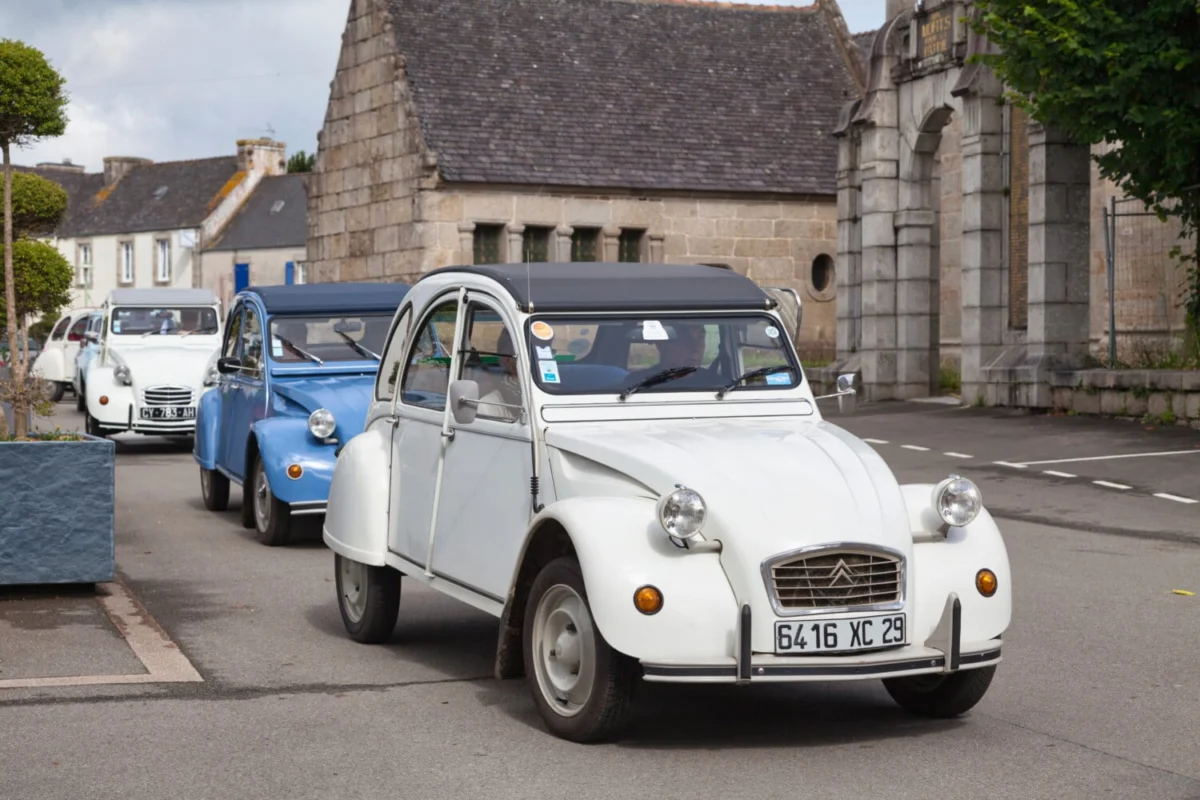
In the annals of automotive history, few vehicles have achieved the mythic status of the Citroën 2CV. Known affectionately in France as the "Deuche," this utilitarian masterpiece is synonymous with French post-war recovery and rural ingenuity. However, the story of the 2CV is not merely one of design triumph; it is a tale of clandestine engineering, the brutal interruption of global conflict, and a persistent vision that refused to die in the shadow of war. While the 2CV officially captured the hearts of the public at the 1948 Paris Motor Show, its true origins lie in the dark, frantic days of 1939, when a revolutionary project known as the "TPV" was silenced by the outbreak of World War II.
The TPV Project: A Vision for the Rural Masses
In 1936, Pierre-Jules Boulanger, the visionary leader of Citroën, set forth a directive that would redefine the automobile industry. He envisioned a "Toute Petite Voiture" (TPV)—a "very small car"—designed not for the elite, but for the rural population of France. At the time, for the vast majority of farmers and laborers, the automobile remained a luxury reserved for the urban bourgeoisie.
Boulanger’s requirements were uncompromising: the vehicle had to be capable of carrying four people and 50 kilograms of potatoes or a small keg of wine across unpaved, muddy fields without breaking a single egg in a basket placed on the floor. It needed to be cheap to produce, easy to maintain, and exceptionally fuel-efficient.
Engineering the Essential
Under the guidance of chief engineer André Lefèbvre, the design team embraced a philosophy of radical subtraction. Everything superfluous was discarded. The original prototype of 1937 weighed a mere 370 kilograms. To save weight and cost, the car featured a single headlight (regulations at the time did not mandate two), a canvas roof, and a minimalist interior. The goal was an audacious 3 liters of fuel consumption per 100 kilometers. By 1939, Citroën had successfully prepared approximately 250 pre-series models, ready to be unveiled to the world at the Paris Motor Show.
A Chronology of Conflict and Clandestinity
The trajectory of the 2CV was irrevocably altered by the geopolitical instability of Europe.
- 1936: Pierre-Jules Boulanger initiates the TPV project.
- 1937: The first functional prototype is tested, weighing only 370kg.
- 1939: Citroën produces 250 pre-series vehicles for the Paris Motor Show. The declaration of war forces the immediate cancellation of the event and the order to hide or destroy the prototypes.
- 1941–1944: Development continues in secret under the German Occupation. Engineer Walter Becchia joins the team, refining the air-cooled engine to eliminate the weight and complexity of water-cooling systems.
- 1948: The production version of the 2CV is finally unveiled at the Paris Motor Show.
- 1949: Commercial production begins, with demand far outstripping supply.
- 1994: A seminal discovery of three pre-war TPV prototypes in an attic at the La Ferté-Vidame testing grounds shocks the automotive world.
The Myth of the "Emmured" Prototypes
For decades, a compelling legend persisted: that as the German army marched toward Paris in 1939, Citroën engineers frantically bricked up their TPV prototypes in the walls of the La Ferté-Vidame facility to prevent the occupiers from stealing their secrets.
Historical research conducted by the CEDREL (Center for the Documentation and Research of the History of Citroën) has provided a more nuanced perspective. While the cars were indeed hidden, evidence suggests they were likely stashed away during the chaotic transition period following the Liberation, around 1946 or 1948, rather than in 1939. This does not diminish the gravity of the feat—maintaining a secret design program under the watchful eye of an occupying force was an act of extreme professional defiance—but it underscores the importance of separating romanticized folklore from documented history.
Technical Evolution: From TPV to the 2CV Type A
The car that debuted in 1948 was a far more polished iteration than the raw, experimental TPV. The transformation was necessary to meet the realities of post-war steel shortages and evolving safety standards.
The 1948 Specifications
The production 2CV introduced to the public featured:
- Engine: A 375cc air-cooled twin-cylinder engine.
- Transmission: A four-speed manual gearbox.
- Bodywork: A robust steel chassis, replacing the experimental materials used in early prototypes.
- Aesthetics: Flaminio Bertoni, the legendary designer who would later pen the Citroën DS, gave the 2CV its iconic, idiosyncratic silhouette, balancing utility with a unique, friendly character.
The shift to an air-cooled engine was a masterstroke by Walter Becchia. By removing the need for a radiator, water pump, and hoses, the car became lighter and significantly less prone to maintenance issues in the harsh conditions of rural France.
Market Valuation and Collector Dynamics
Today, the 2CV is a cornerstone of the classic car market, but its valuation is as eccentric as the car itself. While the "TPV" prototypes remain part of the manufacturer’s historical heritage, the early "Type A" production models are the crown jewels for private collectors.
The Price of Rarity
The market for early 2CVs is highly volatile, driven by provenance and originality. In January 2018, an Osenat auction saw a 1949 Type A—purportedly the 458th 2CV produced—fetch a staggering €75,600. This figure stands in sharp contrast to other early models; a 1951 Type A sold at the same event for €17,400.
Experts from the FFVE (Fédération Française des Véhicules d’Époque) emphasize that these prices are not universal. The value of a 2CV is dictated by:
- Documentation: Records of its ownership history and original parts.
- Restoration Quality: An over-restored "concours" car can sometimes be less desirable to purists than one that retains its original patina.
- Matching Numbers: Verification that the engine and chassis match the factory records is paramount.
Official Responses and Cultural Legacy
Citroën has consistently treated the 2CV as the "DNA" of the brand. In its 2023 retrospective, the company highlighted the 2CV not merely as a product, but as a social solution. The car was designed to bridge the gap between the urban elite and the rural worker.
The fact that the 2CV was mocked upon its 1948 launch—with critics calling it an "ugly duckling"—is now viewed as a badge of honor. It proved that functionality could eventually become style. The car’s long waiting lists in the late 1940s and 1950s—which sometimes stretched to years—serve as the ultimate validation of the TPV concept.
Implications for the Future of Automotive Design
The legacy of the 2CV is currently being re-evaluated in the context of modern sustainable mobility. As manufacturers struggle to balance the weight of battery technology with the need for affordable, accessible transport, the philosophy of the 2CV—"simplify and add lightness"—has never been more relevant.
The 2CV teaches us that an automobile’s success is not measured by its top speed or the luxury of its leather, but by its ability to integrate into the daily rhythm of its user. The project survived the chaos of 1939 and the constraints of the 1940s because it was built on a foundation of empathy for the user’s needs. Whether it is the restoration of a 1949 Type A or the conceptualization of a modern, affordable electric vehicle, the spirit of the TPV lives on: the best cars are those that solve real-world problems with elegance and simplicity.
The 2CV was never just a car; it was a promise made to the people, kept by the engineers, and cemented by history. Even as the metal of the early prototypes rusts or sits in museums, the idea—that mobility is a right for all, regardless of terrain or income—remains the most enduring engine of the Citroën brand.