

The Circuit of the Americas (COTA) has long been a barometer for Formula 1’s technical hierarchy, a track that demands a perfect marriage of aerodynamic efficiency and mechanical grip. Heading into the qualifying session for this weekend’s United States Grand Prix, Ferrari appeared to be the team to beat. Having dominated every single practice session, the Scuderia looked poised to lock out the front row and challenge for a crucial pole position. However, as the sun dipped behind the Texas horizon and the track surface cooled, those ambitions evaporated.
In a dramatic shift of fortune, Charles Leclerc and Lewis Hamilton were relegated to the fourth and fifth positions, respectively. While a second-row start is hardly a disaster in the grand scheme of a championship season, the manner in which the pace slipped away from the SF-26 left the garage in Maranello frustrated. It was a stark reminder that in the high-stakes world of Formula 1, the difference between dominance and mediocrity is often measured in mere degrees of track temperature.
The Chronology of a Disappearing Lead
The narrative of Ferrari’s weekend began with promise. From the moment the cars hit the asphalt on Friday, the SF-26 displayed a level of stability and turn-in precision that neither McLaren nor Red Bull could match. The team looked to have solved the balance issues that had plagued their qualifying efforts in previous races.
The Dominant Practice Phase
Throughout the three free practice sessions, Ferrari was untouchable. Charles Leclerc, in particular, seemed at one with the car, setting purple sectors with clinical regularity. The car was “switched on,” the tires were operating within their optimal window, and the aerodynamic package was producing the downforce necessary to navigate COTA’s complex esses. Team Principal Frédéric Vasseur noted that the telemetry data was glowing; the team felt they had an inherent advantage of nearly a tenth or two over their closest rivals.
The Q2 Peak
As qualifying commenced, the momentum carried through. Q1 and Q2 saw the Ferraris comfortably inside the top tier. The track was warm, the rubber was sticking to the surface, and the confidence within the cockpit was palpable. At this stage, the prospect of a front-row lockout felt like a statistical probability rather than a hope.
The Q3 Cooling Effect
The turning point arrived with the setting sun. As the track temperature dropped by a mere one or two degrees Celsius, the behavior of the Ferrari changed dramatically. In the delicate ecosystem of a modern F1 car, such a minor shift can alter the tire pressure and surface temperature, effectively pushing the car out of its "operating window." As the final session of qualifying reached its crescendo, the Ferrari drivers were unable to replicate the grip levels they had enjoyed just twenty minutes prior. The car, previously razor-sharp, suddenly felt vague and unresponsive.
Technical Analysis: The Sensitivity of the SF-26
To understand why a two-degree drop had such a catastrophic impact, one must look at the technical specifications of the SF-26. Ferrari’s current iteration is highly sensitive to thermal fluctuations. While this provides them with an advantage when the track is hot—allowing them to generate tire temperature quickly—it becomes an Achilles’ heel when conditions cool.
The "Operating Window" Conundrum
Modern F1 tires, supplied by Pirelli, have a very narrow temperature range in which they provide maximum adhesion. If the temperature drops, the chemical compound hardens, reducing the mechanical grip. For Ferrari, the drop in track temperature meant the tires were no longer biting into the asphalt with the same intensity. Leclerc noted that from the moment he left the pit lane for his final run in Q3, he knew the car felt "off."
The Aero-Mechanical Balance
The shift in temperature also affected the car’s aerodynamic balance. As the tires lose grip, the center of pressure moves, forcing the driver to compensate with steering inputs that only generate more heat or, conversely, cause the car to slide, which ruins the tire surface. It is a vicious cycle. Leclerc’s inability to find the front-end bite meant he was forced to underdrive the entry to corners, losing the precious hundredths of a second that ultimately cost him the front row.
Official Responses: Between Frustration and Realism
The aftermath of qualifying brought the inevitable post-mortem from the team’s leadership. Ferrari’s approach to the disappointment was bifurcated: one of genuine frustration from the drivers, and a grounded, pragmatic approach from the team principal.
Charles Leclerc: The Driver’s Perspective
Leclerc was visibly dejected after climbing out of the cockpit. His comments reflected the raw frustration of a driver who knows he had the machinery to win but couldn’t unlock it when it mattered most. "We lost one or two degrees of track temperature, and for us, that made a massive difference," Leclerc explained. "From the out-lap, I felt that I was struggling massively. It’s a shame it happened in Q3, because I am convinced that we had the pace to fight at the front. But unfortunately, not today. Again."
Frédéric Vasseur: The Leader’s Pragmatism
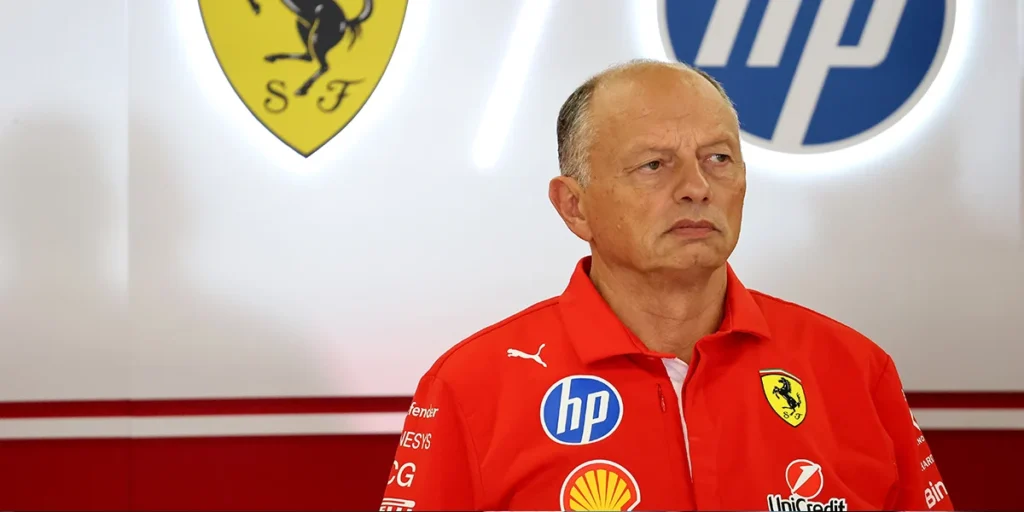
Frédéric Vasseur, ever the diplomat, refused to hide behind excuses. While he acknowledged the technical difficulties caused by the temperature drop, he was quick to remind his team that conditions were the same for everyone. "I think Q2 was a bit faster for everyone. We all struggled to improve in Q3, maybe because of the wind or something else. But it was the same for everyone. We cannot complain about the wind; that would be nonsense," Vasseur stated firmly.
Vasseur’s focus was on execution. He maintained that despite the cooling track, Ferrari’s potential remained high enough to secure a better grid slot. "We have to do a better job during the last lap, because we had the potential to be at least on the front row. Until the last corner, we were in the fight for pole position."
Implications: The Sunday Strategy
While the qualifying result is a setback, the narrative of the United States Grand Prix is far from settled. The Sunday race at COTA is notorious for its high tire degradation, and this is where Ferrari believes they can claw back the deficit.
Tire Management as a Weapon
If the SF-26 struggles to find grip in cold conditions, it might conversely be more gentle on its tires during the high-load conditions of a long race stint. If Ferrari has successfully managed their setup to be "kind" to the rubber, they may find themselves with a significant pace advantage in the final stages of the race, when their rivals’ tires begin to "fall off the cliff."
The Strategic Outlook
Vasseur remains cautiously optimistic about the race. "Tomorrow will be a different exercise, difficult, with a lot of degradation. We will see what happens." The key for Ferrari will be to manage the start, avoid the inevitable turn-one chaos, and stick to a strategy that prioritizes tire longevity. If they can keep the tires in the right window—despite the fluctuating temperatures—a podium finish, or perhaps even a surprise victory, remains well within reach.
Conclusion: A Turning Point for Maranello
The events in Austin serve as a microcosm of Ferrari’s 2024 campaign: a team with undeniable speed and a car that is capable of brilliance, yet one that still lacks the consistency to dominate under all conditions. The failure to secure pole position despite dominating practice is a bitter pill to swallow, but it is also a data-rich lesson.
For Ferrari, the mission is clear: they must learn to insulate their performance from external factors. Whether through improved thermal management software or better tire warm-up procedures, the Scuderia must ensure that their car’s performance is defined by the driver’s skill rather than the thermometer reading on the track surface.
As the lights go out on Sunday, all eyes will be on Leclerc and Hamilton. If they can channel their frustration into a measured, aggressive charge through the field, the disappointment of Saturday might just be remembered as the moment Ferrari learned the final, hardest lesson on their path back to the top of the podium. The speed is there; now, they must prove they have the fortitude to claim the prize.
