Introduction: Can the Icon Electrify the Future?
For decades, the Volkswagen Polo has been the benchmark of the B-segment—a car that defined automotive maturity, reliability, and accessible German engineering. As the automotive industry pivots toward a full-electric future, the challenge for Volkswagen was monumental: how to transition its most iconic nameplate into the era of electrons without losing the soul that made it a household name.
The 2026 Volkswagen ID. Polo is more than just a new model; it is a strategic manifesto. Built upon the cutting-edge MEB+ modular architecture, this car serves as the vanguard for a new wave of EVs, including the Cupra Raval and the Skoda Epiq. Le Moniteur Automobile has spent an extensive week putting the ID. Polo through its paces to determine if it truly is the heir to the Polo legacy or simply another contender in an increasingly crowded market of European and Chinese electric hatchbacks.
1. Design and Philosophy: A New Visual Language
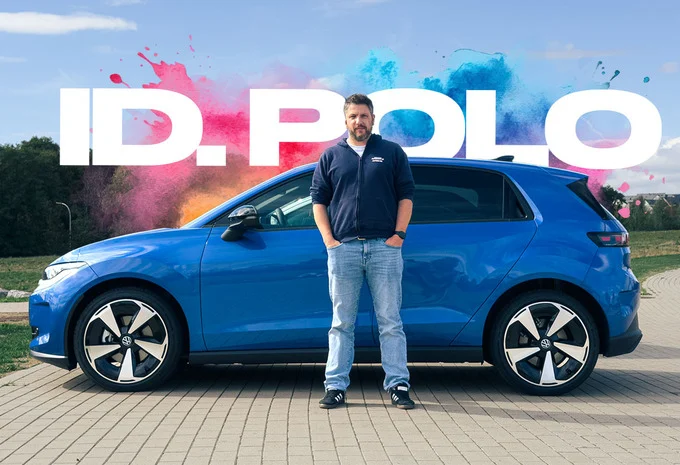
Under the guidance of Volkswagen’s revamped design department, the ID. Polo marks a departure from the "generic" aesthetic that plagued early ID models. The design team has abandoned the overly soft, bulbous silhouettes of the past in favor of a more assertive, angular, and sculptural look.
The front fascia is characterized by a "humanized" lighting signature, providing the car with a distinct personality that is both friendly and determined. The proportions have been shifted to prioritize the wheelbase, resulting in shorter overhangs that give the car a planted, confident stance. The rear, featuring a continuous light bar and a sharply defined spoiler, emphasizes width and aerodynamics, proving that an eco-conscious vehicle doesn’t have to sacrifice visual drama.
2. Interior Ergonomics: The Return of Tactility
Perhaps the most significant—and widely requested—change in the ID. Polo is the interior philosophy. Volkswagen has heard the feedback from owners and journalists alike: touch-sensitive sliders are out; functional, physical buttons are back.
The Human-Machine Interface
The cockpit feels like a masterclass in sensible design. Essential controls, such as climate adjustment and volume, are once again managed by physical buttons and high-quality toggles. This shift toward "logical ergonomics" significantly reduces driver distraction. The central infotainment screen is crisp, responsive, and features a new "Retro Mode" UI option that pays homage to the analog gauges of the original 1975 Polo, blending modern technology with nostalgic charm.
Space and Practicality
Thanks to the MEB+ platform’s unique packaging, the ID. Polo offers an interior volume that defies its external dimensions. The flat floor and pushed-out wheels allow for a rear-seat experience that feels closer to a Golf than a Polo. Even passengers over 1.80m tall will find ample legroom.
The cargo area is arguably the segment’s new benchmark. With a capacity ranging between 450 and 490 liters—depending on the configuration of the under-floor storage—it comfortably accommodates everything from weekly groceries to family luggage, making it a viable primary vehicle for small households.
3. Engineering: The MEB+ Advantage
The technical heart of the ID. Polo is the MEB+ platform. Unlike the rear-wheel-drive configuration found in the ID.3 and ID.4, the ID. Polo adopts a front-wheel-drive (FWD) layout. This decision was driven by the desire to maximize cabin space and provide a more intuitive, familiar driving experience for those transitioning from traditional internal combustion vehicles.
Driving Dynamics
On the road, the ID. Polo is remarkably composed. The suspension setup is tuned to favor a "feathery" comfort without succumbing to excessive body roll. Even on the optional 19-inch wheels, the car filters out road imperfections with a level of sophistication rarely seen in the B-segment.
The steering is light but precise, offering enough feedback to make navigating tight city streets a joy. Furthermore, the "One-Pedal" driving mode, activated in position ‘B’, is exceptionally well-calibrated. It provides smooth, predictable deceleration that works in tandem with the car’s adaptive regeneration system, which utilizes navigation data to adjust the braking force automatically as you approach intersections or speed zones.
4. Batteries, Range, and Charging Infrastructure
Volkswagen has adopted a dual-chemistry strategy to cater to different budget and performance needs.
- The Entry-Level LFP (Lithium Iron Phosphate): Paired with an 85 kW (116 hp) motor and a 39 kWh battery, this version is optimized for urban dwellers. It offers a balance of longevity and cost-efficiency.
- The Performance-Oriented NMC (Nickel Manganese Cobalt): Available in the higher trims, this features a 52 kWh battery and a punchy 155 kW (211 hp) motor. This version is designed for those who require longer range and superior highway performance.
Charging times remain competitive, with the architecture supporting rapid charging that allows the battery to go from 10% to 80% in approximately 25 minutes under optimal conditions.
5. Market Positioning and Pricing
In the Belgian market, the ID. Polo occupies a strategic "sandwich" position. By starting under the €25,000 mark for the base model, Volkswagen effectively challenges the budget-conscious segment, while the top-tier trims compete directly with the Renault 5 E-Tech and Alpine A290.
| Version | Motor / Battery | Starting Price (Incl. VAT) |
|---|---|---|
| ID. Polo (Base) | 85 kW / 39 kWh LFP | €24,990 |
| ID. Polo First Edition | 155 kW / 52 kWh NMC | €37,990 |
6. Official Perspectives and Industry Implications
During the official launch, Volkswagen representatives emphasized that the ID. Polo is not meant to be a niche product. "We didn’t want to build an electric toy," a lead engineer noted during our briefing. "We wanted to build a Polo that happens to be electric."
This sentiment reflects a broader industry shift. As Chinese manufacturers gain ground in Europe with highly competitive, feature-rich EVs, European legacy brands are under immense pressure to prove that their heritage of build quality and chassis tuning still matters. The ID. Polo is Volkswagen’s answer: a car that combines the software-defined agility of a modern EV with the tactile, high-quality manufacturing that European customers expect.
The Competitive Landscape
The ID. Polo is entering a battlefield. The success of the R5 E-Tech shows that there is a hunger for emotional, design-led EVs. However, the ID. Polo holds a distinct advantage in terms of sheer interior volume and the perceived "seriousness" of its daily-use engineering.
7. Final Verdict: The Verdict of the Road
After exhaustive testing, our conclusion is clear: the Volkswagen ID. Polo is a triumph.
Points of Excellence:
- Ergonomics: The return of physical buttons is a game-changer for user experience.
- Space: The interior and cargo capacity are segment-leading.
- Versatility: The transition between city maneuverability and highway stability is seamless.
- Value: An entry price of under €25,000 makes electric mobility accessible to a wider demographic.
Areas for Improvement:
- Options Pricing: While the base model is affordable, fully kitted versions can climb rapidly in price.
- Infotainment Complexity: Despite the "Retro Mode," the underlying software can still be overwhelming for tech-averse users.
Our Final Assessment
The 2026 Volkswagen ID. Polo successfully bridges the gap between the past and the future. It honors the lineage of the internal combustion Polo by providing a car that is "just right"—not too big, not too small, and perfectly suited for the realities of daily life. By refining its design language and focusing on what truly matters to the driver—comfort, usability, and space—Volkswagen has created a benchmark that will force the competition to rethink their own strategies. The ID. Polo is not just a replacement; it is an evolution.