

Updated July 23, 2026.
The French government’s popular "leasing social" (subsidized electric vehicle leasing scheme) is officially returning with a target allocation of 50,000 vehicles. Aimed squarely at low-income working households who depend heavily on their personal vehicles to commute, the initiative promises new electric cars for a monthly layout of between €100 and €200.
However, automotive and financial experts warn that looking strictly at the headline monthly rental fee is a trap. Successfully navigating the 2026 program requires a meticulous audit of household tax brackets, precise commute calculations, a clear understanding of hidden operational costs, and a smart strategy regarding the disposal of one’s current combustion-engine vehicle. Often, the trade-in value of an old car serves as the financial anchor needed to cover insurance, home-charging installations, or end-of-contract restoration fees.
Main Facts: What is the 2026 Electric Social Leasing Program?
The core premise of the social leasing scheme remains anchored in supporting the ecological transition without penalizing working-class mobility. Funded via energy savings certificates (certificats d’économies d’énergie), the program provides long-term rentals (LLD) or lease-to-own agreements (LOA) for brand-new electric vehicles (EVs) with zero initial financial contribution, no advance payments, and no security deposit.
Key structural parameters for the 2026 edition include:
- Target Audience: Working adults residing in France with modest fiscal reference incomes.
- Vehicle Criteria: Brand-new category M1 electric vehicles with an operational mass under 1,800 kg (effectively excluding heavier electric SUVs), a purchase price capped at €47,000 (excluding options), and an environmental score of at least 60 points based on the vehicle’s specific type-variant-version (TVV).
- Exclusions: Anyone who successfully secured a vehicle under the 2024 or 2025 editions of the scheme is strictly ineligible for the 2026 rollout.
- Volume: 50,000 units are slated for distribution starting July 2026.
Chronology and Key Milestones for Applicants
Preparing for the opening of the application window requires strict adherence to timelines, paperwork accumulation, and vehicle transitions.

- Pre-Launch Preparation (May–June 2026): Applicants must audit their tax notices, calculate exact home-to-work driving distances, and obtain preliminary valuations for their current vehicles.
- Application Opening (July 2026): Portals open for dossier submissions. Given the massive demand experienced in 2024 and 2025, speed and accuracy in documentation submission are paramount.
- Validation and Ordering: Once approved, applicants select an eligible model from participating manufacturers, ensuring that delivery dates adhere to the strict six-month maximum window mandated by the program guidelines.
- Vehicle Delivery and Old Car Disposal: Upon receiving the confirmation and tracking delivery dates, beneficiaries can finalize the trade-in or sale of their legacy thermal vehicle to free up cash flow for incoming EV expenses.
Supporting Data and Eligibility Breakdown
Eligibility for the 2026 social lease is governed by rigorous legislative criteria. Applicants must cross-reference their professional status, geographic realities, and household tax revenues.
Eligibility Criteria Overview
| Criterion | 2026 Regulated Rule | Required Documentation / Points to Check |
|---|---|---|
| Age, Activity & Residence | Adult, active worker, residing in France | Identity card + proof of residence + professional status proof |
| Income Cap | Fiscal Reference Income (RFR) per share ≤ €16,880 (plus any foreign income earned that year) | N-1 tax notice on N-2 income (e.g., for a lease starting in 2026, the 2025 notice on 2024 income) |
| Commuting Distance | Personal vehicle commute distance strictly greater than 10 km | Precise map measurement between home and workplace |
| Professional Mileage | Over 8,000 km/year driven for work purposes using a personal vehicle | Professional mileage logs, including regular commutes |
| Previous Beneficiaries | Must not have received a social lease in 2024 or 2025 | Database check against prior program rolls |
| Vehicle Specifications | Brand-new M1 electric vehicle, un-registered prior to leasing | Must be a first permanent French registration executed specifically for the lease |
| Weight Limitations | Mass in running order strictly under 1,800 kg | Large electric SUVs are generally excluded |
| Acquisition Price | Total acquisition cost ≤ €47,000 including tax (excluding options) | Factory options can unexpectedly push models past the threshold |
| Environmental Score | Minimum score of 60 points | Verified via Type-Variant-Version (TVV); commercial names alone are insufficient |
| Contract Duration | Minimum 3-year commitment | Long-term rental (LLD) or Lease with Option to Purchase (LOA) |
| Included Mileage | At least 15,000 km/year included without surcharges | Verify penalty rates for every excess kilometer |
The Critical Commute Nuance
A vital update in the 2026 documentation specifies that the home-to-work distance requirement must be strictly greater than 10 km. Applicants living exactly 10 km or less from their workplace are disqualified. This fine semantic distinction is heavily enforced during the dossier validation phase.
Income Caps by Household Parts (Fares)
The ceiling is calculated using the Fiscal Reference Income (RFR) per share, capped at €16,880 per share for 2026.
| Fiscal Shares (Parts) | Maximum Household RFR | Example Situation |
|---|---|---|
| 1 share | €16,880 | Single person |
| 1.5 shares | €25,320 | Single person with an additional half-share |
| 2 shares | €33,760 | Married or PACS couple without children, joint filing |
| 2.5 shares | €42,200 | Married or PACS couple with one half-share addition |
| 3 shares | €50,640 | Married or PACS couple with two children (tax context dependent) |
| 4 shares | €67,520 | Large households with higher share allocations |
Official Responses and Financial Realities: The True Cost of a €100–€200 Lease
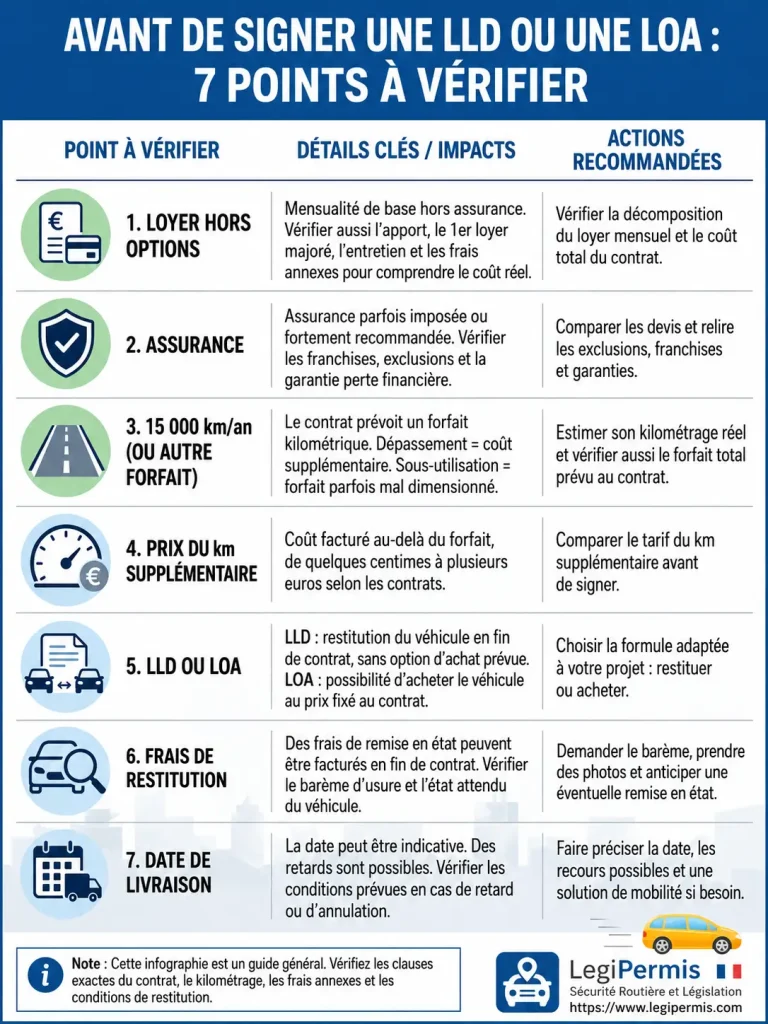
While the headline rates of €100 to €200 per month are striking, consumer advocacy groups and institutional watchdogs emphasize that these numbers represent base rental costs only. They exclude mandatory insurance, optional accessories, maintenance packages, and end-of-contract wear-and-tear fees.
Energy and Charging Economics
Recharging at home remains the most economical option. Assuming a conservative estimate of €3.50 per 100 km for home charging (compared to official benchmarks of roughly €2.50 to €3.00 during off-peak hours), monthly energy expenditures scale as follows:
- 12,000 km/year: ~€35/month for electricity vs. ~€80/month for diesel and ~€110/month for E10 petrol.
- 15,000 km/year: ~€44/month for electricity vs. ~€100/month for diesel and ~€138/month for petrol.
- 20,000 km/year: ~€58/month for electricity vs. ~€133/month for diesel and ~€183/month for petrol.
The Real Monthly Household Budget (Example at 15,000 km/year)
Combining the base rental fee with estimated home electricity usage establishes a more realistic financial floor before accounting for auto insurance:

- Base Rent €100/mo + Home Charging (€44/mo) = Minimal Budget of €144/mo (+ Insurance & Maintenance)
- Base Rent €140/mo + Home Charging (€44/mo) = Minimal Budget of €184/mo (+ Insurance & Maintenance)
- Base Rent €200/mo + Home Charging (€44/mo) = Minimal Budget of €244/mo (+ Insurance & Maintenance)
Implications: Leveraging Your Old Vehicle to Finance the Transition
A frequently overlooked aspect of moving to an electric social lease is the destiny of the applicant’s current combustion-engine vehicle. Because low-income households often own older, depreciated vehicles, selling or trading in this asset can generate vital capital to support the transition.
Valuation Potential of Legacy Vehicles
- Estimated value at €1,500: Covers roughly 10 months of base rent or up to 34 months of home charging.
- Estimated value at €2,500: Covers approximately 18 months of rent or over 4 years of electricity.
- Estimated value at €4,000: Absorbs nearly 28 months of rent or 7 years of fuel equivalent.
- Estimated value at €5,000: Effectively offsets 36 months of leasing costs at €140/month.
Disposal Strategies: Private Sale vs. Professional Trade-In
- Private Sale: Typically yields the highest financial return, though it requires time, administrative paperwork, and carries potential buyer-default risks.
- Professional Trade-In: Offers immediate convenience and cash availability upon EV delivery, though trade-in valuations are generally lower than market rates.
- Retaining Until Delivery: Highly recommended for applicants who need their current car to maintain their professional mileage quotas during the application review period. Prematurely selling the vehicle risks invalidating the commuting criteria required for dossier approval.
Contractual Fine Print and Pitfalls to Avoid
Before signing any agreement with leasing providers, applicants must scrutinize specific clauses to avoid unexpected financial penalties:
- Mileage Caps: The base contract must include at least 15,000 km/year without penalty. Long-distance commuters must calculate their annual mileage strictly (e.g., a 50 km round-trip commute over 220 working days accounts for 11,000 km before factoring in personal errands and weekend travel). Exceeding limits incurs steep per-kilometer penalty fees.
- Insurance Mandates: Comprehensive coverage is obligatory. Applicants must check whether insurance can be contracted independently or if they are forced into expensive provider-bundled policies.
- Delivery Delays and Rescission: Under program regulations, delivery delays cannot exceed six months from the order date. If a vehicle is not delivered within 14 days past the contractual delivery date, consumers retain the legal right to cancel the order without financial penalty.
- Payment Relief Clauses: Providers are required to incorporate temporary payment postponement clauses (up to three months) for beneficiaries facing sudden financial hardship.
Conclusion: Is the 2026 Social Lease Worth It?
The 2026 Electric Social Leasing program represents an extraordinary opportunity for modest-income workers to modernize their mobility while drastically cutting monthly fuel expenditures. However, it is not a turnkey "free mobility" solution.
The equation only works favorably if the beneficiary meets all strict eligibility thresholds, maintains a predictable annual mileage profile below or near the 15,000 km threshold, secures affordable home-charging access, and strategically uses the trade-in value of their legacy vehicle to cushion ongoing insurance and operational overhead. Prospective applicants should approach the scheme not by asking, "Can I get a car for €100 a month?" but rather, "What are the total structural costs of this vehicle over a three-year commitment compared to my current automotive budget?"
