Steering Through the Storm: Antonio Filosa Charts a New Course for Stellantis at the 2026 Paris Motor Show
Raul Delapena Setiawan
October 21, 2026 • 7 MIN READ
PARIS — In the shifting landscape of the global automotive industry, few executives have stepped into a more challenging arena than Antonio Filosa. Taking the helm as the Chief Executive Officer of Stellantis in the spring of 2025, Filosa succeeded Carlos Tavares, inheriting a colossal yet embattled Franco-Italo-American manufacturing giant.
While the early years of the Stellantis merger were characterized by staggering profit margins and aggressive cost-cutting measures, the subsequent fallout has been severe. A cascade of high-profile reliability crises—most notably involving the PureTech and BlueHDi engines, alongside the sprawling Takata airbag recalls—chipped away at the group’s reputation. Trust among both long-standing customers and internal personnel eroded significantly.
Months into his tenure, Filosa has made it his mission to decisively break with the legacy of his predecessor. Seizing the stage at the Mondial de l’Auto de Paris 2026, the Italian executive delivered a masterclass in corporate accountability, combining a profound mea culpa with a bold strategic roadmap designed to restore Stellantis to its former glory.
Main Facts: A New Era and Defining Challenges
At its core, the current chapter of Stellantis is defined by a transition from aggressive financial optimization to meticulous product quality and customer restitution. Filosa’s leadership marks a clear cultural shift away from the defensive postures of the past.
Leadership Transition: Antonio Filosa assumed the CEO role in early 2025, succeeding Carlos Tavares.
The Quality Crisis: Stellantis has faced immense public scrutiny over the PureTech petrol engine failures, the catastrophic Takata airbag safety scandals, and vulnerabilities in the 1.5 BlueHDi diesel engines.
Strategic Realignments: The unveiling of the "FaSTLAne" plan outlines the group’s trajectory toward 2030, emphasizing global power brands like Peugeot, Fiat, RAM, and Jeep, while introducing affordable electric vehicle (EV) architectures such as the "Smart Car" platform and the forthcoming "e-car" project.
The Chinese Competitive Landscape: Stellantis is actively balancing competition from Chinese automakers through local production initiatives, fair-trade advocacy, and its strategic joint venture with Leapmotor.
Chronology of a Crisis: From Record Profits to Public Apologies
To understand the weight of Filosa’s current mission, one must examine the timeline of events that brought Stellantis to this critical juncture.
2021–2022: The Post-Merger Honeymoon
Following the merger of Groupe PSA and Fiat Chrysler Automobiles (FCA) to form Stellantis in early 2021, the company posted record-breaking financial results. Under the direction of Carlos Tavares, the focus was squarely on operational synergies, stringent cost reductions, and maximizing short-term profitability. Wall Street and European financial markets lauded the automotive conglomerate for its unprecedented financial agility.
2023–2024: Cracks in the Foundation
Beneath the glossy financial reports, systemic issues began to surface. Owners of vehicles equipped with the 1.2-liter PureTech three-cylinder petrol engine reported severe oil consumption issues, leading to premature timing belt degradation and, in worst-case scenarios, catastrophic engine failure. Concurrently, the global fallout from defective Takata airbags intensified. Stellantis vehicles, particularly older models produced across various legacy brands, were implicated in safety recalls tied to fatal incidents. The handling of these recalls proved chaotic, marked by sudden driving bans in high-risk climate zones and inadequate loaner car availability for stranded motorists.
Spring 2025: The Arrival of Antonio Filosa
Facing mounting pressure from consumer advocacy groups, regulatory bodies, and internal stakeholders, the Stellantis board orchestrated a leadership change. Antonio Filosa was appointed CEO, tasked with stabilizing operations and rehabilitating the company’s damaged public image. Rather than dodging accountability, Filosa immediately initiated a series of operational reforms and public apologies.
October 2026: The Paris Motor Show Reckoning
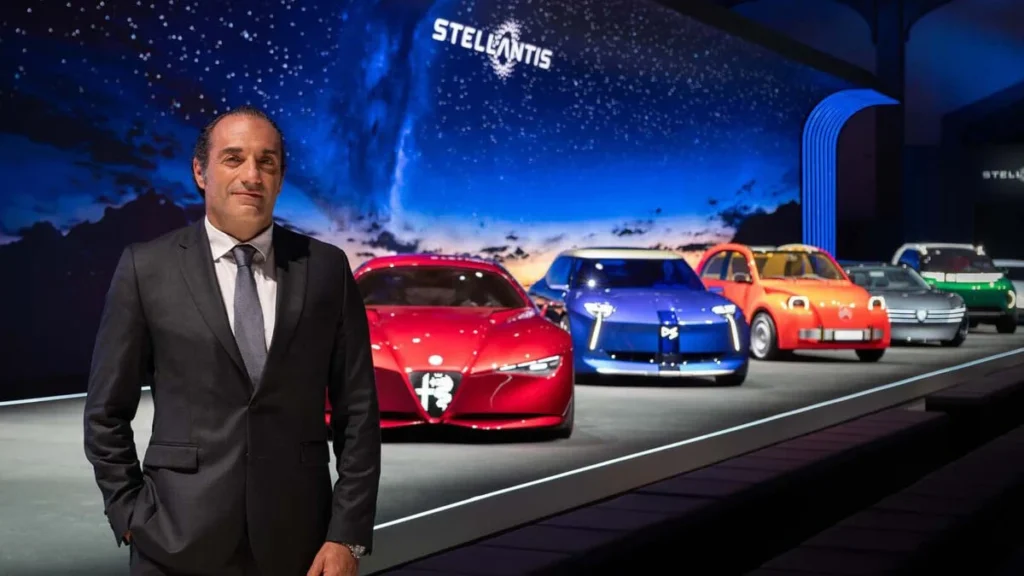
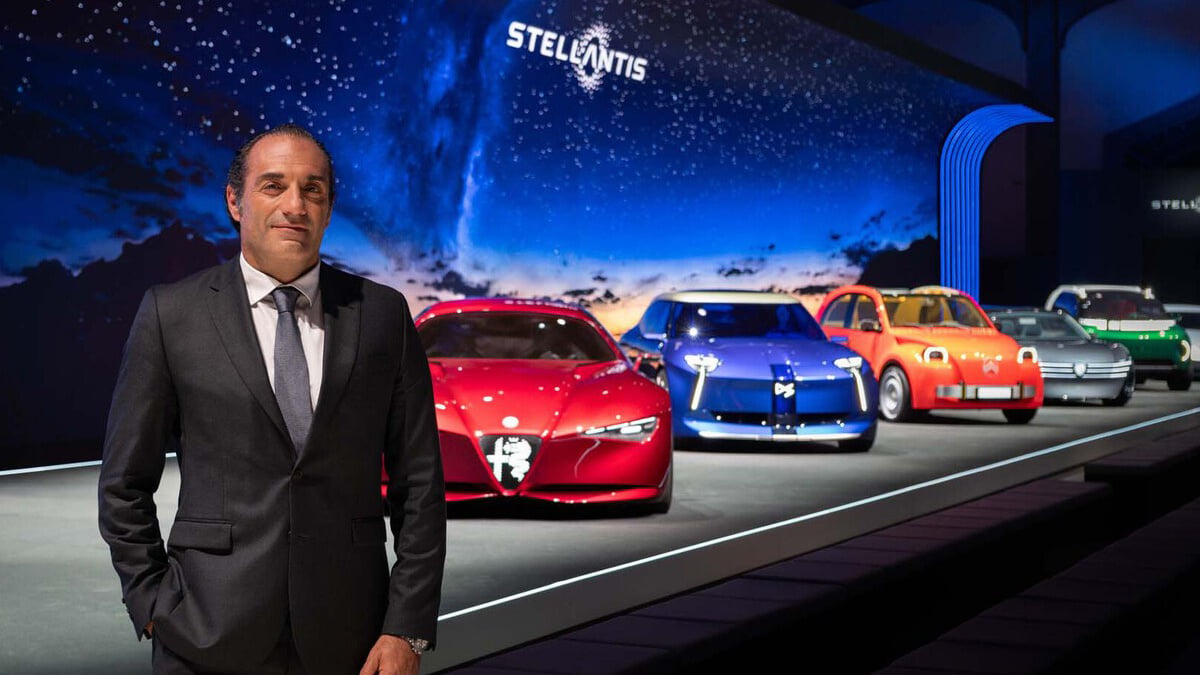
Appearing at the Mondial de l’Auto de Paris 2026, Filosa utilized the high-profile industry event to cement his reformative agenda. Surrounded by nine concept cars and aggressive electrification strategies, the CEO directly addressed the company’s past missteps in a candid interview with Le Parisien, signaling a definitive break from the defensive strategies of the Tavares era.
Official Responses: A Paradigm Shift in Accountability
The contrast between the communication strategies of former CEO Carlos Tavares and current CEO Antonio Filosa could not be starker. While Tavares frequently deflected direct blame—maintaining a posture of being "responsible, but not culpable"—Filosa has embraced radical transparency.
In his address at the Paris Motor Show, Filosa minced no words regarding the PureTech engine debacle:
"In the first place, I present my apologies for the past difficulties they have encountered. I guarantee you that we have invested to raise quality. In Europe, in France and Italy, as well as in North America, we have set up around a hundred ‘quality war rooms’ bringing together engineers, suppliers, and production site representatives daily. We are going to progress again, I personally commit to it."
This hands-on approach is anchored by tangible operational changes. Stellantis has decentralized its quality control mechanisms, placing engineers directly on the factory floors to intercept manufacturing defects before vehicles reach dealerships. According to internal metrics cited by Filosa, these corrections have already improved vehicle quality ratings by approximately 30% since the beginning of his tenure.
Regarding the Takata airbag crisis—which left thousands of motorists grounded without alternative transportation due to logistical logjams—Filosa avoided retreating into technical justifications. Instead, he pivoted the conversation entirely toward the future:
"I prefer not to look back at the past. Looking at the present and the future, our corrections have above all focused on the products. We are working tirelessly on the quality of our vehicles."
Supporting Data: Navigating the EV Transition and Global Rivalry
Beyond mechanical reliability, Stellantis faces an existential test in the electric vehicle (EV) market, particularly driven by the rapid ascension of Chinese manufacturers. Addressing allegations that European legacy automakers are falling behind, Filosa pushed back firmly during the Paris summit:
The EV Playing Field:"We are absolutely not behind. Whatever players are present in the arena, common rules are essential. That is why we firmly support the principle of ‘Made in Europe’. This mechanism will guarantee fair competitive conditions for every manufacturer."
The Leapmotor Partnership: While advocating for fair trade, Stellantis is pragmatic. Its joint venture with Chinese EV maker Leapmotor serves a dual purpose: establishing a commercial platform to distribute Leapmotor vehicles globally while simultaneously absorbing manufacturing and supply-chain efficiencies for zero-emission technology.
The Brand Hierarchy (FaSTLAne Strategy): Under the FaSTLAne roadmap extending to 2030, Stellantis maintains a portfolio of 14 distinct brands. Four have been designated as global pillars—Peugeot, Fiat, RAM, and Jeep—chosen for their high sales volumes across multiple continents.
Crucially, Filosa reassured European consumers that these global heavyweights will not cannibalize regional market accessibility. Innovations will debut on global brands—such as the upcoming STLA One platform premiering on the next-generation Peugeot 208—before cascading down to more affordable nameplates.
Highlighting the group’s commitment to economical mobility, Filosa pointed to the success of the Citroën ë-C3’s "Smart Car" platform. The upcoming "e-car" project promises a lineup of small, eco-friendly, European-built electric city cars priced around €15,000, underscored by the sensational reception of the retro-futuristic Citroën 2CV concept at the Paris show.
Implications: Can Stellantis Rebuild the Trust Deficit?
The transformation currently underway at Stellantis carries profound implications not only for the conglomerate itself, but for the broader European automotive ecosystem.
Restoring Brand Equity: Trust is notoriously difficult to regain once lost. By offering direct, unvarnished apologies for the PureTech and Takata crises, Filosa has successfully lowered the temperature with disgruntled consumers. However, long-term brand equity will depend entirely on the real-world reliability of vehicles rolling off assembly lines under the new "quality war room" protocols.
Economic Viability vs. Margins: The shift toward ultra-affordable electric vehicles—such as the €15,000 EV segment—demonstrates that Stellantis is willing to compress profit margins in the short term to secure market share against aggressive low-cost Asian competitors.
Internal Morale: For the hundreds of thousands of employees within the Franco-Italo-American group, Filosa’s empathetic and collaborative leadership style marks a welcome departure from the austere, top-down rigidity of the past. Fostering daily cooperation between engineers, suppliers, and assembly workers revitalizes a corporate culture that had grown fractured.
As Antonio Filosa navigates the remainder of his term, the ultimate verdict will rest on execution. If Stellantis can successfully bridge the gap between its ambitious 2030 technological roadmap and flawless vehicle manufacturing, the missteps of the early 2020s may ultimately be remembered as the painful crucible that forged a more resilient, customer-centric automotive titan.